
Water Under Your Garage Door in Massachusetts: Seal, Slope, or Drainage?
Water under your garage door in Massachusetts usually comes from one of three places: a worn bottom seal, a driveway that slopes toward the garage, or drainage that has nowhere to go. Here is how to tell which one it is — and what fixes it.
Start by watching where the water comes in. A wet line under the door points to the bottom seal. Water running in from the driveway points to the slope. Water that pools and stays points to drainage. Call (833) 563-1552 when the door will not close properly, or the water keeps coming back.
How do I tell where the water under my garage door comes from?
Water under a garage door looks the same whatever causes it — a wet line on the floor, a puddle by the wall, damp boxes on the lowest shelf — so the first job is to work out where it comes in.
Do it on a rainy day, while the water is still coming in, and watch the floor, not the door. The pattern tells you the cause, and the cause decides the fix. A wet line that follows the bottom of the door, with the middle of the floor dry, points to the bottom seal. Water that runs in from the driveway, in a stream or a sheet, points to the slope of the driveway. Water that pools in one corner and stays there after the rain stops points to drainage. And water that comes in everywhere at once, after heavy rain, is usually a flood — which is a different job, covered in our November 6 floods post for New Bedford and Fall River.
| What you see | What it usually means | What fixes it |
|---|---|---|
| Wet line under the door, floor dry in the middle | Bottom seal worn, torn, or flattened | New bottom seal, fitted on the visit |
| Water runs in from the driveway in a stream | Driveway slopes toward the garage | Threshold plus drainage work |
| Water pools in one corner and stays | Low spot in the floor, or blocked drain | Drainage work, discussed on the visit |
| Water everywhere at once after heavy rain | Floodwater, not a seal fault | Flood check first, then the door |
The check costs nothing and it decides everything that follows. A seal job is a small visit; a drainage job is a bigger one — and fitting a new seal on a door whose real problem is the driveway slope is money spent on the wrong fix. Watch the water once, on a rainy day, and you will know which of the three it is before anyone is called.
Is the bottom seal the first thing to check for water under the door?
Yes — the bottom seal is the first thing to check. It is a rubber strip along the bottom of the door that closes the gap between the door and the floor. It wears out faster than any other part that does not move: it freezes to the floor in winter, bakes in summer sun, and soaks in every rainstorm.
The sign is a seal that is cracked, torn, flattened, or missing in places — and the consequence is water, cold air, and leaves getting in where a sound seal would keep them out. Look at the seal in daylight, with the door closed, and look along its whole length: a seal that is worn in the middle and sound at the ends still lets water in.
A worn seal also lets meltwater collect under the door, and that water freezes the door to the floor overnight — which is why a seal job in November is a small job that stops bigger ones. A door that freezes shut in the morning traps the car inside, and an opener that tries to force it open strains against the ice. Our garage door maintenance checklist covers the same twice-a-year look, including what a homeowner can check safely and what is technician-only. A seal is fitted on the visit, matched to the door, and the door is tested before we leave — including the safety sensors, because a door that does not close properly is a door that does not seal properly either.
Water pooling by the door, or a seal that is cracked and torn? That is water finding its way in — get it checked before the freeze.
Call Now to Speak to a SpecialistWhat is a garage door threshold, and does it stop shallow water?
When the seal is sound and water still comes in, the next fix is a threshold — a raised rubber lip fitted to the floor across the doorway, so shallow water has to climb over it to get in.
It works best on the water that runs in from the driveway: a thin sheet of rainwater, snowmelt, or a driveway that slopes gently toward the garage. It does not stop floodwater, and it does not fix a driveway that drops steeply toward the door — that needs drainage work, not a lip.
A threshold is fitted on a dry day, on a clean floor, because the adhesive that holds it needs the floor dry and the weather mild to bond properly. A threshold fitted on a wet floor in freezing weather will not hold, so the visit is timed for a dry spell — which is why a threshold job is a November job, not a January one. The door still has to close over the threshold without catching on it, so the fit is checked with the door running — and the safety sensors are tested too, because a door that stops short of closing leaves a gap the threshold cannot cover.
When is water under the door a driveway or drainage problem?
When water runs in from the driveway in a stream, the seal and the threshold are not the problem — the driveway is. A driveway that slopes toward the garage sends every rainstorm straight at the door, and no seal can hold back a stream.
The fix is to give the water somewhere else to go: a trench drain across the driveway in front of the door, a channel that carries the water to the side, or regrading the driveway so it falls away from the garage instead of toward it. Those are bigger jobs than a seal, and they are jobs to discuss on the visit, not to start on a rainy afternoon.
What you can check yourself is simpler: clear the leaves from the driveway and from the track, and look at where the water goes when it rains. If it pools against the door, the driveway is the problem. If the gutters and downspouts dump water by the garage, that is the problem too — a downspout that empties at the corner of the garage sends its water straight at the door. Our storm garage door guide for Massachusetts explains the same checks for heavy rain, including what to look for after a storm has passed.
Water in winter: the freeze that follows the rain
Water under the door is a nuisance in summer and a fault in winter, because the water that sits under the seal freezes the door to the floor overnight. A door frozen shut in the morning is a car trapped inside — and an opener that tries to force it open strips its gear, pulls a cable off its drum, or burns out its motor. The November rain makes this worse: meltwater and rain collect where the door meets the floor during the day, then freeze overnight, and by morning the seal is stuck fast. A seal that is cracked or torn lets even more water in, and a seal that froze once already tears a little when it breaks free.
That is why the check matters before the cold arrives, not after: look at the bottom seal now, clear the leaves from the tracks so water can drain instead of pooling, and listen for grinding as the door moves. Our winter garage door guide for Massachusetts explains the full pre-freeze check, including what to look for on the seal and in the track. And if the door is frozen shut in the morning, warm the bottom seal gently and try the door by hand first — never force it with the opener.
What a visit covers — and what it costs
The visit starts with the same question as this post: where does the water come in? The seal is checked along its whole length, the floor is checked for low spots, and the driveway is checked for slope and drainage. A worn seal is fitted on the visit, matched to the door, and the door is tested — including the balance and the safety sensors, because a door that does not close properly does not seal properly either. A threshold is fitted on a dry day, when the floor is clean and the weather is mild enough for the adhesive to bond. Drainage work is discussed on the visit, with the options and the written price before anything is ordered.
No Bay State price is published here. Most common repairs are reported in the $150 to $400 range by other Massachusetts sources — a cable or roller job at the low end, a spring or opener job higher. What changes the price is the part, the door's size and weight, and whether more than one part needs replacing. Your exact price is confirmed in writing on site after the door has been seen. Start from our Bay State Garage Door Repair Pros homepage for every city we serve.
Water under the door: the parts involved
These images show the parts involved when water gets under a garage door — the track and rollers, the cable and drum, the opener, and the door off its track.
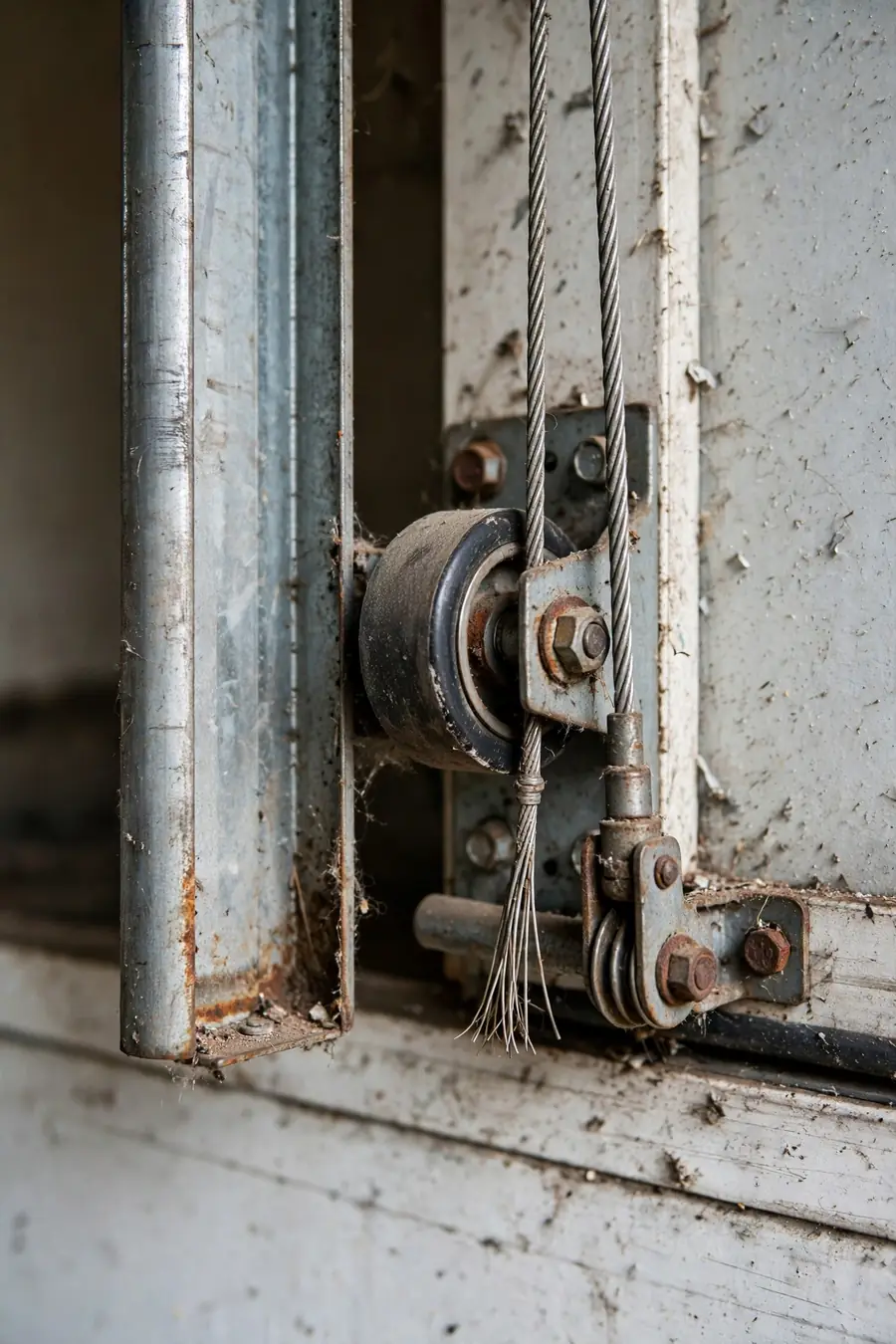
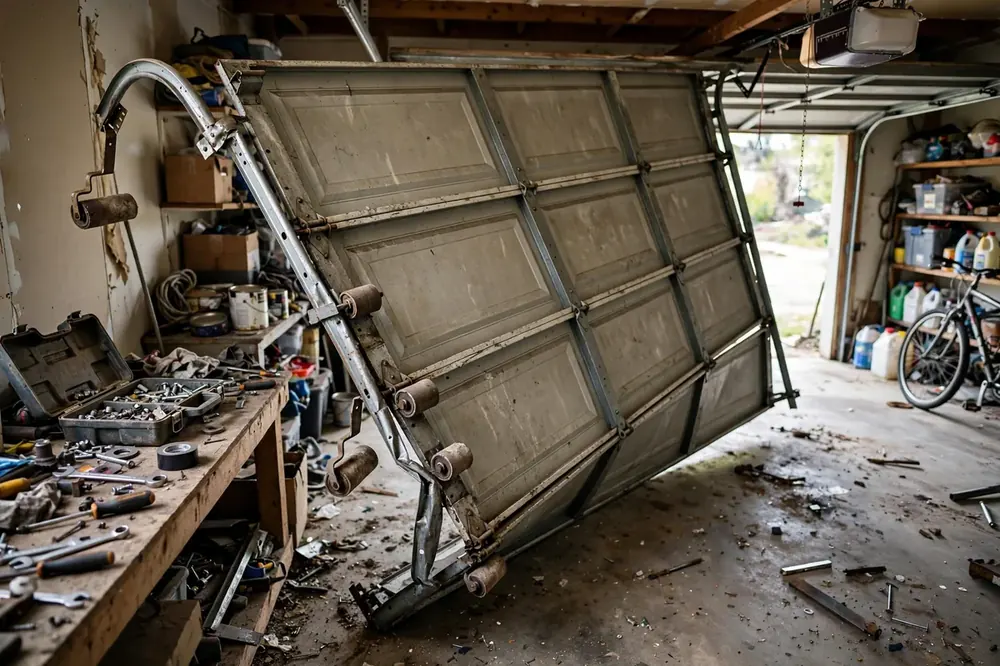
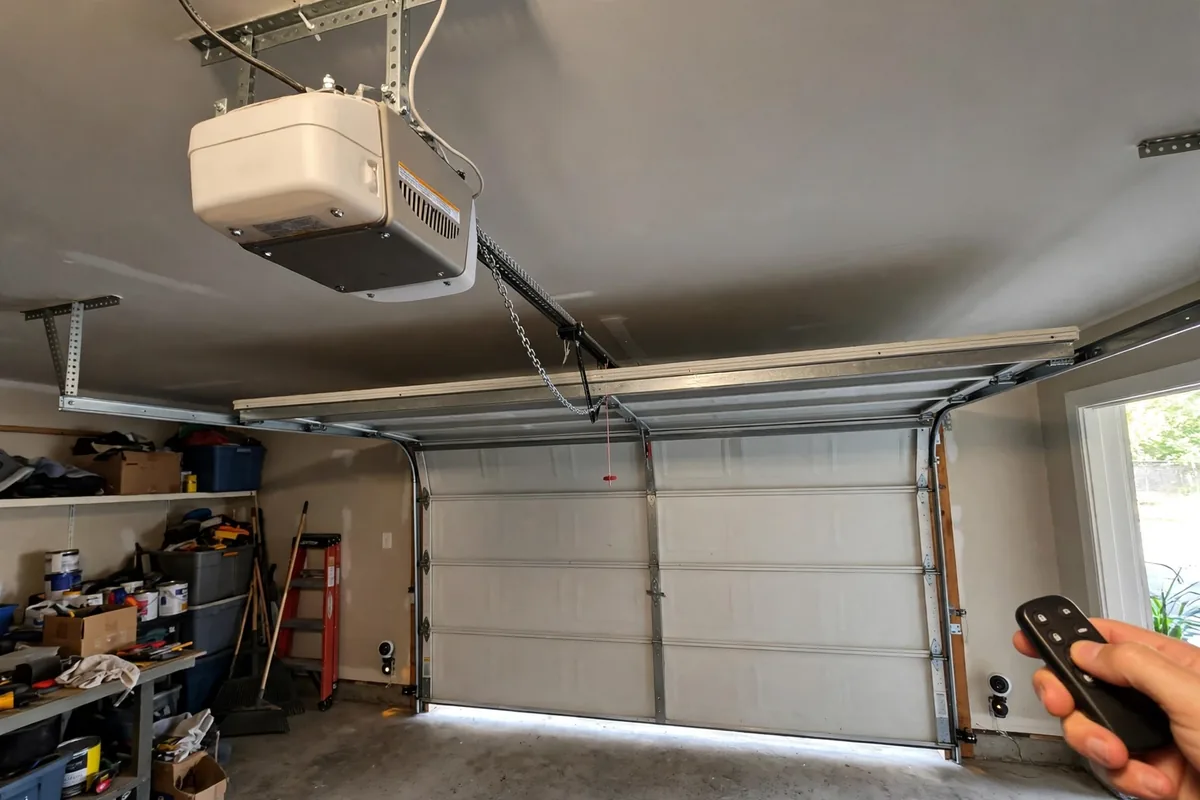
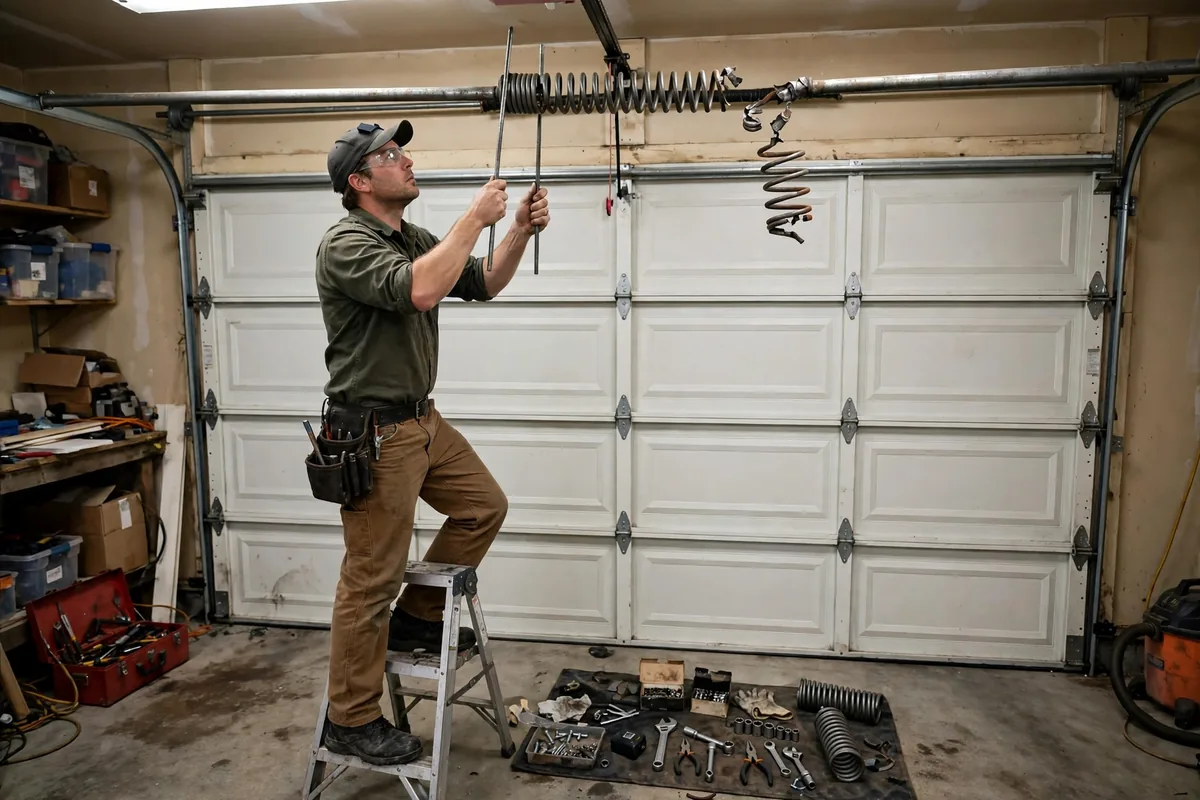
Water pooling by the door, or a seal that is cracked and torn? That is water finding its way in — get it checked before the freeze.
Call Now to Speak to a SpecialistFor local help, start from our Bay State Garage Door Repair Pros homepage, and read our garage door maintenance checklist for the twice-a-year look.
Frequently asked questions about water under the garage door
Why is there water under my garage door after rain?
Usually one of three things: a bottom seal that is cracked, torn, or flattened, so water slips under the door; a driveway that slopes toward the garage, so rain runs straight at the door; or drainage that has nowhere to go, so water pools by the door. A wet line under the door points to the seal, a stream from the driveway points to the slope, and a pool that stays points to drainage.
Can a new bottom seal stop water coming under the garage door?
Yes, when the seal is the cause. A seal that is cracked, torn, flattened, or missing in places lets water in where a sound seal would keep it out, and a new seal fitted on the visit closes that gap. But a seal cannot hold back a stream from a driveway that slopes toward the garage, or fix pooling drainage. If the seal is sound and water still comes in, the cause is the slope or the drainage.
What is a garage door threshold, and does it stop water?
A threshold is a raised rubber lip fitted to the floor across the doorway, so shallow water has to climb over it to get in. It works best on the water that runs in from the driveway: a thin sheet of rainwater or snowmelt, or a driveway that slopes gently toward the garage. It does not stop floodwater, and it does not fix a driveway that drops steeply toward the door.
My driveway slopes toward the garage — what can be done?
Give the water somewhere else to go. A trench drain across the driveway in front of the door catches the water before it reaches the door, and a channel carries it to the side. Regrading the driveway so it falls away from the garage is the bigger fix, and a downspout that empties by the garage should be moved first. These are jobs to discuss on the visit, with the options and the written price before anything is ordered.
When is water under the garage door an emergency?
When the door will not close, or the water keeps coming back. A door that stops short of closing leaves a gap that water, cold air, and leaves come through — and in winter, the water under the seal freezes the door to the floor. A door frozen shut traps the car inside, and an opener that tries to force it open can strip its gear or pull a cable off its drum. Leave it closed and call (833) 563-1552.
About the author
Jude Bray is the lead technician at Bay State Garage Door Repair Pros, with 26 years in the trade. The business holds Massachusetts Home Improvement Contractor (HIC) Registration and Construction Supervisor License (CSL) credentials, plus IDEA garage door certifications.
Call Bay State Garage Door Repair Pros at (833) 563-1552, 24 hours a day, 7 days a week. A seal or threshold fitted now is a small job — a door frozen shut in January is an emergency.
Call Now to Speak to a SpecialistLast updated: November 28, 2026. Author: Jude Bray, Bay State Garage Door Repair Pros. Business address: 98-2 Ames Pl, Lowell, MA 01851. Phone: (833) 563-1552. Email: [email protected]. No prices are quoted here — your exact price is confirmed in writing on site. Photos and illustrations on this page do not show real Bay State jobs or staff.