
Storm Garage Door Guide for Massachusetts
This storm garage door guide for Massachusetts covers what a nor'easter does to a garage door: wind pressure on a large opening, why a closed door protects the house, bracing options, safe manual release during a power outage, and post-storm checks.
In a Massachusetts storm, keep the garage door closed and locked: it is the largest opening in most houses, and if wind gets in through it, the pressure inside can push the roof and walls out. Before a storm, check the seal and sensors and know where the manual release is. After a storm, look for bent panels and tracks, and leave springs, cables, and track work to a technician.
Why a garage door matters so much in a storm
A garage door is usually the biggest single opening in a house, and that size is exactly what makes it vulnerable. Wind pushing on the outside of the door is called positive wind pressure; wind pulling on the other side is negative pressure. Research by the Insurance Institute for Business and Home Safety has found that the bigger the door, the higher the wind pressure it faces, which makes double-wide doors especially vulnerable. When a door fails and blows in or out, the opening it leaves can be as large as 300 square feet, according to storm-preparedness guidance.
That breach is what turns a damaged door into a damaged house. Once wind gets inside, it pressurizes the building the way air inflates a balloon, in the words of Clemson University wind researcher Scott Schiff. In the best case the pressure blows out windows and equalizes; more often it pushes the roof or whole wall sections out. The Federal Emergency Management Agency identifies garage doors as a major source of hurricane damage to homes. A nor'easter is not a hurricane, but the mechanism is the same: high wind, driving rain or snow, and a large door that must hold. Keeping that door closed and sound is therefore not a detail of storm preparation — it is one of the main ways the house envelope stays intact.
Before the storm: checks you can do yourself
Start with the same look-and-listen routine used in our maintenance checklist, but with a storm in mind. Run the door through one full open and close and watch for uneven movement, one side lagging, or a stop at the same point. Check the bottom weather seal and side stripping for gaps, tears, or daylight showing through, because a torn seal lets wind-driven rain and meltwater into the garage and can freeze the door to the floor overnight. Clean the photo-eye safety sensors near the floor with a soft, dry cloth, and clear leaves, grit, and anything stored against the tracks — without pulling, bending, or loosening any track bracket.
Then prepare for the outage that often comes with a nor'easter. Find the red manual release cord on the opener rail now, while the lights are on, and make sure everyone in the household knows where it is. If your opener has a battery backup, check that it is charged; a battery system keeps normal opener controls and safety systems working while charge remains, which is far safer than manual operation in the dark. Move cars, bins, and loose items away from the door's path, and lock any manual slide bolt on the door. If any check finds fraying, rust, a gap in a spring coil, or a door that has gone crooked, stop there and call a technician before the storm arrives — looking is safe, touching those parts is not. For local help, see our pages for garage door repair in Lowell and garage door repair in New Bedford, a coastal city where salt air and storm winds wear doors faster.
Bracing and reinforcement: what the options are
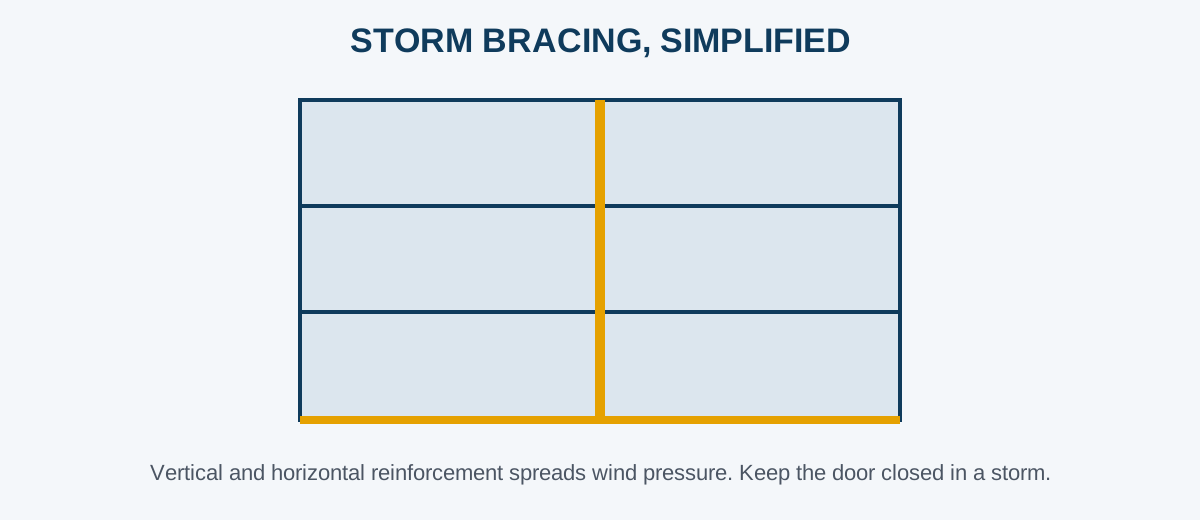
There are two kinds of reinforcement, and the difference matters. Passive systems are built into the door and need no action from you: a wind-resistant door uses heavier vertical stiles, added horizontal reinforcement, and heavier-gauge tracks, hinges, and rollers to carry wind loads into the building's framing. Active systems are fitted before a storm: bracing kits that mount vertical or horizontal braces on the inside of the door, anchored at the floor and the header, and removed again afterwards. Some kits reinforce the tracks as well, since a door is only as strong as the tracks and attachments that hold it to the building.
Either route changes the door's weight and balance, and that is why fitting belongs to a technician. Adding reinforcement changes what the springs must lift, so the springs usually have to change too, and spring work under tension is pro-only work. The same applies to heavier tracks, hinges, and rollers: they must be matched to the door and the opening, or the door can bind, bend a panel, or jump the track. If a reinforcement or replacement changes the opening, the framing, or the wiring, it is a structural or electrical change, and such changes may need town approval under the Massachusetts State Building Code, 780 CMR — ask your town building department first, as our permits guide explains. See panel replacement for how damaged panels are matched and fitted.
During the storm: keep it closed
Once high wind arrives, the rule is simple: keep the door closed and do not open it unless you must. Opening a large door in strong wind puts the full wind load on the panels and tracks at the moment they are least supported, and a door that is already worn can come off its tracks. If you need to get a car out, do it before the worst of the wind, and close and lock the door again straight away. Do not stand under or beside the door while it moves in a storm, and do not try to hold a rattling door shut by hand — if the door is flexing, bowing, or making new loud noises, step away from it and wait for the wind to drop. A door that survives a storm with a bent panel or a pulled track is a repair job; a person standing next to a failing door is a safety risk.
Power outage: using the manual release safely
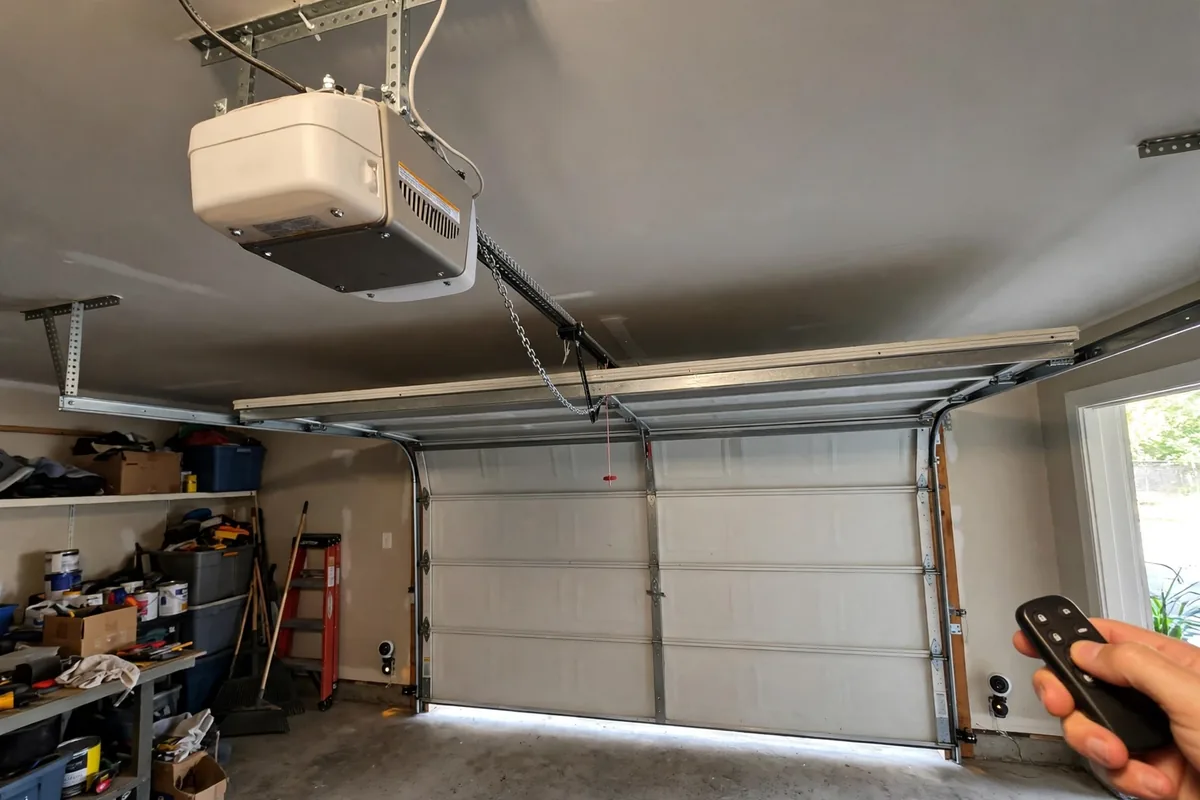
When the power goes out, the opener stops working and the door stays where it is until you release it by hand. The manual release is the red cord with a handle hanging from the opener rail, and every modern opener has one. Use it only when the door is fully closed, and only when the springs look intact — if there is a gap in a spring coil, or you heard a loud bang recently, do not pull the cord, because a door with a broken spring is extremely heavy and can drop. Make sure nobody is standing under the door, then pull the cord straight down until it clicks and the trolley disconnects from the opener.
Lift the door by hand from the bottom edge or handle, keeping it level in the tracks and your fingers away from the gaps between panels. A balanced door should rise with moderate effort and stay open on its own; if it feels heavy, drifts down, or will not move, stop and lower it gently — that heaviness means a spring or cable problem, and forcing it can cause injury. Close the door the same way, and lock it with the manual slide bolt if you leave it disconnected, since a disconnected door can be lifted from outside. When power returns, close the door fully by hand first, then pull the release cord toward the door and run the opener until the trolley re-latches. If the door will not re-engage, or the opener strains, call (833) 563-1552, Monday to Saturday, 9:00 AM to 6:00 PM.
After the storm: damage checks, in order
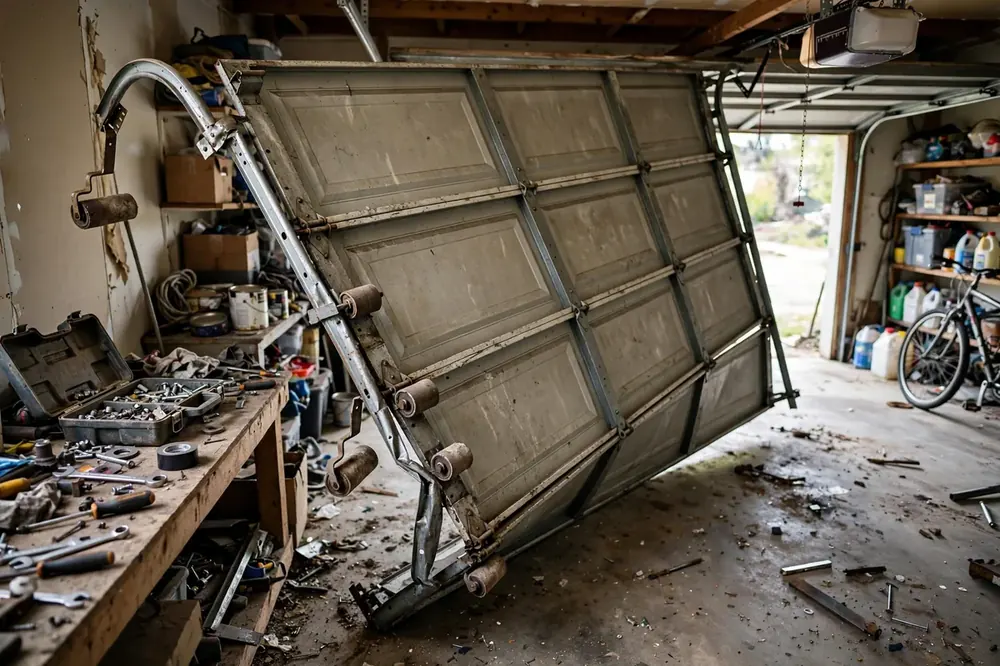
Once the wind has dropped, check the door from outside first, before running it. Look for dented or cracked panels, especially at the bottom where wind-driven debris hits, and for tracks pulled away from the wall or bent at the curve. Check that the door sits level in the opening and that the bottom seal is still in place — storm water and road salt grime also coat the photo-eye sensors, so wipe them clean. Then run the door once, standing clear of its path, and listen for grinding, scraping, or a new stop at the same point. If the door is crooked, off its tracks, or the opener hums without moving it, stop and do not force it: a door that has jumped its tracks needs off-track repair, and forcing it can bend panels and tracks further.
Also check what the storm left behind rather than what it broke. Clear debris, leaves, and grit from the track area without moving the tracks themselves, and look for water stains or salt residue on the bottom brackets and cables, which rust faster after coastal storms. Note anything new — the date of the storm, the noise, the spot where the door stops — and hand that note to the technician, because a short history helps find the worn part faster than a general report that the door "seems off". Our garage door maintenance checklist covers the yearly routine that keeps a storm-worn door in shape between storms.
What to leave to a technician after a storm
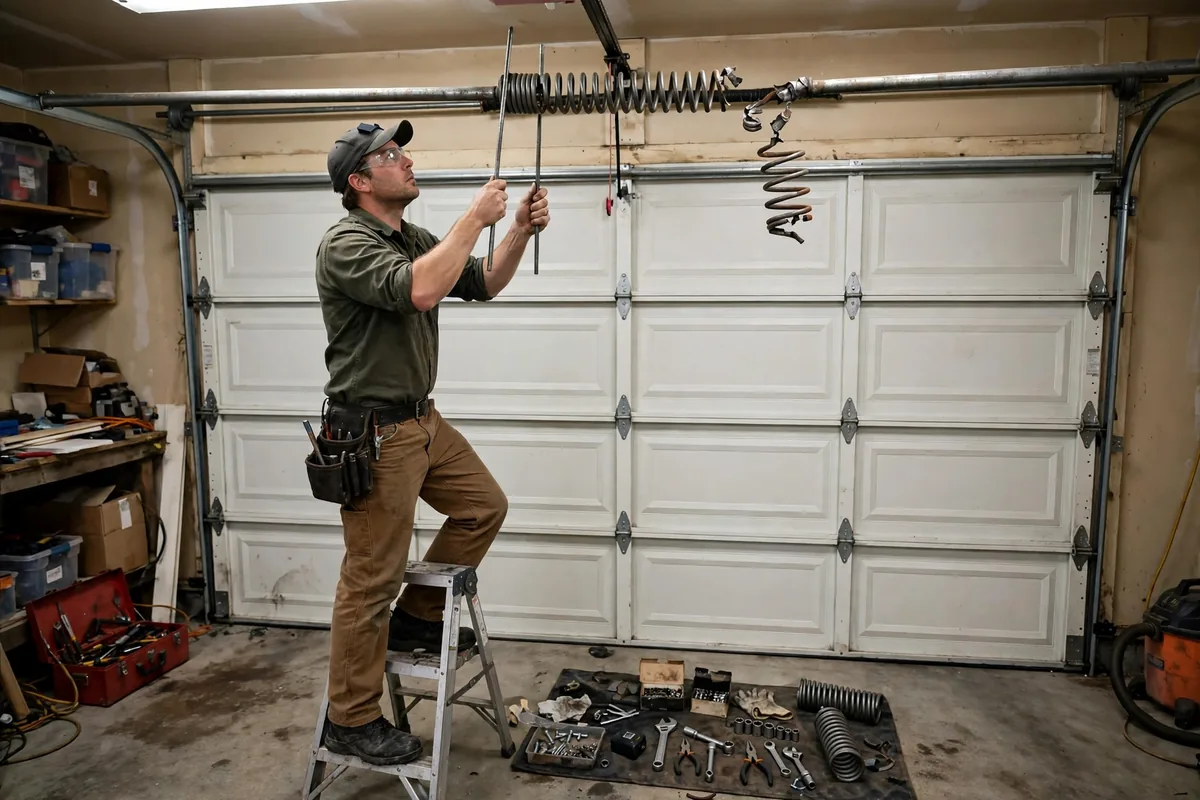
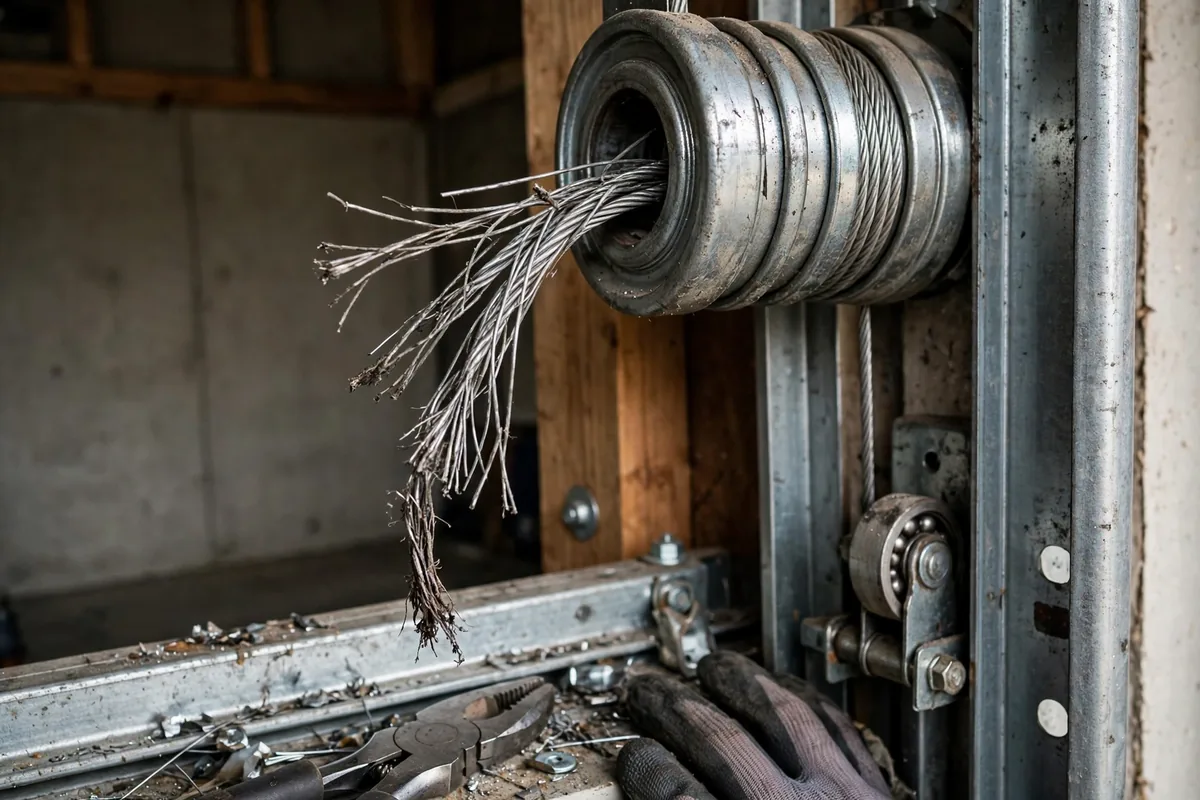
Storm damage and storm wear look similar but are not the same job. A homeowner can clear debris, clean sensors, check the seal, and note new noises. A technician should handle anything involving spring tension, lift cables, track alignment, balance, bent or buckled panels, and opener force settings. Springs store enough energy to lift a door weighing hundreds of pounds, and adjusting or replacing one without the right winding bars and training can release that energy suddenly. Lift cables are under the same tension, and a frayed cable can snap while it is being handled. Track realignment changes the path the whole door follows, and a track set even slightly out of true can bind the rollers or let the door jump the track again.
That line matters more after a storm, because storm damage is often hidden: a panel that looks only dented can have a bent stile behind it, and a track that looks straight can have a pulled bracket at the top. A technician checks balance with the opener disconnected, inspects cables, drums, and bottom brackets, and tests the auto-reverse properly before the door goes back into daily use. If a guide tells you to adjust spring tension or straighten a track yourself, close it — those jobs belong on the pro-only list, and so does anything that asks you to stand under a disconnected door.
Garage door storm work
Storm damage on your door? Call (833) 563-1552, Monday to Saturday, 9:00 AM to 6:00 PM, and describe what the door is doing.
Call (833) 563-1552For local help, start from our Bay State Garage Door Repair Pros homepage, see our pages for garage door repair in Lowell and garage door repair in New Bedford, and read Garage Door Maintenance Checklist next.
Frequently asked questions about storm garage doors
Should I leave my garage door open or closed during a storm?
Closed, and locked if your door has a manual lock. A closed door keeps wind out of the garage, so the house envelope stays intact. An open or partly open door lets wind pressurize the garage, which is how roofs and walls get pushed out from inside during a major windstorm.
Can I use the manual release during a power outage in a storm?
Yes, but only when the door is fully closed and the springs look intact. Pull the red release cord straight down, lift the door by hand, and lock it with the manual lock if you leave it disconnected. Never pull the release under a stuck or partly open door, and never force a door that feels heavy.
What is garage door bracing, and does it need a technician?
Bracing adds strength to the door against wind pressure, usually with vertical or horizontal braces fitted inside the door and anchored at the floor and header. Fitting braces changes how the door is balanced, so the fitting and any spring adjustment belong to a technician, not a homeowner job.
What should I check on my garage door after a storm?
Look for bent or dented panels, tracks pulled away from the wall, a door that sits crooked, sensors that no longer line up, and an opener that strains or reverses. Clear debris from the track area without moving the tracks, and call a technician for anything bent, frayed, or out of alignment.
Do I need town approval to reinforce or replace my garage door?
A like-for-like repair usually does not, but structural or electrical changes may need town approval under the Massachusetts State Building Code, 780 CMR. Ask your town building department before a reinforcement or replacement that changes the opening, the framing, or the wiring.