
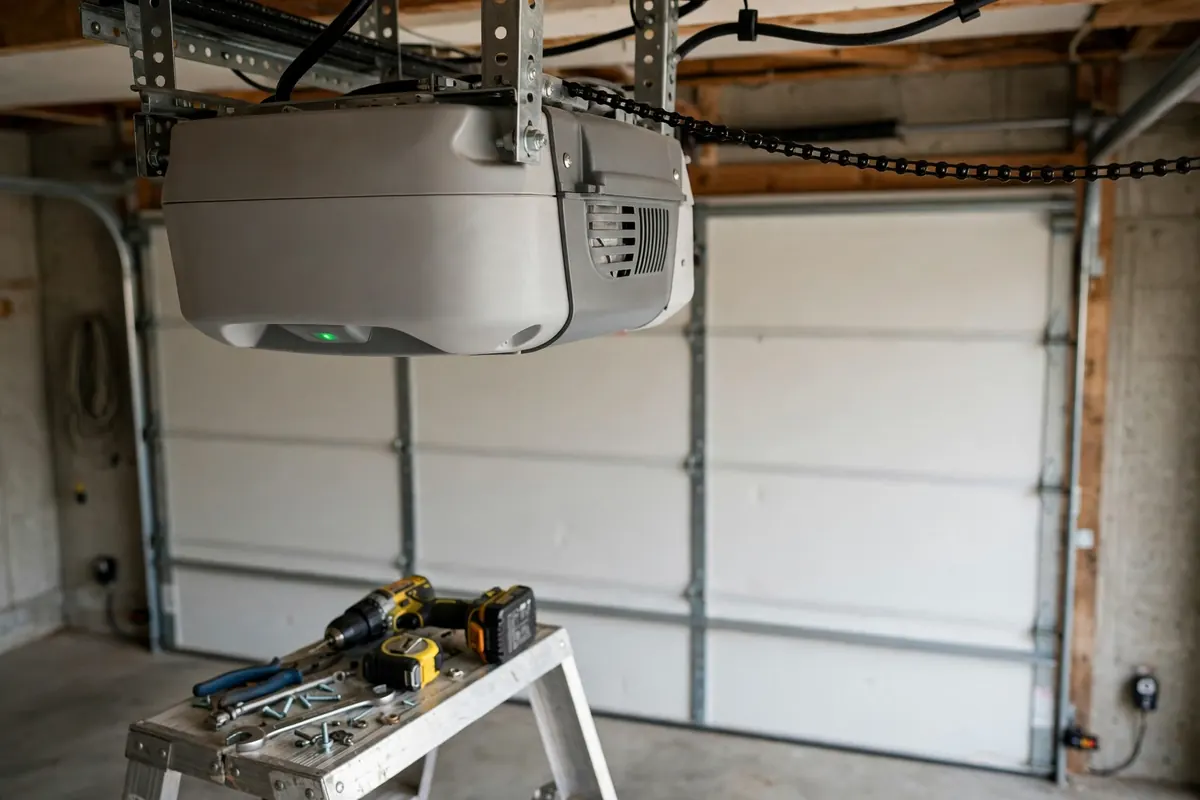
Opener problems are often simpler than they look — and roughly half of the openers some companies are called to replace do not need replacing at all, according to the Lowell page research. They need a gear, a sensor fix, or a limit adjustment. That is why we start with diagnosis, not a new opener quote.
Safe opener checks first: power, photo-eye sensors, remote, and keypad
- Power: is the opener plugged in, and is the circuit on? Check for a tripped breaker or a pulled plug.
- Sensors: are the small photo-eye sensors near the floor blocked, dusty, or knocked out of alignment? Clear any obvious blockage.
- Remote and keypad: try a fresh remote battery, and check whether the emergency release cord was pulled by accident.
- Door by hand: only if the door moves smoothly and there is no broken spring or loose cable — disconnect and lift gently. If the door is heavy, crooked, or stuck, stop and call.
If the opener hums, grinds, or runs without moving the door after those checks, that points to a gear, belt, chain, or board problem inside the opener. If the door reverses for no reason, that points to a sensor, track, or balance problem. Both need an on-site diagnosis, not repeated button presses.
Opener fault finder: what you can safely check, and what needs a technician
Use this table before you call. The middle column lists checks that are safe for a homeowner: power, batteries, sensor lenses, and obstructions. The right column is the stop line: if your symptom falls there, stop pressing the button and call, because the fault involves parts under tension, wiring, or the opener's internals.
| Symptom | Likely cause | Safe check you can do | Call a technician when |
|---|---|---|---|
| Nothing happens, no lights or sound | Power loss, tripped breaker, or tripped outlet | Check the plug, the breaker, and any reset button on the ceiling outlet, then try the wall button | Power is present but the opener stays dead, which points to the board or motor |
| Wall button works, remote does not | Dead remote battery, lock mode, or lost pairing | Fit a fresh remote battery, check the wall control for a lock setting, and try from closer range | A new battery and a working wall button still leave the remote dead |
| Door starts to close, then reverses | Blocked or misaligned photo-eye sensors, or sunlight glare on a lens | Clear the opening, wipe both sensor lenses with a dry cloth, and look for a blinking sensor light | Lenses are clean and the beam path is clear but the door keeps reversing |
| Door only closes while you hold the wall button | Sensor fault overriding normal closing | Same sensor checks as above: clear path, clean lenses, steady lights | The hold-to-close behaviour continues, which means the sensors need realignment or replacement |
| Opener hums or clicks, door does not move | Worn gear, slipped chain or belt, or board fault | Confirm power only, then stop pressing the button | Always a technician job: gears, chains, and boards are opener internals |
| Door moves halfway, then stops | Travel or force limits, balance, or track drag | Look for a visible obstruction in the opening only, and do not force the door | The door stops at the same point repeatedly, or feels heavy or uneven |
| Grinding or scraping noise | Worn rollers, track damage, or drive wear | Stop using the door and note where the noise comes from | Always a technician job, and sooner rather than later: grinding wears parts fast |
| Keypad code is not accepted | Weak keypad battery, mis-entered code, or receiver fault | Re-enter the code slowly, and fit a fresh keypad battery if the keypad takes one | The correct code is still rejected, which points to the keypad or receiver |
Whatever the symptom, three rules always apply. Never touch springs, cables, or track hardware: those parts carry high tension and serious weight, and no saving on a callout is worth that risk. If the door is heavy, crooked, off its track, or stuck open, leave it alone and call rather than forcing it. And use the manual release cord only when the door is fully closed: pulling it under a stuck or partly open door can let a heavy door drop.
What we diagnose and repair: opener motor, chain drive, belt drive, gears, and sensors
| Symptom | Likely cause | What we check first |
|---|---|---|
| Opener hums or clicks, door stays still | Gear, belt, chain, or board | Gear and drive, then board and motor |
| Door reverses for no reason | Sensor alignment, track, or balance | Photo-eyes, track, and balance test |
| Door grinds or moves in jerks | Roller, track, or drive wear | Rollers, track, and drive chain/belt |
| Remote or keypad does not work, wall button does | Remote, battery, or pairing | Battery, pairing, and receiver |
| Opener dead, no lights or sound | Power, board, or motor | Power, circuit, and board |
We repair common brands including LiftMaster, Chamberlain, and Genie, and we pair remotes and keypads before we leave. Tell us the brand on the opener or door when you call, and we will bring the matching parts where possible. Opener types covered in research include chain, belt, screw, and jackshaft drives — the right drive depends on noise, headroom, and door weight, and we will tell you which one yours is before you agree to a new opener.
Repair or replace your garage door opener? Motor, rail, and sensor check
| Repair is usually right if… | Replacement is usually right if… |
|---|---|
| One part failed — a gear, sensor, belt, or board — and the motor is sound. | The motor, board, and drive are all failing, or parts are no longer available. |
| The door itself is balanced and moves smoothly by hand. | The door is unbalanced, off track, or needs spring and cable work first. |
| You want to keep costs down and the opener has life left in it. | You need quieter operation, battery backup, or a jackshaft unit for low headroom. |
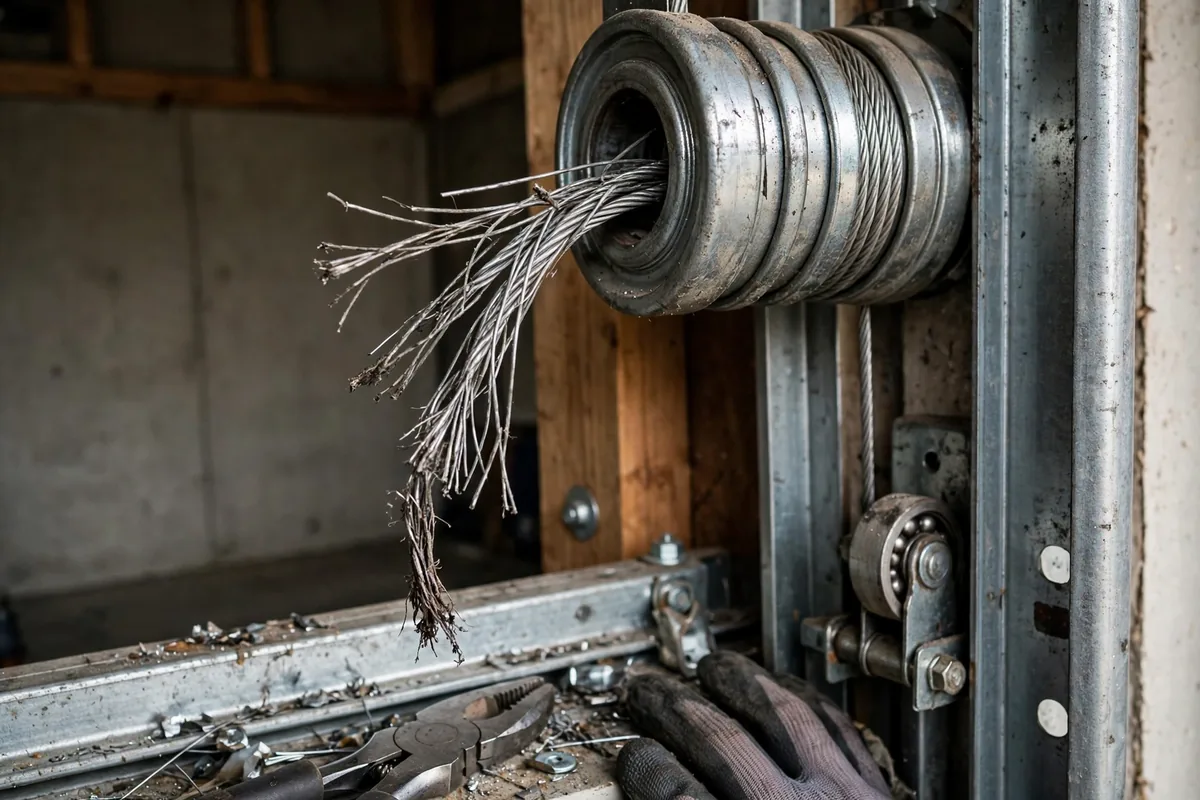
A new opener will not fix a broken spring, a snapped cable, or a bent track. If those are present, they are fixed first — see our garage door spring replacement service and our garage door cable repair service for that detail. For city-specific faults, including detached Lowell garages with no reliable circuit for an opener, see our garage door repair Lowell MA page. For the full list, see our garage door services hub, and for the statewide picture, start from the Bay State Garage Door Repair Pros homepage.
How much does opener repair cost in Massachusetts?
No Bay State opener price is published here, because no Bay State price range was supplied. Planning ranges reported by other Massachusetts sources put opener repair at $150 to $400, usually 1–2 hours on site. A new opener installation is a separate job with its own part cost — competitor-reported installation figures vary widely by drive type and features, so we confirm any installation price in writing on site, not over the phone. Your exact repair price depends on the part needed, the opener brand and drive type, and whether the door also needs spring, cable, or track work.
In Massachusetts, HIC registration and a Construction Supervisor License are different credentials and are not interchangeable, and the official Massachusetts Home Improvement Contractor Registration page explains that distinction in plain language. We hold HIC Registration and a CSL, along with IDEA residential and commercial garage door certifications. Ask us about warranty terms for parts and work on your specific job when you call — we will give you a straight answer for that job, not a blanket promise that covers everything.
Not sure what's wrong with your door? Call and describe it — we'll give you a clear next step.
Call (833) 563-1552Related parts checked on an opener visit
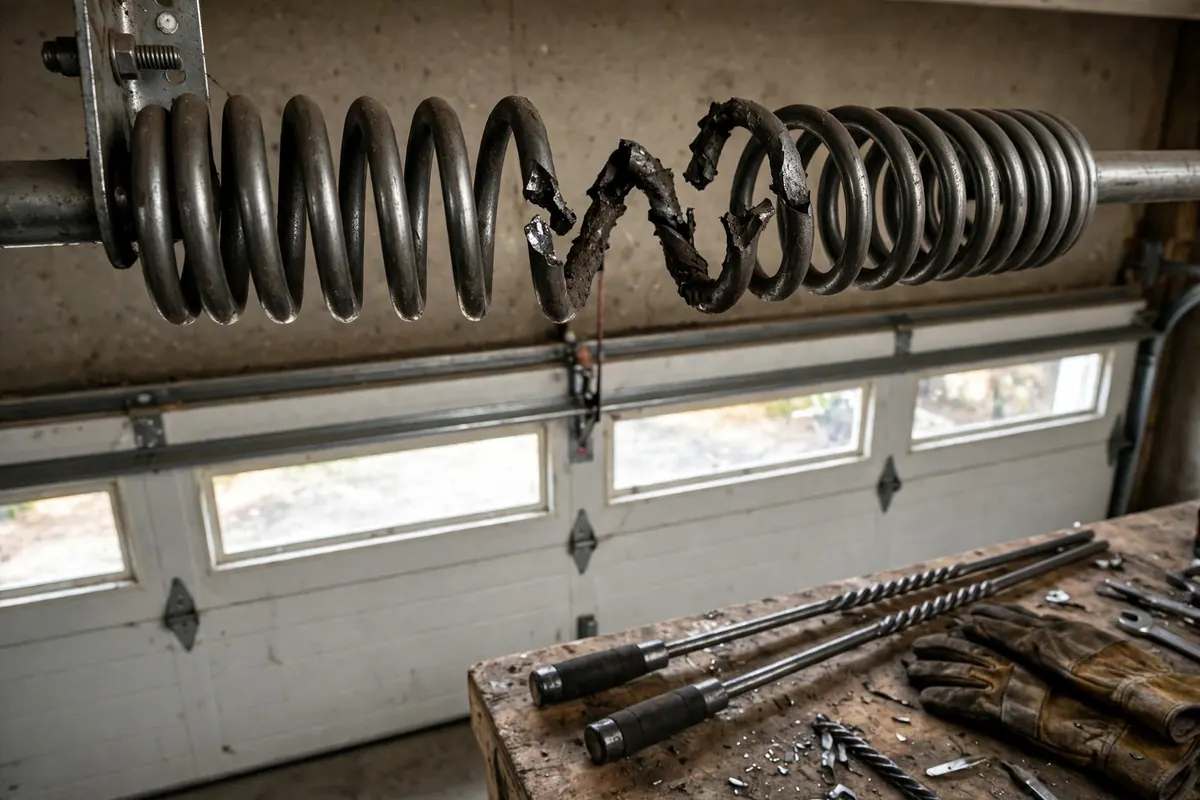
An opener fault is often a door fault in disguise. We check extension springs and torsion springs, lift cables, hinges, panels, rollers, tracks, and weather seals, plus winding bars and shaft alignment where a spring is involved, before deciding whether the opener itself needs repair or replacement. Service areas: Lowell (01850, 01851, 01852, 01854), Fall River (02720, 02721, 02723, 02724), New Bedford (02740, 02744, 02745, 02746), Lynn (01901, 01902, 01904, 01905), and Brockton (02301, 02302). Call to confirm your ZIP — we will tell you straight away whether we can help.
Opener repair work: motors, rails, remotes, and safety sensors
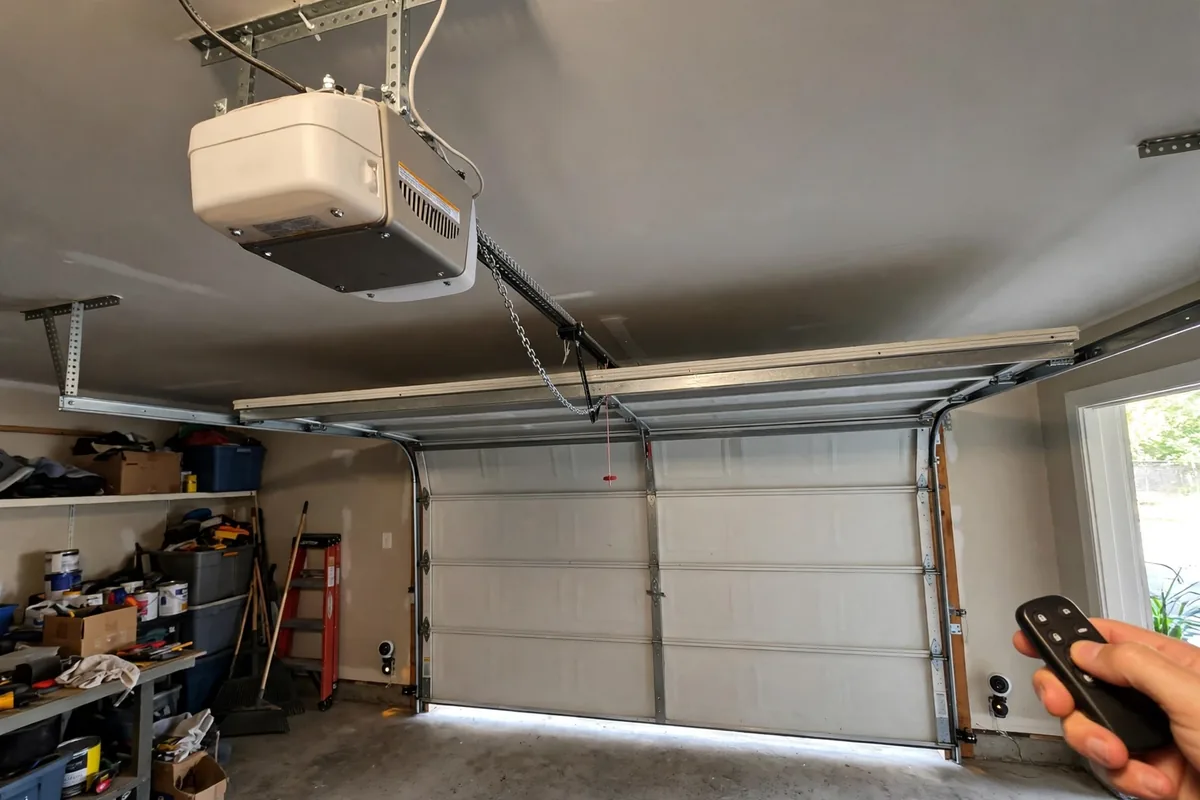
These images show the kind of problem and repair this page covers. They are illustrations, not photos of real Bay State jobs.
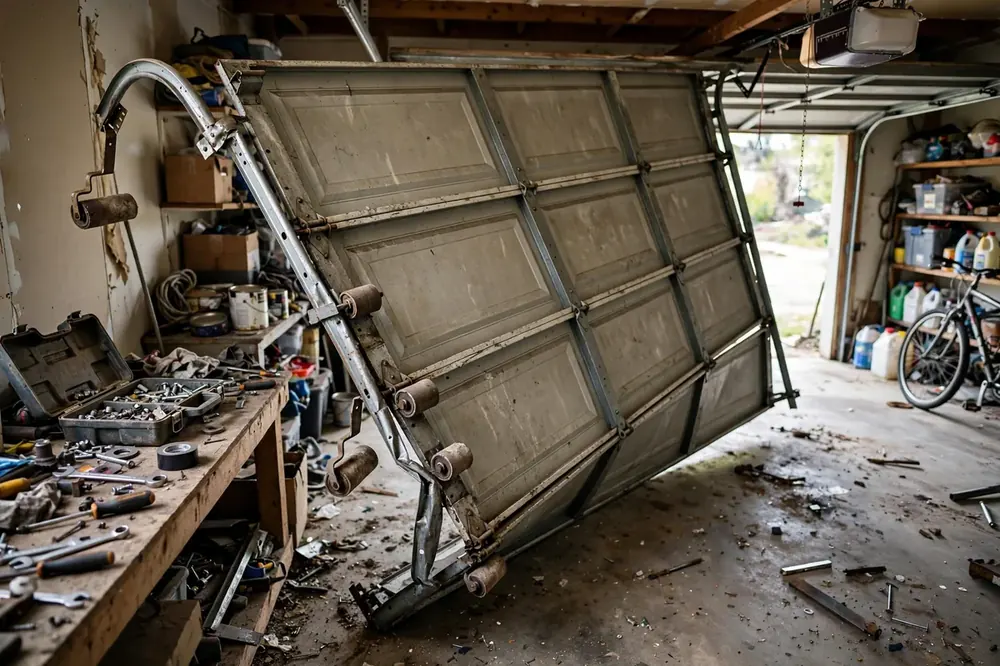
What fails inside a garage door opener, and what the visit checks
An opener is several parts working together, and the failed part decides whether repair is quick or the opener is past its best. The motor drives the door through a chain, belt, or jackshaft; a circuit board takes the signal from the remote and keypad; gears turn the drive; and photo-eye sensors at the bottom of the tracks tell the opener the path is clear.
When an opener hums or clicks but the door does not move, the problem is often in the drive: a worn gear, a slipped chain, or a motor that has lost power. When the remote works sometimes and not others, the cause is more often the remote battery, the keypad, or interference, and those are the cheapest things to rule out first. When the door reverses for no clear reason, the photo-eyes are the first suspect: dirt on a sensor, a sensor knocked out of line, or something blocking the beam.
A technician's visit usually follows that order: power and remote first, then the sensors, then the drive and the board. Wiring and board work are not homeowner jobs, and a board that has failed more than once, or an opener so old that parts are hard to find, is when replacement starts to make more sense than another repair. That decision is made on the visit, with the door's age and parts availability in front of you, not guessed over the phone.
Frequently asked questions about garage door opener repair in Massachusetts
Why does my opener hum but the door does not move?
That usually points to a gear, belt, chain, or board problem inside the opener, or a door that is stuck, off track, or too heavy because of a spring problem. Check power and sensor blockage first, then call if it does not clear — do not keep running the opener, or you can damage the drive further.
Why does my door reverse for no reason?
Most often a photo-eye sensor is blocked, dusty, or out of alignment, or the track or balance is off. Clear any obvious blockage from the sensors near the floor, then call if the door still reverses — the balance and track need checking on site.
Do you pair remotes and keypads?
Yes. We pair remotes and keypads before we leave, and we test the door's balance and safety sensors after the repair. Tell us how many remotes and keypads you use when you call, so we can allow time for pairing.
Do I need a permit for opener work in Massachusetts?
For most routine repairs — springs, cables, rollers, openers, and like-for-like parts — a permit is not usually required. If work changes the structure, the door opening, or the electrical wiring for a new opener, your town's building department may require approval. We will tell you on site if your job falls into that second group.
What if my detached garage has no reliable power for an opener?
Plenty of detached garages, especially older Lowell garages, have no reliable circuit for an opener. We will tell you honestly if what you need first is an electrician, rather than selling you an opener that cannot run reliably.
Opener humming, grinding, or dead? Call for diagnosis first.
Call Bay State Garage Door Repair Pros at (833) 563-1552, Monday through Saturday, 9:00 AM to 6:00 PM, across our Massachusetts service areas.
Last updated: November 2, 2026. Author: Jude Bray, Bay State Garage Door Repair Pros. Business address: 98-2 Ames Pl, Lowell, MA 01851. Phone: (833) 563-1552. Email: [email protected]. Prices above are planning ranges reported by other sources, not a quote for your door. Images are illustrations, not photos of real jobs or real staff.