
Garage Door Repair Cost Estimator
Get a realistic planning range for your garage door repair in Massachusetts before you call. Pick the problem and your door size, and this free-to-use estimator shows other-source ranges, what moves the price, and whether repair usually wins — with your exact price confirmed on site before work starts.
Estimate your repair cost
This estimator is free to use. Pick the problem and your door size, then choose “Get my planning range”. You will see a planning range reported by other sources, what moves the price, and whether repair usually makes sense. It is not a Bay State price and not a quote: your exact price is confirmed on site before work starts. See all our free tools.
Your planning range
Your exact price is confirmed on site before work starts.
Planning ranges reported by other sources, not Bay State prices.
How this estimator works
Most garage door repair questions start the same way: something broke, and you want to know whether the fix is a small job or a big one before you call. This estimator answers that planning question honestly. It does not guess a price for your door, because no tool can do that without seeing the door. Instead, it takes the two facts that move the price most — what broke, and whether your door is single or double width — and shows the planning range that other Massachusetts sources report for that kind of job, together with what would push your price toward the top or the bottom of the range.
Use it in three steps. First, pick the problem that matches what your door is doing. A loud bang followed by a door that will not lift points to a spring; a door hanging crooked or dropping on one side points to a cable or a track; a door that hums, clicks, or does nothing points to the opener. If you are not sure which problem fits, pick the closest one and describe the symptom on the call — the description matters more than the label. Second, pick your door size: single means one car wide, double means two cars wide. Third, read the result as a planning range, not a promise. The range helps you budget and helps you judge whether a quote you receive elsewhere sits inside the usual band or far outside it.
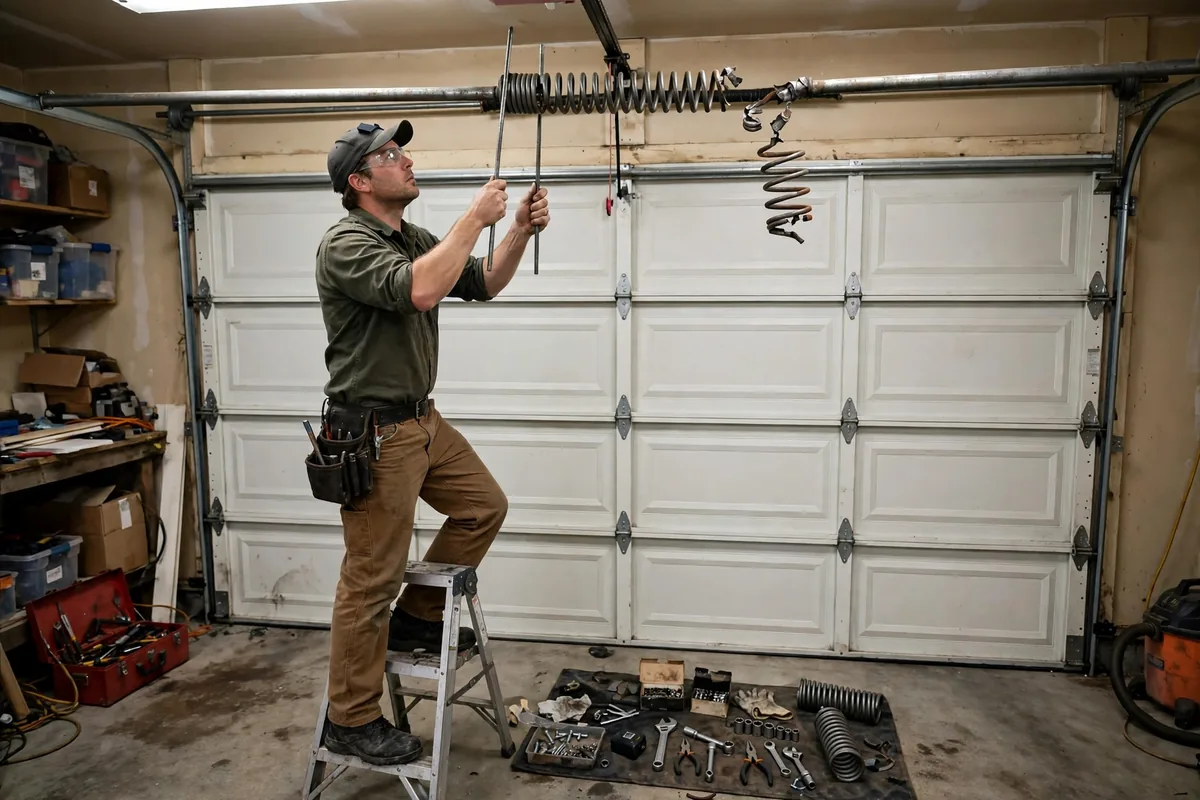
One safety note comes before everything else. Springs and cables hold high tension, and a door with a broken spring carries its full weight. Do not try to lift it, wind it, or adjust it yourself. Leave the door closed, keep the area clear, and call. The estimator will never ask you to do repair work yourself, and nothing on this page is a repair instruction.
Planning ranges at a glance
The bars below show the same other-source planning ranges as the table further down this page, drawn on one scale so you can compare jobs at a glance. A longer bar means a wider range, not a worse problem: panel work has the widest range because material and matching vary so much, while a cable job has a narrow range because the part and the labour are well understood.
Diagram: planning ranges reported by other sources, not Bay State prices. Scale $0–$1,000. Roller and noisy-door jobs have no published range on this site, so they have no bar — see the table below.
What changes the price most
The part that failed is the biggest factor. Springs, cables, rollers, panels, and opener motors all sit in different price bands, and a job that needs two parts costs more than a job that needs one. That is why the estimator asks for the problem first: the part sets the band, and everything else moves the price inside it. A spring job and a panel job are not comparable, even when the symptom — a door that will not move — looks the same from the outside.
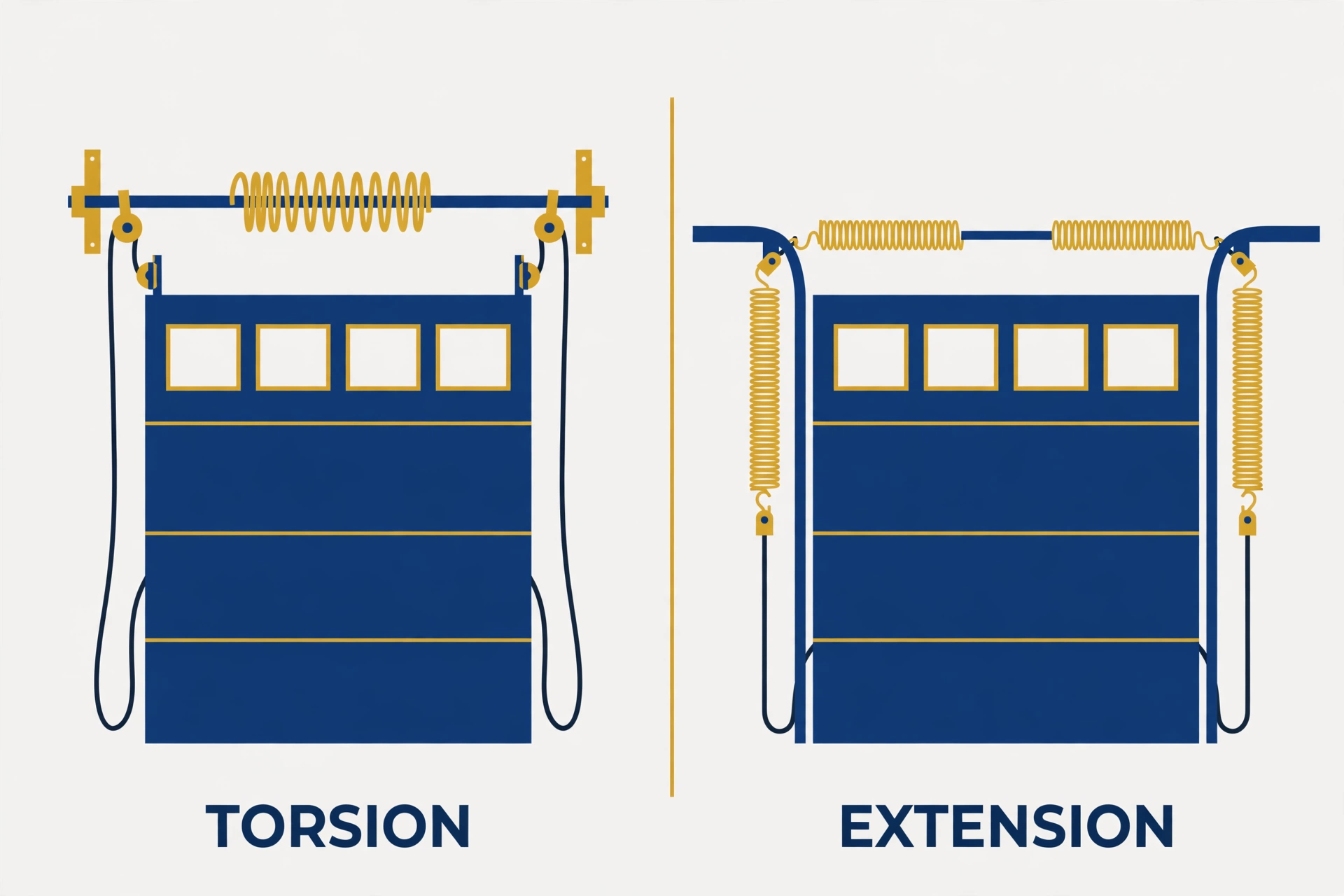
Door size and weight come next. A double door uses larger panels, longer springs, and more labour than a single door, and its springs are often replaced as a pair even when only one has broken, because the second spring has done the same number of cycles and is likely to fail soon after. Replacing both in one visit saves a second call-out, which is why the estimator shows a pair range for double-door spring jobs. For other jobs, size moves the price inside the range rather than changing the range itself: a heavier door needs heavier parts and more time, but the job is the same kind of job.
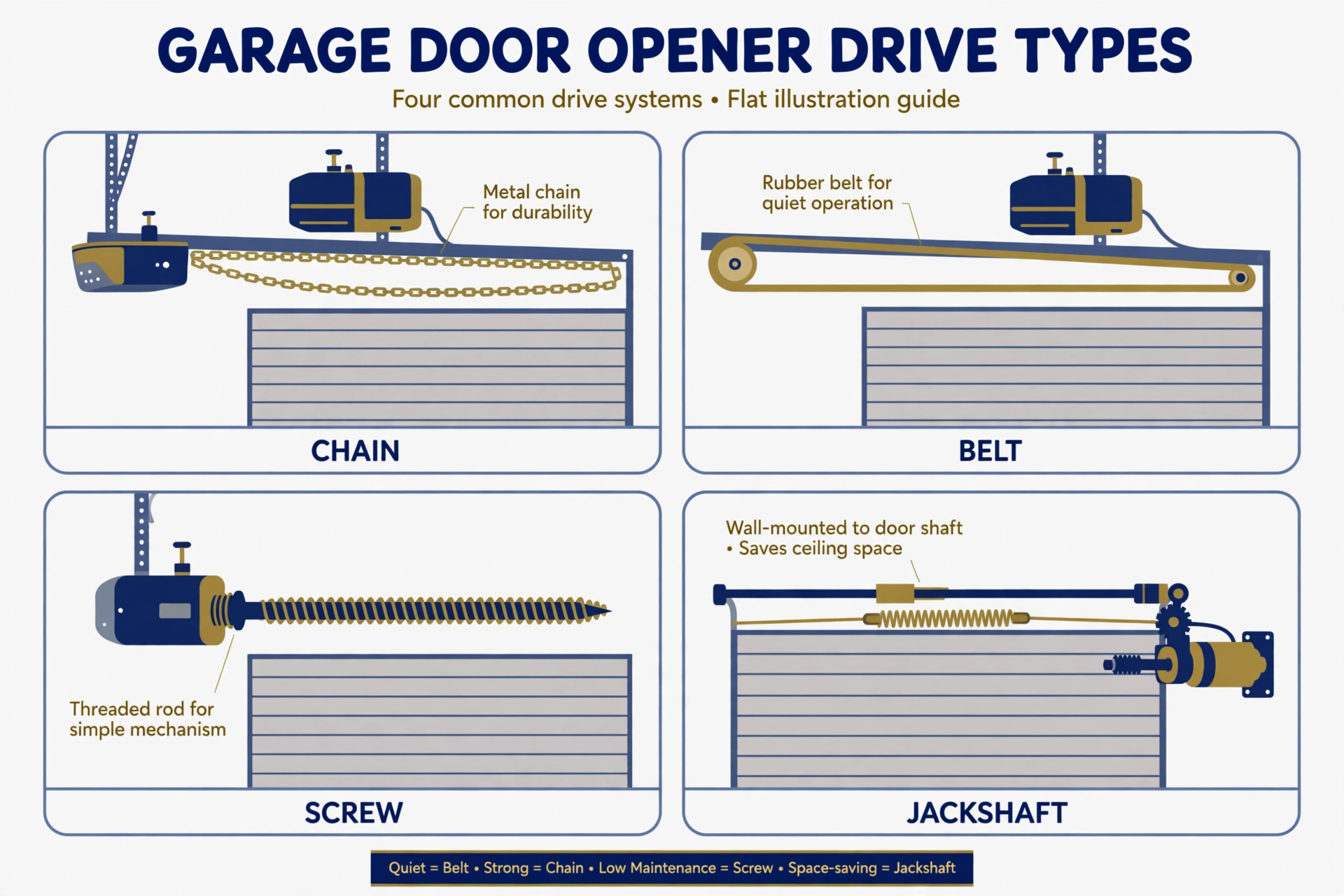
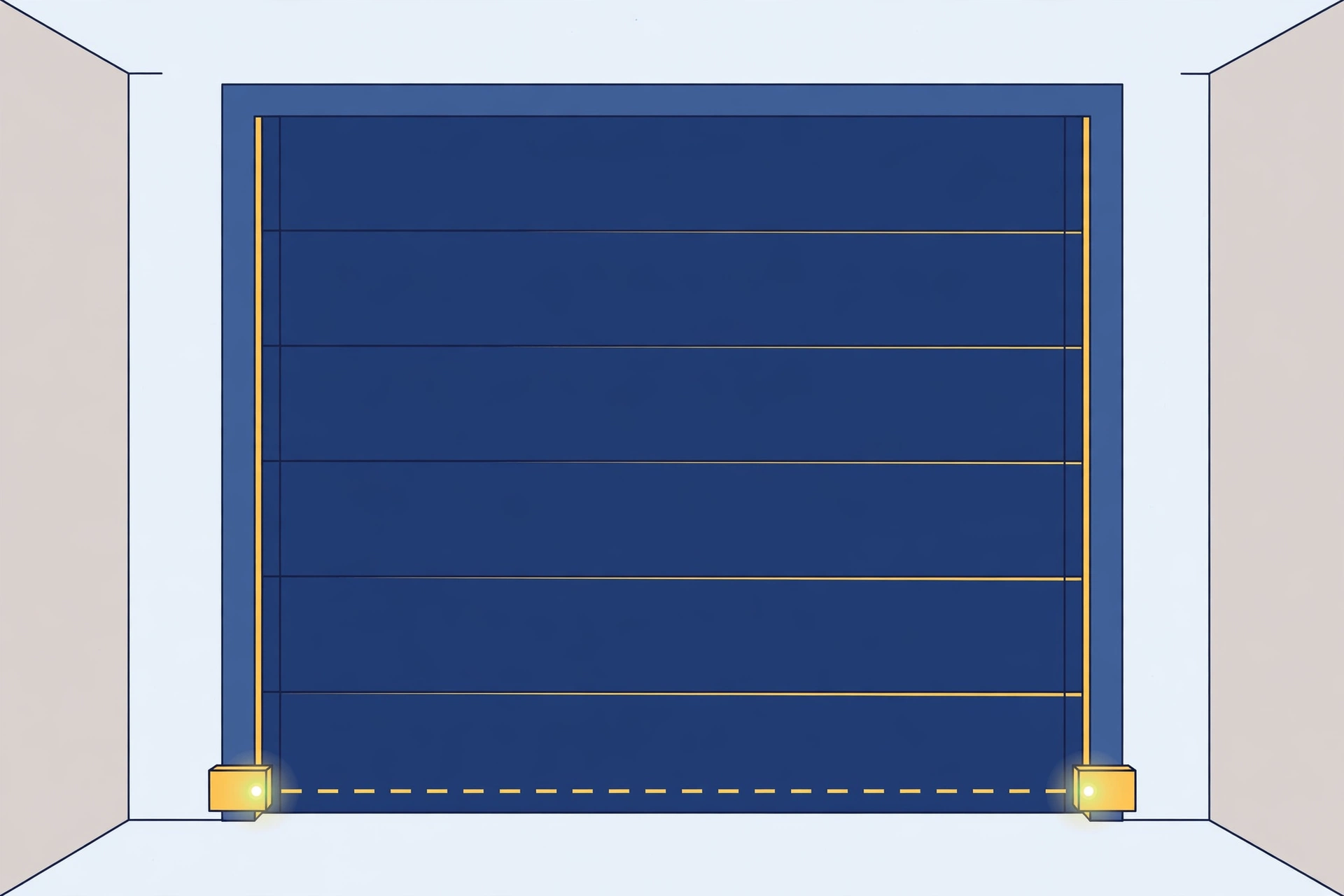
Access and condition matter more than most people expect. A door in a tight garage with stored items blocking the tracks, a rusted track that needs straightening as well as a roller, or an opener mounted high in a finished ceiling can all add time. Age matters too: parts for a current sectional door are usually available quickly, while parts for a discontinued door may need ordering and can cost more. For panels, matching is the deciding factor — a replacement panel must match by maker, model, size, and colour, or it will stand out and may not seal properly. For openers, the brand and drive type matter: a sensor realignment costs far less than a motor replacement, even though both present as “the opener stopped working”.
Planning ranges by repair type
The table below lists every problem in the estimator, with the planning range other sources report and what moves the price for that job. Read it alongside the estimator result: the table is the full picture, the estimator is your shortcut to the row that fits your door. For the full cost discussion, including Boston and Fall River source figures, see our garage door repair cost guide for Massachusetts. For how spring jobs are priced by factor, see spring replacement; for motor, gear, and sensor work, see opener repair.
| Problem | Planning range (other sources) | What moves the price |
|---|---|---|
| Broken torsion spring, single door | $200–$350 installed | Door weight, spring size, single vs pair |
| Broken spring, double door (pair) | $300–$500 | Door weight, cycle rating, both springs in one visit |
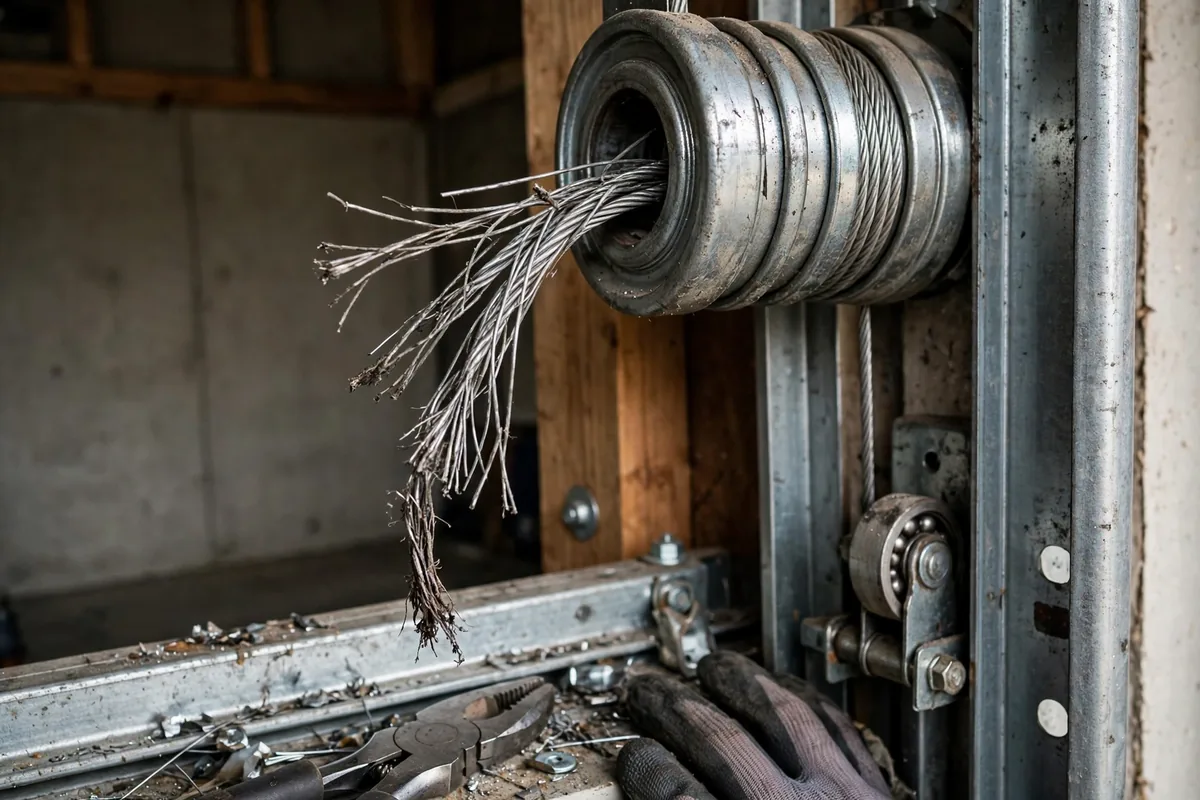
| Snapped or frayed cable | $150–$250 | Cable type, drum condition, spring condition, door size and weight |
| Opener not working | $150–$400 | Part needed, opener brand and drive type, related spring or cable work |
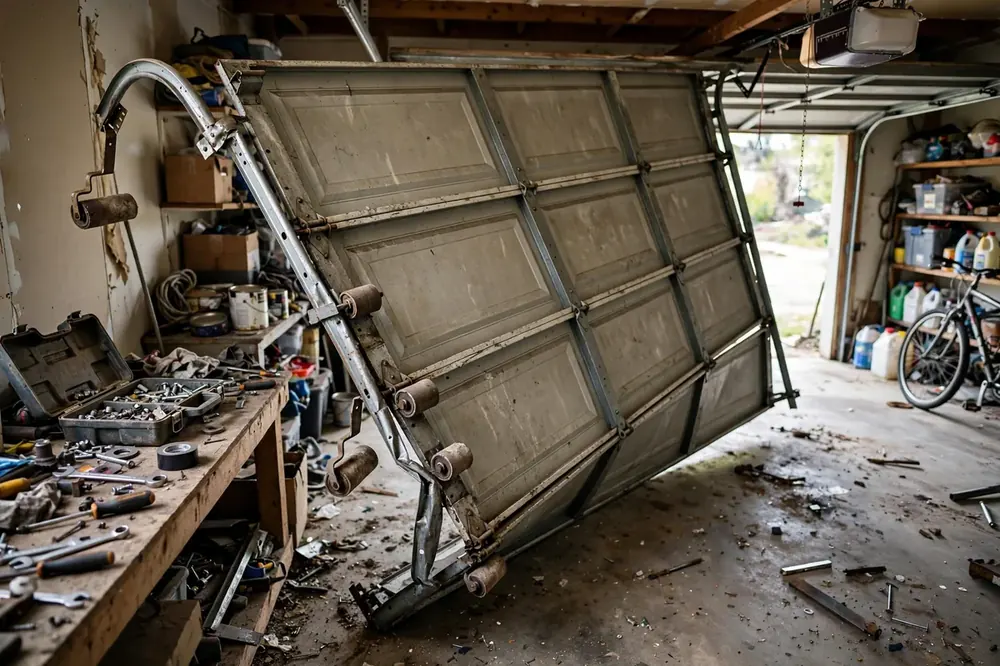
| Door off track | $150–$300 | Realignment vs roller vs bent track, track condition |
| Dented or damaged panel (single panel) | $250–$900 | Material, door width, whether a matching panel is still made |
| Worn rollers or noisy door | No published range — factors + call | Roller and track condition, number of rollers, door size and weight |
| Tune-up and maintenance | $100–$250 | Door size, condition, parts found worn during the check |
All figures are planning ranges reported by other sources, not Bay State prices. Your exact price is confirmed on site before work starts.
Repair or replace: the short version
Most garage door problems are part problems, not door problems. A broken spring, a snapped cable, a worn roller, or a dead opener can usually be repaired without replacing the door, and in most cases that is the sensible choice. The estimator reflects that: for a single part failure, the repair-vs-replace hint says repair usually wins, because one part rarely justifies a new door. The exception is when several major parts fail at once — then it is worth asking us to compare the combined repair against replacement before agreeing to anything.
Panels follow a clearer rule, and it is the one place where the estimator gives a firmer steer. One or two damaged panels: repair usually wins, because a matching section can be fitted for a fraction of a new door. Three or more damaged panels: price a new door, because the parts and labour often approach half the cost of a new one, and you would still have an old door with old springs, cables, and opener behind the new panels. The same logic applies when the frame is bent, when matching parts are discontinued, or when repairs approach half the price of a new door. For the full decision framework, read our repair vs replace guide.
What to tell us on the call
The estimator gives you a planning range; the call gives you an exact price. The most useful call is short and specific. Start with the symptom — what the door does, when it started, and whether one side moves before the other — then the door itself: single or double, sectional or tilt-up if you know, and roughly how old it is. Mention anything you have already checked, such as cleaned sensors or cleared tracks, so that ground is not covered twice. That description lets us work out which part is most likely involved and what the visit will need to cover.
On the call, ask for the same three things every time. First, what is included in the price: the part, the labour, and any call-out charge. Second, whether the exact price will be confirmed before work starts, so you can approve it rather than discover it afterwards. Third, what happens if a second worn part is found during the job — whether it will be quoted separately before it is fitted, or fitted and charged without a separate quote. Clear answers to those three questions are the best protection against an unexpected bill. For local help anywhere in the state, start from our Bay State Garage Door Repair Pros homepage.
Have your planning range? Call and describe what your door is doing — that description helps us bring the right parts.
Call (833) 563-1552Garage door repair work
Frequently asked questions about the garage door repair cost estimator
Is this estimator a quote for my repair?
No. It shows planning ranges reported by other sources for your kind of job, so you can budget and judge other quotes. It is not a Bay State price and not a quote for your door. Your exact price is confirmed on site before work starts, once the part, door size, and job are known.
Why does the estimator show a range instead of one price?
Because the same problem costs different amounts on different doors. The part that failed, the door's size and weight, whether one spring or a pair is replaced, access, and condition all move the price. A single number would hide that variation and mislead you, so the estimator shows the honest band instead.
What if my door has two problems at once?
Pick the main problem first, then describe both on the call. A combined job costs more than either single range alone, because it needs more parts and more time. The estimator cannot add ranges together reliably, so for two problems the planning range is a starting point and the call gives you the combined picture.
Does a double door always cost more to repair?
Not always. Double-door spring jobs often use a pair range, because both springs have done the same cycles and the second is likely to fail soon after. For other jobs, a double door usually moves the price inside the same range, since the parts are larger and the job takes longer, but the kind of job stays the same.
What should I tell you on the call to get an exact price?
Describe the symptom first, then the door: single or double, what it does now, and anything you have already checked, such as cleaned sensors or cleared tracks. That lets us identify the likely part and confirm your exact price on site before work starts, with no surprise at the end of the visit.