
Garage Door Repair vs Replace: How to Decide
Garage door repair vs replace is the question owners ask when a door is dented, noisy, or old. This guide gives you a plain decision framework: when a single repair is enough, when several damaged panels or an ageing door make replacement the better value, and what to compare first.
Repair the part in most cases: one or two damaged panels, a broken spring, or a dead opener rarely justify a new door. Replace the door when three or more panels are damaged, the frame is bent, matching parts are discontinued, or repairs approach half the price of a new door.
The short answer: repair the part, replace the door only when the door itself is the problem
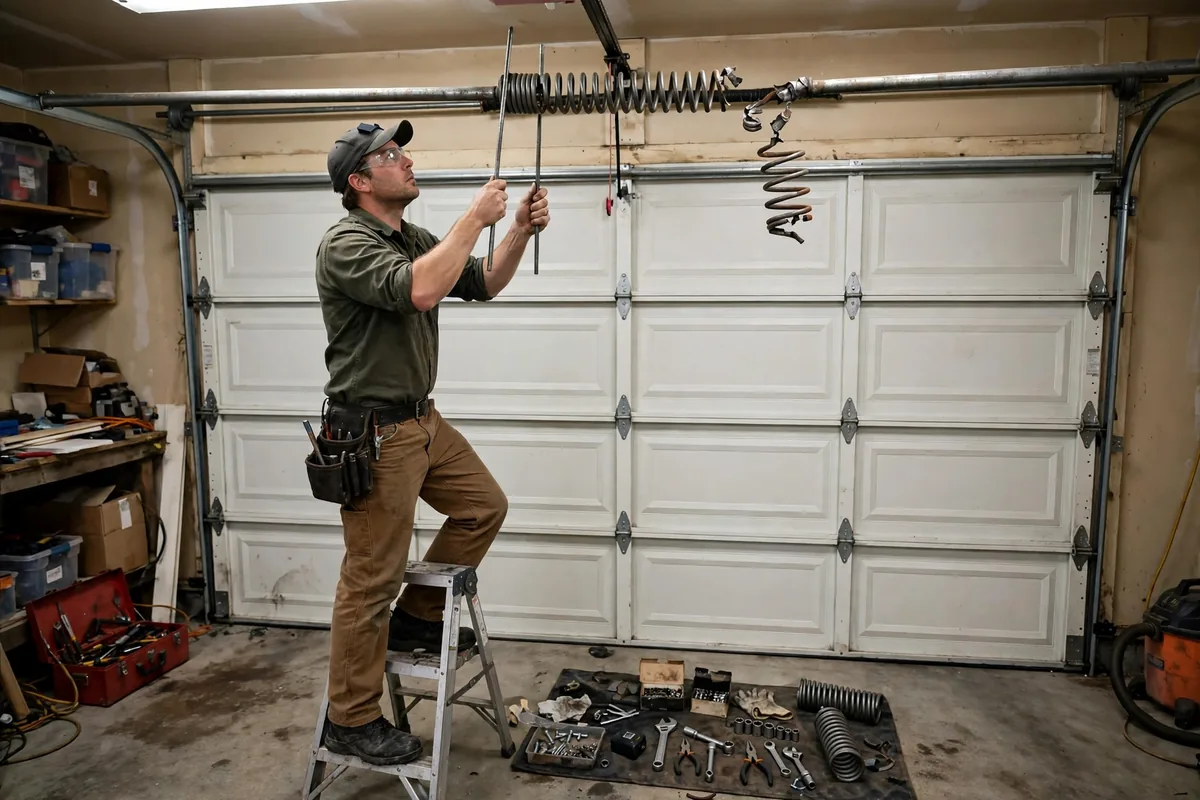
Most garage door problems are part problems, not door problems. A broken spring, a snapped cable, a worn roller, or a dead opener can all be repaired without replacing the door, and in most cases that is the sensible choice. Replacement becomes the better value when the door itself is failing: three or more panels damaged, a frame that is bent or rusted through, a door so old that matching parts are no longer made, or a door that costs more to keep repairing than it would cost to replace. The rest of this guide helps you tell which situation you are in, with the cost factors to check before you decide.
One or two damaged panels: repair usually wins
Modern garage doors are sectional, built from horizontal panels hinged together. If a car bumper, a basketball, or a falling ladder damages one or two sections and the rest of the door is sound, replacing just those sections usually restores the door's strength and appearance for a fraction of the price of a new door. The key question is whether a matching panel is still available: it needs to match by maker, model, size, and colour, or the repair will stand out and may not seal properly.
If the maker has discontinued your door, or the damage has bent the track, hinges, or struts around the panel, a single-panel job can turn into a larger repair. A technician can tell you on site whether a matching panel can be ordered and how long ordering takes — typically days, not hours — and whether the door is safe and secure in the meantime. Panel replacement explains how a section is removed, matched, and refitted, and when a panel job stops making sense.
Three or more damaged panels: replacement usually wins
The rule of thumb used across the trade is simple: one or two damaged panels, repair; three or more, price a new door. The reason is arithmetic, not salesmanship. Each panel has to be ordered, matched, and fitted, and the labour adds up. By the time three sections are replaced, the parts and labour often approach half the cost of a new door — and you still have an old door with old springs, cables, and opener behind the new panels.
The same logic applies when damage is spread across the door rather than concentrated in one spot: multiple dents, a twisted frame, or rust that has weakened the bottom section. In those cases a new door also gives you new tracks, springs, rollers, and weather sealing in one job, rather than a series of repairs spread over a year. Garage door installation covers door types, insulation, and what a full replacement includes, so you can compare it fairly against the repair quote.
Spotted one of these problems? Call and describe what your door is doing — that description helps us bring the right parts.
Call (833) 563-1552Door age, safety, and parts availability
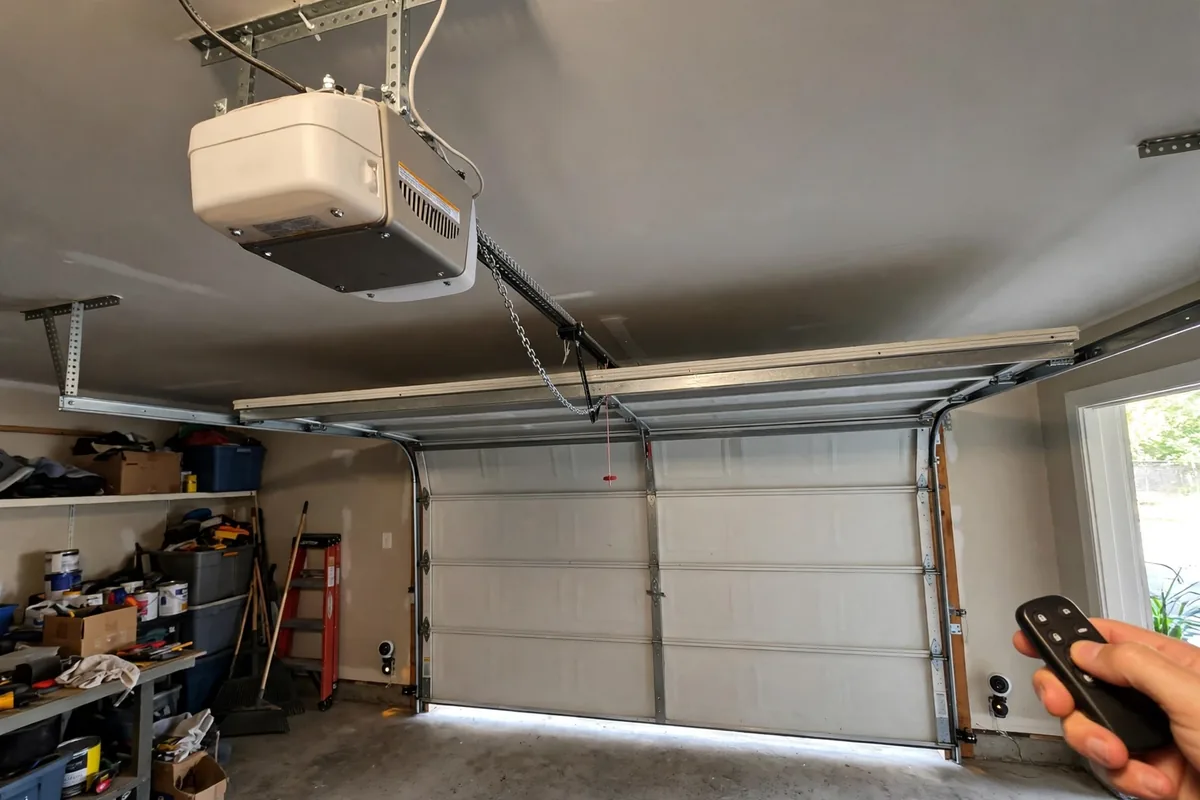
Age matters for three practical reasons. First, safety: older doors may lack modern photo-eye sensors or an auto-reverse that meets the current UL 325 standard, and retrofitting those features is not always possible on a very old opener. Second, parts: springs, cables, and panels for discontinued models become harder to find, which means longer waits and higher parts prices. Third, accumulated wear: a door that has already had a spring, a cable, and an opener repair in a short period is telling you its main parts are reaching the end of their life together.
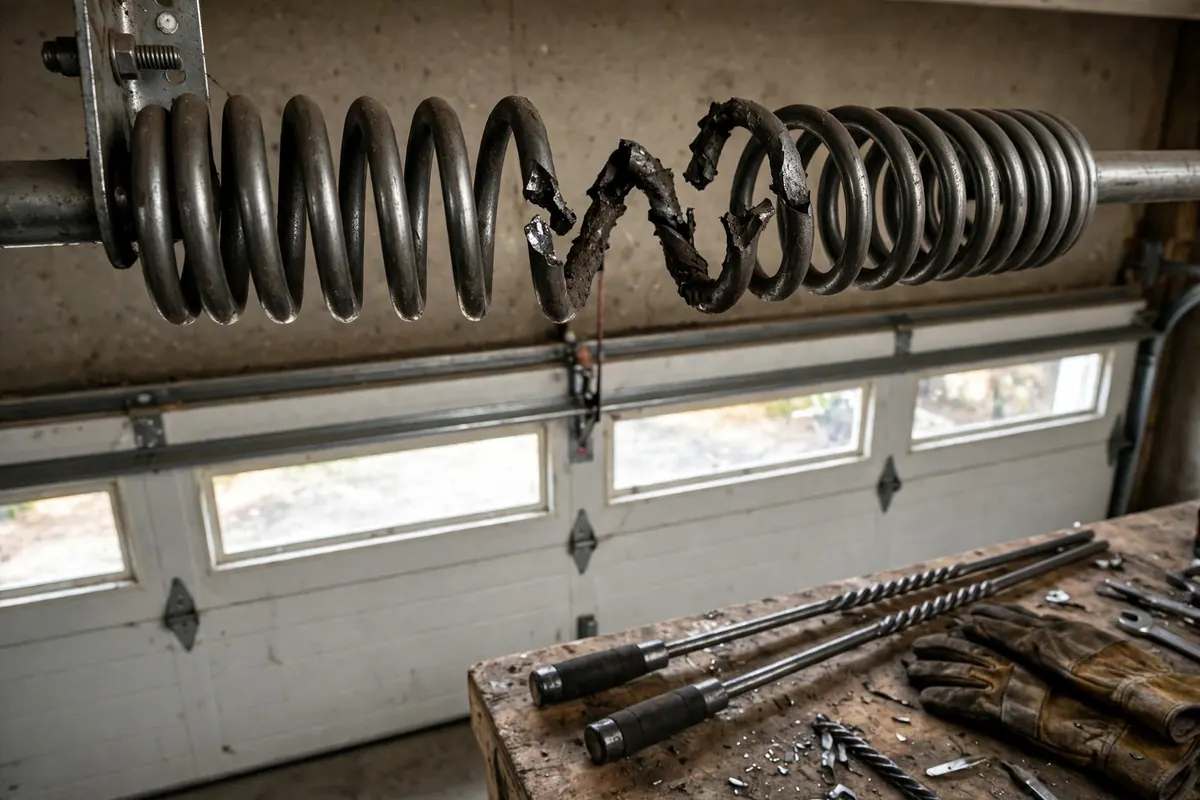
As a general, typical figure reported by competitors — not Bay State data — springs are often rated for around 10,000 cycles, roughly 7 to 10 years of normal use. If your door is past that age and the springs are original, a spring failure is a repair, not a reason on its own to replace the door — but it is a good moment to look at the door as a whole. Ask whether the opener, cables, and panels have similar age on them, and whether the next repair is likely to follow soon after this one.
Energy efficiency and insulation: when a new door pays back in comfort
For an attached garage, the door is part of the house's thermal envelope. An old, uninsulated steel door lets cold air into the garage and, through the wall between garage and house, into the rooms beyond. An insulated sectional steel door, with a higher R-value and proper perimeter weather sealing, keeps the garage noticeably warmer in a Massachusetts winter and cooler in summer. That comfort difference matters most if you use the garage as a workshop, a laundry route, or a room above or beside it is hard to heat.
For a detached garage used only for parking, insulation matters far less, and a basic non-insulated door is usually the better value. Do not let energy claims decide the job on their own: compare the insulation benefit against the repair cost, and be wary of any claim that a new door will pay for itself in energy savings — that depends on your house, your heating, and how you use the garage, and no honest quote can promise it. A tune-up visit can also help here, because worn weather seals and gaps around an otherwise sound door are often fixed cheaply without replacing anything.
Cost comparison: repair ranges vs new door ranges (planning figures from other sources)
All prices in this section are planning ranges reported by other sources, not Bay State prices — your exact price is confirmed before work starts. Single-panel replacement is reported in a wide range, roughly $250 to $900 depending on material, size, and matching, with some national guides reporting higher averages for a single section. Spring replacement is reported around $100 to $350, cable repair around $80 to $250, and opener repair around $150 to $400 in the Massachusetts planning ranges used across this site.
A new door is a different scale of job. Massachusetts sources report a standard single-car steel door from around $1,599 including installation, insulated raised-panel doors from about $2,200 to $3,800, carriage-house styles from about $3,200 to $5,500, and premium or custom doors from $5,500 upwards. Boston averages reported by Angi sit lower, around $1,447 on average with a range of $946 to $1,953, which shows how much door type and size move the figure. Use those ranges to frame the decision: if the repair is a few hundred and the door is otherwise sound, repair; if repairs are approaching half the price of a new door and the door is old or widely damaged, get a replacement quote to compare side by side.
Spotted one of these problems? Call and describe what your door is doing — that description helps us bring the right parts.
Call (833) 563-1552Safety: when repair is not the safe option
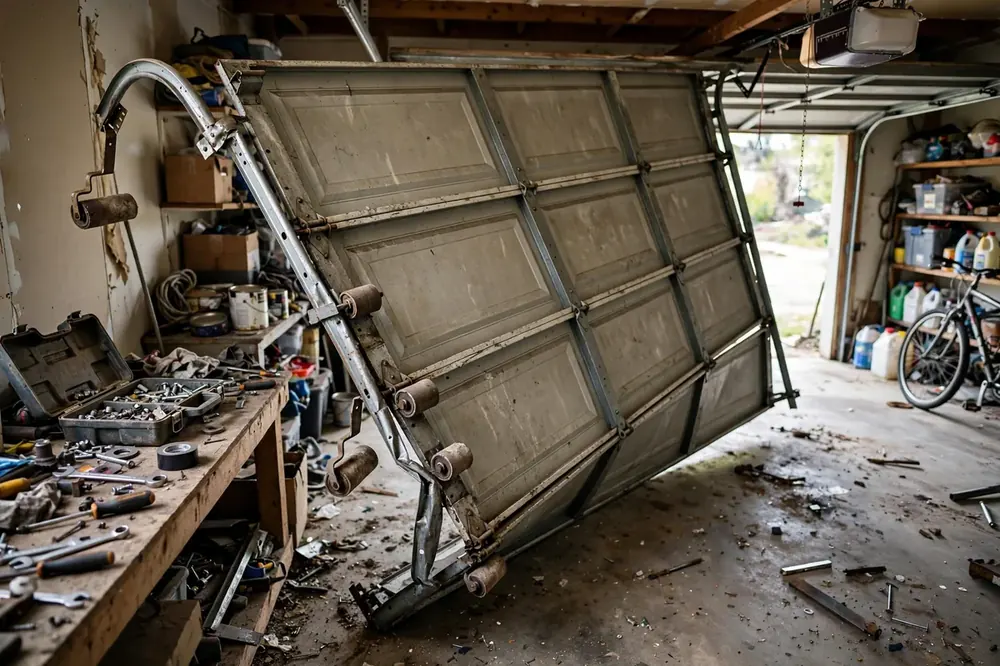
Some damage cannot be repaired safely, however much cheaper repair looks. A door whose frame is bent so it no longer sits square in the opening, a bottom section rusted through, a door that has come off its track and bent the track with it, or a door with a broken spring and a frayed cable at the same time may not be safe to keep using even after a part is swapped. In those cases a technician should say so plainly, and the safe next step is to leave the door closed and get a replacement quote.
The same applies to a door that will not stay up, drops unevenly, or reverses unpredictably after sensors and tracks have been checked. Those are balance and safety-system problems, and they are not fixed by adjusting the opener force setting to overpower them. If you are told a door is unsafe, ask what specifically makes it unsafe and what the replacement would change — a clear answer to both questions is the difference between a genuine safety call and a sales push.
Questions to ask before you decide
Ask these five questions, and write down the answers before you choose. One, can a matching panel or part still be ordered for my door, and how long will it take? Two, what is the total repair cost, including parts and labour, compared with a new door fitted? Three, how old are the springs, cables, and opener, and are they likely to need work soon? Four, is the door safe to keep using after this repair, and what would change that? Five, would insulation or a quieter opener make a real difference to how you use the garage, or is this door only ever a parking door?
If the answers point to repair, book the repair and ask what to watch for next — a worn roller or an ageing spring found during the same visit is useful information, not an upsell, as long as it is quoted separately. If they point to replacement, compare door types on size, material, insulation, and opener pairing rather than on price alone, and check that the installer is a registered home improvement contractor in Massachusetts before the job starts. The Massachusetts home improvement contractor registration page explains what to look for, and it is worth a read before any large job: Massachusetts home improvement contractor registration. For the repair options in this guide, see spring replacement, cable repair, and panel replacement.
Garage door repair work
Ready for help? Call (833) 563-1552, Monday to Saturday, 9:00 AM to 6:00 PM, and describe the problem.
Call (833) 563-1552