
After the November 6 Floods: What Water Does to a Garage Door in New Bedford and Fall River
November 6, a storm dumped more than 5 inches of rain on southeastern Massachusetts — New Bedford Airport recorded 4.46 inches in one day. Floodwater damages garage doors in ways that show up days later. Check your door in New Bedford (02740) and Fall River (02720) before using it again.
The November 6 storm dropped over 5 inches of rain on southeastern Massachusetts. Floodwater damages a garage door in ways that show up days later: swollen panels, rusted springs and cables, water in the opener motor, silt in the tracks. If the door is crooked, heavy, or off its track, leave it closed and call (833) 563-1552.
What happened to garage doors on November 6, 2026?
On Friday, November 6, 2026, a slow-moving storm dumped more than 5 inches of rain on parts of southeastern Massachusetts. Boston Logan recorded 2.64 inches on Friday, a daily record — the old record was 1.58 inches, set in 1966.
New Bedford Airport measured 4.46 inches on Friday alone, more than a normal whole November, which averages 4.26 inches. Preliminary storm totals reached 5.94 inches near Rochester and 5.80 inches near Mashpee. The rain fell hard enough to strand cars in street flooding across the South Coast, including under the Deane and Purchase Street overpass in New Bedford, where several cars were disabled, and a three-car crash on Route 140 southbound was caused by street flooding. The New Bedford–Fairhaven Bridge closed temporarily when its gates malfunctioned. In Fall River, the end of Plymouth Avenue was reported flooded and impassable, and flooding was also reported in Somerset, Westport, and Acushnet. A flash flood warning covered southeastern Bristol and southern Plymouth counties until 11:30 p.m. on Friday. The figures in this post come from WeatherBoy's report of November 7, 2026 and the National Weather Service Boston/Norton preliminary local storm report of November 6, 2026.
The same storm knocked out power to about 10,000 customers from noon to about 2 p.m. in Taunton, Raynham, East Taunton, and Lakeville, after a lightning strike hit a National Grid transmission line — so for two hours that afternoon, every garage door opener in those towns was dead too. Power was restored the same afternoon. As of November 10, statewide outages were back to normal, so this post is about the damage the water left behind, not an ongoing outage.
How floodwater damages a garage door
Floodwater damages a garage door in four ways, and three of them show up after the water is gone. First, it swells and warps panels. Water soaks into wood and composite sections, and a swollen bottom panel no longer sits straight in its tracks — the door drags, jerks, or sticks. Second, it rusts the steel: springs, cables, drums, and bottom brackets all corrode once they have been wet, and a cable that was sound before the flood can fray and snap weeks later. Third, it gets into the opener motor and the safety sensors. Water in the motor can short it or seize it, and water on the sensor lenses stops the door closing — or worse, leaves the safety reverse unreliable. Fourth, it leaves silt in the tracks. Fine grit washed in by floodwater grinds the rollers every time the door moves, wearing them out and scoring the tracks.
On the South Coast, salt air makes all four worse. New Bedford and Fall River sit on the water, and standing water plus salt corrodes coastal doors faster than inland ones — which is why the same flood does more damage to a garage door in New Bedford than it would in Lowell. Our coastal salt-air garage door guide explains how salt attacks hardware from the bottom up. If your door stood in water on November 6, even for an hour, the check below is worth doing now, while the damage is still small.
What should I check before using the door again after a flood?
Do this check before you run the door normally again. You need no tools, and you should not touch the springs, cables, or tracks.
- Look at the bottom panel and the bottom seal. Swelling, warping, or a seal that has pulled away from its retainer are the first signs the door stood in water.
- Look at the springs above the door. Rust on the steel, or a gap in the coil, means the spring is damaged — a spring with a gap has snapped, and the door must stay closed.
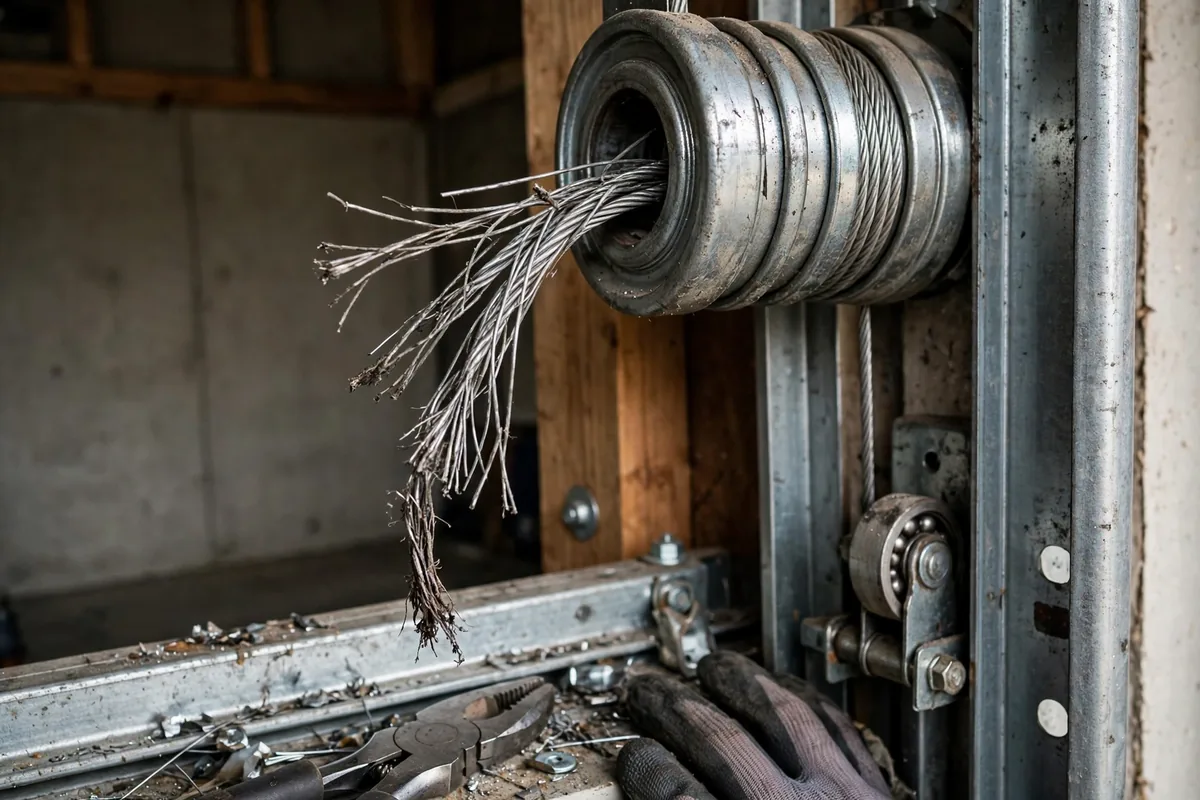
- Look at the cables and the drums. Fraying, rust, or slack in the cable means the cable is failing — do not run the opener.
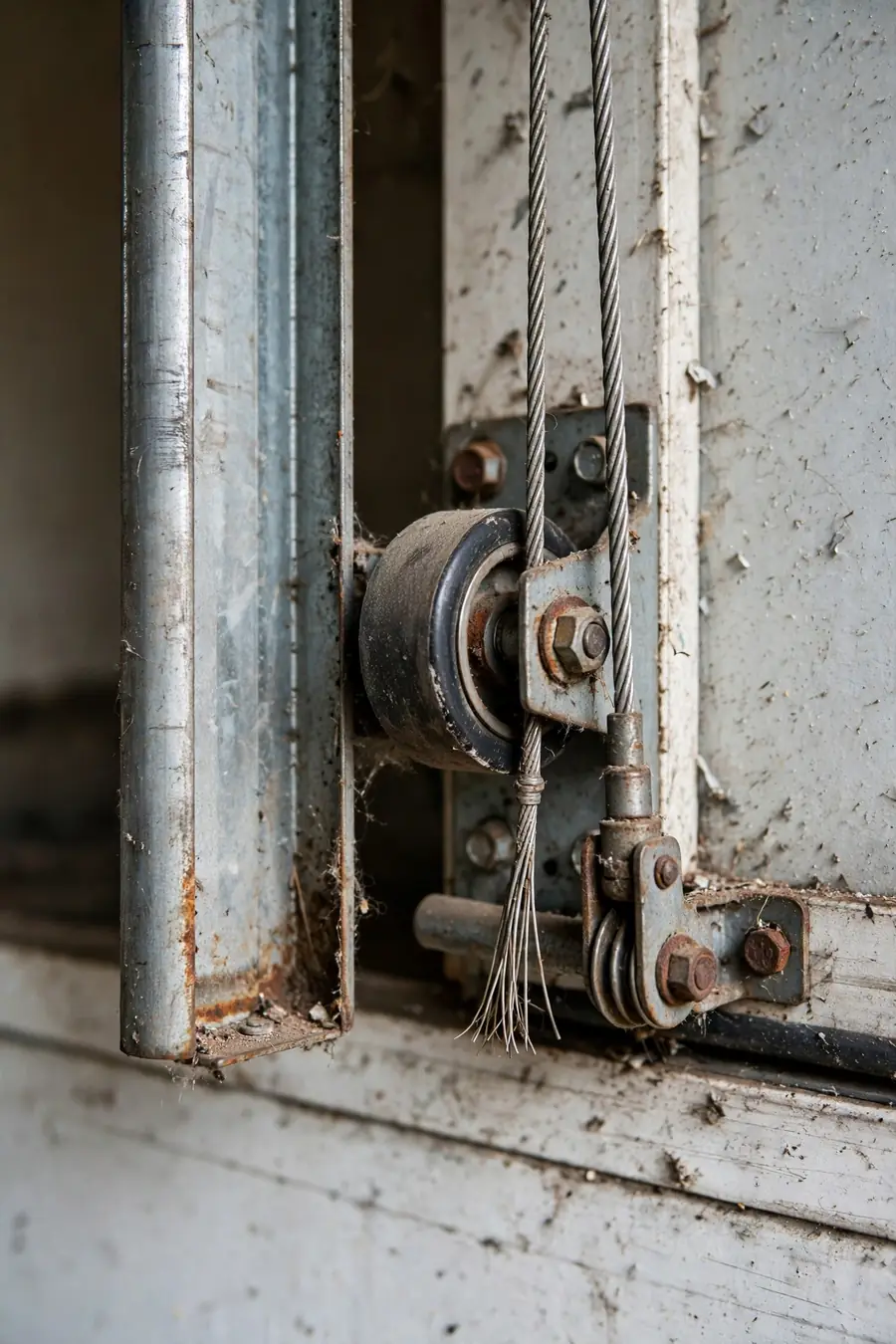
- Look at the tracks. Silt and grit in the tracks will grind the rollers. Sweep them out before running the door.
- Wipe the safety sensors and check the opener. Clean both photo-eye lenses, check both lights are on, and listen to the opener. If it hums but the door does not move, stop — the motor or the gear may be water-damaged.
Then test the safety reverse: place a roll of paper towels flat on the floor under the door and close it with the wall button. The door should touch the roll and reverse. If it crushes the roll or keeps going, stop using the opener and call us — the safety reverse is not working. If the door is crooked, heavy, or off its track, our garage door off-track repair service covers re-tracking and checking the rollers, hinges, and balance. If a cable is frayed or the drum is rusted, our garage door cable repair service checks the cable, drum, and spring together — a worn drum will chew through a new cable.
Door stood in water on November 6? Check it before you use it — flood damage shows up days later.
Call Now to Speak to a SpecialistWhere did the November 6 water hit hardest in New Bedford and Fall River?
New Bedford took the worst of it: 4.46 inches in a day, cars stranded under the Deane and Purchase Street overpass, the Fairhaven bridge gates malfunctioning, and basements flooded across the city. Fall River saw the end of Plymouth Avenue flooded and impassable, and the surrounding towns — Somerset, Westport, Acushnet, Swansea — all reported flooding.
If your garage is in New Bedford in ZIP codes 02740, 02744, 02745, or 02746, or in Fall River in ZIP codes 02720, 02721, 02723, or 02724, and the water reached your garage floor on November 6, the check above applies to your door. For the full local picture, see our garage door repair New Bedford MA page and our garage door repair Fall River MA page.
One more thing to check while you are there: the garage itself. Floodwater that reached the door also reached the floor, and a concrete floor that stays damp keeps the bottom seal wet — which is what freezes the door shut on the first cold morning. Dry the floor, dry the seal, and spray it lightly with silicone so it releases instead of sticking. Our garage door frozen shut guide explains what to do if it does freeze, and our storm garage door guide for Massachusetts covers the full post-storm picture. With another storm forecast for later this week, and the first freeze behind it, a door that stood in water on November 6 is a door worth checking before the next one arrives.
When should I call after the November 6 floods?
Call if the door is crooked, heavy, jerky, or off its track, if you can see a gap in the spring or a frayed cable, if the opener hums but the door does not move, or if the safety reverse test fails.
Those are broken parts or failed safety systems, not drying-out. Leave the door closed, keep the area clear, and call (833) 563-1552 any time, day or night. If the door moves smoothly and nothing looks or sounds wrong, a check is still worth having — flood damage shows up days later, and a spring or cable caught now is a scheduled visit rather than an emergency on a freezing morning.
Floodwater and garage doors: the parts that take the damage
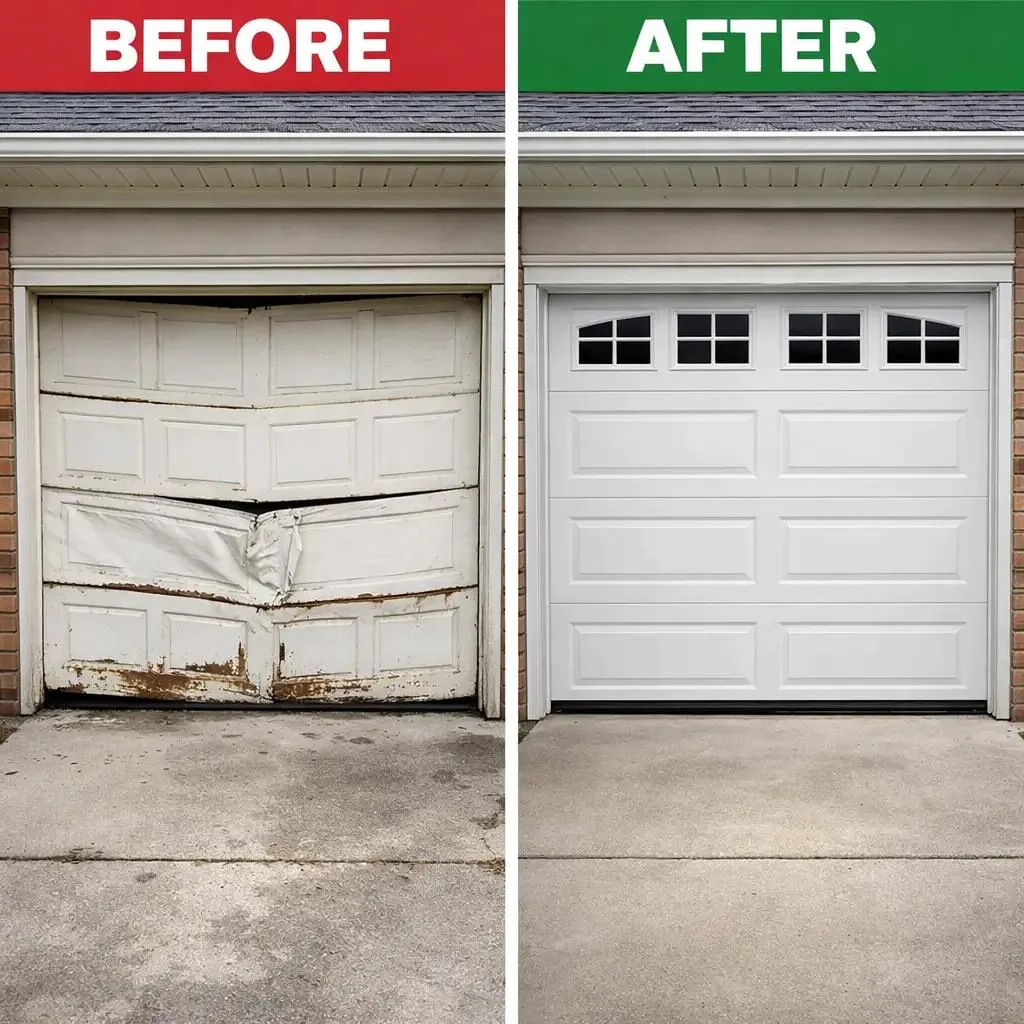
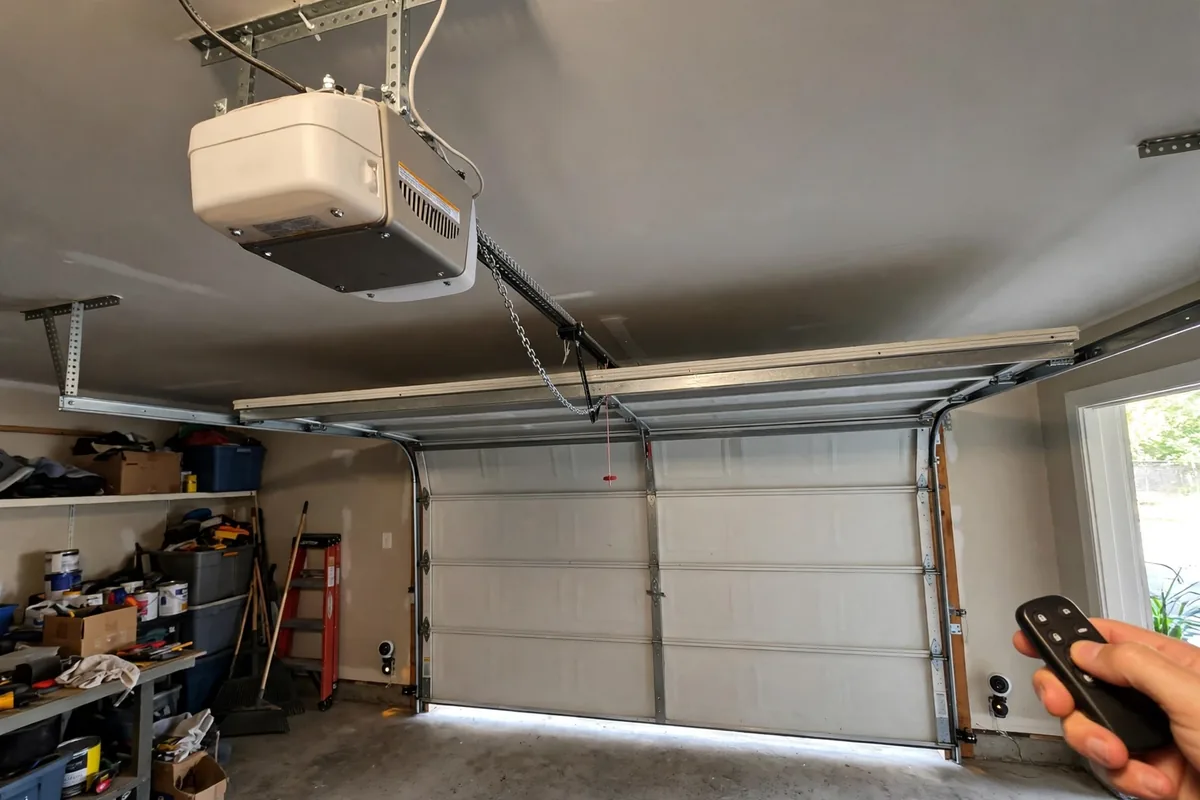
These images show the parts floodwater damages first — the bottom panel and seal, the cables and drums, the opener motor, and the tracks the door moves in.
Door stood in water on November 6? Check it before you use it — flood damage shows up days later.
Call Now to Speak to a SpecialistFor local help, start from our Bay State Garage Door Repair Pros homepage, and see our garage door repair in New Bedford page for the city that took the worst of the storm.
Frequently asked questions about garage doors after the November 6 floods
How does floodwater damage a garage door?
Water swells and warps panels, especially wood and composite sections, rusts springs and cables, gets into the opener motor and the safety sensors, and leaves silt in the tracks that grinds the rollers. The damage is often invisible on the day of the flood and shows up days later, when a weakened spring snaps, a rusted cable frays, or the door starts grinding. Salt in coastal floodwater speeds the rust up further.
Is it safe to use my garage door after a flood?
Check it first, and do not force it. Look at the panels, the springs, the cables, and the tracks; listen as the door moves; and test the safety reverse. If the door is crooked, heavy, jerky, or off its track, or the opener hums but the door does not move, leave it closed and call us. A door that looks and sounds normal is safe to use, but a check is worth having — flood damage shows up days later.
What should I check on my garage door after flooding?
Five things, in order: the bottom panel and seal for swelling and water damage; the springs above the door for rust and gaps; the cables and drums for fraying and rust; the tracks for silt and grit; and the opener motor and safety sensors for water. Wipe the sensor lenses and check both lights are on. Then test the safety reverse with a roll of paper towels under the door — it should reverse when it touches the roll.
Will my garage door dry out on its own after a flood?
The visible water will dry, but the damage it started will not reverse itself. Moisture left in tracks and rollers starts corrosion on springs and cables, and a panel that has swollen stays swollen. On the South Coast, salt air adds to the problem: standing water plus salt corrodes coastal doors faster than inland ones. Clear the silt from the tracks, dry the bottom seal, and get the door checked — waiting lets rust do its work quietly.
Does flood damage to a garage door need a repair visit?
It depends on what the check finds. If the door moves smoothly, the safety reverse works, and nothing looks or sounds wrong, a check is still worth having — water damage shows up days later as a snapped spring or a frayed cable. If anything is crooked, heavy, jerky, or off its track, or the opener will not move the door, call now — those are broken parts, not drying-out. Leave the door closed and call (833) 563-1552.
About the author
Jude Bray is the lead technician at Bay State Garage Door Repair Pros, with 26 years in the trade. The business holds Massachusetts Home Improvement Contractor (HIC) Registration and Construction Supervisor License (CSL) credentials, plus IDEA garage door certifications.
Call Bay State Garage Door Repair Pros at (833) 563-1552, 24 hours a day, 7 days a week. Leave the door closed and describe what it is doing.
Call Now to Speak to a SpecialistLast updated: November 28, 2026. Author: Jude Bray, Bay State Garage Door Repair Pros. Business address: 98-2 Ames Pl, Lowell, MA 01851. Phone: (833) 563-1552. Email: [email protected]. Rainfall figures in this post come from WeatherBoy's November 7, 2026 report and the National Weather Service Boston/Norton preliminary local storm report of November 6, 2026. Prices are planning ranges reported by other sources, not a quote for your door. Photos and illustrations on this page do not show real Bay State jobs or staff.