
Winter Garage Door Guide for Massachusetts
Winter hits a Massachusetts garage door all at once: lubricant thickens, seals shrink, meltwater freezes the door to the floor, and road salt corrodes the hardware. This guide covers each problem, what you can safely do, and what to leave to a technician.
Cold stiffens lubricant, shrinks seals, and freezes meltwater under the bottom seal, so a winter door needs a different routine. Never force a frozen door, and only use the manual release when the door is fully closed.
Why winter is hard on a garage door
A garage door that worked fine in September can start complaining in November, and the reason is that cold changes every part of the system at once. Lubricant thickens and hardens in low temperatures until it offers little protection. Rubber seals shrink and harden, letting cold air and meltwater in. Metal springs and cables carry the same load but with less give, and the opener motor has to work harder against all of it. None of this means a winter door is doomed; it means a door that was already wearing shows that wear first on cold mornings.
Massachusetts winters add one more factor: the freeze-thaw cycle. Rain and meltwater run into tracks and under seals during the day, then freeze overnight, so the same water that was harmless at noon becomes ice holding the door shut by morning. That cycle, repeated all winter, is what turns a small seal problem into a stuck door, and a stiff door into a snapped cable. This guide covers each winter problem separately, so you can tell which ones you can handle and which ones belong to a technician.
A door frozen to the floor: what to do, and what not to do
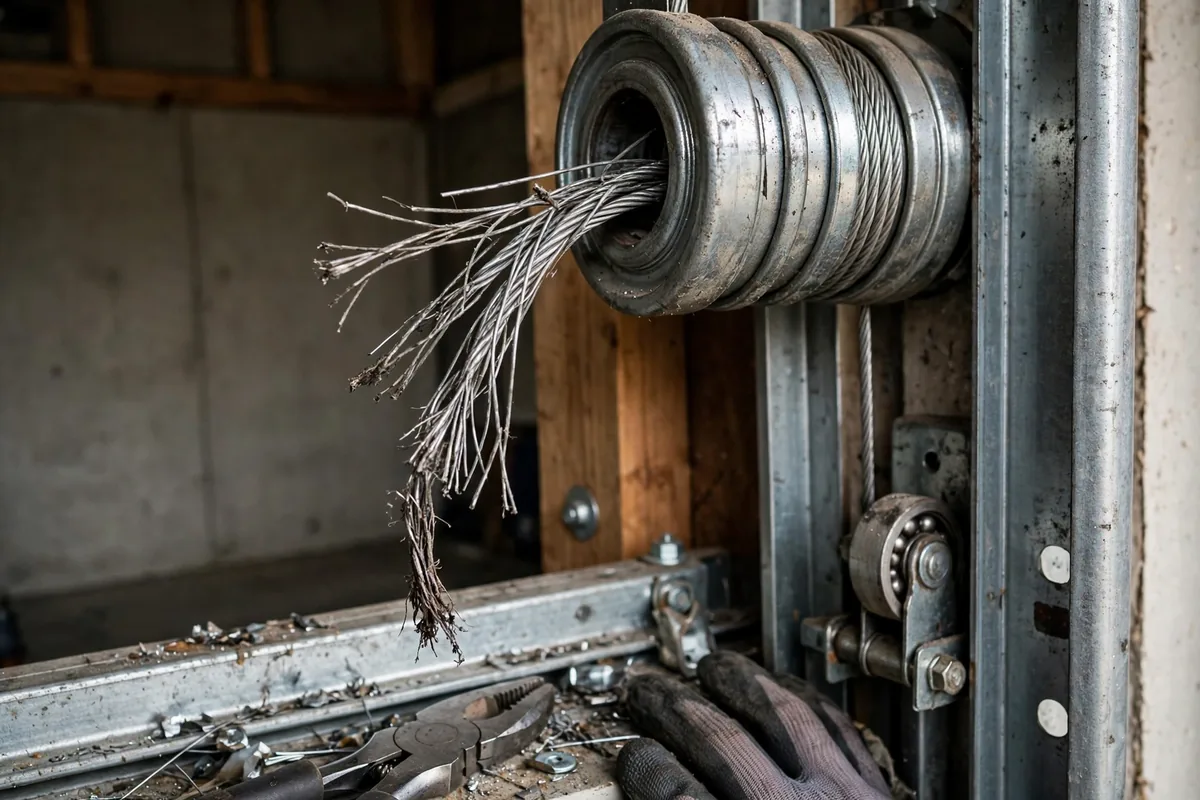
The most common winter call is a door frozen to the floor. Meltwater runs under the bottom seal, freezes overnight, and glues the seal to the concrete. The temptation is to hit the opener again, harder, or to yank the door by hand. Do neither. Forcing a frozen door can tear the bottom seal, strip the opener gears, burn out the motor from the strain, or snap a cable, turning a morning's inconvenience into a repair.
Instead, warm the garage if you can, chip ice gently from around the seal with an ice scraper, and place a portable heater nearby to melt the ice slowly. Never pour hot water on a frozen seal: the sudden temperature change can damage the seal, and the water refreezes. Once the seal is free and undamaged, run the door once and watch it. If it still sticks, grinds, or moves unevenly, call (833) 563-1552, Monday to Saturday, 9:00 AM to 6:00 PM, and describe what is stuck rather than forcing it again.
Ice in the tracks, and grit carried in on tyres
Ice does not only form under the seal. Meltwater and slush carried in on tyres freeze in the tracks overnight, and a roller meeting a ridge of ice can jam, jump, or bend a track out of true. Clear snow away from the door promptly, before it melts and refreezes into an ice dam at the threshold, and sweep grit and salt out of the track area regularly. Keep the tracks themselves clean rather than greased: lubricant on a track attracts grit and makes the door run worse, not better.
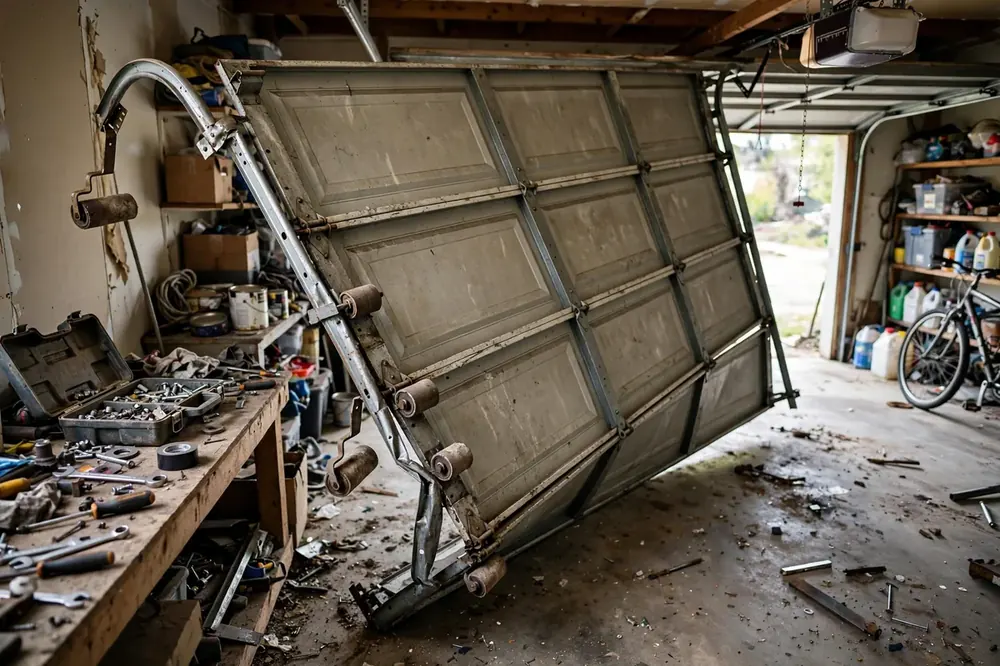
A de-icing spray or a hairdryer can melt track ice in a pinch, but never use a hammer on a track or a roller. If a roller is jammed, a track is bent, or the door has gone crooked, stop and call: track realignment changes the path the whole door follows, and a track set even slightly out of true can bind the rollers or let the door jump the track. That work belongs on the pro-only list, along with springs and cables.
Cold-stiffened springs, openers, and batteries
Cold makes lubricant thicken, and thick lubricant is poor lubrication. A door that moves slowly, groans, or needs a second press of the remote on cold mornings is often telling you its lubricant has stiffened, or its springs and rollers were already wearing. A thin coat of silicone-based or lithium-based garage door lubricant on hinges, roller stems, and springs, wiped free of excess, is the usual recommendation; heavy grease stiffens worst of all, and a thin coat beats a thick one. Do not spray lubricant on the tracks, and do not touch the springs themselves.
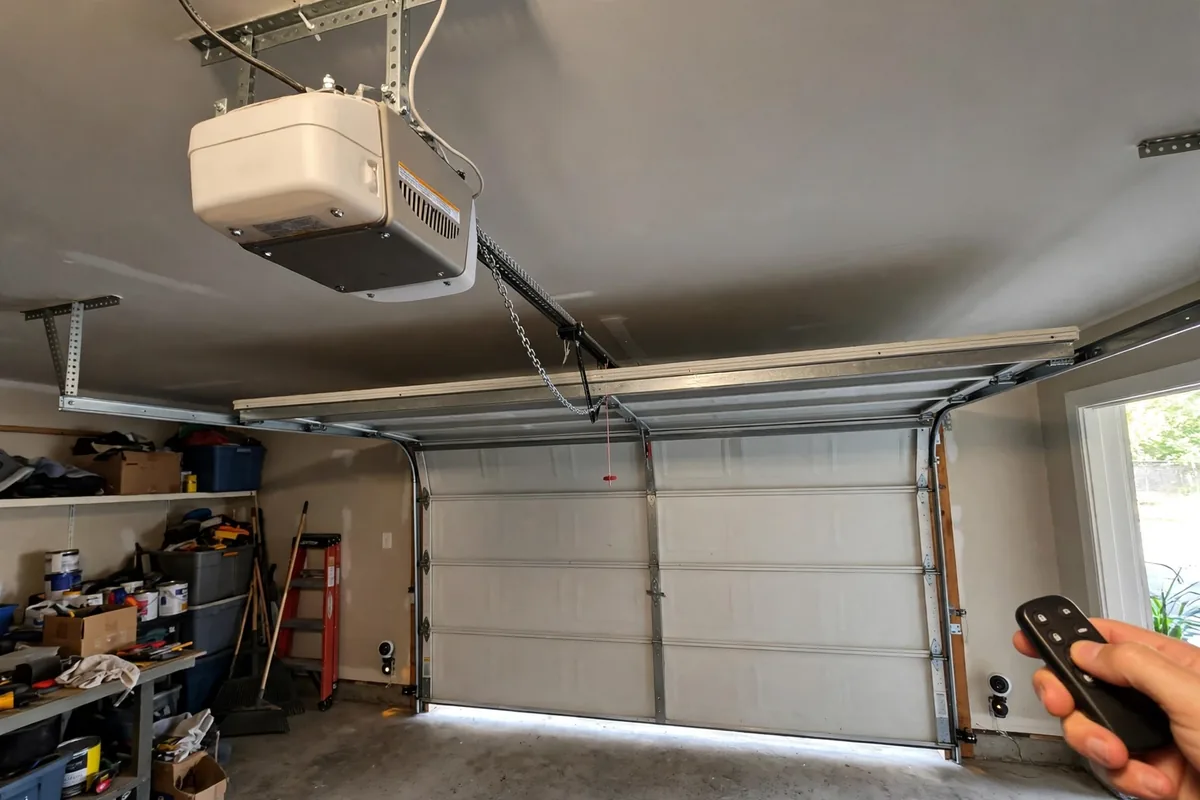
Batteries suffer in the cold too. Remote and keypad batteries drain faster in winter, so a remote that only works at close range may need fresh batteries before it needs anything else. Opener motors also strain more in the cold, especially if the door is out of balance, and raising the opener force to overcome that strain only masks the problem while making the safety reverse less effective. If the door is heavy, uneven, or slow even after fresh batteries and a sensor clean, book a tune-up rather than adjusting force settings yourself. For opener faults specifically, see opener repair.
Weather seals: the cheapest winter protection you have
The bottom seal and side weatherstripping do more winter work than any other part. A sound seal keeps out cold air, snow, and meltwater; a cracked, flattened, or hardened seal lets all three in, and then freezes to the floor. Check the seal before the first freeze: look for daylight along the bottom and sides when the door is closed, feel for draughts on a windy day, and look for tears or sections that have gone hard and lost their spring.
A silicone spray on the seal repels water and reduces the amount that enters the seal and freezes, and it is a homeowner-safe job, though repeated use can damage foam rubber seals and paint, so use it lightly. Replacing a worn seal before winter is one of the cheapest ways to make the garage less draughty and the door less likely to freeze shut. If the seal is torn or the door still draughts after a replacement, the frame or the door itself may be out of true, which is a technician's check, not a seal problem.
Power outages and the manual release: the one rule that matters
Winter storms bring power outages, and the manual release cord is how you open the door without power. The rule is simple and absolute: pull the release only when the door is fully closed. With the door down, the springs are holding its weight safely, and you can lift it by hand if it moves freely. Reconnect the opener afterward by running it once the power returns, or by pulling the cord toward the door until the trolley re-engages, following your opener's manual.
Never pull the release under a stuck or open door. If a spring has broken, the door's full weight is no longer counterbalanced, and a released door can fall suddenly and seriously injure anyone underneath it. Never stand under a disconnected door for any reason. If the door is stuck open, jammed, or will not stay up on its own, leave it alone and call: a technician can secure it and fix the spring or cable safely. The same rule applies in every season, but winter is when people most often reach for the cord in a hurry, in the dark, during an outage, which is exactly when the rule matters most.
Road salt, sensors, and the winter routine
Road salt is winter's version of coastal salt air. Salt and grit carried in on tyres corrode bottom brackets and cables, fog the safety sensor lenses near the floor, and pack into tracks. Wipe the photo-eye lenses with a soft, dry cloth regularly in winter: frost, dirt, or a slight bump out of alignment can stop the door from closing, and a door that starts down and reverses is often a dirty sensor, not a broken opener. Keep the doorway clear, and do not test the safety reverse by standing in the doorway; keeping the sensors clean and the doorway clear is the homeowner test.
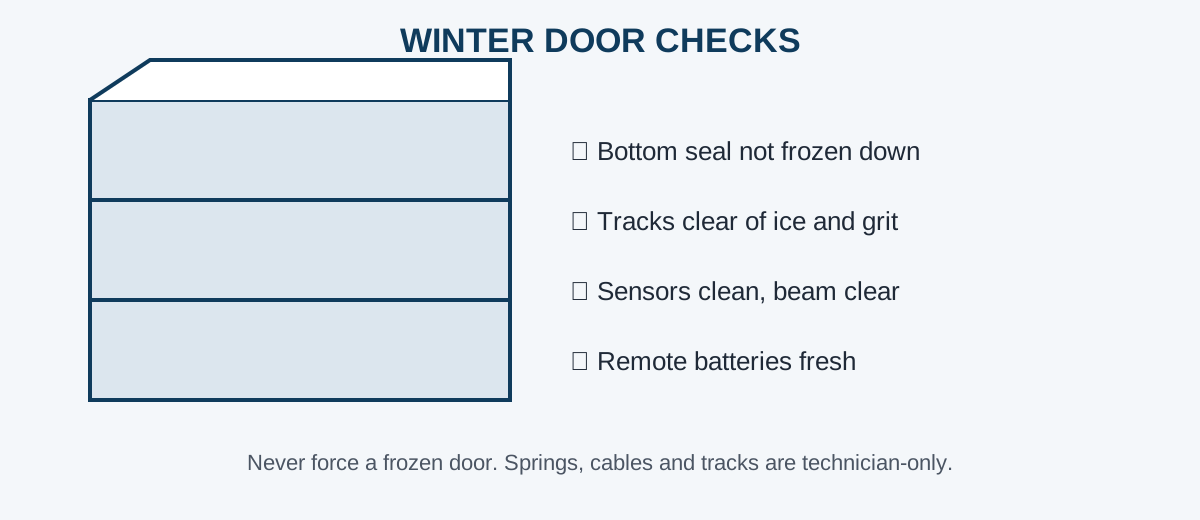
Put it together as a winter routine. Before the first freeze: check the seals, clean the sensors, clear the track area, and book a tune-up if anything is noisy, stiff, or uneven. Through winter: clear snow from the door promptly, sweep salt and grit out of the tracks, keep batteries fresh, and never force a frozen door. For city-specific help, see our garage door repair in Lowell and garage door repair in Boston pages, and for the year-round version of this routine, read our maintenance checklist, which this guide extends rather than repeats.
Garage door repair work
Ready for help? Call (833) 563-1552, Monday to Saturday, 9:00 AM to 6:00 PM, and describe the problem.
Call (833) 563-1552For local help, start from our Bay State Garage Door Repair Pros homepage, see our pages for garage door repair in Lowell and garage door repair in Boston, and read Garage Door Maintenance Checklist next.
Frequently asked questions
Why does my garage door freeze to the floor in winter?
Meltwater runs under the bottom seal and freezes overnight, gluing the seal to the concrete. A worn, flattened, or torn seal makes it worse, because it lets more water in and gives the ice more surface to grip. A worn or cracked bottom seal holds more water against the floor, so replacing a damaged seal before winter helps.
What should I do if my garage door is frozen shut?
Do not force it: forcing a frozen door can snap a cable, strip the opener gears, or tear the seal. Warm the garage, chip ice gently from around the seal, and clear it before running the door. If it still will not move freely, call a technician.
Can I use the manual release in winter?
Only when the door is fully closed. Pull the release cord with the door down, lift it by hand only if it moves freely, and reconnect the opener afterward. Never release the opener under a stuck or open door, because a door with a broken spring can fall.
Why does my garage door move slowly or noisily in the cold?
Cold stiffens lubricant and shrinks rubber seals, so a door that was already wearing shows it first on cold mornings. Lubricant thickens in the cold and offers less protection, which is why a noisy autumn door usually gets louder in winter.
How do I prepare a garage door for a Massachusetts winter?
Before the first freeze, check the bottom seal and weatherstripping, clean the safety sensors, clear grit from the track area, and book a tune-up if anything is noisy, stiff, or uneven. Fresh batteries in remotes help too, since cold drains batteries faster.