
Garage Door Parts That Wear Out Fastest
Garage door parts that wear out fastest are the ones that move, stretch, or sit in the weather: springs, cables, rollers, hinges, tracks, weather seals, and opener gears. Here is the sign each part gives before it fails — and when to call instead of waiting.
Springs wear out first, then cables, rollers, and weather seals — the parts that carry the door's weight, move every time it runs, or sit in salt air and winter wet. Learn the sign each part gives before it fails, and call (833) 563-1552 when one shows up.
Why are springs the part that carries the door?
The spring wears out first on most Massachusetts doors, and the reason is simple: it carries the door's weight on every single open and close. A garage door can weigh well over a hundred pounds, and the spring is what makes it feel light enough to lift by hand.
Every cycle — every open and every close — flexes the coil, and a spring is rated in cycles, not years. A door used several times a day reaches the end of its spring sooner than a door used once a week, which is why two doors the same age can have very different springs. Our garage door spring types guide explains the difference between torsion and extension springs, what cycle ratings mean, and why the replacement must be matched to the door's weight.
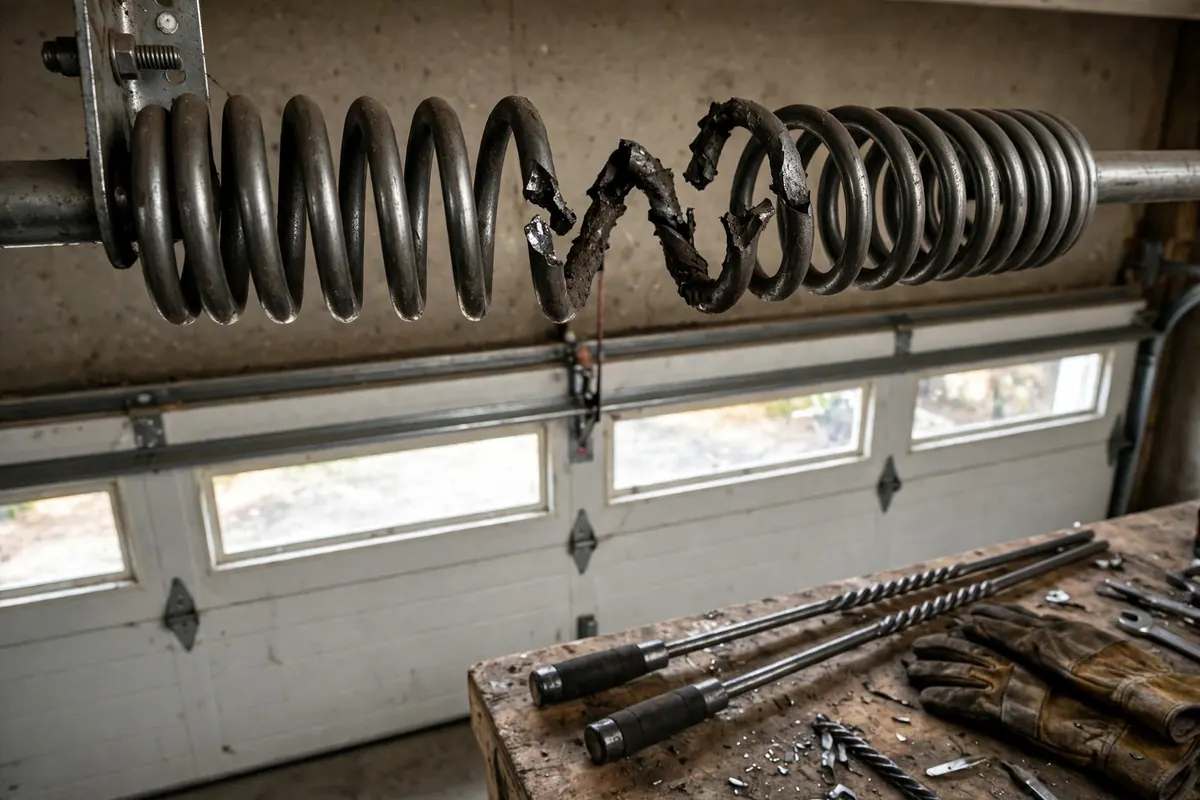
The signs a spring is wearing out are hard to miss once you know them. The door feels heavy when you lift it, or it moves slowly and sags. You can see a gap in the coil where the metal has separated, or rust on the coil where salt air and winter wet have thinned it. And the classic sign: a loud bang on a cold morning, then a door that will not lift at all. Cold contracts the metal, and a worn spring snaps when the cold arrives. A spring is technician-only — it holds the door's full weight under tension, and a spring handled the wrong way can injure you badly. If the door feels heavy or you hear the bang, leave it closed and call (833) 563-1552.
What do cables do for a garage door?
Cables wear out second, and they wear out for the same reasons springs do: age, use, and salt air. The cable holds the door to the drum under full spring tension, and it carries the door's weight every time the door moves.
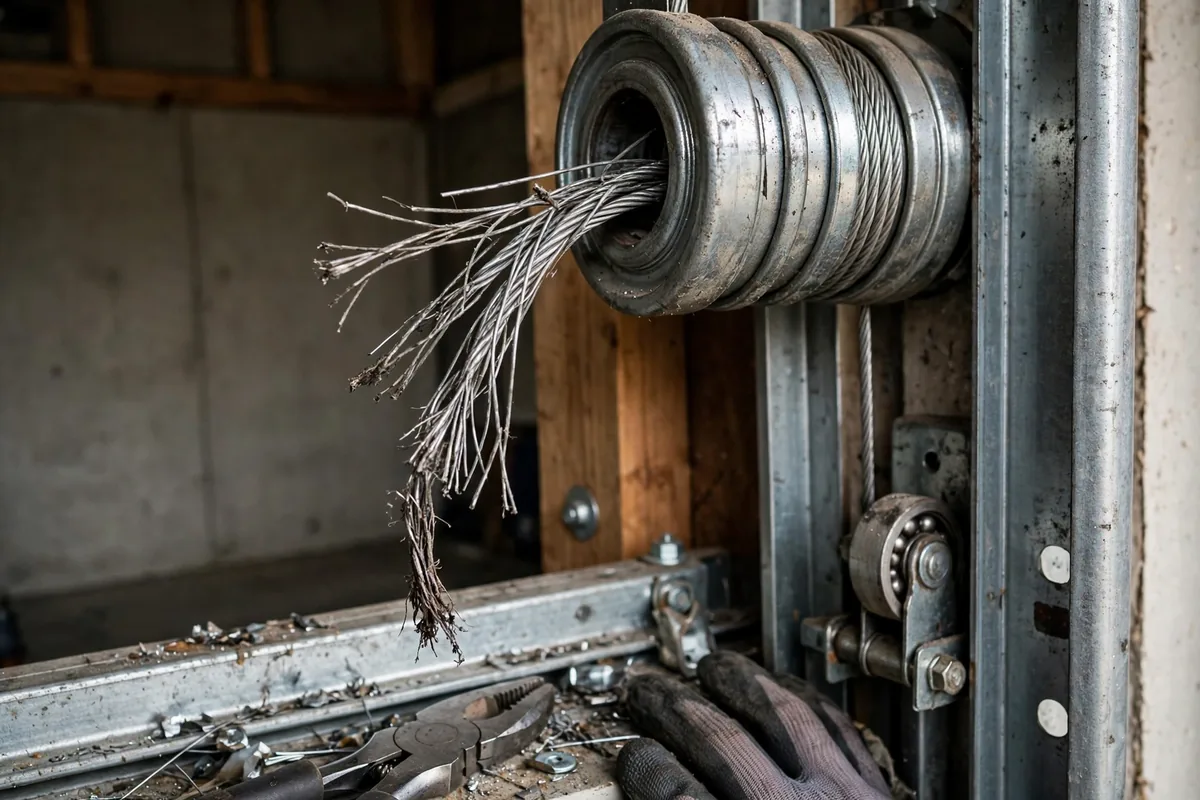
A cable does not stretch the way a spring does — it frays, a strand at a time, until the strands left cannot carry the load. The sign is fraying you can see on the cable, a cable that has gone slack on the drum, or a door that hangs crooked with one side lower than the other. A cable close to snapping is a cable to replace now, not next month, because a cable that snaps does so suddenly. Our garage door cable repair service covers the check, the replacement, and the balance test — and a cable caught while it is only frayed is a scheduled visit, not an emergency.
Coastal doors wear cables faster than inland doors. Salt air corrodes the cable a little at a time, and a cable already thinned by salt is the one that snaps when the cold arrives. The bottom brackets go first — they sit closest to the wettest, saltiest part of the door — and a bracket that fails under full spring tension can let a cable come off its drum. That is why a coastal visit checks the bottom of the door first, and why fraying is the warning to act on. Never try to re-seat a cable or adjust one yourself: the cable is under full spring tension, and the technician's job is everything that carries the door's weight.
Door heavy, cable frayed, or a loud bang on a cold morning? That is a spring or cable fault — leave the door closed and call.
Call Now to Speak to a SpecialistWhy do rollers and hinges wear out?
Rollers and hinges wear out third, because they move every time the door runs. A roller turns in the track on every open and every close, and the bearings inside it wear a little at a time until the roller wobbles, grinds, or seizes.
The signs are noise and movement: a squeak that lubrication does not fix, a grind as the door moves, rollers that wobble in the track, or a door that jerks and stops partway. Rollers wear so gradually that the door gets louder month by month, and most homeowners only notice when the door barely moves. A roller job caught early is a scheduled visit; a roller left until it seizes can bend the track and rack the panels, and that is a track and panel job on top of the roller job.
Hinges wear the same way, and they show the same signs: a door that moves unevenly, panels that do not sit straight, and a squeak that comes back days after lubrication. Hinges carry the panels as the door bends around the curve of the track, and a worn hinge lets a panel sag. The check is a look, not a repair: watch the door as it moves and listen to how it sounds. A smooth, quiet run is a healthy door. A squeak points to dry hinges or rollers; a grind points to worn rollers or bearings; a pop or bang points to a spring. Our garage door safety inspection checklist covers the same twice-a-year look-and-listen routine, including the five-minute test a homeowner can do safely.
How do tracks and weather seals wear out?
Tracks wear out more slowly than rollers, but they wear out all the same — and when a track goes, it takes the door with it. A track bends when a roller seizes and drags, when a door runs crooked on a snapped cable, or when something hits it.
The sign is a door that binds in one spot, stops partway, or jumps as it moves. A bent track is technician-only: the track holds the door's path, and a track that is bent or misaligned needs the door taken off and re-hung. Never try to straighten a track yourself, and never keep running a door that binds — every run bends it a little more and racks the panels a little further.
Weather seals wear out fastest of all the parts that do not move, because they sit in the weather all year. The bottom seal freezes to the floor in winter, bakes in summer sun, and soaks in every rainstorm in between. The sign is a seal that is cracked, torn, or flattened — and the consequence is water, cold air, and leaves getting in where a sound seal would keep them out. A worn seal also lets meltwater collect under the door, and that water freezes the door to the floor overnight. Replacing a seal is a small job, and it is the job that stops the bigger ones: a door that freezes shut, an opener that strains against the ice, and a spring that snaps on the first cold morning. Our winter garage door guide for Massachusetts explains the full pre-freeze check, including what to look for on the seal.
Opener gears: the part that strains in silence
Opener gears wear out last, and they wear out quietly — which is why they surprise people. The gear turns the chain or belt that moves the door, and it wears a little with every cycle. The signs are a motor that hums but does not move the door, a door that moves an inch and stops, or a grinding sound from the motor unit on the ceiling. The gear wears fastest when the door is already struggling: a worn spring makes the opener lift more weight than it was built for, a frozen seal makes it strain against the ice, and a bent track makes it pull against resistance. That is why an opener fault is often a door fault in disguise — and why the visit checks the spring, the cables, and the balance before blaming the opener.
The rule for opener gears is the same as for every part on this page: stop pressing the button when the door does not move properly. Pressing it again strains the gear a little more with every press, and a stripped gear is an opener job on top of the door job. If the motor hums and the door does not move, or the door moves an inch and stops, leave it closed and call us.
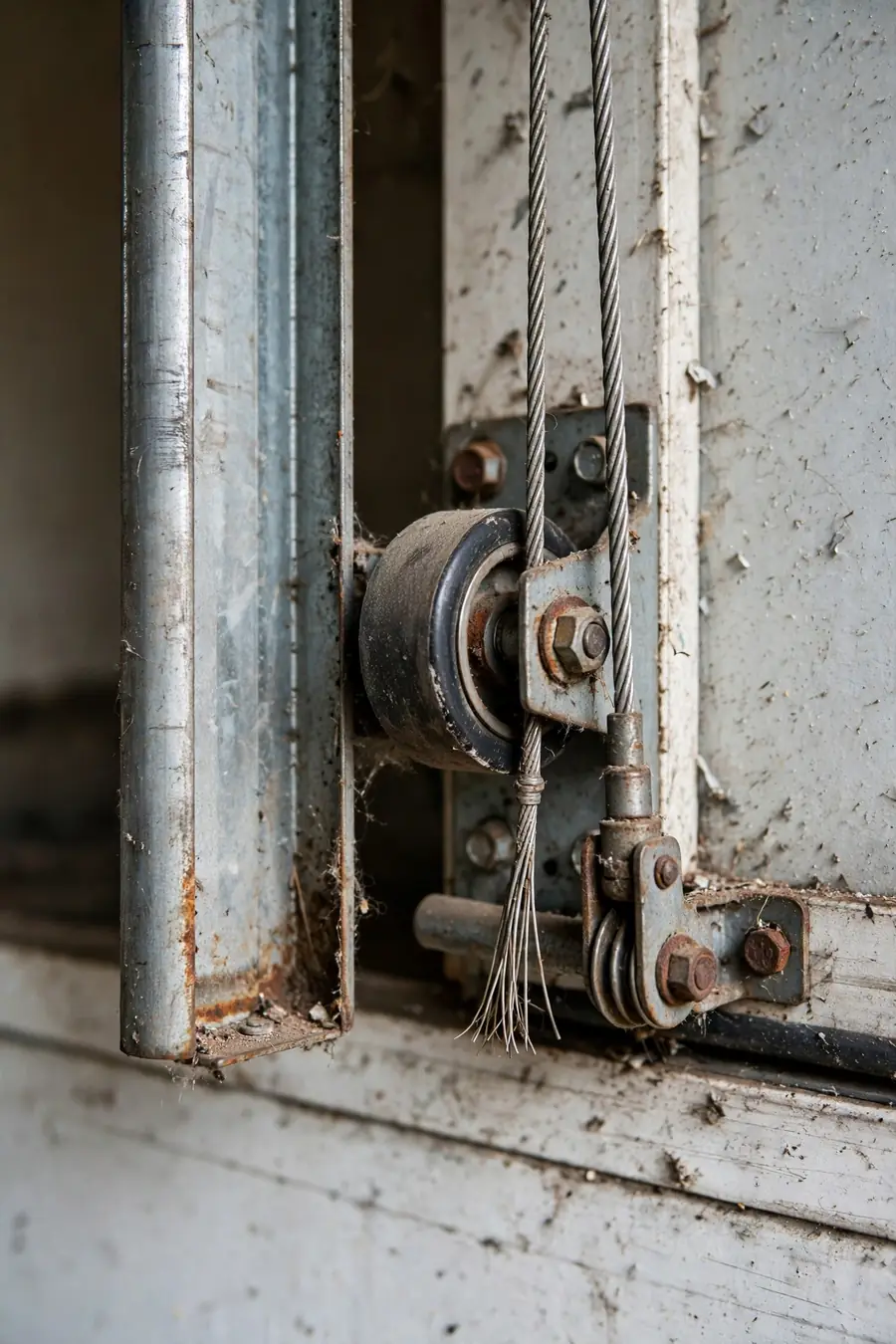
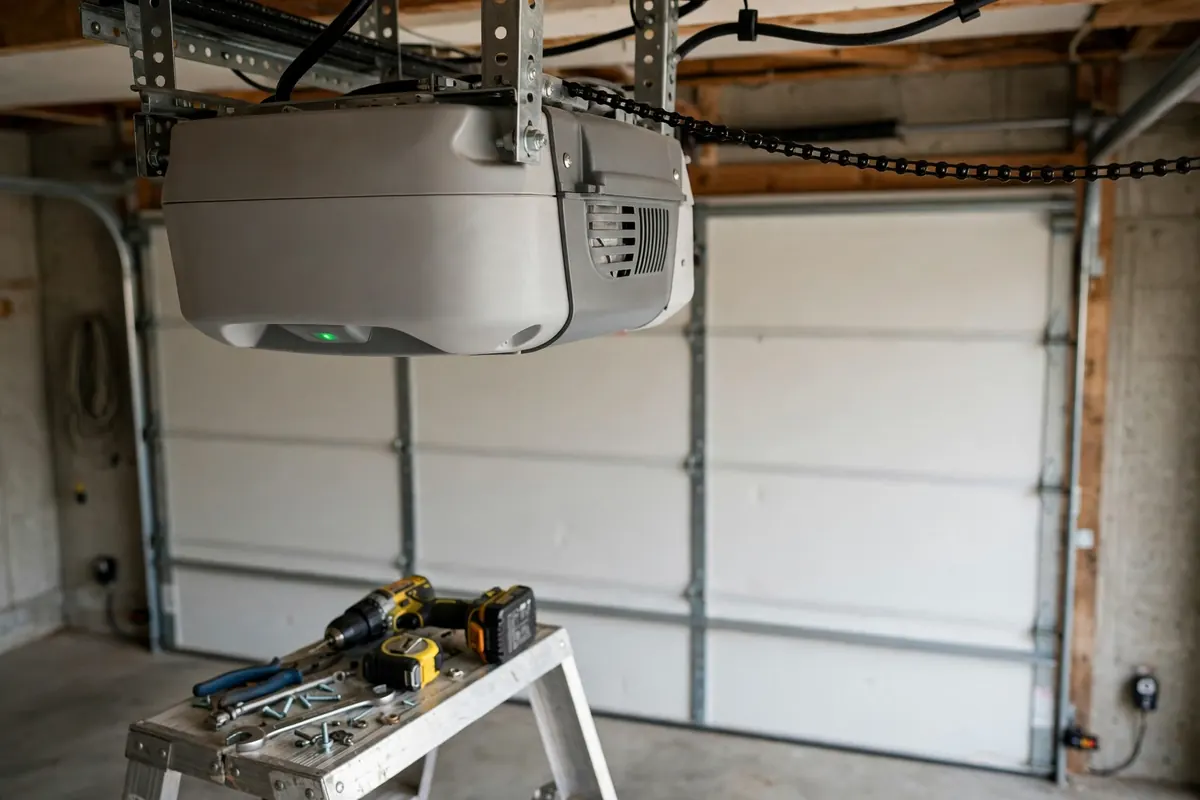
These images show the parts that wear out fastest — the spring, the cable and drum, the track and rollers, and the opener.The parts that wear out fastest
Door heavy, cable frayed, or a loud bang on a cold morning? That is a spring or cable fault — leave the door closed and call.
Call Now to Speak to a SpecialistFor local help, start from our Bay State Garage Door Repair Pros homepage, and read our garage door spring types guide for the spring in full.
Frequently asked questions about garage door parts that wear out
How long springs last is answered in our how long garage door springs last guide.
Which garage door part wears out first?
The spring wears out first on most Massachusetts doors, because it carries the door's weight on every single open and close. A spring is rated in cycles, not years, and a door used several times a day reaches the end of its spring sooner than a door used once a week. The sign is a door that feels heavy, moves slowly, or sags — and a loud bang on a cold morning usually means the spring has snapped.
Can I replace a garage door spring myself?
No — a spring is technician-only, and it is the most dangerous part on the door. A torsion spring holds the door's full weight under tension, and a spring handled the wrong way can injure you badly. The homeowner's job is to spot the signs: a heavy door, a loud bang, a gap in the coil. The technician's job is everything that carries the door's weight. Leave the door closed and call (833) 563-1552.
How do I know my garage door rollers need replacing?
The signs are noise and movement: a squeak that lubrication does not fix, a grind as the door moves, rollers that wobble in the track, or a door that jerks and stops partway. Rollers wear a little at a time, so the door gets louder month by month until one day it barely moves. A roller job caught early is a scheduled visit; a roller left until it seizes can bend the track and rack the panels.
What does it cost to replace worn garage door parts?
No Bay State price is published here. Most common repairs are reported in the $150 to $400 range by other Massachusetts sources — a cable or roller job at the low end, a spring or opener job higher. What changes the price is the part, the door's size and weight, and whether more than one part needs replacing. Your exact price is confirmed in writing on site after the door has been seen.
What wears out in a garage door?
The parts that move or carry weight wear out first: the springs, the cables, the rollers and hinges, the tracks and weather seals, and the opener gears. Springs carry the door's weight on every open and close, cables hold it to the drum, and rollers wear a little with every trip along the track. The signs are noise, a heavy door, a door that jerks or sags, and a gap in the spring coil — all covered above.
About the author
Jude Bray is the lead technician at Bay State Garage Door Repair Pros, with 26 years in the trade. The business holds Massachusetts Home Improvement Contractor (HIC) Registration and Construction Supervisor License (CSL) credentials, plus IDEA garage door certifications.
Call Bay State Garage Door Repair Pros at (833) 563-1552, 24 hours a day, 7 days a week. Leave the door closed — do not keep running a door with a worn spring, cable, or track.
Call Now to Speak to a SpecialistLast updated: November 28, 2026. Author: Jude Bray, Bay State Garage Door Repair Pros. Business address: 98-2 Ames Pl, Lowell, MA 01851. Phone: (833) 563-1552. Email: [email protected]. No prices are quoted here — your exact price is confirmed in writing on site. Photos and illustrations on this page do not show real Bay State jobs or staff.