
How Long Do Garage Door Springs Last?
Garage door springs are rated in cycles, not years — one cycle is a full open and close. This guide explains what a cycle rating means, what wears springs out faster in Massachusetts, the signs a spring is near the end, and when to replace it before it snaps.
A garage door spring lasts as many cycles as it is rated for — one cycle is one open and close — not a set number of years. Daily use wears springs out faster than occasional use. Replace a spring when the door feels heavy, the opener strains, or a gap appears in the coil.
What does a spring cycle rating mean?
A garage door spring is rated in cycles, not years. One cycle is one full open and one full close — the spring winds up as the door closes and unwinds as it opens, and every cycle uses a little of its life.
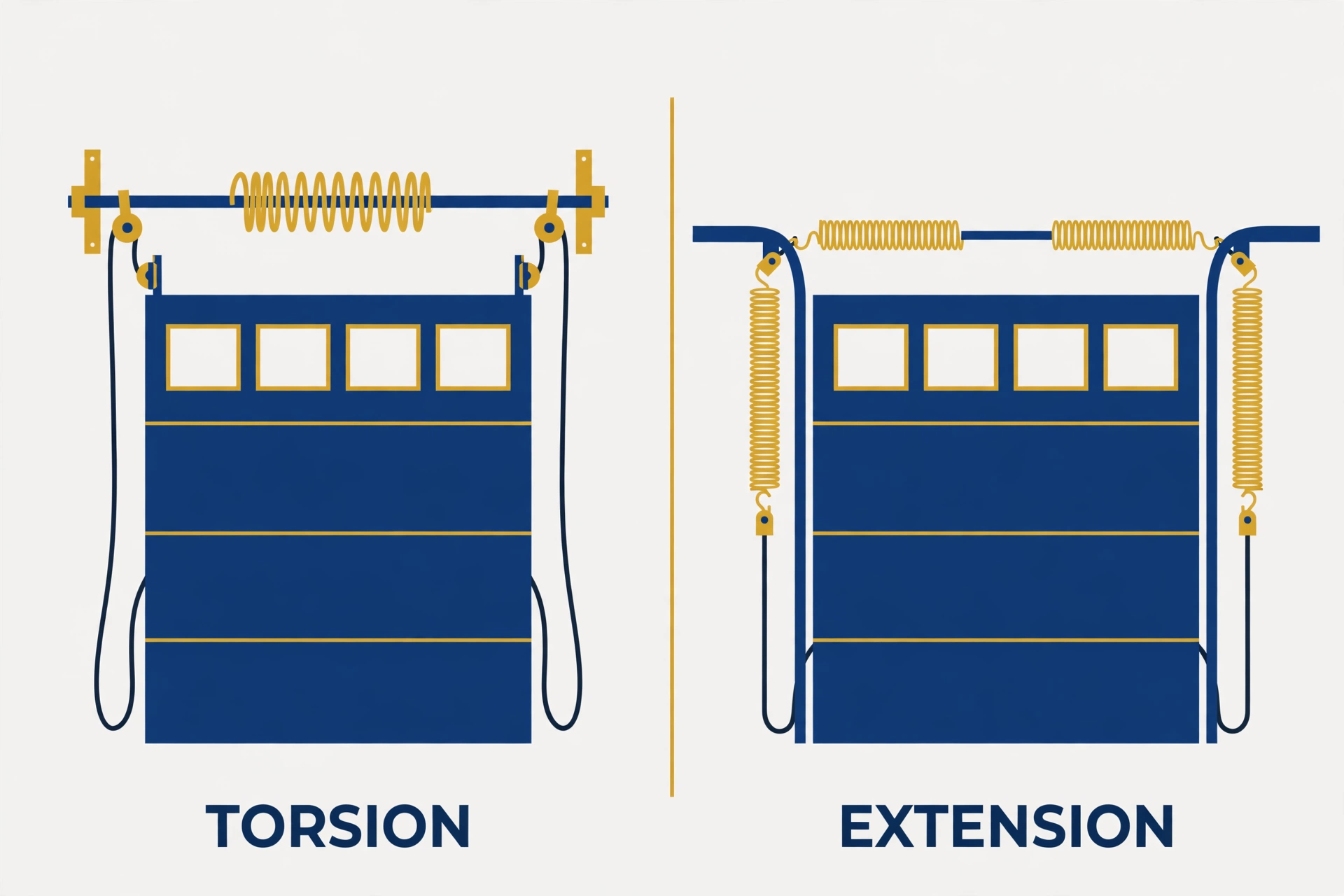
The rating varies by spring and by door: a heavier door needs a stronger spring, and a stronger spring is rated differently from a lighter one. What the rating means in practice is simple: a door used several times a day uses up its cycles far faster than a door used once a day, so two identical springs on two different doors can last very different lengths of time. That is why no one can give you a number of years for your spring without knowing how often your door runs. Our garage door spring types guide explains torsion and extension springs in plain language, and how each one carries the door's weight.
The cycle idea also explains why springs fail when they do. A spring does not wear out gradually and then stop — it works fine until the metal fatigues, and then it snaps, usually all at once and usually on a cold morning. The cold is not the cause; the wear is. A spring that has done most of its cycles is waiting for one cold morning to finish it, and that morning is the one when the door will not lift. The useful question is not how old the spring is, but how close it is to the end of its cycles — and the signs below are how you tell.
What wears springs out faster
Three things wear springs out faster than the rest, and all three are common in Massachusetts. The first is a heavy door: a solid wood door, an insulated double door, or a door with windows and hardware loads the spring more on every cycle than a light single door, so its cycles are used up sooner. The second is cold: metal contracts when it gets cold, and a spring that was already worn snaps on the first cold morning — which is why so many springs break in November and December rather than in summer. The third is daily use: a family that opens the door four or five times a day uses up cycles four or five times faster than a household that opens it once. Our garage door spring replacement service covers the check, the replacement, and the balance test — and a spring caught early is a scheduled visit, not an emergency on a freezing morning.
Salt air near the coast adds a fourth. A spring on a coastal door corrodes a little at a time, and the coil thins where the rust sits. A spring thinned by salt is the one that snaps when the cold arrives, because the metal has less left to give. Rust on the coil is worth looking at twice a year: a spring with rust spots is a spring that is aging faster than its cycles alone would suggest. If the coil is rusty and the door is slow or heavy, do not wait for the bang — call us and get it checked.
Door heavy, opener straining, or a gap in the coil? That spring is near the end — get it checked before it snaps.
Call Now to Speak to a SpecialistWhat are the signs a garage door spring is near the end?
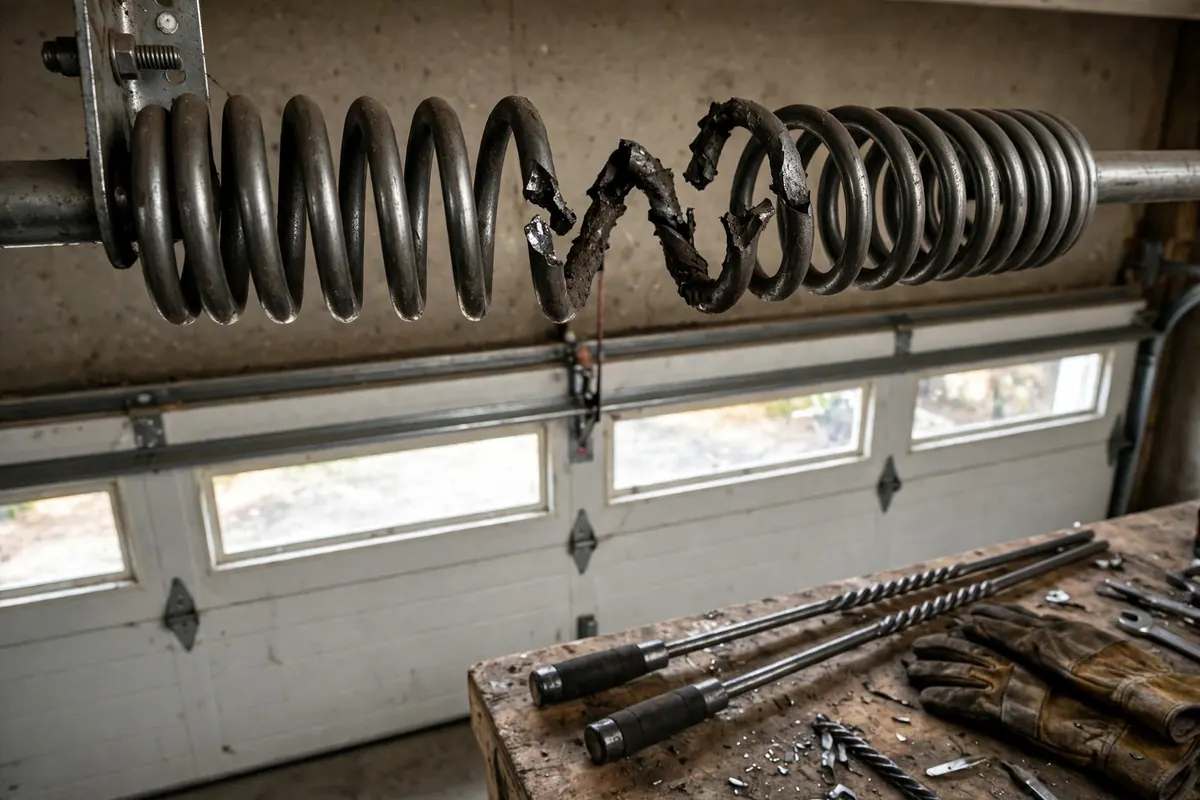
The signs are easy to spot, and they are worth checking before the first freeze. The first is a door that feels heavy: with the opener disconnected, a balanced door should stay put halfway — if it falls, or if it feels very heavy to lift by hand, the spring is no longer carrying its share of the weight.
The second is an opener that strains: it hesitates, grinds, or reverses for no reason, because it is doing the spring's work as well as its own. The third is a visible gap in the coil, where the spring has separated — a gap you can see is a spring that has already failed or is about to. A slow or jerky close is a fourth sign: the door moves in fits and starts because the spring is not holding the weight evenly. Our garage door spring fault checker walks through the same signs step by step, and tells you whether what you are seeing is a spring fault or something else.
One more sign is easy to miss: the door that used to stay put halfway now drifts down on its own. That drift means the spring has lost tension, and the door is heavier than the opener expects. It is not an emergency yet, but it is a spring with very little life left — and the next cold morning may be the one that finishes it. If you see any of these signs, do not keep running the door and hoping. Call us, describe what the door does, and get the spring checked before it snaps.
When should I replace a spring before it snaps?
The best time to replace a spring is before it snaps, and the best moment to check is autumn, before the first freeze. A pre-winter check looks at the spring, cables, drums, and door balance together, because a broken spring strains everything it works with — and a spring that snaps in January is an emergency on the coldest morning.
The same spring caught in October is a scheduled visit. If the spring is near the end, the visit will tell you straight, and the replacement is priced in writing on site before anything is fitted. Our garage door tune-up service covers the full annual check — lubrication, hardware, balance, and safety sensors — in one visit, and the spring is the first thing it looks at.
Whether to replace one spring or the pair is a question to ask on the visit, not a rule to decide in advance. The second spring is the same age and has done the same number of cycles, so it is often near the end too — but whether both are replaced is something the technician advises after seeing the door, the springs, and the balance. What matters is that the door is balanced and tested after the work, whichever springs are fitted, and that the cables and drums are checked at the same time. A spring job that ignores the cables is a job half done.
When should I call about a worn spring — and what should I say?
Call now if the spring has snapped: a loud bang, a door that will not lift, a visible gap in the coil. Leave it closed and call (833) 563-1552 — do not try to lift it, do not unwind anything, and do not keep running the opener, because the door can drop suddenly while you are under it.
Call soon if the door feels heavy, the opener strains, or the door drifts down on its own — those are the signs of a spring near the end, and a check now is a scheduled visit instead of an emergency later. Tell us three things on the phone: what the door does when you try it, whether you can see a gap in the spring, and how old the door is if you know. That is enough for us to confirm a visit time and bring the right part where possible. Start from our Bay State Garage Door Repair Pros homepage for every city we serve.
Garage door springs: the parts involved
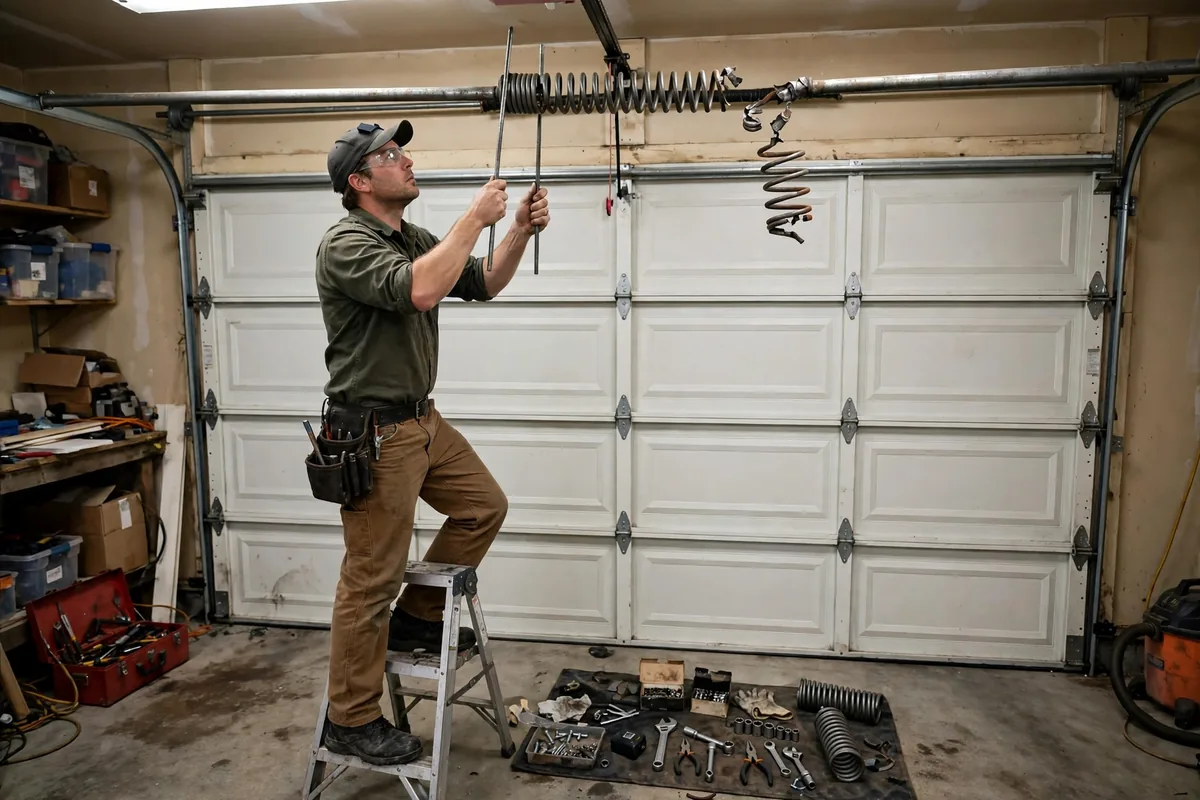
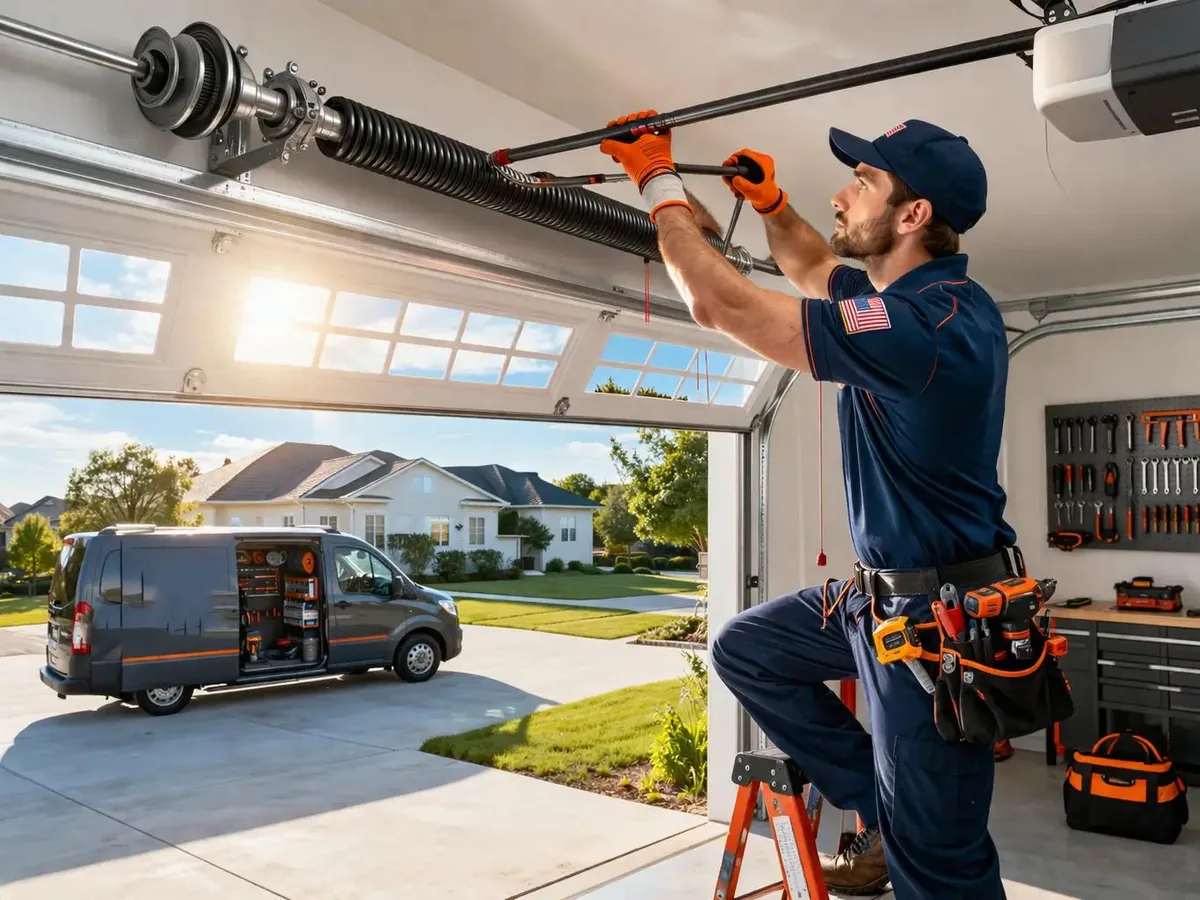
These images show the parts involved when a spring is checked or replaced — the spring types, the spring itself, the technician's work, and the winding.
Door heavy, opener straining, or a gap in the coil? That spring is near the end — get it checked before it snaps.
Call Now to Speak to a SpecialistFor local help, start from our Bay State Garage Door Repair Pros homepage, and read our garage door spring types guide for torsion and extension springs.
Frequently asked questions about how long garage door springs last
Broken-spring questions are answered on our garage door spring replacement page.
How long do garage door springs last?
A garage door spring lasts as many cycles as it is rated for — one cycle is one full open and close — not a set number of years. The rating varies by spring and by door, and a door used several times a day uses up its cycles far faster than one used once a day. There is no single number of years that applies to every door, which is why the signs below matter more than a date.
What wears garage door springs out faster?
Three things wear springs out faster than the rest: a heavy door, which loads the spring more on every cycle; cold snaps, which contract the metal and snap a spring that was already worn; and daily use, which simply uses up cycles faster. Salt air near the coast adds a fourth: it thins the coil a little at a time, and a spring thinned by salt is the one that snaps when the cold arrives.
What are the signs a spring is near the end of its life?
The signs are a door that feels heavy to lift by hand, an opener that strains or hesitates, a visible gap in the coil where the spring has separated, and a door that will not stay put halfway when the opener is disconnected. A slow or jerky close is another sign. If you see any of these, do not keep running the door — call us and get the spring checked before it snaps.
Should I replace one spring or the pair?
That is a question to ask on the visit, not a rule to decide in advance. The second spring is the same age and has done the same number of cycles, so it is often near the end too — but whether both are replaced is something the technician advises after seeing the door, the springs, and the balance. What matters is that the door is balanced and tested after the work, whichever springs are fitted.
About the author
Jude Bray is the lead technician at Bay State Garage Door Repair Pros, with 26 years in the trade. The business holds Massachusetts Home Improvement Contractor (HIC) Registration and Construction Supervisor License (CSL) credentials, plus IDEA garage door certifications.
Call Bay State Garage Door Repair Pros at (833) 563-1552, 24 hours a day, 7 days a week. A check in autumn is a scheduled visit, not an emergency on a freezing morning.
Call Now to Speak to a SpecialistLast updated: November 28, 2026. Author: Jude Bray, Bay State Garage Door Repair Pros. Business address: 98-2 Ames Pl, Lowell, MA 01851. Phone: (833) 563-1552. Email: [email protected]. No prices are quoted here — your exact price is confirmed in writing on site. Photos and illustrations on this page do not show real Bay State jobs or staff.