
Garage Door Safety Inspection Checklist
This garage door safety inspection checklist covers the things to check twice a year in Massachusetts: the 5-minute test a homeowner can do safely, what each test tells you, and what is technician-only. No tools, no adjustments — just looking, listening, and knowing when to call.
Check your garage door twice a year: look at the springs and cables, test the balance, test the auto-reverse with a paper-towel roll, and check the safety sensors. If any test fails, stop using the opener and call (833) 563-1552. Never adjust a spring, cable, or track yourself.
What is the 5-minute garage door safety check?
The whole check takes about five minutes, and it needs no tools at all — just your eyes, your ears, and the wall button. Do it in the autumn before the first freeze, and again in the spring after the winter has done its worst.
Start with the door closed and the opener on. Look at the springs and cables first: a gap in the spring coil, a frayed cable, rust on the coil, or a cable that has gone slack are all signs the door needs a visit. Then look at the rollers and the track: rollers that wobble, black residue on the track, or a track that is bent or dented are worth noting. Our garage door maintenance checklist covers the same twice-a-year routine from the maintenance side, including lubrication points and hardware checks.
Then listen. Open the door and close it again, and listen to how it moves. A smooth, quiet run is a healthy door. A squeak points to dry hinges or rollers; a grind points to worn rollers or bearings; a pop or bang points to a spring. A door that jerks, stops partway, or moves slowly is a door with a fault developing. Note what you hear, and when it started — that is exactly what the technician will ask you on the phone.
What does each safety test tell me — and what does a fail mean?
Every test in this checklist is a check, not a repair, and every fail has the same answer: stop using the opener and call. The balance test tells you whether the spring is still carrying the door's weight: a door that stays put halfway is balanced, and a door that falls is a door whose counterbalance has failed.
The auto-reverse test tells you whether the entrapment protection still works: a door that reverses on the paper-towel roll is safe, and a door that crushes it is not. The sensor check tells you whether the photo eyes can see each other: both lights on means they can, and one light out means they cannot. Our garage door spring fault checker walks through the same signs step by step, and tells you whether what you are seeing is a spring fault or something else.
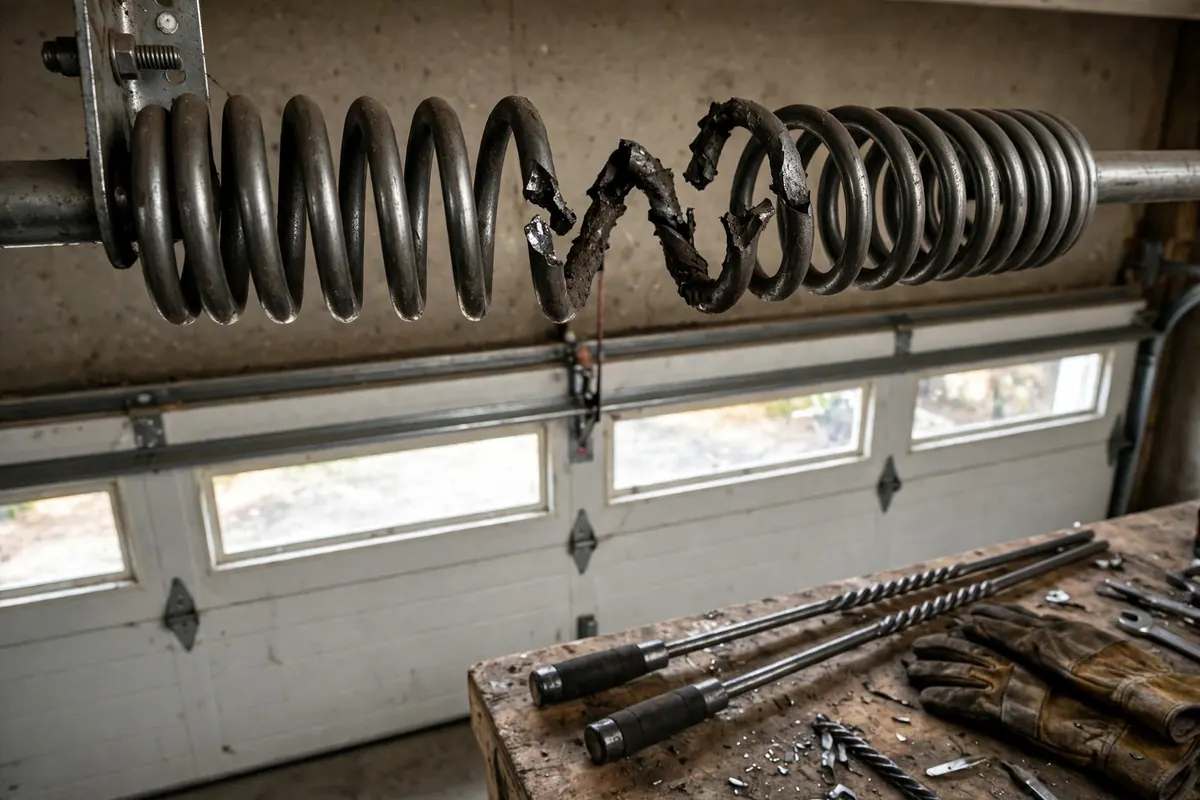
The visual check tells you the rest. Rust on the spring coil means the spring is aging faster than its cycles alone would suggest. A frayed cable means the cable is close to snapping — and a cable under full spring tension does not give warning before it goes. A bottom bracket that is thin or bent means the salt air has done its work, and the bracket is the next thing to let go. None of these is a do-it-yourself job: the homeowner's part is to see them early, and the technician's part is to fix them before they fail.
One test failed — a door that falls, a sensor light out, an auto-reverse that does not reverse? Stop using the opener and call.
Call Now to Speak to a SpecialistHow do I do the auto-reverse test right?
The auto-reverse test is the most important test on this list, because it is the one that protects children and pets. Put a paper-towel roll on the floor under the door, in the middle of the opening, then close the door with the wall button and watch.
The door should touch the roll and reverse straight away, back to fully open. That is a pass. If the door crushes the roll and keeps going, or if it does not reverse at all, that is a fail — stop using the opener immediately and call us. Do not try to adjust the close-force setting yourself: the force setting is not a homeowner adjustment, and turning it up to make the door close is how a door that should have reversed ends up crushing something instead.
Test the auto-reverse every time you do the twice-a-year check, and test it again after any opener work. An opener that has been repaired, re-paired to a new remote, or had its power cut and restored can lose its settings, and the auto-reverse is the first thing to verify before the door goes back into daily use. If the test passes, the door is safe to use. If it fails, the door is not — and no amount of holding the wall button down makes it safe.
How do the safety sensors stop most reversals?
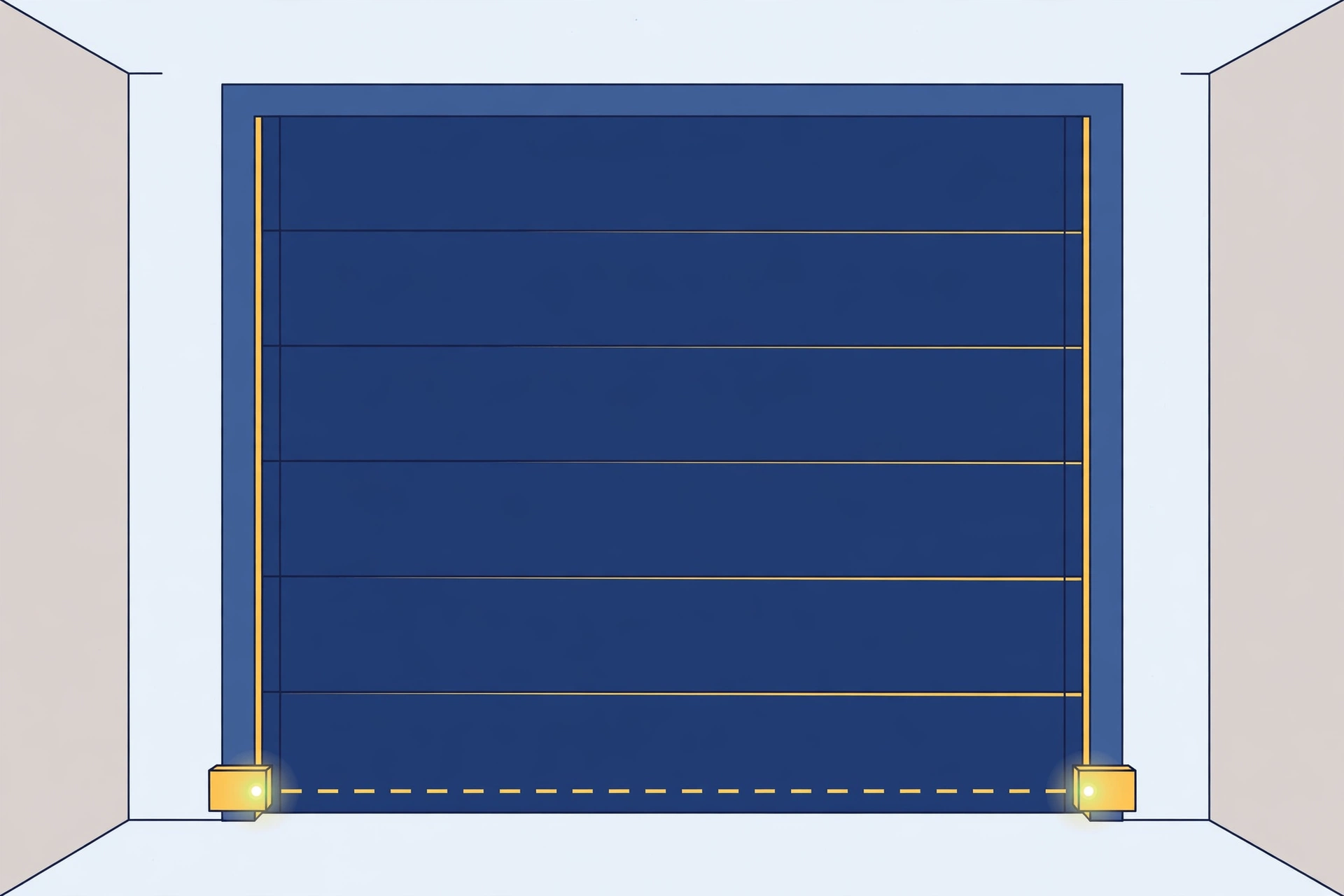
Most doors that reverse for no reason have a sensor problem, not a door problem. The photo-eye sensors sit low on either side of the doorway, and they need a clear line of sight to each other.
Wipe both lenses with a soft cloth — dust, cobwebs, and salt spray are the usual causes — and check that both lights are on. Clear anything in the doorway, including leaves and snow, and check that nothing is leaning against a sensor. Our garage door safety sensors guide explains the same check in full, including what sunlight glare does to a sensor on a bright morning.
If one light is out, or the door only closes while you hold the wall button down, the sensors are not working — and holding the button down is the opener's override, not a fix. A door that only closes on override is a door whose entrapment protection is switched off, and it should not be used that way. Leave it closed and call us. The sensor check is a five-second job, and it is the check that stops most of the calls we get about doors that reverse for no reason.
What is technician-only
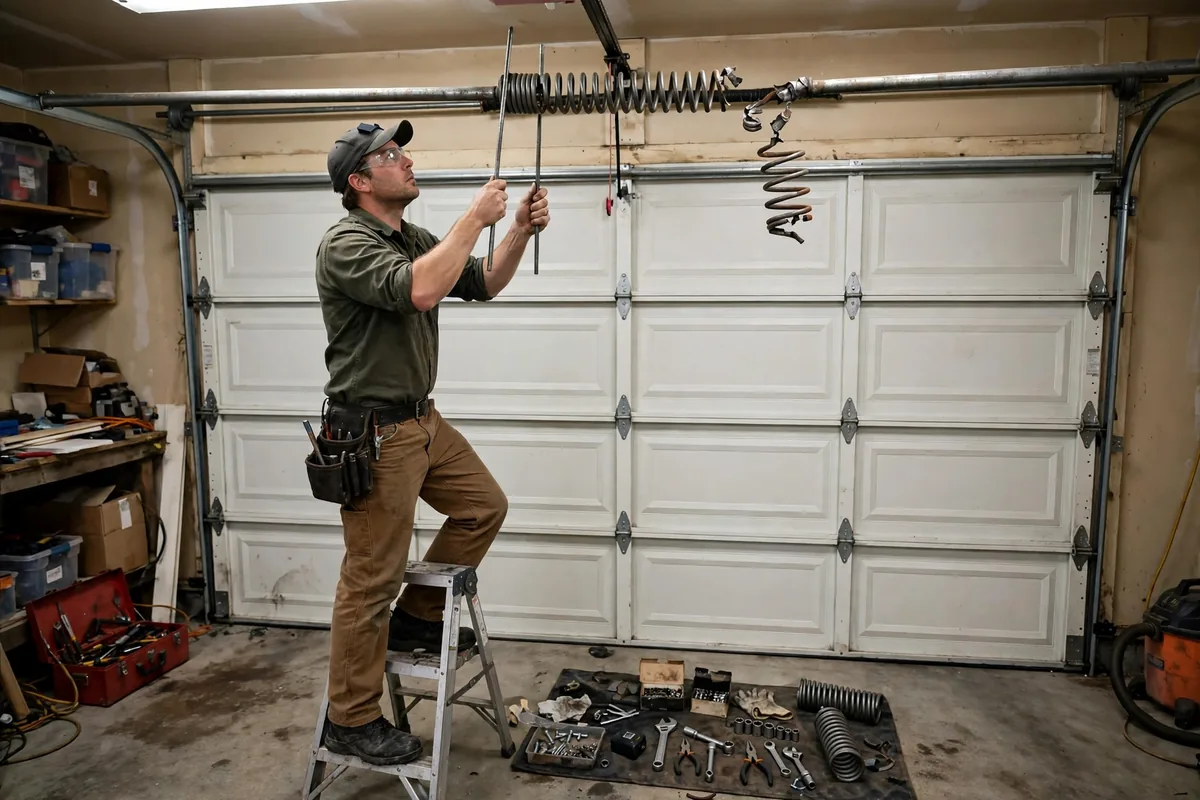
Three things on a garage door are always technician-only: the springs, the cables, and the track. The spring carries the door's weight, and a spring under tension can injure you badly if it is touched the wrong way. The cable holds the door to the drum under full spring tension, and a cable that lets go does so suddenly. The track holds the door's path, and a track that is bent or misaligned needs the door taken off and re-hung. None of these is a homeowner job, and none of them is a job to learn from a video. Our garage door tune-up service covers the full professional version of this checklist — lubrication, hardware, balance, and safety sensors — in one visit, with the spring and the bottom seal first on the list.
The rule is simple: if a test fails, or if what you see involves a spring, a cable, or a track, leave the door closed and call (833) 563-1552. Tell us three things on the phone: which test failed, what the door does when you try it, and whether the door is crooked, heavy, or off its track. That is enough for us to confirm a visit time. Start from our Bay State Garage Door Repair Pros homepage for every city we serve.
The safety inspection: the parts to check
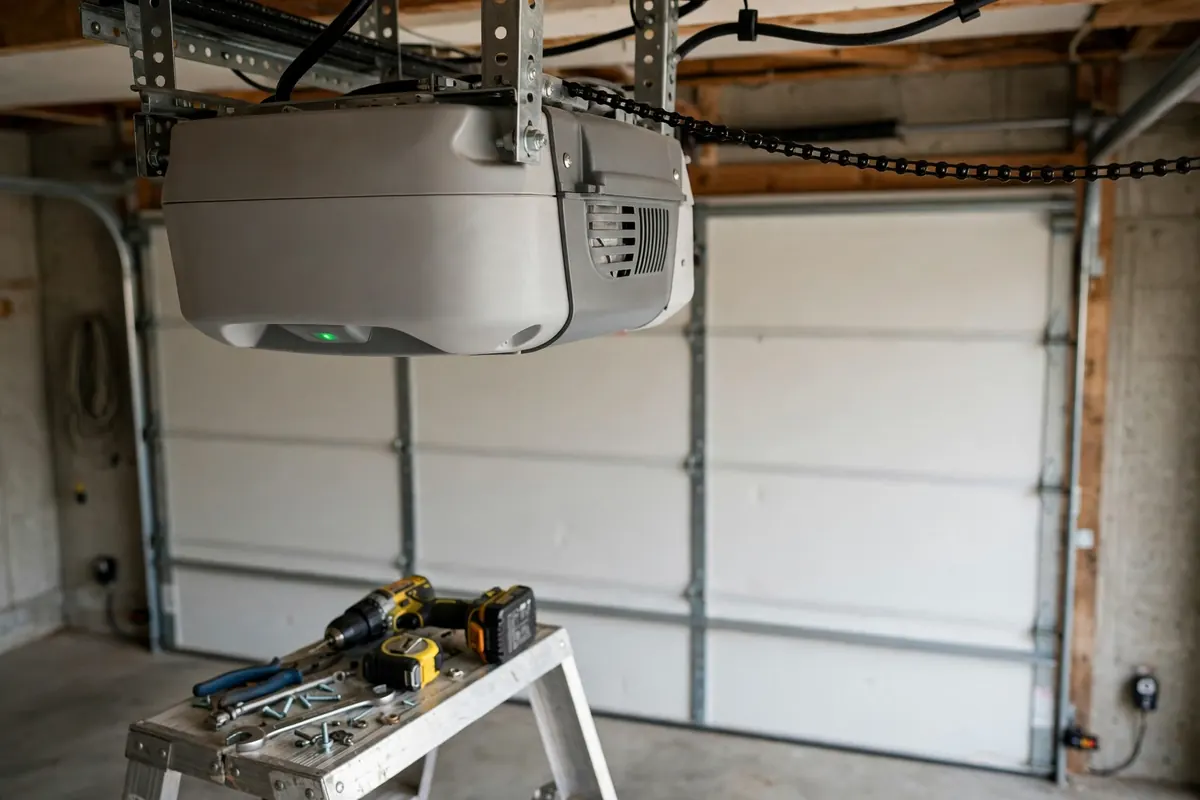
These images show the parts the safety inspection checks — the sensors, the spring, the technician's work, and the opener.
One test failed — a door that falls, a sensor light out, an auto-reverse that does not reverse? Stop using the opener and call.
Call Now to Speak to a SpecialistFor local help, start from our Bay State Garage Door Repair Pros homepage, and read our garage door safety sensors guide for the sensor check in full.
Frequently asked questions about garage door safety inspection
How often should I inspect my garage door?
Twice a year is the right rhythm for most Massachusetts homes: once in the autumn, before the first freeze, and once in the spring, after the winter has done its worst. A door that is used several times a day, a door with children or pets in the house, or a coastal door in salt air is worth checking more often — but twice a year, done properly, catches most problems before they become emergencies.
How do I test the auto-reverse on my garage door?
Put a paper-towel roll on the floor under the door, then close the door with the wall button. The door should touch the roll and reverse straight away. That is the whole test — it is a check only, never an adjustment. If the door does not reverse, or it crushes the roll and keeps going, stop using the opener and call us. Do not try to adjust the force setting yourself.
What is the balance test, and how do I do it safely?
With the door fully closed, pull the red emergency release cord to disconnect the opener, then lift the door by hand to halfway and let go. A balanced door stays put. If it falls, or if it feels very heavy to lift, the counterbalance has failed — usually a spring — and the door is not safe to use. Reconnect the opener, leave the door closed, and call us. Do not keep testing a door that falls.
What should I check on the safety sensors?
Check three things: both sensor lenses are clean, both lights are on, and nothing is in the doorway. Wipe the lenses with a soft cloth — dust, cobwebs, and sunlight glare are the usual causes of a door that reverses for no reason. If one light is out, or the door only closes while you hold the wall button down, the sensors are not working and the door needs a visit. Our safety sensors guide explains the check in full.
When should I call a technician instead of checking the door myself?
Call a technician for anything involving a spring, a cable, or a track — and for any test that fails. A broken spring, a frayed cable, a door that hangs crooked, or a door that falls when the opener is disconnected are all call-now faults. The homeowner's job is to look and to test; the technician's job is everything that carries the door's weight. If you are unsure whether something is safe, leave the door closed and call.
About the author
Jude Bray is the lead technician at Bay State Garage Door Repair Pros, with 26 years in the trade. The business holds Massachusetts Home Improvement Contractor (HIC) Registration and Construction Supervisor License (CSL) credentials, plus IDEA garage door certifications.
Call Bay State Garage Door Repair Pros at (833) 563-1552, 24 hours a day, 7 days a week. Stop using the opener, leave the door closed, and let a technician do the rest.
Call Now to Speak to a SpecialistLast updated: November 28, 2026. Author: Jude Bray, Bay State Garage Door Repair Pros. Business address: 98-2 Ames Pl, Lowell, MA 01851. Phone: (833) 563-1552. Email: [email protected]. No prices are quoted here — your exact price is confirmed in writing on site. Photos and illustrations on this page do not show real Bay State jobs or staff.