
Garage Door Safety Sensors: How They Work
Garage door safety sensors are the two photo-eye units near the floor that stop your door closing on anything in its path. This guide explains how the infrared beam works, what the indicator lights mean, and which faults you can fix yourself.
Garage door safety sensors are two photo-eye units that project an invisible beam across the doorway: while the beam is unbroken the door may close, and the moment it breaks the door stops and reverses. Most reversing doors are a blocked beam, a dirty lens, or a knocked bracket — not a dead opener.
What garage door safety sensors do, and why the door reverses
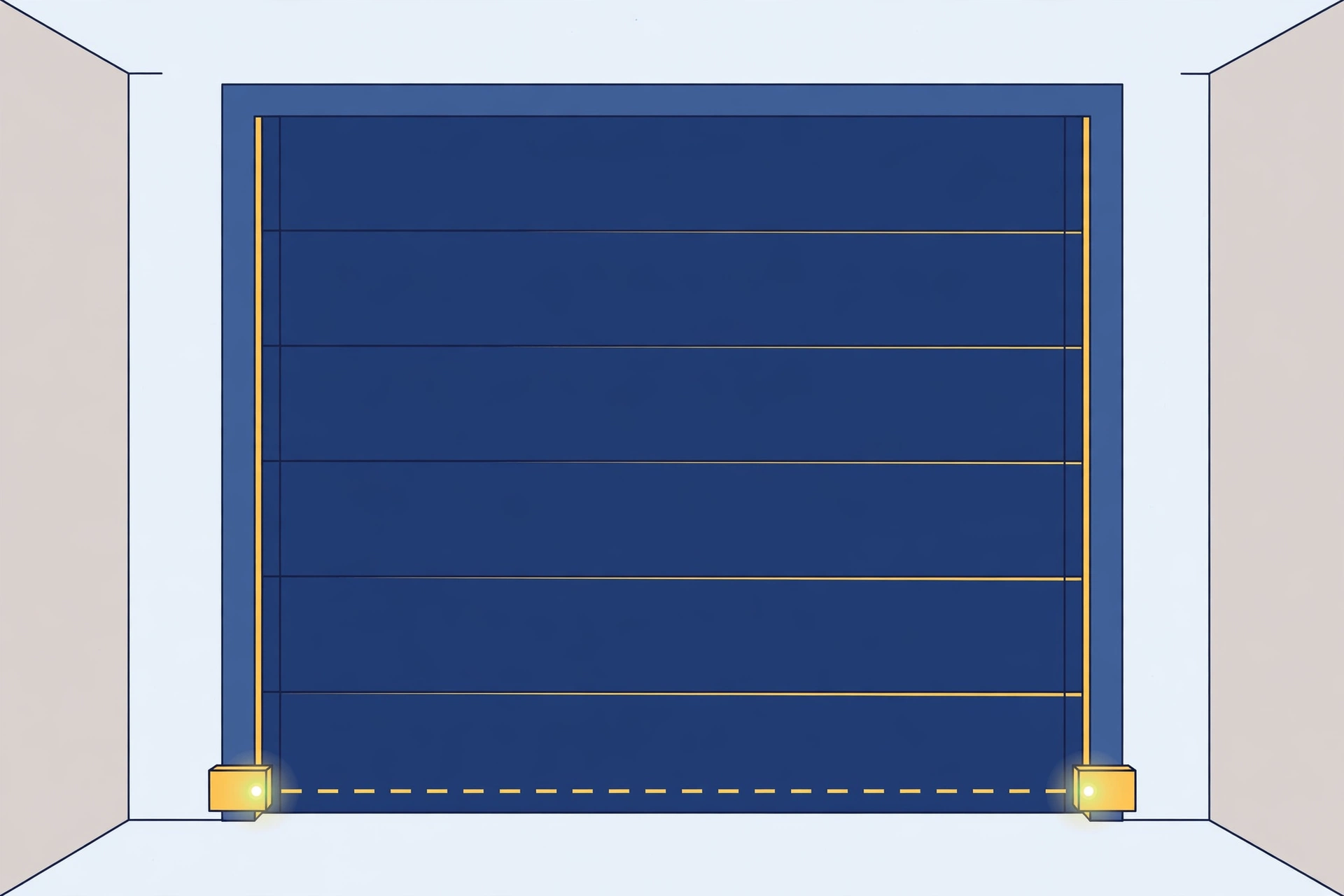
Garage door safety sensors — often called photo-eyes — are the two small units mounted near the floor on either side of the door opening. One is the sender: it projects an invisible infrared beam across the doorway. The other is the receiver: it watches for that beam. While the beam is unbroken, the opener is allowed to close the door. The moment something breaks the beam — a person, a pet, a bike, a box — the opener stops the closing door and sends it back up. That reversal is the whole point: it keeps a heavy door from closing on whatever is in its path.
This is not an optional extra. Since 1993, federal safety standards for residential garage door openers sold in the United States have required an external entrapment protection system, and photo-eye sensors are the standard way of providing it. A door that closes with dead, disconnected, or bypassed sensors is not just inconvenient — it has lost its main protection against closing on a person or a pet. If your door will only close when you hold the wall button down, that is the opener's built-in override, not a fix. It is meant for limited use while the safety system is being repaired, never as a permanent workaround.
How the beam works: sender, receiver, and indicator lights
The two units sit low — federal guidance puts them about four to six inches above the floor — one on each side of the opening, facing each other. Low-voltage wires run from each sensor up to the opener motor unit on the ceiling. The sender's LED shows it has power and is emitting the beam; the receiver's LED shows it is actually receiving it. Colours vary by brand, but the pattern is consistent: a solid light on the receiver means a clear beam, while a blinking, dim, or dark light means the beam is broken, the lens is dirty, the bracket has moved, or the wiring is faulty.
That LED pattern is your best first clue. If the sender light is solid but the receiver light blinks, the beam is not reaching the receiver — something is in the way, a lens is dirty, or the bracket has been knocked out of line. If both lights are dark, power or wiring is the likelier cause. Note which light is doing what before you call: it tells a technician whether to bring alignment tools, a replacement sensor, or wiring parts, and it saves a second visit.
The five most common sensor faults, and which ones you can fix yourself
First, a blocked beam. Toys, bins, a garden hose, or a cobweb strung across the doorway all break the beam, and the door reverses exactly as designed. Move the obstruction and the door should close normally — this is the most common cause and the easiest fix. Second, dirty lenses. Dust, pollen, and winter road salt grime build up on the lenses until the receiver can no longer see the beam clearly. Wipe both lenses gently with a soft, dry cloth; never use abrasive cleaners or scrape the lens. Third, a knocked bracket. A bump from a car bumper, a bin, or a child's bike can shift a sensor by a few degrees, which is enough to drop the beam. Re-aiming brackets is technician work on this site's guidance, because it sits alongside wiring and mounting checks — but spotting that a bracket is visibly bent or loose is a useful diagnosis to report.
Fourth, sunlight interference. Low, bright sun shining straight into the receiver lens can overwhelm the infrared beam, which is why some doors only misbehave at a certain time of day. Shading the receiver side or reporting the time-of-day pattern helps a technician fix it properly. Fifth, wiring and dead sensors. Wires can be chewed, corroded, or nicked by a staple, and a sensor's LED can simply die with age. Both lights dark, or a fault that survives cleaning and clearing, points here — and both are technician jobs, not homeowner repairs. Never tape over a sensor, unplug it, or jumper the wires to force the door shut: that removes the protection the system exists to provide.
Homeowner-safe sensor checks: clean, clear, and look — nothing more
The safe homeowner routine is short, and it deliberately stops before anything involving tension, alignment hardware, or wiring. One, clear the doorway: move anything stored near the sensors and sweep cobwebs out of the beam path. Two, clean both lenses with a soft, dry cloth. Three, look at the indicator lights and note which are solid, blinking, or dark. Four, try the door once from the remote and note exactly what happens — refuses to move, starts down then reverses, or reverses at the same point every time. That last detail matters: a door that reverses at the same point every time may instead be catching on a bent track or a damaged roller, which is a different repair.
What stays off the homeowner list: adjusting spring tension, touching lift cables, loosening track brackets, rewiring sensors, and testing the safety reverse by standing in the doorway. The broom-handle test — passing a long object through the beam while the door closes, without any part of your body under the door — is a check a technician performs; the homeowner version is simply keeping the beam clear and the lenses clean. If cleaning and clearing do not restore normal closing, call (833) 563-1552, Monday to Saturday, 9:00 AM to 6:00 PM, and describe the lights and the symptom — that description is what lets a technician arrive with the right parts.
When a sensor fault is really something else
Not every reversing door is a sensor problem, and misdiagnosing it wastes a visit. If the door reverses at the same height every time, or only when it is nearly closed, suspect a track, roller, or panel problem rather than the beam — a door catching on a bent track or a damaged roller stops in the same place because the obstruction is physical, not optical. If the door is heavy, slow, or uneven as well as reversing, the spring or cable system may be wearing, and that is a technician-only repair. And if the opener hums or clicks without moving the door at all, the opener motor or its drive may be at fault rather than the sensors.
That is why the symptom description matters so much. “It reverses” could be sensors, tracks, rollers, or opener force settings, and each points to a different repair. Note when it happens, whether the lights blink, and whether the door behaves differently from the wall button versus the remote. For opener-side faults, see opener repair; for a door that needs a full check of rollers, hinges, and sensor alignment together, see tune-up and maintenance. Both pages cover the technician side of the work this guide deliberately leaves out.
Sensor care through a Massachusetts year
Massachusetts gives sensors a harder year than most climates. Winter road salt grime fogs lenses, summer pollen coats them, autumn leaves pile up in the track area and across the beam path, and low winter sun shines straight into receivers at certain times of day. A quick lens wipe and doorway clear once a month — and again before winter — prevents most sensor callouts before they happen. Keep storage away from the sensor brackets themselves: bins leaning against a bracket are how most brackets get knocked out of line in the first place.
If your door starts reversing and the season has just changed, check the lenses before you assume a part has failed. Grime builds gradually, so the beam weakens gradually, and the first symptom is often an intermittent reversal that only happens on bright or damp days. That pattern — intermittent, weather-linked, fixed by a wipe — is the signature of a dirty lens, not a dying opener. Persistent faults that survive a clean, on the other hand, deserve a prompt call: a door that cannot close properly is a security problem as well as a safety one.
Garage door repair work
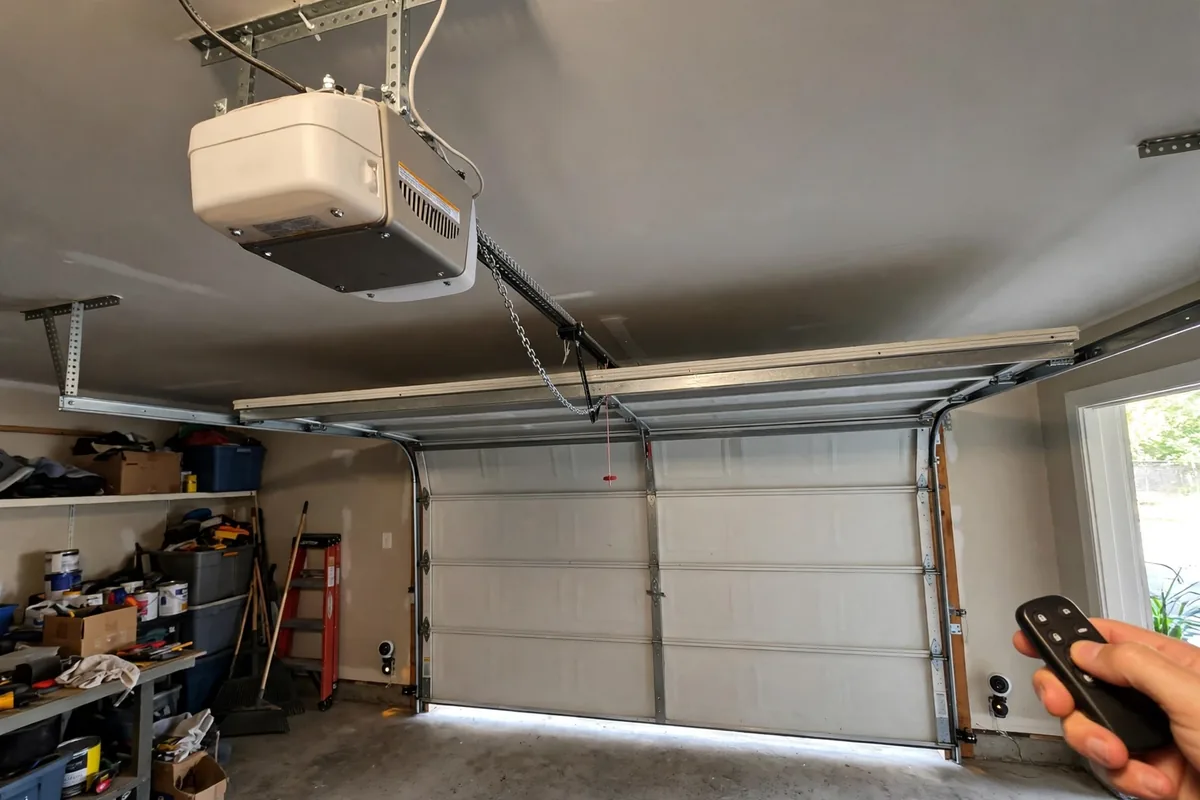
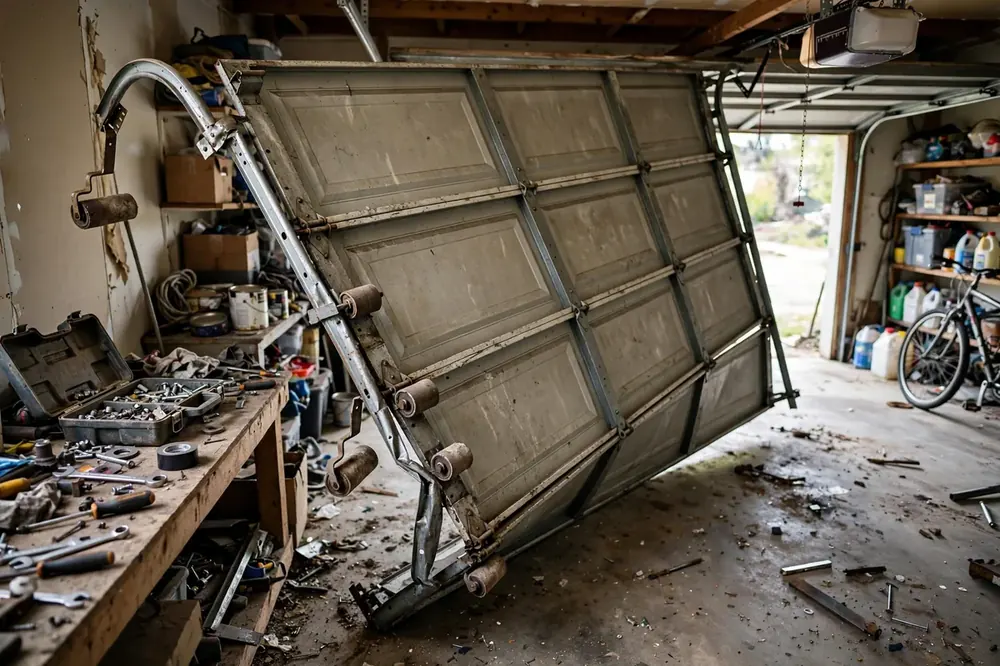
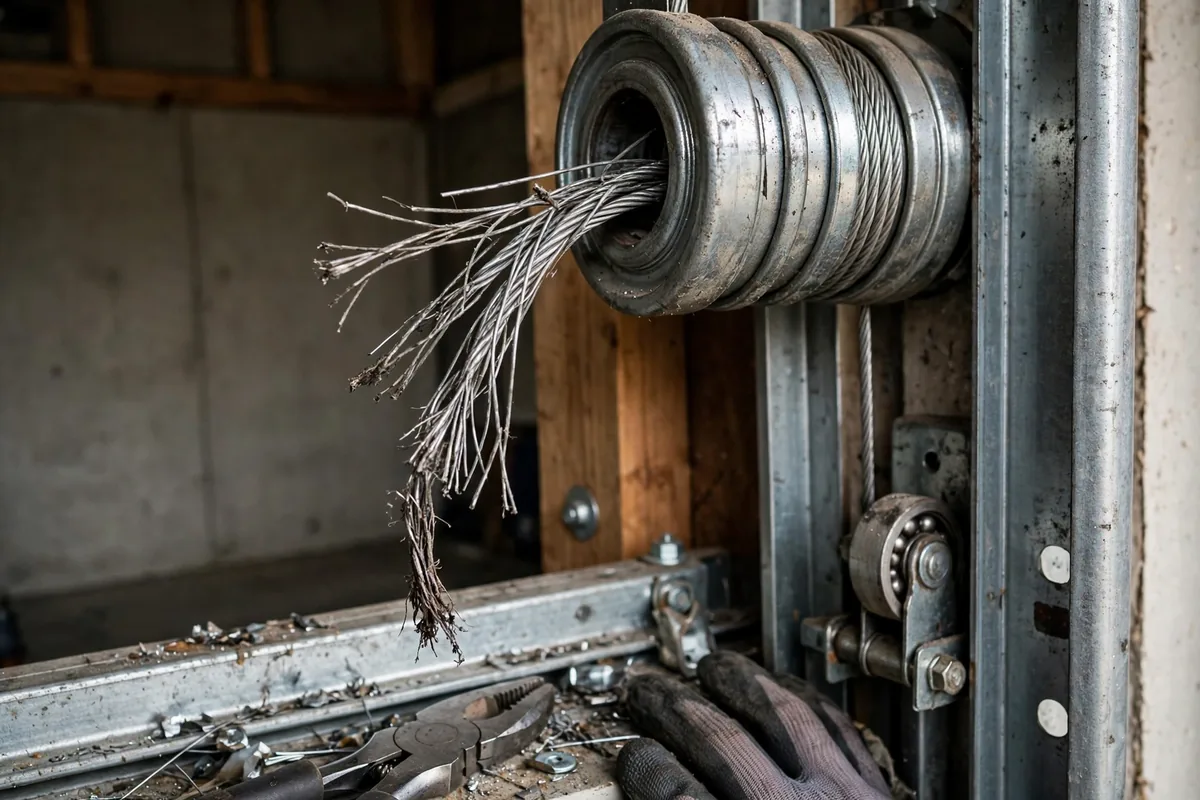
Ready for help? Call (833) 563-1552, Monday to Saturday, 9:00 AM to 6:00 PM, and describe the problem.
Call (833) 563-1552For local help, start from our Bay State Garage Door Repair Pros homepage, see our pages for garage door repair in Lowell and garage door repair in Cambridge, and read Garage Door Maintenance Checklist next.
Frequently asked questions about garage door safety sensors
Why does my garage door start to close and then reverse?
Most often, the photo-eye safety sensors are not seeing each other. A blocked beam, a dirty lens, a knocked bracket, or a wiring fault makes the opener treat the doorway as blocked, so it stops the door and sends it back up rather than closing on something.
What exactly are garage door safety sensors?
They are the two small photo-eye units mounted low on either side of the door opening. One sends an invisible infrared beam across the doorway and the other receives it. While that beam is unbroken, the opener is allowed to close the door; when it breaks, the door stops or reverses.
What can I safely check myself before calling?
Look for anything blocking the beam, wipe both lenses gently with a soft, dry cloth, and check the indicator lights. Do not touch springs, cables, or track brackets, and do not bypass the sensors — if cleaning and clearing do not fix it, the fault needs a technician.
Why do my sensors fail more in bright sunlight or winter?
Low, bright sunlight can shine straight into a receiver lens and confuse it, and winter road salt grime fogs the lenses. Shade the receiver side if you can, keep the lenses clean, and treat a fault that only appears at one time of day as a sensor problem, not a random glitch.
Do I have to replace both sensors if one fails?
Not always. A technician first checks alignment, lenses, and wiring, because a single faulty wire or a dead LED on one side is a common cause. If one sensor has genuinely failed, both are often replaced as a matched pair so the beam strength matches, but that is decided after testing.