
Winter Garage Door Problems in Boston, MA
A door that worked fine in October can refuse to move on the first freezing morning in Boston. These are the winter garage door problems Boston homeowners meet most — frozen seals, snapped springs, slow doors, and sensors blocked by snow — and what each one means.
Start with the bottom seal: if meltwater froze the door to the floor, the opener hums and the door stays put. If you heard a bang like a gunshot, the spring snapped. A door that moves slowly or stops partway is usually thickened grease, a stiff roller, or ice on the door itself.
Why is my garage door frozen to the ground?
The opener hums or starts to lift, then stops or reverses. Look along the bottom edge: if the seal is iced to the concrete, the door is held down, not broken. Meltwater runs under the bottom seal by day — snow tracked in on tires, a midday thaw, or rain — and freezes overnight.
A cracked or flattened seal makes it worse, because it lets more water under the door than a sound seal would. Our garage door frozen shut guide explains how to tell ice from a broken spring, and what never to do when the door will not move.
Free the seal before you touch the opener button again. Unplug the opener so nobody else tries it, then break the ice along the bottom edge with a plastic scraper or warm — not boiling — water, and dry the slab afterwards. Do not chip at it with a metal tool, and do not force the door with the opener: the opener will strain against the ice and can strip its gear or pull a cable off the drum. If the door still will not move once the ice is gone, or if it moves an inch and stops, the fault is a broken part, not ice — leave it closed and call (833) 563-1552.
What does a bang like a gunshot mean: did the spring snap?
A torsion spring has almost certainly let go. Springs are steel coils under constant tension, and cold makes the metal less forgiving, so a spring with few cycles left is more likely to snap in a freeze. The door will not lift, and it may feel far too heavy to move by hand.
Boston's freeze-thaw cycle makes this the most common winter failure across the city: the spring that was already tired picks the coldest night to give up, and the bang is the sound of the coil breaking.
Do not try to lift the door, do not keep running the opener, and do not touch the spring. The spring carries the door's weight, and without it the door can drop suddenly. Our garage door spring snapped in cold weather guide explains the same failure in full, and our garage door spring replacement service covers the check, the replacement, and the balance test. A spring caught early is a scheduled visit, not an emergency on a freezing morning.
Heard a bang on a cold morning, or a door that will not lift? That is a broken spring until proven otherwise — leave the door closed and call.
Call Now to Speak to a SpecialistWhy does my door go up slowly or stop partway in winter?
Cold thickens the lubricant on the rollers and hinges, so the door drags where it used to glide — and a door made heavier by ice on its face asks more of the opener than the opener can give.
A stiff roller, a track with ice in it, or a spring near the end of its life all slow the door the same way, and the opener gives up before the top. Watch the door run: it should move smoothly, without jerking, scraping, or loud banging, and a door that stops partway is a door telling you something is wrong.
If the door stops partway or jerks, stop running it. A slow door is often a worn part away from a stuck one, and running the opener against a door that will not move can strip the drive gear or pull a cable off its drum. Clear snow and ice from the bottom of each track and from the line where the door closes, and look at the spring coil for a gap or rust — but do not touch the spring, the cable, or the track yourself.
Why does my garage door reverse as it closes in winter?
Often a safety sensor that is caked with snow, frosted over, or knocked out of line by a shovel or a snowblower. The sensors sit low on each side of the door, and when they cannot see each other the opener treats the path as blocked and reverses the door.
Wipe both lenses with a soft dry cloth and check that they still face each other squarely — both lights on means they can see each other — and clear slush from the door line before nightfall.
If the lights stay off after cleaning, or the door still reverses with a clear path, the fault is in the wiring, the sensor, or the opener itself, and that is a visit. Test the safety reversal the way the check is meant to be run: lay a roll of paper towels flat under the door and close it. It should touch and reverse. If it does not, stop using the opener and call.
5. A cable slips or frays in the salt
Salt and meltwater sit at the bottom corners, where the cables attach, and rust there is a slow winter fault that ends suddenly. Road salt rides in on tires and drips onto the floor right where the door's bottom section, brackets, and cables live. A few times a winter, on a mild day, hose or wipe down the bottom of the door and the floor along the door line, and let it dry with the door partly open. Fresh water holds back the rust that eats away at cables, brackets, and the bottom panel.
Look at the cables, do not touch them. Rust, a gap in a spring coil, or frayed strands on a cable are worth a call before the cold makes them fail — and a cable that lets go does so suddenly, under full spring tension. If the door hangs crooked or one side drops, the cable has already failed: leave the door closed and call.
6. The remote stops working in the cold
Cold drains batteries, and a weak remote battery is one of the simplest fixes of the season. Replace the battery, then use the wall button to tell whether the opener itself still responds: if the wall button works and the remote does not, the remote was the whole fault, and no visit is needed. If neither works, check the power to the opener first — a tripped outlet or a tripped breaker is the next thing to look at, and the opener's outlet is often on the same circuit as the garage lights.
Lock mode is the setting that catches people out: a switch or a long press on the wall control that disables the remotes on purpose, easy to bump by accident. If the wall button works but the remotes do not, check lock mode first — press and hold the lock button until the icon goes out, then test a remote. If the remote works again, that was the whole fault.
What is safe to do yourself
Some winter garage door problems are well within reach of a homeowner. Free a frozen seal with a plastic scraper or warm water, clear the tracks and the threshold of snow, salt, and ice, clean the sensor lenses, and replace the remote battery. Lubricate the moving parts with a garage door lubricant or white lithium grease on the hinges, the roller bearings, and a light coat on the springs — before the first cold snap, and again when the weather warms up. Do not grease the inside of the tracks; that collects grit.
Not safe, whatever the weather: any work on springs, cables, drums, or bottom brackets. They hold enough tension to injure you badly if they are touched the wrong way. The homeowner's job is to look and to test; the technician's job is everything that carries the door's weight. Our winter garage door guide for Massachusetts explains the full pre-freeze check, including what to look for on the seal and in the track.
What a visit covers — and what it costs
A winter visit starts with the same question as this post: does the door close all the way, and if not, why not? The spring, the cables and drums, and the door's balance are all checked, because a door that does not close properly does not lock properly either. The bottom seal is checked for cracks and gaps, the sensors are tested, and the door is run through a full open and close. No Bay State price is published here. Most common repairs are reported in the $150 to $400 range by other Massachusetts sources — a cable or roller job at the low end, a spring or opener job higher. Your exact price is confirmed in writing on site. A door that will not open can trap a car inside, and one that will not close leaves the garage exposed to snow and wind — and our emergency garage door repair service covers it any time of day or night. Start from our Bay State Garage Door Repair Pros homepage for every city we serve.
Winter garage door problems: the parts involved
These images show the parts winter tests hardest — the spring, the track and rollers, the cable and drum, and the opener.
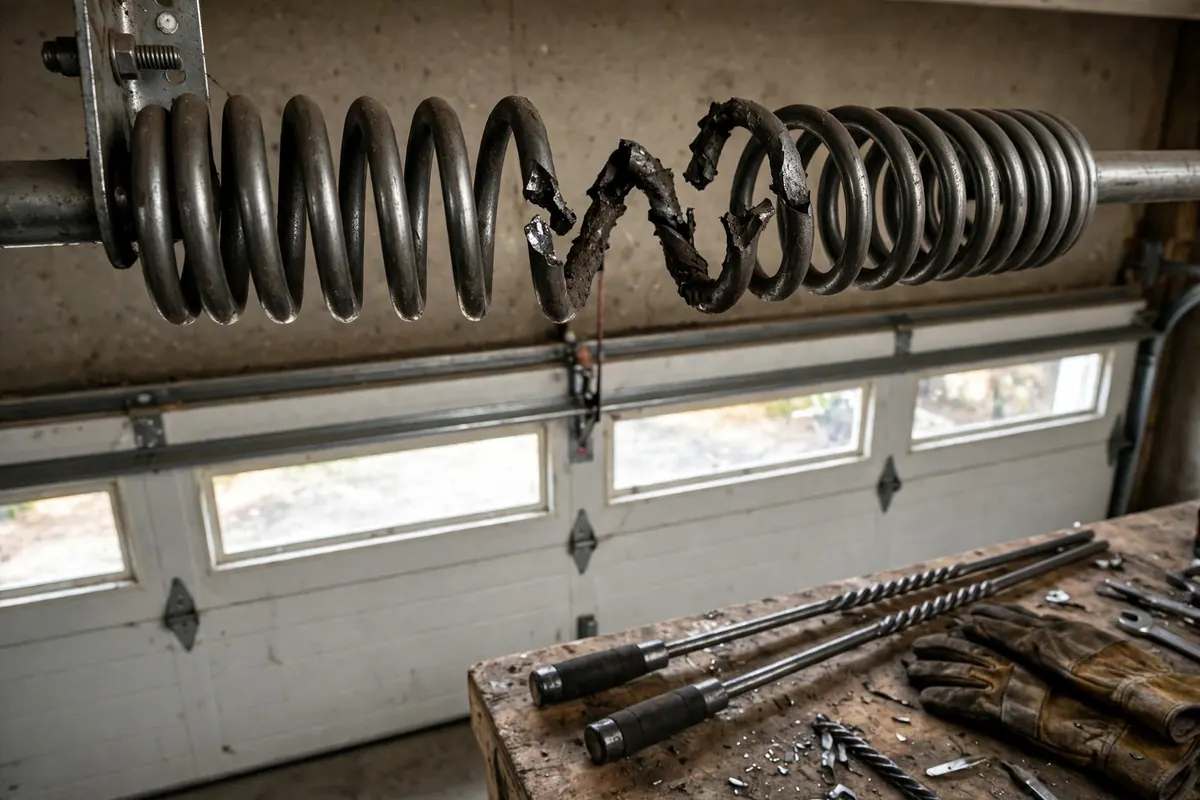
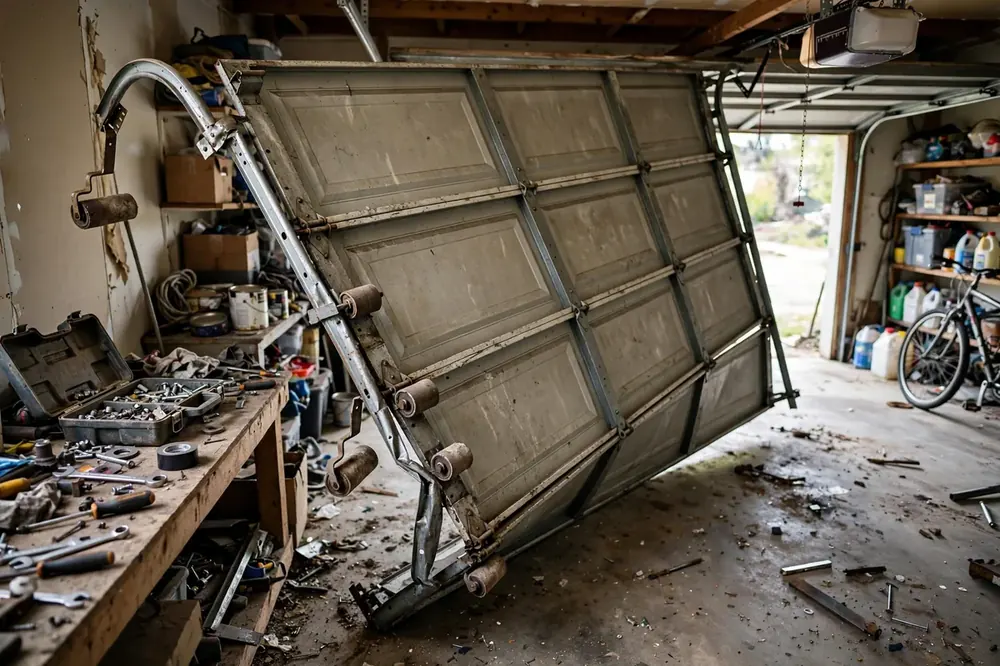
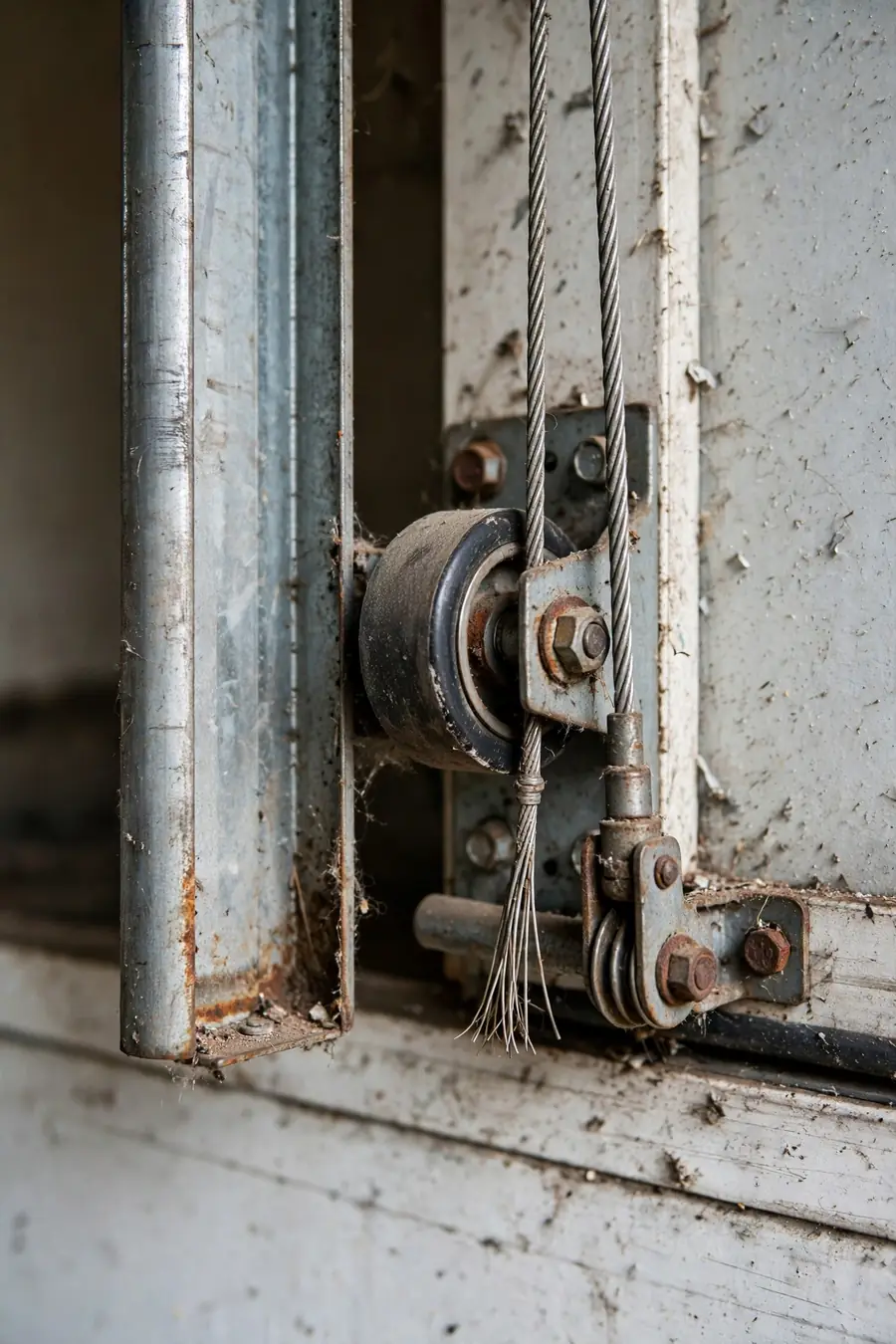
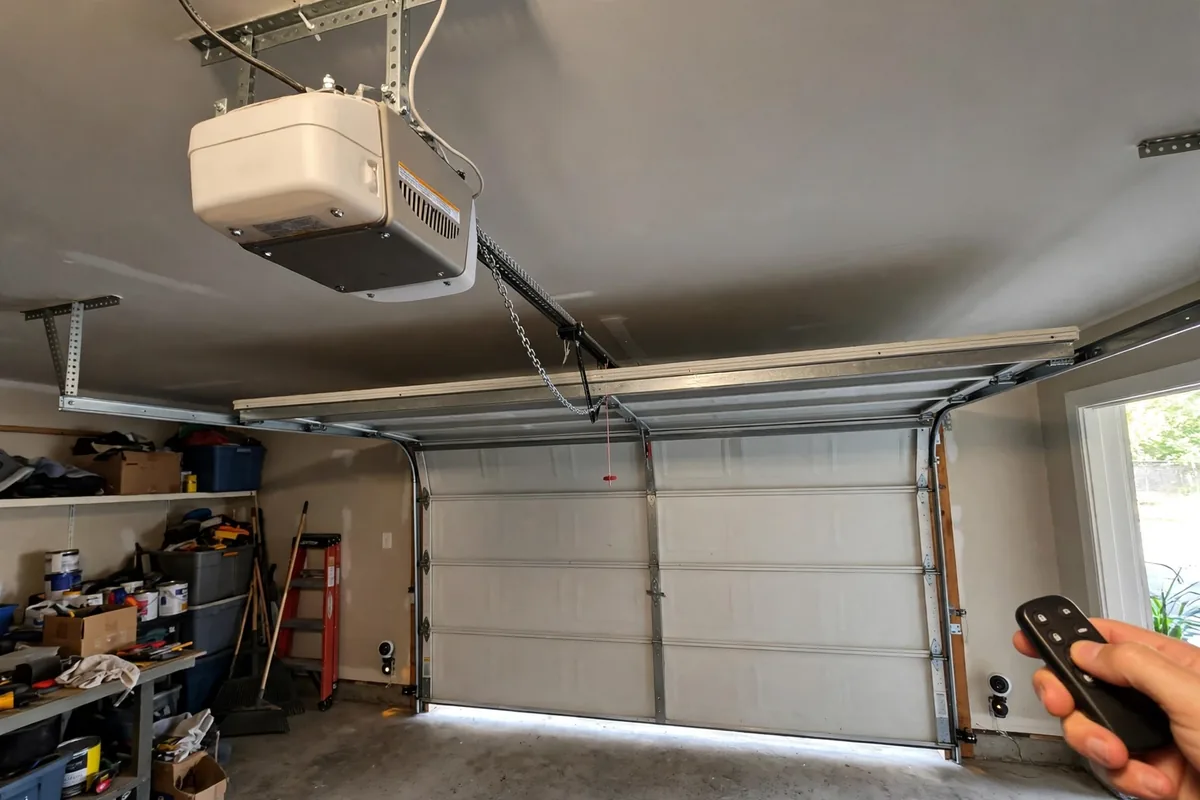
Door slow, noisy, or heavy after the first freeze? The cold tests the same parts again every night — get it checked before the next freeze.
Call Now to Speak to a SpecialistFor local help, start from our Bay State Garage Door Repair Pros homepage, and read our garage door frozen shut guide for how to tell ice from a broken spring.
Frequently asked questions about winter garage door problems in Boston
Why does my garage door freeze to the ground in Boston?
Meltwater runs under the bottom seal — from snow tracked in on tires, from a thaw, or from rain — and freezes overnight when the temperature drops below 32°F. The rubber seal bonds to the concrete slab, and the opener cannot break that bond without straining. A cracked or flattened seal makes it worse, because it lets more water under the door. Clear slush from the door line before nightfall, and the freeze has nothing to hold onto.
What does a bang like a gunshot mean on a cold morning?
A torsion spring has almost certainly let go. The spring carries the door's weight, and cold makes the steel less forgiving, so a spring with few cycles left picks the coldest night to snap. The door will not lift, and it may feel far too heavy to move by hand. Do not try to lift it, do not keep running the opener, and do not touch the spring. Leave the door closed and call (833) 563-1552.
Why does my garage door move slowly in winter?
Cold thickens the lubricant on the rollers and hinges, so the door drags where it used to glide, and a door made heavier by ice on its face asks more of the opener. A stiff roller, a track with ice in it, or a spring near the end of its life all slow the door. If the door stops partway or jerks, stop running it: a slow door is often a worn part away from a stuck one.
Why does my garage door reverse when it closes in snow?
The safety sensors sit low on each side of the door, and snow, frost, or slush kicked up from the floor can cover a lens or knock a sensor out of line. When the sensors cannot see each other, the opener treats the path as blocked and reverses the door. Wipe both lenses with a soft dry cloth and check that they face each other squarely. If the lights stay off or the door still reverses, stop and call.
Can I use the opener to force a frozen door open?
No. The opener strains against the ice and can strip its drive gear, pull a cable off its drum, or bend the track — turning a frozen seal into a broken part. Unplug the opener so nobody else tries it, free the seal with a plastic scraper or warm water, and dry the slab afterwards. If the door still will not move once the ice is gone, the fault is a broken part, not ice.
About the author
Jude Bray is the lead technician at Bay State Garage Door Repair Pros, with 26 years in the trade. The business holds Massachusetts Home Improvement Contractor (HIC) Registration and Construction Supervisor License (CSL) credentials, plus IDEA garage door certifications.
Call Bay State Garage Door Repair Pros at (833) 563-1552, 24 hours a day, 7 days a week. A pre-freeze check now is a scheduled visit, not an emergency on a freezing morning.
Call Now to Speak to a SpecialistLast updated: November 28, 2026. Author: Jude Bray, Bay State Garage Door Repair Pros. Business address: 98-2 Ames Pl, Lowell, MA 01851. Phone: (833) 563-1552. Email: [email protected]. No prices are quoted here — your exact price is confirmed in writing on site. Photos and illustrations on this page do not show real Bay State jobs or staff.