
Garage Door Frozen Shut in Massachusetts? How to Free It Without Damage
A garage door frozen shut in Massachusetts is meltwater that refroze under the bottom seal — not a broken part. This guide shows how to tell ice from a broken spring, free the seal, and stop it sticking again. Call (833) 563-1552 if the door still will not move.
A frozen-shut garage door is usually meltwater that refroze under the bottom seal overnight — not a broken spring. Warm the seal gently, never force the opener, and if the door still will not move after the ice is gone, leave it closed and call Bay State at (833) 563-1552.
How do I tell ice from a broken spring?
The first question with a door that will not move on a cold morning is simple: is it ice, or is it a broken part? The answer changes everything you do next. Ice is a seal problem you can usually fix yourself in a few minutes.
A broken spring is a call-now problem — the door carries its full weight, and lifting it can hurt you or wreck the opener.
| What you see or hear | Frozen shut (ice) | Broken spring |
|---|---|---|
| Bottom of the door | Ice along the bottom seal where it meets the floor | No ice; the seal looks normal |
| The spring above the door | No gap in the coil; the spring looks whole | A clear gap in the coil, or a spring hanging loose |
| What happened before it stopped | Wet day, then a freeze overnight; no bang | A loud bang from the garage, then the door would not lift |
| How the door feels | Stuck at the bottom; the top may lift a fraction | Very heavy all the way, or crooked on one side |
| The opener | Strains for a second, then stops | Hums or runs, but the door barely moves |
If the signs point to ice, work through the safe steps below. If they point to a spring — a bang, a gap in the coil, a very heavy door — stop there. Do not try to lift the door, do not keep running the opener, and do not touch the spring or the cables. Our garage door spring replacement service covers broken torsion and extension springs, and the first instruction on every spring job is the same: leave it closed and call us.
What should I never do when my garage door is frozen shut?
Most of the damage from a frozen door is not caused by the ice — it is caused by what people do to the ice. The opener is the first casualty. It is built to lift a balanced door, not to tear a frozen seal off the floor.
Pressing the button again and again strains the motor, and it can strip the opener's drive gear or pull a lift cable off its drum. One press that does not move the door is enough information: stop pressing.
Do not force the door by hand either. Prying at the bottom of a frozen door with a shovel or a crowbar tears the seal, bends the bottom panel, or snaps the seal off the retainer — and if the door does break free suddenly, it can drop. Do not pour boiling water on the door or use a flame or heat gun on any part of it. And do not disconnect the opener and try to lift a door you have not checked: if the real problem is a broken spring rather than ice, the door can drop without warning. Free the ice first, gently, and only then see whether the door moves.
What are the safe steps to free a frozen garage door?
Work from inside the garage, where you can see the seal and stay out of the cold. Give yourself ten minutes — rushing is what breaks things.
- Look at the seal. Crouch down and look along the bottom of the door from inside. If you can see ice where the seal meets the floor, that is the problem.
- Warm the seal, gently. Pour warm — not boiling — water slowly along the bottom seal from inside, or aim a hair dryer on a low setting at the seal and move it along. Work in short sections, a foot or two at a time.
- Try the opener once. After a section is free, press the wall button once. If the door lifts, let it open fully, then close it and open it once more to check it moves freely.
- Clear the floor. Sweep the meltwater away from the seal line so it does not refreeze in the same place tonight.
- Spray the seal. Once the seal is dry, a light coat of silicone spray along the bottom seal helps it release from the floor instead of sticking again. Do not use oil-based sprays on rubber seals.
- Stop if it still will not move. If the ice is gone and the door still will not lift, or it feels very heavy or hangs crooked, the problem is not ice. Leave it closed and call us.
Door still stuck after the ice is gone? That is not a seal problem — leave it closed and call us.
Call Now to Speak to a SpecialistWhy does my garage door keep freezing shut?
A door that freezes shut once will freeze shut again unless the cause is fixed, because the cause is usually the seal or the drainage — not the weather. A bottom seal that is cracked, torn, or flattened with age lets meltwater sit in the gap between the seal and the floor, and that water freezes overnight.
Snow is usually the start of it: our snow and ice guide covers snow load, ice dams at the threshold, and ice in the tracks.
A driveway that slopes toward the garage does the same thing: water runs to the door instead of away from it, pools along the seal line, and freezes. Leaves and grit in the tracks hold water against the door in the same way.
The fix is unglamorous and it works. Replace a cracked seal before the first hard freeze — a seal that is torn cannot keep water out. Keep the driveway salted along the seal line in winter so meltwater drains instead of pooling. Sweep leaves out of the tracks in autumn. A yearly tune-up is the right time to catch all three: our garage door tune-up service checks the seal, the balance, and the safety sensors before winter, and it is cheaper than a stripped opener gear in January. For the full cold-weather picture, read our winter garage door guide for Massachusetts.
When to call — and what to say on the phone
Call if the door still will not move after the ice is gone, if it feels very heavy, if it hangs crooked, if it grinds or jerks when it moves, or if you see a gap in the spring or a loose cable. Those are broken parts, not ice, and the right move is to leave the door closed and call us. Tell us three things on the phone: what the door is doing, whether you can see ice along the seal, and whether you heard a bang. That is enough for us to confirm a visit time and bring the right part where possible. If the door is stuck open and the garage cannot be secured, say that first — a door that cannot be secured is treated as an emergency, and the exact price is confirmed in writing on site before any work starts.
Frozen garage doors: what the problem looks like
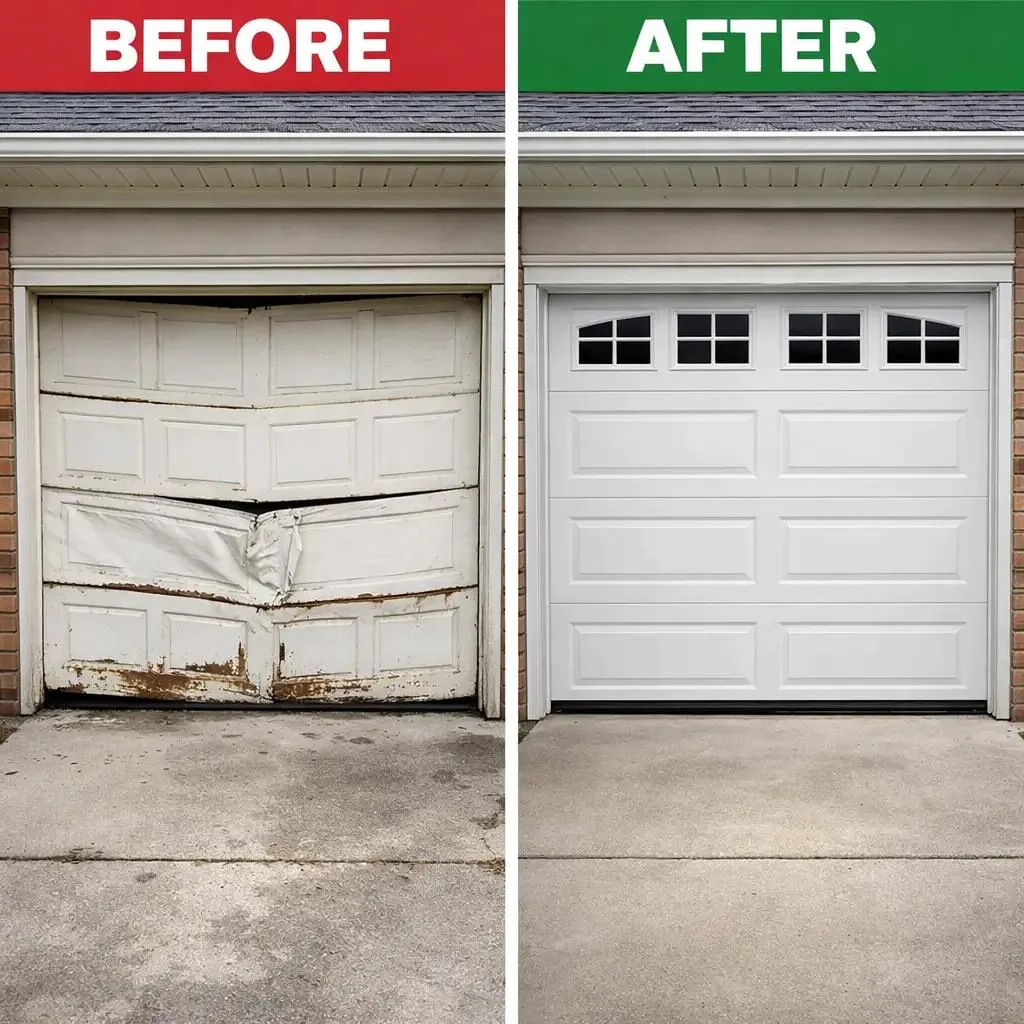
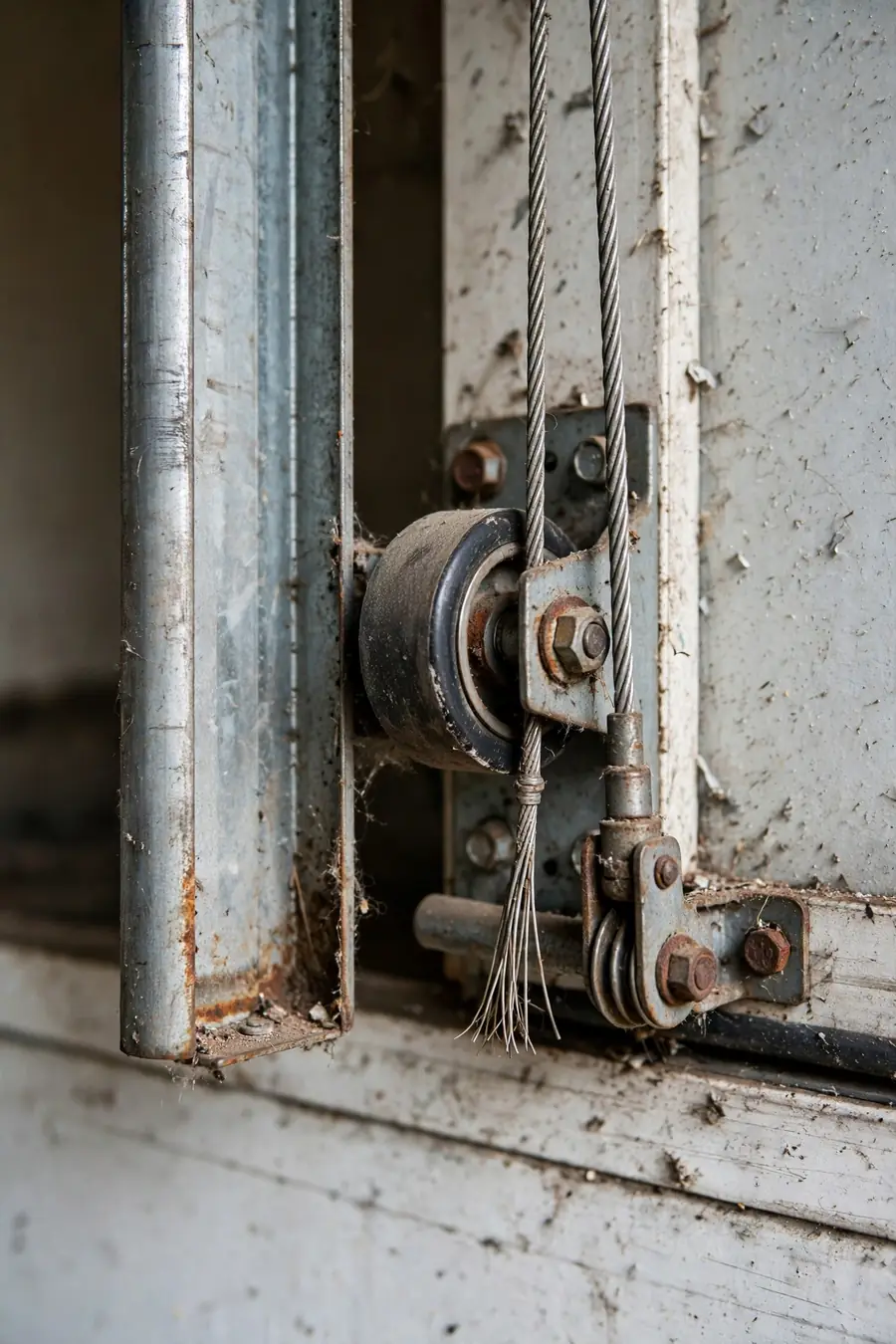
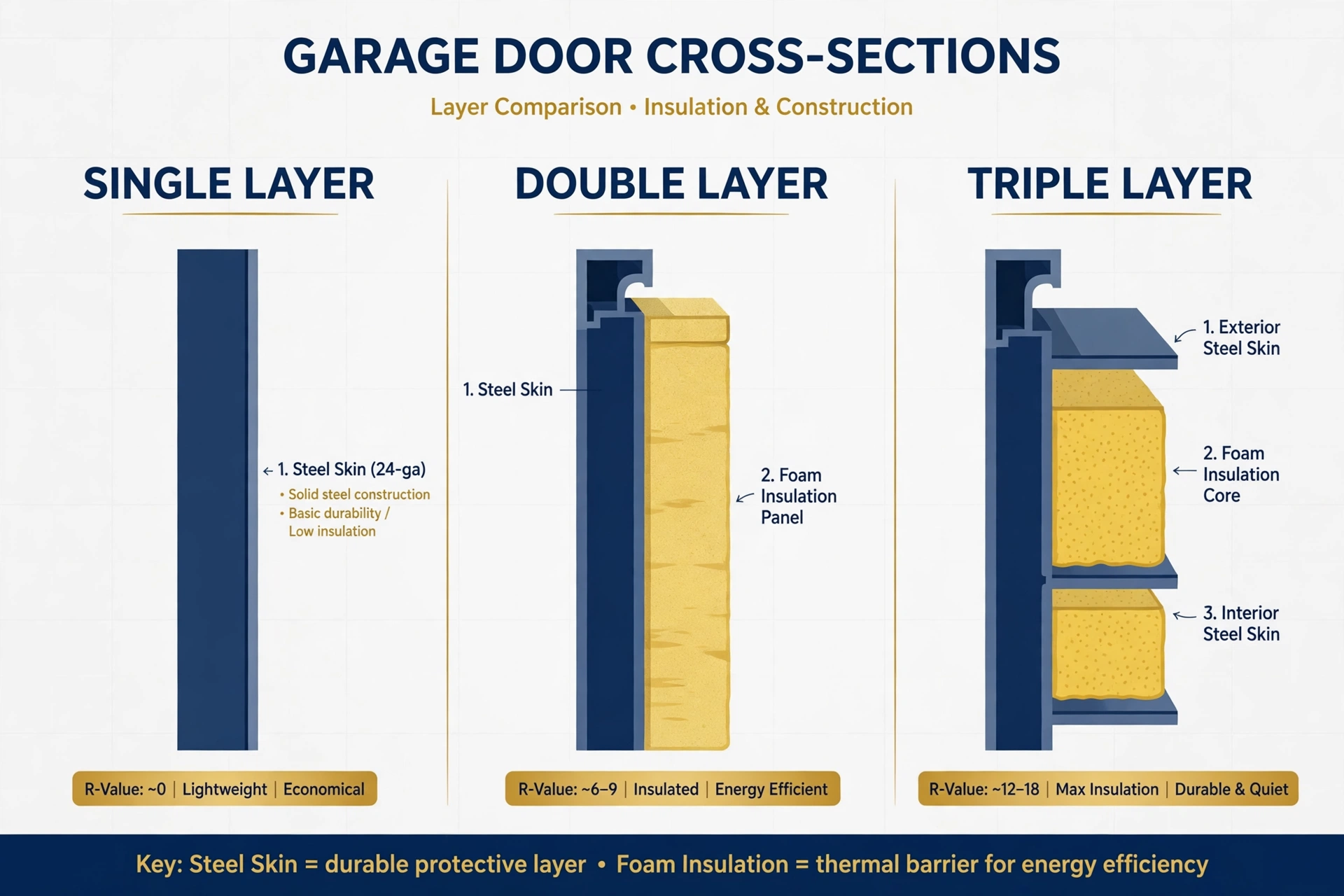
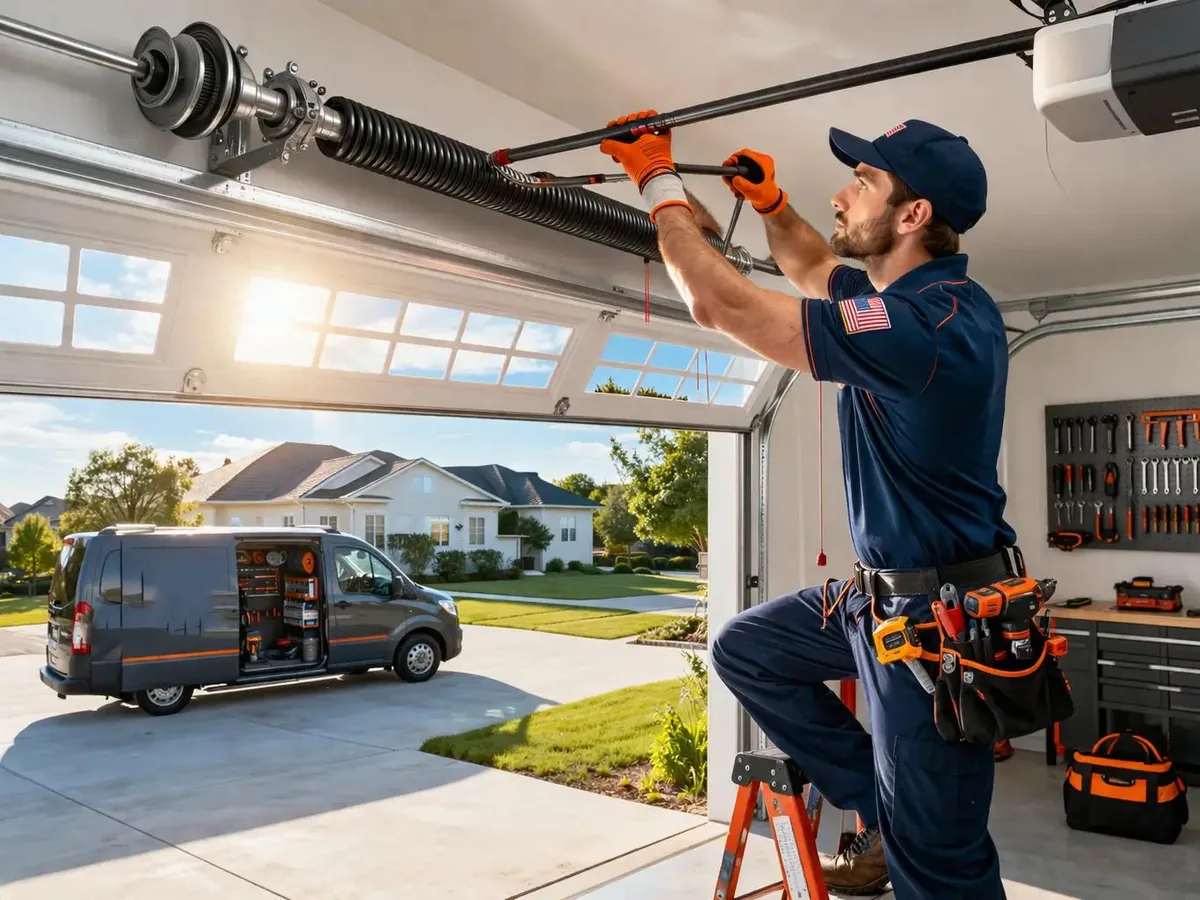
These images show the parts involved when a door freezes shut — the bottom seal, the tracks and rollers, and the spring that must be checked before the door is forced.
Door still stuck after the ice is gone? That is not a seal problem — leave it closed and call us.
Call Now to Speak to a SpecialistFor local help, start from our Bay State Garage Door Repair Pros homepage, and read our storm garage door guide for Massachusetts next.
Frequently asked questions about a garage door frozen shut
How do I know if my garage door is frozen shut or the spring is broken?
Look at the bottom of the door. If you can see ice along the bottom seal, and the spring above the door has no gap in its coil, the door is frozen, not broken. A broken spring is different: a loud bang, a visible gap in the coil, and a door that feels very heavy. If you see a gap in the spring, do not try to lift the door — leave it closed and call us.
Can I use hot water to free a frozen garage door?
Warm water poured slowly along the bottom seal can free a frozen door, but use water that is warm, not boiling — boiling water can crack cold concrete and warp a seal. A hair dryer on a low setting, aimed at the seal from inside the garage, works just as well. Never pour water on the opener, the tracks, or the springs, and never use a flame or a heat gun on any part of the door.
Will my opener break if I keep pressing the button on a frozen door?
Yes, it can. The opener is built to lift a balanced door, not to tear a frozen seal off the floor. Pressing the button again and again strains the motor and can strip the opener's drive gear or pull a lift cable off its drum. That turns a frozen seal into a stripped gear or a snapped cable. Press the button once; if the door does not move, stop and free the ice first.
How do I stop my garage door freezing shut again?
Keep the bottom seal in good shape — a cracked or torn seal lets meltwater sit against the floor, and that water freezes. A light coat of silicone spray on the seal in late autumn helps it release from the floor instead of sticking. Clear leaves and grit from the tracks, and keep the driveway salted along the seal line so meltwater drains instead of pooling. If the seal is cracked, it needs replacing before the next freeze.
When should I call for help with a frozen garage door?
Call if the door still will not move after the ice is gone, if it feels very heavy, hangs crooked, or grinds when it moves, or if you see a gap in the spring or a loose cable. Those are not ice problems — they are broken parts. Leave the door closed, keep the area clear, and call (833) 563-1552 any time, day or night.
About the author
Jude Bray is the lead technician at Bay State Garage Door Repair Pros, with 26 years in the trade. The business holds Massachusetts Home Improvement Contractor (HIC) Registration and Construction Supervisor License (CSL) credentials, plus IDEA garage door certifications.
Call Bay State Garage Door Repair Pros at (833) 563-1552, 24 hours a day, 7 days a week. Leave the door closed and describe what it is doing.
Call Now to Speak to a SpecialistLast updated: November 28, 2026. Author: Jude Bray, Bay State Garage Door Repair Pros. Business address: 98-2 Ames Pl, Lowell, MA 01851. Phone: (833) 563-1552. Email: [email protected]. Prices are planning ranges reported by other sources, not a quote for your door. Photos and illustrations on this page do not show real Bay State jobs or staff.