
Garage Door Spring Snapped in the Cold? What to Do Now
A loud bang on a cold morning, then a door that will not lift — that is usually a spring that snapped in the cold. Cold does not break a healthy spring; it breaks one already worn. Leave the door closed and call (833) 563-1552, open 24 hours a day.
A garage door spring that snaps in the cold is almost always a worn spring that failed on the first cold morning — the cold contracts the metal and finishes what years of use started. Do not lift the door, do not touch the spring, and do not keep running the opener. Leave the door closed and call (833) 563-1552.
What happened when my garage door spring snapped on a cold morning?
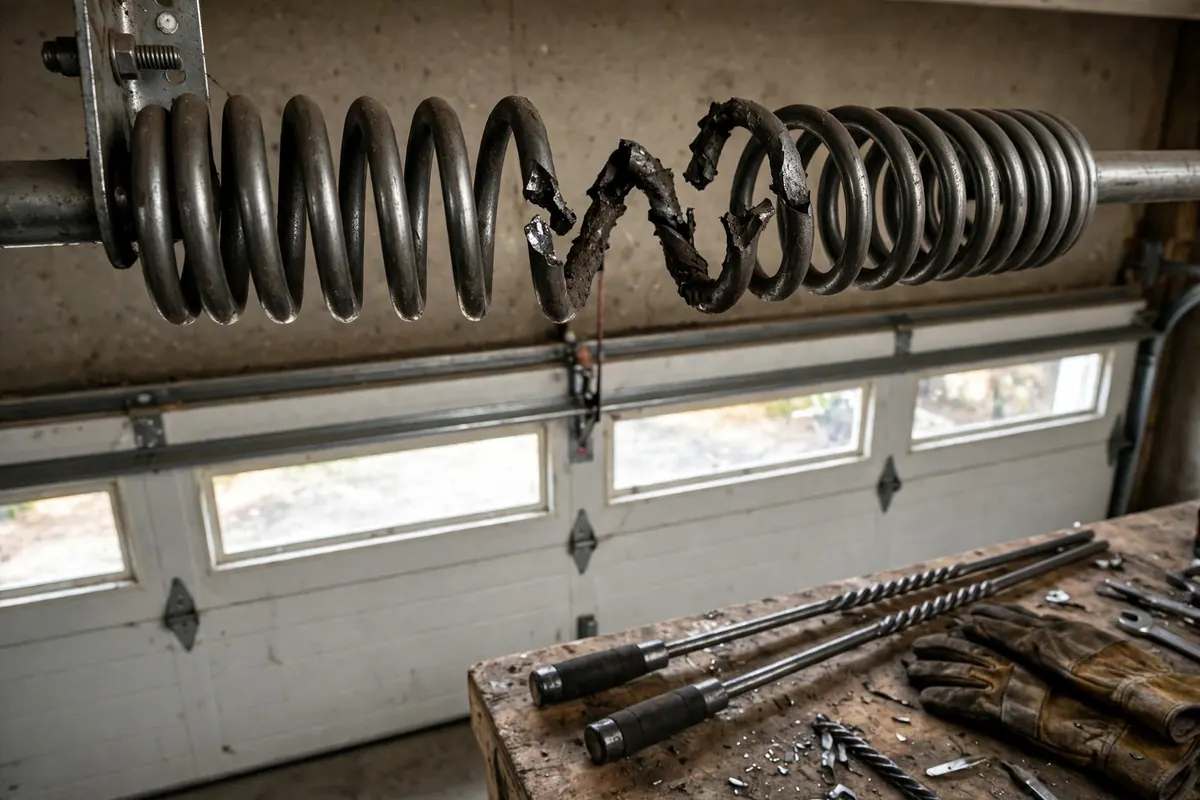
It is the sound every Massachusetts homeowner with an older garage door dreads: a loud bang from the garage first thing on a cold morning, and then a door that will not lift. What happened is simple. The spring above the door — the coiled steel bar that carries the door's weight — snapped.
And it snapped in the cold for a reason that surprises most people: the cold did not break a healthy spring. It broke one that was already worn.
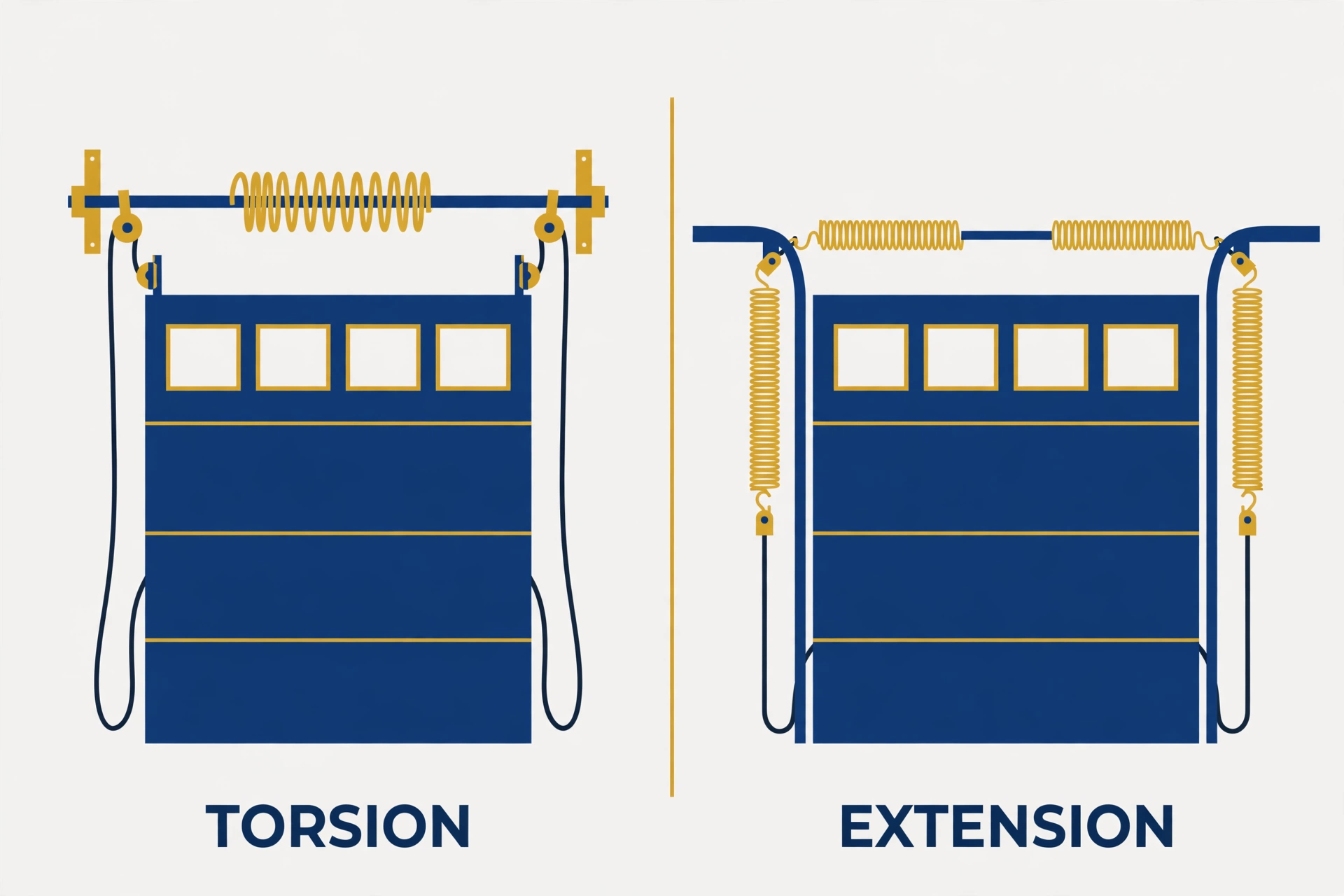
A garage door spring is rated in cycles, not years — one cycle is one open and one close. Every cycle wears the steel a little, and after thousands of cycles the spring is thinner and weaker than it was. Cold weather finishes the job: cold contracts the metal, thickens the lubricant on the rollers and tracks, and makes the door heavier to lift. A spring that had a little life left in September runs out of it on the first morning the temperature drops below freezing. That is why most spring failures in Massachusetts happen in late autumn and winter, and why the failure so often comes with a bang at the exact moment the door is asked to lift. Our garage door spring types guide explains torsion and extension springs in plain language, and our spring fault checker tool walks through the symptoms one by one.
| What you see or hear | Spring snapped in the cold | Frozen shut (ice) |
|---|---|---|
| The sound | A loud bang from the garage | No bang; the door just will not move |
| The spring above the door | A clear gap in the coil | No gap; the spring looks whole |
| How the door feels | Very heavy all the way, or crooked | Stuck at the bottom; the top may lift a fraction |
| The bottom of the door | Seal looks normal; no ice | Ice along the bottom seal |
| What happened before | Cold morning; door was slow or heavy lately | Wet day, then a freeze overnight |
If the signs point to a snapped spring — a bang, a gap in the coil, a very heavy door — stop there. The rest of this guide is about what never to do, and what to do instead. If the signs point to ice, read our garage door frozen shut guide next — the two problems look alike on a cold morning, and the wrong fix makes the right one harder.
What should I never do with a snapped spring?
A broken spring is the one garage door fault where doing nothing is the right move. Do not try to lift the door. Without a working spring, the door carries its full weight, and it can drop suddenly while you are under it — a sectional door is heavy enough to hurt you badly.
Do not prop the door open with a ladder, a broom, or a block of wood and walk under it. Do not unwind, adjust, or remove anything on the spring itself: torsion springs hold high tension even when broken, and the hardware around them is under load. Do not keep pressing the opener button, either. The opener is built to lift a balanced door, not a dead weight, and running it against a broken spring can strip its drive gear or pull a lift cable off its drum — turning a spring job into an opener and cable job as well.
The car question comes up on almost every spring call, because the car is usually trapped inside. If the door will not lift, leave the car where it is and call us — a trapped car is an emergency, and we will say so on the phone. Do not try to force the door up far enough to drive under it. A door that is lifted by force and then drops can damage the car, the door, and anyone standing nearby. Leave the door closed, keep the area clear, and call (833) 563-1552.
What does a spring replacement visit cover?
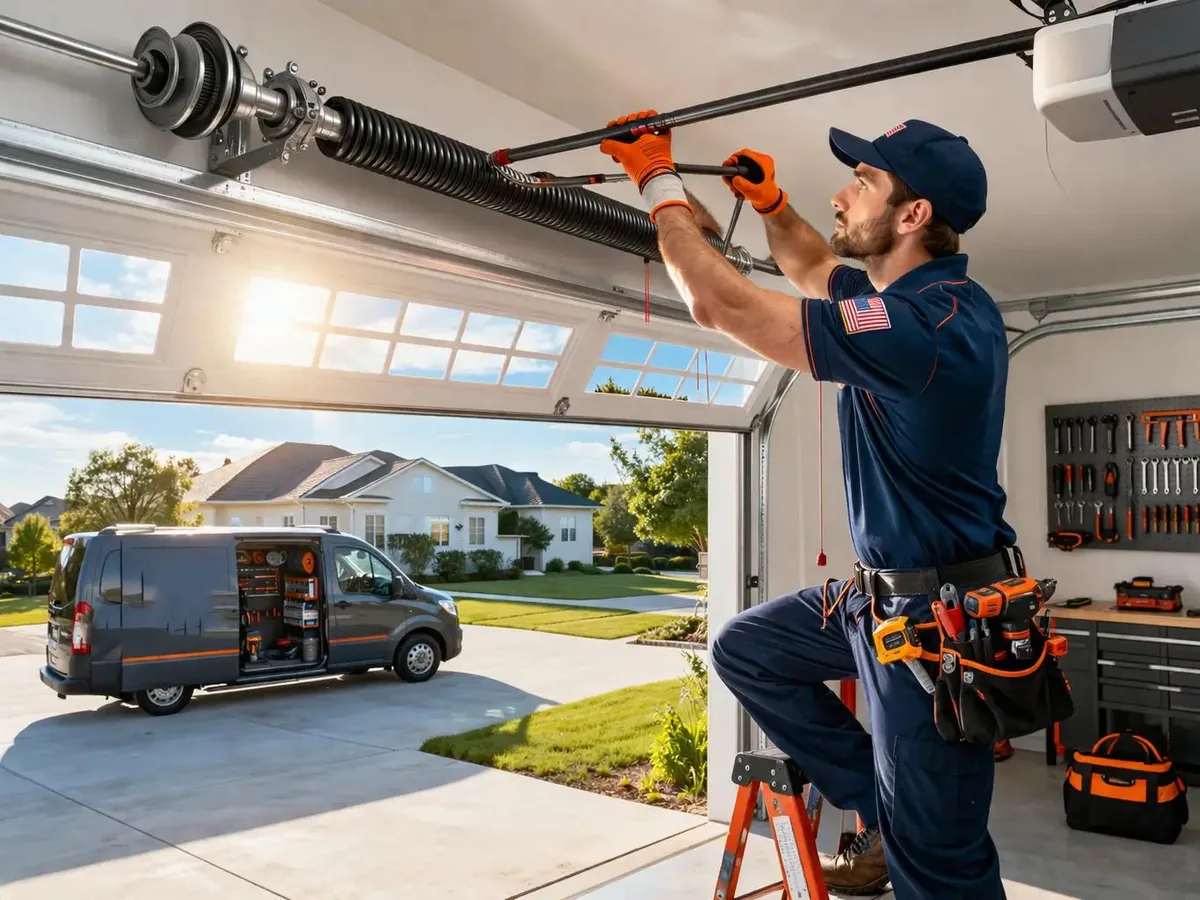
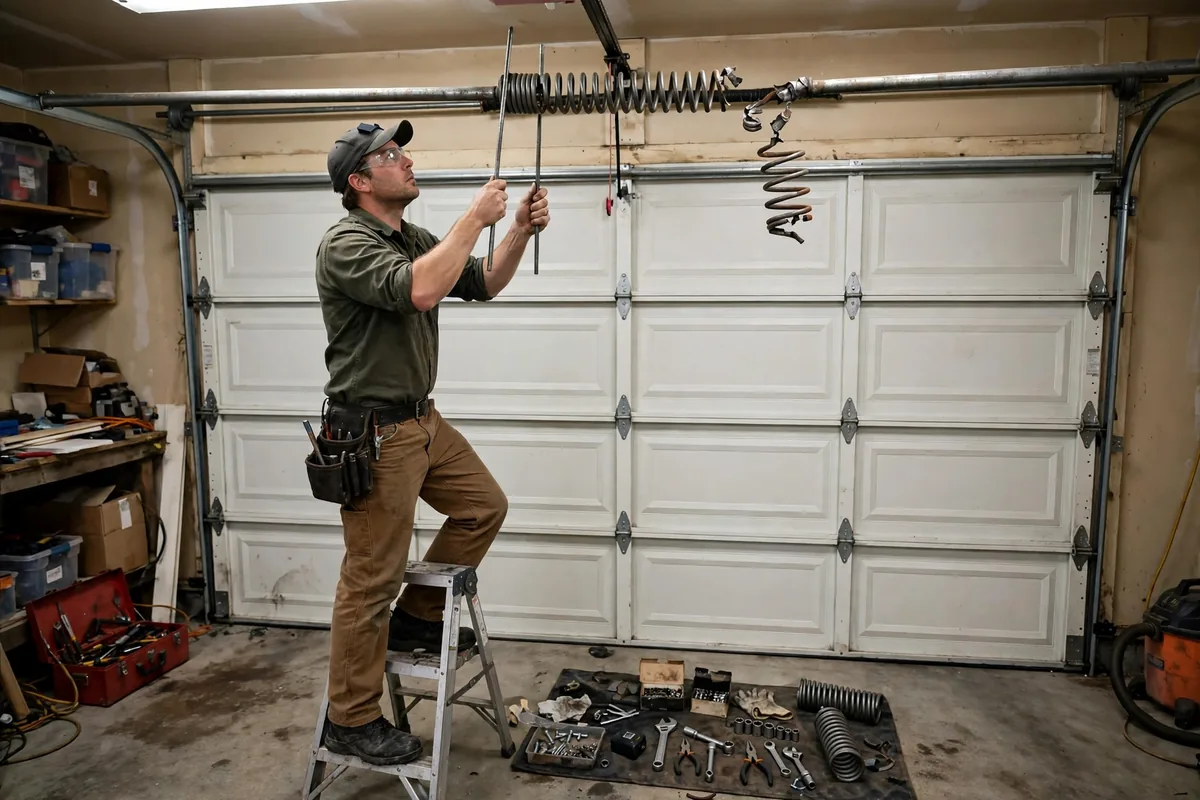
The first job on site is always safety: making the door closed, secured, and unable to drop. Then the fault is confirmed — the spring is looked at, the cables and drums are checked, and the door's balance is tested.
A broken spring strains everything it works with: the cables, the opener, and the rollers all take extra load when the spring fails, so the visit checks all of them rather than swapping the spring and hoping. Our garage door spring replacement service covers torsion and extension springs matched to your door's weight, and the door is balanced and tested before we leave.
Two questions come up on every spring visit. The first is whether one spring or both should be replaced. The two springs on a door are the same age and have done the same number of cycles, so when one snaps the other is usually close behind — but whether both are replaced depends on their condition, the door's weight, and what the check finds. It is a question to ask on the visit, and the answer is priced in writing before any work starts. The second is how long the visit takes: most single-part spring repairs take one to two hours on site, including the check of the whole door, the repair, and testing the balance and the safety sensors. A job that also needs cables, rollers, or a panel can take longer, and that is priced in writing too.
Loud bang, then the door won't lift? That is a broken spring — leave it closed and call us.
Call Now to Speak to a SpecialistWhat should I look at before the first freeze?
The best time to catch a spring that is about to snap is autumn, before the first freeze. Look at the spring above the door: a gap in the coil, rust on the steel, or a spring that looks stretched or sagging are all warning signs.
Listen to the door as it moves: a door that has become slow, heavy, or noisy is telling you the spring is struggling. Watch how it closes: a door that drops the last few inches instead of lowering smoothly has lost its balance. Any one of those is worth a call before winter — a spring caught in autumn is a scheduled visit; a spring that snaps on a freezing morning is an emergency, often with the car trapped inside.
A yearly tune-up is the right time to catch all of it at once: the springs, the cables, the rollers, the balance, and the safety sensors, checked before winter rather than after a failure. Our winter garage door guide for Massachusetts covers the full pre-freeze check in one place. And if the door is already slow or heavy as the temperature drops, do not wait for the bang — call now, describe what the door is doing, and get the check done while the door still moves.
When to call — and what to say on the phone
Call if you heard a bang and the door will not lift, if you can see a gap in the spring, if the door feels very heavy by hand, or if it hangs crooked or drops when it moves. Those are broken parts, not ice and not a power problem. Tell us three things on the phone: what the door is doing, whether you heard a bang, and whether the car is trapped inside. That is enough for us to confirm a visit time and bring the right part where possible. If the door is stuck open and the garage cannot be secured, say that first — a door that cannot be secured is treated as an emergency. Leave the door closed, keep the area clear, and call (833) 563-1552 any time, day or night.
A spring that snapped in the cold: the parts involved
These images show the parts involved when a spring snaps — the torsion spring itself, the technician's work on site, and the opener and tracks the spring works with.
Loud bang, then the door won't lift? That is a broken spring — leave it closed and call us.
Call Now to Speak to a SpecialistFor local help, start from our Bay State Garage Door Repair Pros homepage, and read our winter garage door guide for Massachusetts for the full pre-freeze check.
Frequently asked questions about a garage door spring snapped in the cold
Broken-spring questions are answered on our garage door spring replacement page.
Why do garage door springs snap in cold weather?
Cold contracts metal, thickens lubricant, and makes a door heavier to lift — so a spring near the end of its life fails on the first cold morning rather than in summer. The cold does not snap a healthy spring; it snaps one already weakened by years of use. That is why most spring failures in Massachusetts happen in late autumn and winter, often with a loud bang first thing in the morning.
Can I open my garage door if the spring snapped in the cold?
You should not try. Without a working spring, the door carries its full weight and can drop suddenly while you are under it. The opener cannot lift it either: running the opener against a broken spring can strip the drive gear or pull a cable off its drum. Leave the door closed, keep the area clear, and call us. If the car is trapped inside, say so on the phone — a trapped car is treated as an emergency.
Should I replace one spring or both?
That is a question to ask on the visit, not a decision to make in advance. The two springs on a door are the same age and have done the same number of cycles, so when one snaps the other is usually close behind. What matters is that the price for the full job is confirmed in writing on site before any work starts, and that the door is balanced and tested before we leave.
How can I stop my garage door spring snapping in winter?
You cannot stop a worn spring from failing, but you can catch it before it snaps. Look at the spring above the door each autumn: a gap in the coil, rust, or a stretched spring are warning signs. Listen for a door that has become slow, heavy, or noisy. A yearly tune-up checks the springs, cables, and balance before winter. If the door is slow or heavy as the temperature drops, call before it fails completely.
About the author
Jude Bray is the lead technician at Bay State Garage Door Repair Pros, with 26 years in the trade. The business holds Massachusetts Home Improvement Contractor (HIC) Registration and Construction Supervisor License (CSL) credentials, plus IDEA garage door certifications.
Call Bay State Garage Door Repair Pros at (833) 563-1552, 24 hours a day, 7 days a week. Leave the door closed and describe what it is doing.
Call Now to Speak to a SpecialistLast updated: November 28, 2026. Author: Jude Bray, Bay State Garage Door Repair Pros. Business address: 98-2 Ames Pl, Lowell, MA 01851. Phone: (833) 563-1552. Email: [email protected]. Prices are planning ranges reported by other sources, not a quote for your door. Photos and illustrations on this page do not show real Bay State jobs or staff.