
Rain, Then a Second Freeze: What It Does to Your Garage Door
Rain is likely November 22-23, then cold returns around November 24-25 — and the second freeze is the one that breaks garage doors. Water from the warm-up rain sits in tracks and seals, then freezes again. Here is the check to do before the weekend.
The first hard freeze hit November 16-17 — Boston low 32°F, Quincy low 31°F on Tuesday November 17. A warm-up follows, highs about 60-63°F, with rain likely November 22-23. Then cold returns around November 24-25, high about 43°F, and the water left behind freezes again — that second freeze is the one that breaks doors.
What is the forecast, in plain language?
The first hard freeze has already hit: November 16-17 brought the season's first hard freeze to Massachusetts, with Boston down to a low of 32°F and Quincy down to 31°F on Tuesday, November 17. That was the night garage doors were first tested — springs snapped, seals froze to the floor, and openers strained.
But the freeze is not the end of the story. The National Weather Service Boston/Norton Area Forecast Matrices, issued at 4:03 PM EST on Monday, November 16, 2026, with the weather.com Worcester forecast and the WindBorne Boston 7-day forecast, all read on November 17, agree on what comes next: a warm-up, then rain, then cold again.
The warm-up comes first. Wednesday through Friday brings highs of about 60-63°F — warm enough to melt whatever the first freeze left behind, and warm enough for the rain that follows. Rain is likely on November 22-23, with about 0.32-0.75 inches expected and a 58-61% chance of rain. That is not a storm to fear on its own — it is ordinary late-November rain. The problem is what comes after it: cold returns around November 24-25, with a high of about 43°F. The water the rain left behind freezes again, and that second freeze is the one that breaks doors. Our first hard freeze guide explains what the first freeze did to a door, and what the check before dark looked like.
Why does the second freeze break doors the first one only weakened?
A freeze is a night at or just below 32°F — cold enough for frost, but not cold enough to freeze water solid through. A hard freeze is a night in the 20s, long enough for water to freeze solid — and the difference is what breaks garage doors.
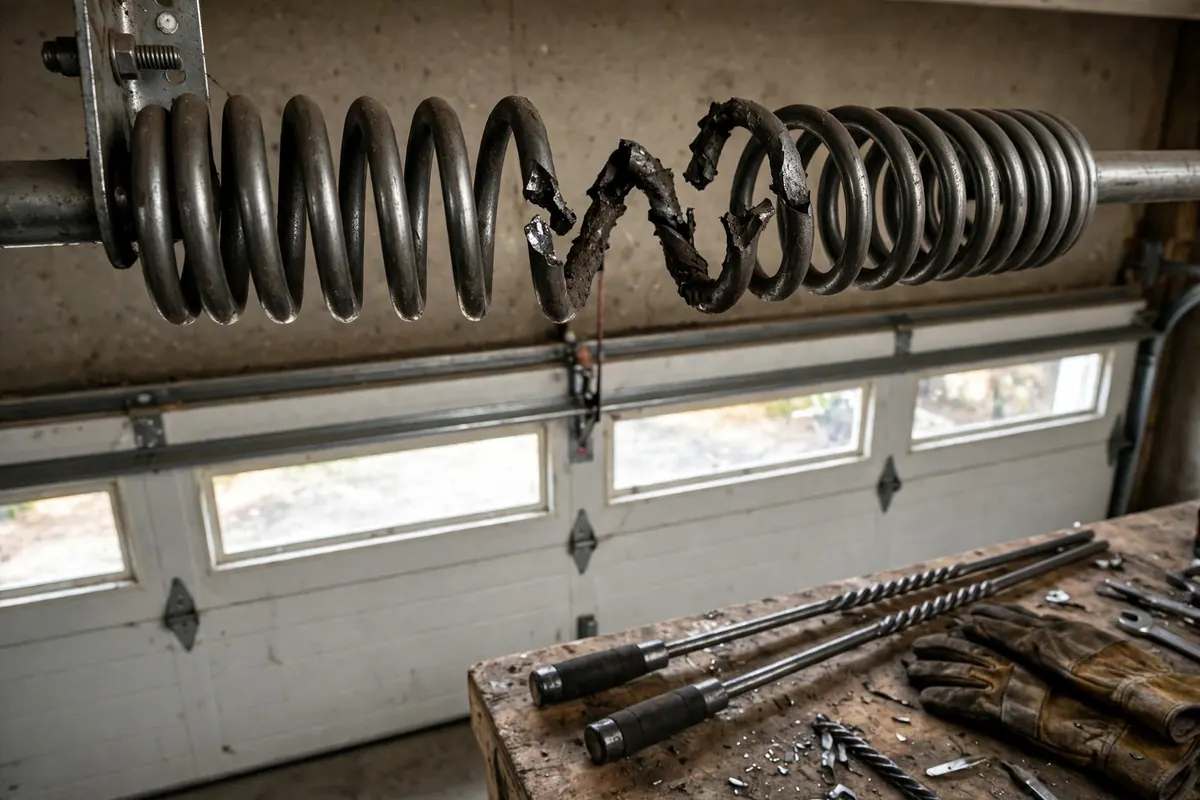
The first freeze tests parts that were already worn, and most of them pass the test — barely. A spring thinned by salt air survives the first cold night with a little less strength than it had. A seal that froze to the floor once tears a little when it breaks free. A cable that was already frayed frays a little more. Nothing fails on the first freeze, so nothing gets fixed — and that is the trap.
Then the warm-up rain soaks everything again. Meltwater and rain get into the tracks, under the bottom seal, and around the rollers — the same places the first freeze already weakened. And then the cold returns, and the water left behind freezes again. Ice expands as it freezes, so it wedges the door to the floor, jams the rollers in the track, and strains the opener against a door that will not move. The second freeze tests the same parts a second time, while they are still wet — and that is the night they fail. Our garage door spring replacement service covers the check, the replacement, and the balance test — and a spring caught before the second freeze is a scheduled visit, not an emergency on a freezing morning.
Door slow, noisy, or heavy after the first freeze? The second freeze tests the same parts again, while they are still wet — get it checked before the rain.
Call Now to Speak to a SpecialistWhere does the water sit after the rain: tracks, seals, and the bottom of the door?
Water does not sit evenly on a garage door — it collects in three places, and each one fails differently when it freezes. The first is the bottom seal: meltwater and rain collect where the door meets the floor during the day, then freeze overnight, and by morning the seal is stuck fast to the floor.
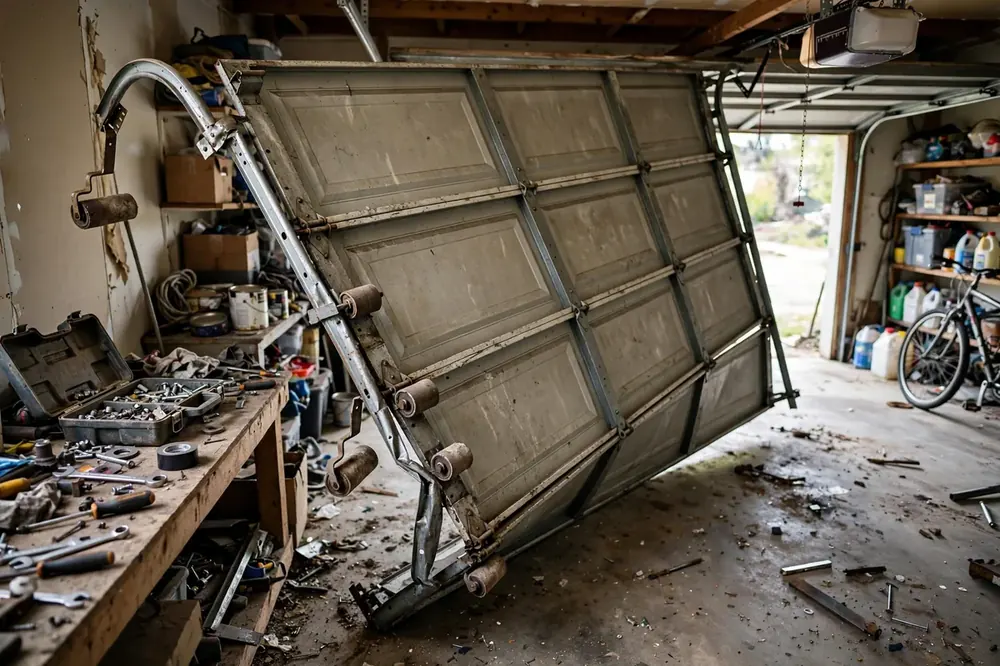
A seal that is cracked or torn lets even more water in, and a seal that froze once already tears a little when it breaks free. The second is the track: water pools in the track, leaves wash in with it, and the rollers freeze in place. A door whose rollers are frozen in the track does not move at all — and an opener that tries to move it strips its gear. The third is the bottom of the door itself: salt air corrodes the bottom section, the brackets, and the fasteners a little at a time, and a bracket that fails under full spring tension can let a cable come off its drum.
Coastal doors add a second problem to all three. Salt air corrodes springs and cables faster than inland air, and a spring already thinned by salt is the one that snaps when the cold returns. The bottom brackets go first — they sit closest to the wettest, saltiest part of the door — and a bracket that fails under full spring tension can let a cable come off its drum. That is why a coastal visit checks the bottom of the door first, and why a door that was slow after the first freeze is a door to check before the rain, not after. Our winter garage door guide for Massachusetts explains the full pre-freeze check, including what to look for on the seal and in the track.
What is the pre-weekend check a homeowner can do safely?
Do the safe check before the weekend, while the warm-up is still here: look at the bottom seal — if it is cracked or torn, water is getting in where a sound seal would keep it out.
Test the safety sensors — both lights on means they can see each other — and clear leaves from the tracks so water can drain instead of pooling. Listen for grinding as the door moves, watch for a slow or jerky close, and look at the spring coil for a gap or rust, and at the cable for fraying. If the door is slow, noisy, or heavy as the temperature drops, do not wait for the second freeze to find out what is wrong with it. Our garage door tune-up service covers the full annual check before the first freeze: lubrication, hardware, balance, and safety sensors in one visit, with the spring and the bottom seal first on the list.
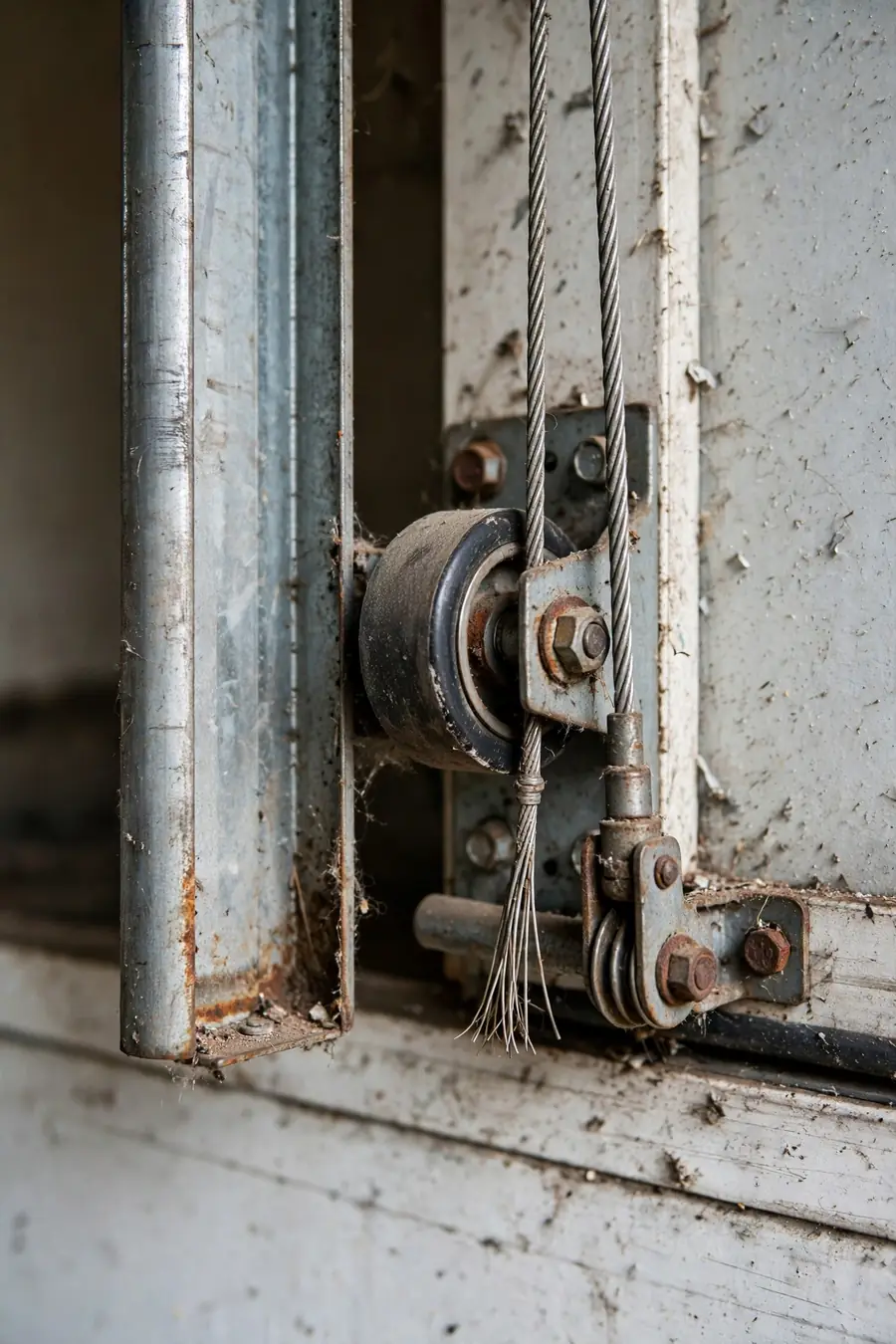
What the safe check does not include is just as important: never touch a spring, a cable, or a track yourself. The spring carries the door's weight, and a spring under tension can injure you badly if it is touched the wrong way. The cable holds the door to the drum under full spring tension, and a cable that lets go does so suddenly. The track holds the door's path, and a track that is bent or misaligned needs the door taken off and re-hung. The homeowner's job is to look and to test; the technician's job is everything that carries the door's weight. If a test fails, or if what you see involves a spring, a cable, or a track, leave the door closed and call (833) 563-1552.
If the door is frozen shut after the second freeze
If the door is frozen shut in the morning, warm the bottom seal gently and try the door by hand first — never force it with the opener. If the ice is gone and the door still will not move, or if it moves an inch and stops, the fault is a broken part, not ice. Leave it closed and call (833) 563-1552. And if the car is trapped inside, that is an emergency, not a tomorrow problem. Our garage door frozen shut guide explains how to tell ice from a broken spring, and what never to do when the door will not move. Start from our Bay State Garage Door Repair Pros homepage for every city we serve.
The second freeze: the parts it tests
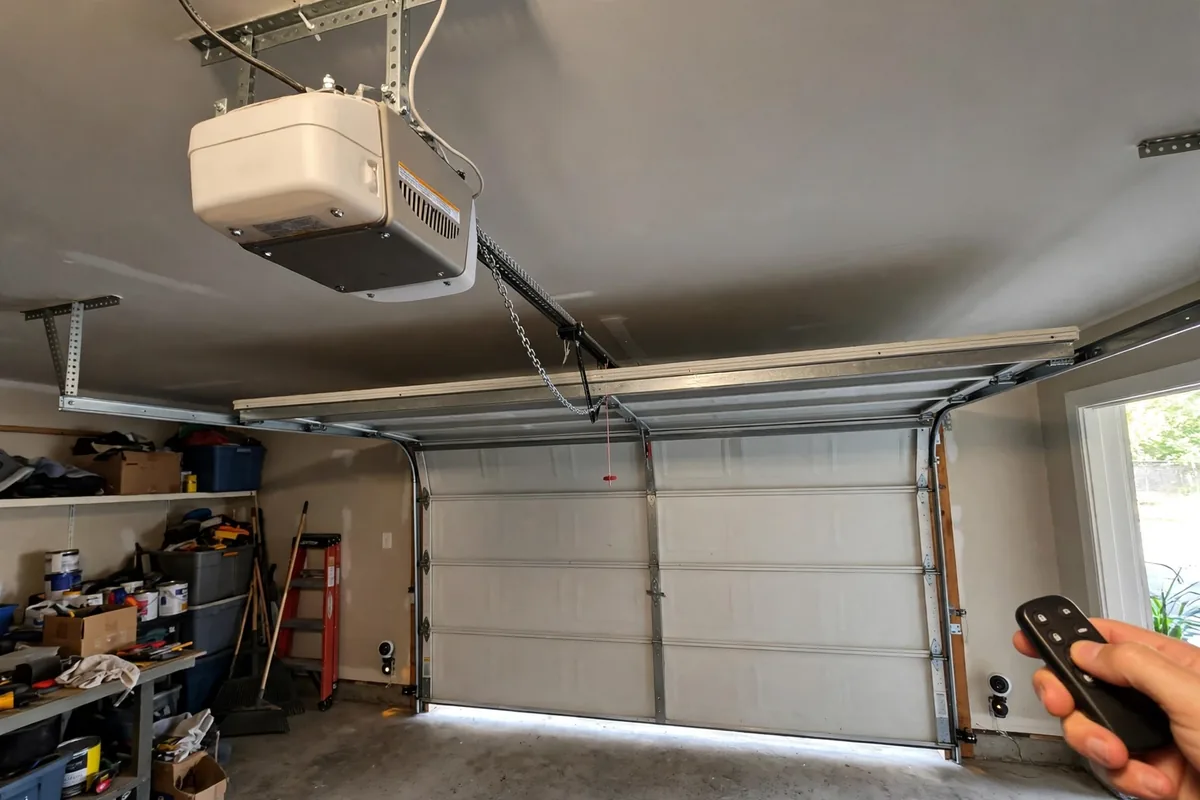
These images show the parts the second freeze tests — the spring, the track and rollers, the cable and drum, and the opener.
Door slow, noisy, or heavy after the first freeze? The second freeze tests the same parts again, while they are still wet — get it checked before the rain.
Call Now to Speak to a SpecialistFor local help, start from our Bay State Garage Door Repair Pros homepage, and read our winter garage door guide for Massachusetts for the full pre-freeze check.
Frequently asked questions about rain, then a second freeze in Massachusetts
What is a freeze-thaw-refreeze cycle, and why does it break garage doors?
It is three steps in a row: a freeze, then a warm-up with rain, then a second freeze. The warm-up rain puts water into the tracks and under the bottom seal, and the second freeze turns that water to ice. Ice expands as it freezes, so it wedges the door to the floor, jams the rollers in the track, and strains the opener. The first freeze only weakens the parts; the second freeze is the one that finishes them.
What should I check before the rain on November 22-23?
Do the safe check before the weekend: look at the bottom seal — if it is cracked or torn, water is getting in where a sound seal would keep it out. Test the safety sensors, listen for grinding as the door moves, and clear leaves from the tracks. Look at the spring coil for a gap or rust, and at the cable for fraying. Never touch a spring, a cable, or a track yourself.
What do I do if the door is frozen shut after the second freeze?
Warm the bottom seal and try the door first — never force it with the opener. Pressing the button strains the opener against the ice, and it can strip the drive gear, pull a cable off its drum, or burn out the motor. If the ice is gone and the door still will not move, or if it moves an inch and stops, the fault is a broken part, not ice — leave it closed and call (833) 563-1552.
Why did the first freeze only weaken my door?
Because the first freeze tests parts that were already worn, and most of them pass the test. A spring thinned by salt air survives the first cold night with a little less strength than it had. A seal that froze to the floor once tears when it breaks free. Then the warm-up rain soaks everything again, and the second freeze tests the same parts a second time, while they are still wet. That is the night they fail.
When should I call a technician instead of waiting for the second freeze?
Call now if the door was slow, noisy, or heavy after the first freeze, or if the seal is cracked, the cable is frayed, or the spring coil shows a gap or rust. Those are the signs the second freeze will finish. A tune-up before the rain is a scheduled visit; a spring that snaps on a freezing morning, with the car trapped inside, is an emergency. Leave the door closed and call (833) 563-1552.
About the author
Jude Bray is the lead technician at Bay State Garage Door Repair Pros, with 26 years in the trade. The business holds Massachusetts Home Improvement Contractor (HIC) Registration and Construction Supervisor License (CSL) credentials, plus IDEA garage door certifications.
Call Bay State Garage Door Repair Pros at (833) 563-1552, 24 hours a day, 7 days a week. A pre-rain tune-up now is a scheduled visit, not an emergency on a freezing morning.
Call Now to Speak to a SpecialistLast updated: November 28, 2026. Author: Jude Bray, Bay State Garage Door Repair Pros. Business address: 98-2 Ames Pl, Lowell, MA 01851. Phone: (833) 563-1552. Email: [email protected]. Weather figures in this post come from the National Weather Service Boston/Norton Area Forecast Matrices issued 4:03 PM EST Monday, November 16, 2026, the weather.com Worcester forecast, and the WindBorne Boston 7-day forecast, all read November 17, 2026. Prices are not quoted here — your exact price is confirmed in writing on site. Photos and illustrations on this page do not show real Bay State jobs or staff.