
Rain, Then a Hard Freeze Before Thanksgiving: Forecast Update
The forecast changed overnight. Rain is now 90% Sunday night into Monday, November 22-23, and it may be heavy at times — then a hard freeze, with lows in the 20s Tuesday and Wednesday, November 24-25. Here is what changed, and the check to do before Thanksgiving.
The National Weather Service forecast for Boston, issued 4:02 AM November 19, calls for rain Sunday night into Monday with a 90% chance, then mostly clear Tuesday and Wednesday, with highs in the lower 40s and lows in the mid-20s. The water the rain leaves behind freezes solid — that is the hard freeze that breaks doors.
What changed in the forecast, in plain language?
The week starts warm and dry, and it ends with a freeze — and the forecast changed in two ways that matter. The National Weather Service Boston/Norton forecast, issued at 4:02 AM EST on Thursday, November 19, 2026, calls for a warm, dry stretch first: Thursday sunny with highs in the upper 60s, Friday sunny with highs in the mid-60s.
Saturday sunny with highs around 60, and Sunday mostly cloudy with highs around 60. Then the rain arrives — and it is now likelier and heavier than yesterday's call. Rain is expected Sunday night into Monday, November 22-23, with a 90% chance, and the Weather Service says it may be heavy at times. Lows stay in the lower 50s, with highs in the upper 50s.
| What changed | Yesterday's forecast (Nov 18) | Today's forecast (Nov 19) |
|---|---|---|
| Rain Sunday night – Monday | 60% chance | 90% chance, may be heavy at times |
| Monday night | Much cooler, lows mid-30s | 30% chance of rain, lows mid-30s |
| Tuesday – Wednesday | Highs mid-40s, lows mid-30s | Highs lower 40s, lows mid-20s |
| Thanksgiving Day | Not in the forecast yet | Rain, 60% chance, about 17 mm (Weather.com) |
Monday night turns much cooler, with a 30% chance of rain and lows in the mid-30s in Boston — and Tuesday through Wednesday are mostly clear, with highs only in the lower 40s and lows in the mid-20s. That is the change that matters most: yesterday's forecast called the freeze mid-30s, and today's calls it mid-20s — a hard freeze, not a frost, and two nights of it, not one. The National Weather Service gives no rain amounts — only the 90% chance — and the amounts below come from Weather.com, not the Weather Service: about 22 millimetres in Boston on Sunday night and about 15 millimetres on Monday. No snow is forecast at all, and no freeze or frost advisory is in effect for Boston: the freeze is a forecast low, not an issued warning.
Why does a hard freeze break garage doors?
A freeze is a night at or just below 32°F — cold enough for frost, but not cold enough to freeze water solid through. A hard freeze is a night in the 20s, long enough for water to freeze solid — and the difference is what breaks garage doors.
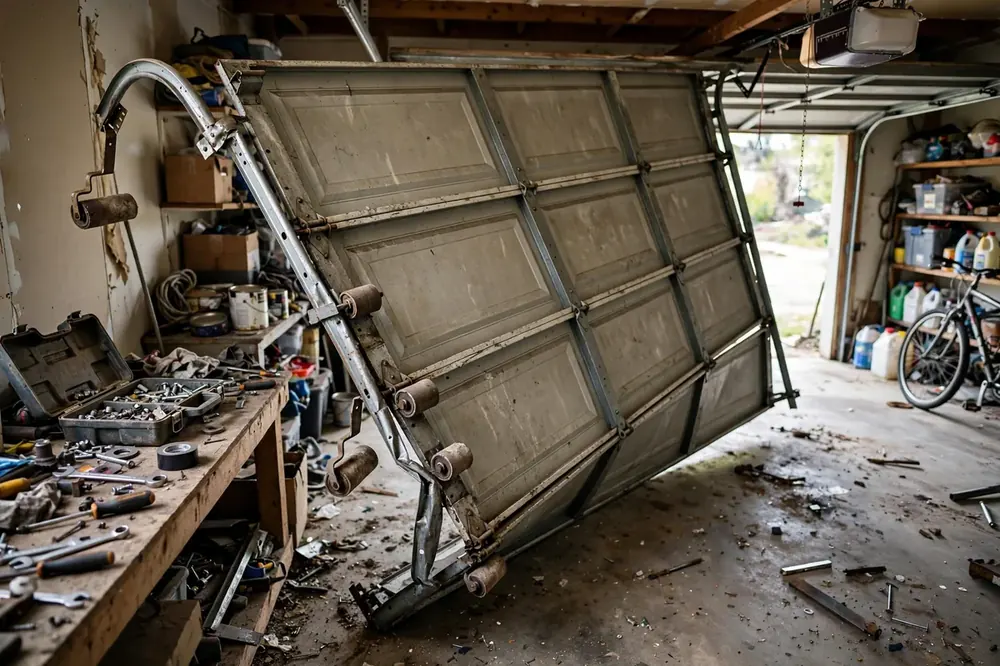
The rain puts water into the tracks and under the bottom seal, and the freeze turns that water to ice. Ice expands as it freezes, so it wedges the door to the floor, jams the rollers in the track, and strains the opener against a door that will not move. The first freeze only weakens the parts; the hard freeze after the rain is the one that finishes them. Our rain-then-second-freeze post explains the same freeze-thaw-refreeze cycle in full — this week is that cycle, with a date on it, a harder freeze, and a travel deadline at the end of it.
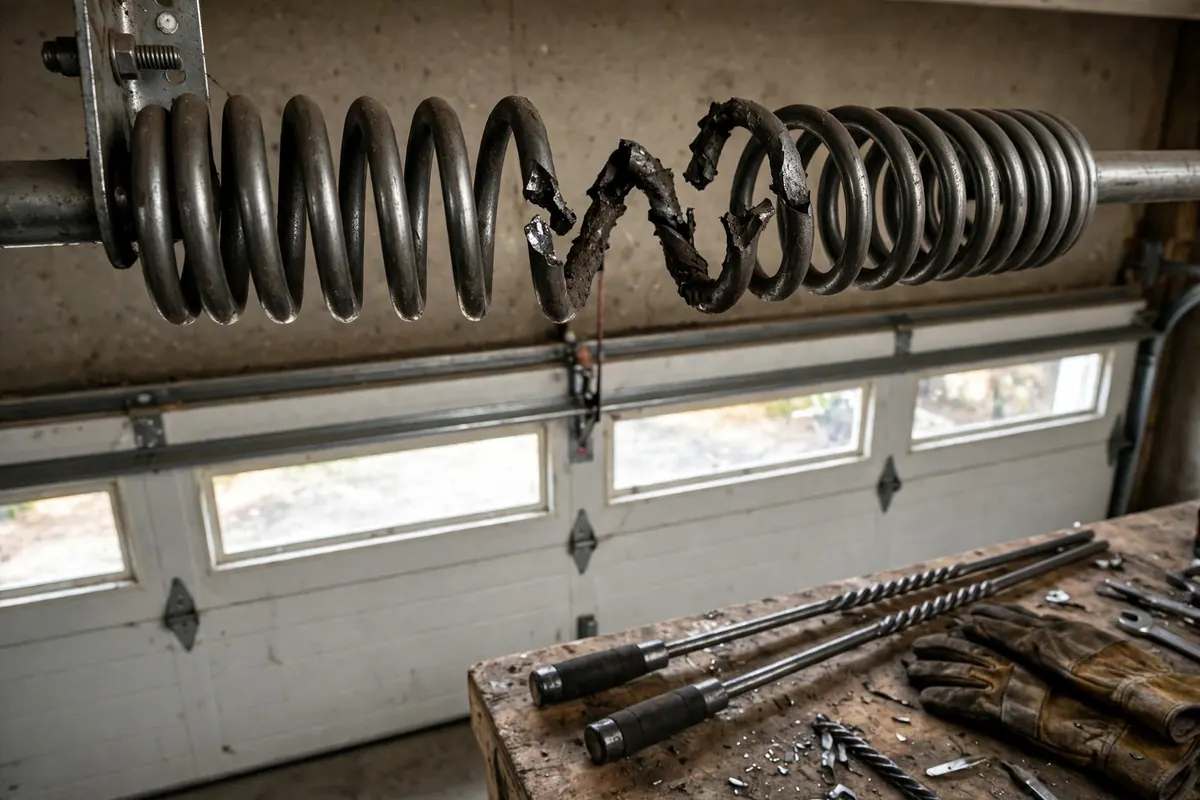
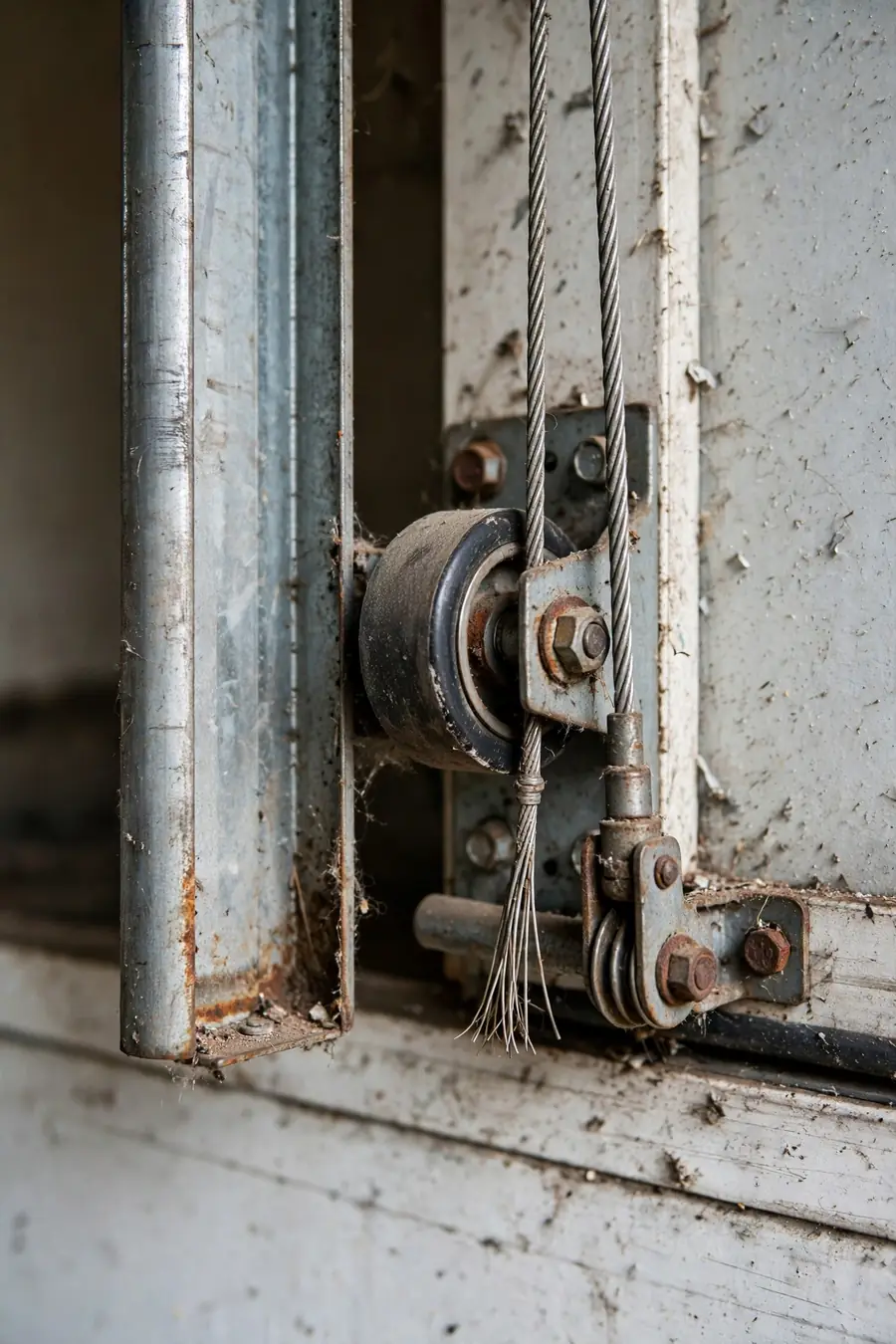
Coastal doors add a second problem. Salt air corrodes springs and cables faster than inland air, and a spring already thinned by salt is the one that snaps when the cold returns. The bottom brackets go first — they sit closest to the wettest, saltiest part of the door — and a bracket that fails under full spring tension can let a cable come off its drum. That is why a coastal visit checks the bottom of the door first, and why a door that was slow after the first freeze is a door to check before the rain, not after. Yesterday's call had the rain at 60% and the freeze in the mid-30s — and this post is the update: the rain is heavier, and the freeze is harder.
Door slow, noisy, or heavy after the first freeze? The rain and the hard freeze after it test the same parts again, while they are still wet — get it checked before you travel.
Call Now to Speak to a SpecialistWhy is inland Massachusetts colder than Boston?
Boston gets the mildest version of this week, and inland Massachusetts gets a colder one. Western Norfolk — Foxborough and Norwood — sees lows in the lower 20s on Tuesday and Wednesday, with highs in the lower 40s. Central Middlesex — Framingham and Lowell — sees the same: lows in the lower 20s, highs in the lower 40s.
Southern Worcester sees highs in the upper 30s and lows in the lower 20s, and northern Worcester — Barre and Fitchburg — sees highs in the upper 30s and lows around 20. Eastern Norfolk, including Quincy, follows Boston: highs in the lower 40s, lows in the mid-20s. The pattern is the same everywhere, and the inland version is colder at every step: the rain is the same, the freeze is deeper, and the door that was already worn is the one that fails.
That matters because the first hard freeze has already hit: November 16-17 brought the season's first hard freeze to Massachusetts, with Boston down to a low of 32°F and Quincy down to 31°F on Tuesday, November 17. The doors that were tested that night are the doors going into this week's rain already weakened — a spring thinned by salt air, a seal that froze to the floor once and tore a little when it broke free, a cable that was already frayed. The warm, dry days in between are the time to check them, not the time to forget them.
What happens when Thanksgiving Day brings the rain back?
Thanksgiving is Thursday, November 26, 2026 — and the rain comes back for the holiday itself. Weather.com's Boston forecast, read November 19, shows rain on Thanksgiving Day with a 60% chance and about 17 millimetres of rain, a high of 45°F, and rain continuing into the night.
Friday, November 27, brings morning showers and a high of 48°F. The National Weather Service forecast runs only through Wednesday, so the Thanksgiving rain comes from Weather.com, not the Weather Service — and the two sources agree on the shape of the week: rain, then a hard freeze, then rain again.
A wet Thanksgiving means a wet door. A door that was slow or noisy after the first freeze, and wet again by Thursday, is a door going into the coldest nights of the month already weakened. The check takes an afternoon, and it is the same check as any pre-freeze visit: look at the bottom seal, test the safety sensors, listen for grinding as the door moves, clear the leaves from the tracks, and look at the spring coil for a gap or rust, and at the cable for fraying. If the door is slow, noisy, or heavy as the temperature drops, do not wait for the freeze to find out what is wrong with it. A tune-up before the rain is a scheduled visit; a spring that snaps on a freezing morning, with the car trapped inside the day before Thanksgiving, is an emergency.
The Thanksgiving travel deadline: the freeze lands the day before the car has to move
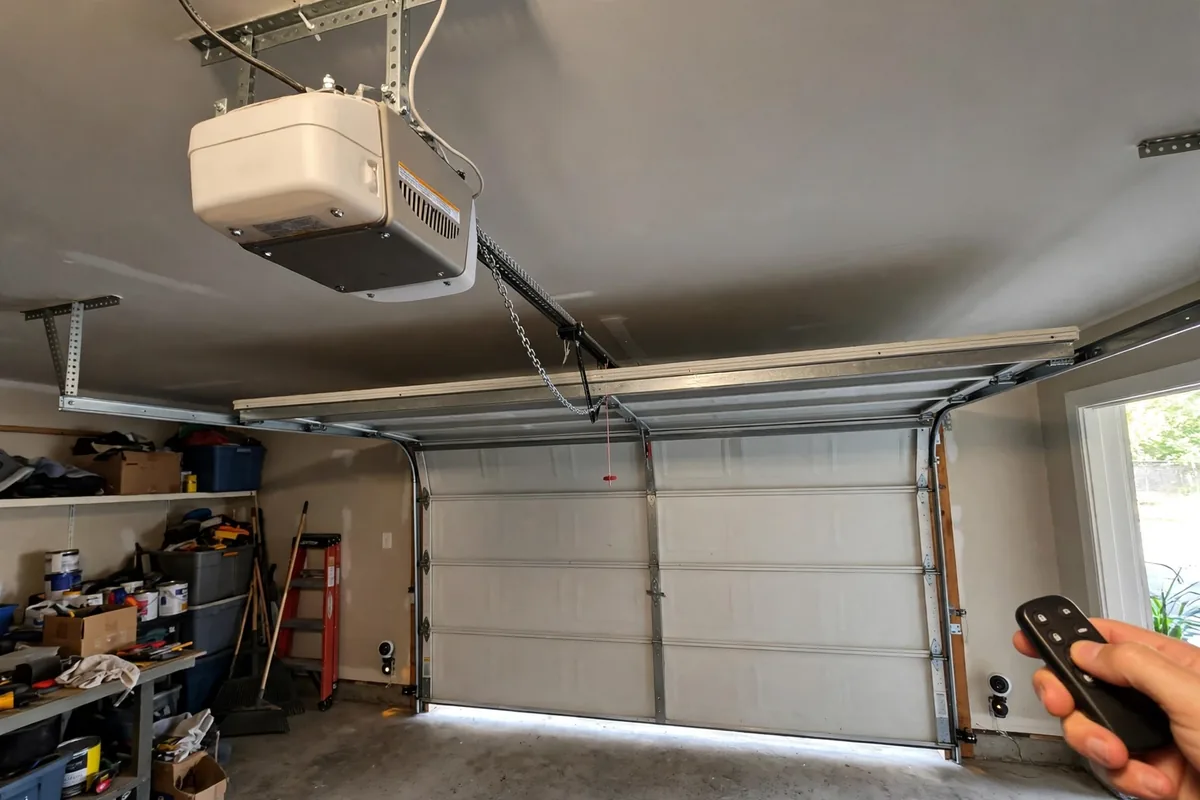
Thanksgiving is Thursday, November 26, 2026 — and the freeze lands the day before travel does. Wednesday, November 25, brings highs of 41 in Boston and 37 in Worcester, with lows of 32 in Boston and 28 in Worcester. A door that freezes shut on Tuesday or Wednesday morning traps the car the day before Thanksgiving, when the car is needed most — and an opener that tries to force it open strips its gear, pulls a cable off its drum, or burns out its motor. That is the deadline: not a generic winter warning, but a dated one, with a car that has to move on Wednesday.
The pre-holiday check a homeowner can do safely
Do the safe check before the weekend, while the warm, dry days are still here: look at the bottom seal — if it is cracked or torn, water is getting in where a sound seal would keep it out. Test the safety sensors — both lights on means they can see each other — and clear leaves from the tracks so water can drain instead of pooling. Listen for grinding as the door moves, watch for a slow or jerky close, and look at the spring coil for a gap or rust, and at the cable for fraying. Our winter garage door guide for Massachusetts explains the full pre-freeze check, including what to look for on the seal and in the track.
What the safe check does not include is just as important: never touch a spring, a cable, or a track yourself. The spring carries the door's weight, and a spring under tension can injure you badly if it is touched the wrong way. The cable holds the door to the drum under full spring tension, and a cable that lets go does so suddenly. The track holds the door's path, and a track that is bent or misaligned needs the door taken off and re-hung. The homeowner's job is to look and to test; the technician's job is everything that carries the door's weight. If a test fails, or if what you see involves a spring, a cable, or a track, leave the door closed and call (833) 563-1552.
If the door is frozen shut on Tuesday morning
If the door is frozen shut in the morning, warm the bottom seal and try the door by hand first — never force it with the opener. If the ice is gone and the door still will not move, or if it moves an inch and stops, the fault is a broken part, not ice. Leave it closed and call (833) 563-1552. And if the car is trapped inside, that is an emergency, not a tomorrow problem — especially the day before Thanksgiving. Our garage door frozen shut guide explains how to tell ice from a broken spring, and what never to do when the door will not move. Start from our Bay State Garage Door Repair Pros homepage for every city we serve.
Rain, then a hard freeze: the parts it tests
These images show the parts the hard freeze after the rain tests — the spring, the track and rollers, the cable and drum, and the opener.
Door slow, noisy, or heavy after the first freeze? The rain and the hard freeze after it test the same parts again, while they are still wet — get it checked before you travel.
Call Now to Speak to a SpecialistFor local help, start from our Bay State Garage Door Repair Pros homepage, and read our winter garage door guide for Massachusetts for the full pre-freeze check.
Frequently asked questions about rain, then a hard freeze before Thanksgiving
Has the forecast changed since yesterday?
Yes. Yesterday's National Weather Service forecast called for rain Sunday night into Monday with a 60% chance, and a freeze with lows in the mid-30s. Today's forecast, issued 4:02 AM November 19, raises the rain to a 90% chance — rain that may be heavy at times — and drops the freeze to lows in the mid-20s on Tuesday and Wednesday. The rain is likelier and heavier, and the freeze is colder and longer.
What is a hard freeze, and why does it break garage doors?
A freeze is a night at or just below 32°F. A hard freeze is a night in the 20s, long enough for water to freeze solid — and the difference is what breaks garage doors. Water that freezes solid expands, so it wedges the door to the floor, jams the rollers in the track, and strains the opener. A spring thinned by salt air snaps, and a seal that froze once tears when it breaks free.
Will it rain on Thanksgiving Day?
Yes, rain is expected on Thanksgiving Day itself. Weather.com's Boston forecast, read November 19, shows rain on Thursday, November 26, with a 60% chance and about 17 millimetres of rain, a high of 45°F, and rain continuing into the night. The National Weather Service forecast runs only through Wednesday, so the Thanksgiving rain comes from Weather.com, not the Weather Service. A wet Thanksgiving means a wet door — and the freeze that follows it.
How cold will it get inland?
Colder than Boston at every step. Western Norfolk — Foxborough and Norwood — sees lows in the lower 20s on Tuesday and Wednesday, with highs in the lower 40s. Central Middlesex — Framingham and Lowell — sees the same: lows in the lower 20s, highs in the lower 40s. Southern and northern Worcester see highs in the upper 30s and lows in the lower 20s, down to around 20 in the north.
What do I do if the door is frozen shut on Tuesday morning?
Warm the bottom seal and try the door by hand — never force it with the opener. Pressing the button strains the opener against the ice, and it can strip the drive gear, pull a cable off its drum, or burn out the motor. If the ice is gone and the door will not move, or if it moves an inch and stops, the fault is a broken part, not ice — leave it closed and call (833) 563-1552.
About the author
Jude Bray is the lead technician at Bay State Garage Door Repair Pros, with 26 years in the trade. The business holds Massachusetts Home Improvement Contractor (HIC) Registration and Construction Supervisor License (CSL) credentials, plus IDEA garage door certifications.
Call Bay State Garage Door Repair Pros at (833) 563-1552, 24 hours a day, 7 days a week. A pre-rain tune-up now is a scheduled visit, not an emergency on a freezing morning.
Call Now to Speak to a SpecialistLast updated: November 28, 2026. Author: Jude Bray, Bay State Garage Door Repair Pros. Business address: 98-2 Ames Pl, Lowell, MA 01851. Phone: (833) 563-1552. Email: [email protected]. Weather figures in this post come from the National Weather Service Boston/Norton Zone Forecast Product issued 4:02 AM EST Thursday, November 19, 2026, with rain amounts and Thanksgiving Day figures from Weather.com, labelled as such. Prices are not quoted here — your exact price is confirmed in writing on site. Photos and illustrations on this page do not show real Bay State jobs or staff.