
November 2026 in Massachusetts: Record Rain, No Freeze, and a Garage Door About to Be Tested
November 2026 in Massachusetts has been warm, wet, and strange: record rain on November 6, no freeze yet in Boston, then the season's first nor'easter on November 13. This recap puts the month in numbers — and explains what a wet, warm November does to a garage door.
Through November 14, Boston has had 3.88 inches of rain — 2.21 inches above normal — and still has not frozen: the coldest morning was 35°F. The first nor'easter passed on November 13 with rain, a trace of snow, and cold air behind it. A wet November leaves moisture in tracks and rollers; the freeze-thaw finishes the job.
What do the numbers say about November 2026 so far?
November 2026 in Massachusetts has been warm, wet, and strange, and the numbers from the National Weather Service in Boston tell the story plainly. Through November 11, Boston averaged 59.1°F — 10.8°F above normal — with 3.66 inches of rain, 2.59 inches above normal, and zero days at or below freezing.
The highest temperature was 77°F on November 4; the lowest was 40°F on November 1. Through November 14, the month-to-date rain reached 3.88 inches, 2.21 inches above normal. In other words, Massachusetts had a November that felt like October, rained like April, and never once froze — until the storm of November 13 changed the weather in a single day. Our winter garage door guide for Massachusetts explains the pre-freeze check that this month has made more urgent, not less.
That warm, wet setup is what makes this November different from an ordinary one. A normal November dries a door out between storms and freezes it a few times, so faults show up gradually. This November did the opposite: it kept every door wet for two weeks, never froze, and then dropped the temperature twenty degrees in a day. The doors that fail in the next two weeks will be the ones that spent November getting wet and never drying out.
What were the two big events of November 2026: the floods and the Taunton outage?
The month's first event was the storm of Friday, November 6. A slow-moving storm dumped more than 5 inches of rain on parts of southeastern Massachusetts: Boston Logan recorded 2.64 inches on Friday, a daily record that broke the old mark of 1.58 inches from 1966.
New Bedford Airport measured 4.46 inches in a single day — more than a normal whole November; and preliminary storm totals reached 5.94 inches near Rochester and 5.80 inches near Mashpee. Cars were stranded in street flooding in New Bedford, the end of Plymouth Avenue in Fall River was reported flooded and impassable, and flooding was reported in Somerset, Westport, and Acushnet. Lightning sparked a three-alarm house fire in Abington. Our November 6 floods garage door guide explains what floodwater does to a door — swollen panels, rusted springs and cables, water in the opener motor and the safety sensors, silt in the tracks — and what to check before using a door again.
The same storm knocked out power to about 10,000 customers in Taunton, Raynham, East Taunton, and Lakeville from noon to about 2 p.m. on Friday, November 6, when lightning struck a National Grid transmission line. Power was restored the same afternoon. Ten thousand homes lost power for two hours, and every one of their garage doors went dead with it — an opener needs power, and a door with a dead opener and no battery backup is a door that will not open. That is the second event inside this month's story, and it is the reason the battery-backup rule matters: the CPSC published it on October 30, 2026, and it takes effect on December 29, 2026.
Door slow, noisy, or heavy after a wet November? That is a door telling you it is about to fail — get it checked before the freeze.
Call Now to Speak to a SpecialistWhat changed with the season's first nor'easter on November 13?
The season's first nor'easter formed on November 12 and passed through New England on November 13, bringing the first large accumulations of snow to the region. In Boston it was mostly a rain event with cold air behind it: November 13 recorded a high of 47°F, a low of 36°F, 0.18 inches of rain, and a trace of snow.
Western Massachusetts saw the snow — 3 inches in eastern Hawley — and Block Island recorded wind gusts of 55 to 59 mph. The next day, November 14, Boston recorded a high of 46°F and a low of 35°F, with no rain at all. Boston has still not frozen: the coldest morning so far is 35°F, and the first Boston freeze is still to come. Our storm garage door guide for Massachusetts explains wind pressure, bracing, power outages, and the post-storm check — and the nor'easter prep guide we published before the storm covers the 15-minute check to do before it arrives.
Inland towns were forecast to reach freezing on Friday night, November 13 — Lowell 30°F, Worcester 32°F, Boston 35°F — while Boston stayed just above it. That is the pattern to watch for the rest of the month: the coast stays a few degrees warmer, the inland towns freeze first, and the doors that fail first are the inland ones. If you live inland and your door was slow or heavy on Saturday morning, do not wait for the next cold night to find out what is wrong with it.
What does a wet, warm November do to a garage door?
A wet, warm November hurts a garage door in three ways, and all three are already in motion. The first is moisture in the tracks and rollers: two weeks of rain with no freeze means the tracks never dried out, and rollers that run wet grind instead of rolling.
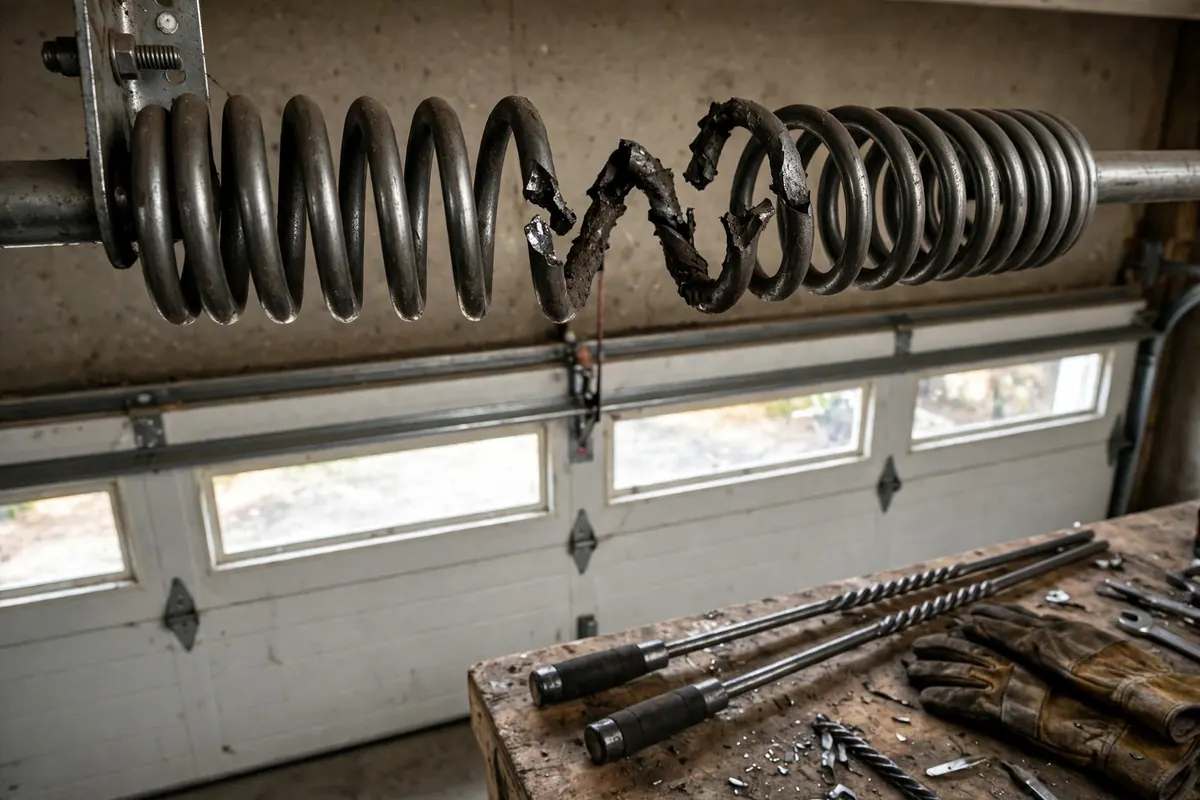
The second is corrosion starting on springs and cables: a spring that sits wet for weeks starts to rust, and a spring thinned by rust is the one that snaps when the cold arrives. The third is the bottom seal: a seal that stayed wet for weeks never dried out, and when the first freeze comes it freezes to the floor — and the opener strains against the ice until the drive gear strips or a cable comes off its drum. Our garage door spring replacement service covers the check, the replacement, and the balance test, and a spring caught early is a scheduled visit, not an emergency on a freezing morning.
Coastal doors add a fourth problem. Salt air plus standing water corrodes the bottom brackets first — the parts that sit closest to the wettest, saltiest part of the door — and a bracket that fails under full spring tension can let a cable come off its drum. That is why a coastal visit checks the bottom of the door first, and why the November 6 floods mattered most on the South Coast: New Bedford and Fall River got the most rain, and their doors got the wettest.
The freeze-thaw is when weakened parts fail
The turn is what makes this month dangerous for garage doors, not the rain itself. A wet November weakens the parts; the freeze-thaw finishes them. Meltwater by day, a hard freeze overnight — that cycle is what breaks garage doors, and it is the cycle that arrives now that the warm November is over. Water collects under the bottom seal and freezes the door to the floor. Cold contracts the metal in springs and cables, and a worn spring snaps on the first cold morning, often with a loud bang. Lubricant thickens, so rollers grind and the door moves slowly or jerks. If your door is slow, noisy, or heavy as the temperature drops, call before it fails completely. Our garage door tune-up service covers the full annual check before the first freeze: lubrication, hardware, balance, and safety sensors in one visit, with the spring and the bottom seal first on the list. Our snow and ice guide covers the same mechanism as a durable page: snow load, ice dams, frozen tracks, and how to free a frozen door safely.
Do the five-minute check before the next freeze: listen for grinding as the door moves, watch for a slow or jerky close, test the safety sensors, and clear leaves from the tracks. Look at the bottom seal — if it is cracked or torn, water is getting in where a sound seal would keep it out. And if the door has been slow or heavy since the storm, do not keep running it and hoping. If the door is crooked, heavy, or off its track, leave it closed and call (833) 563-1552. Call us, describe what the door does, and get it checked before the freeze arrives. Start from our Bay State Garage Door Repair Pros homepage for every city we serve.
November 2026: the parts the wet month wears out
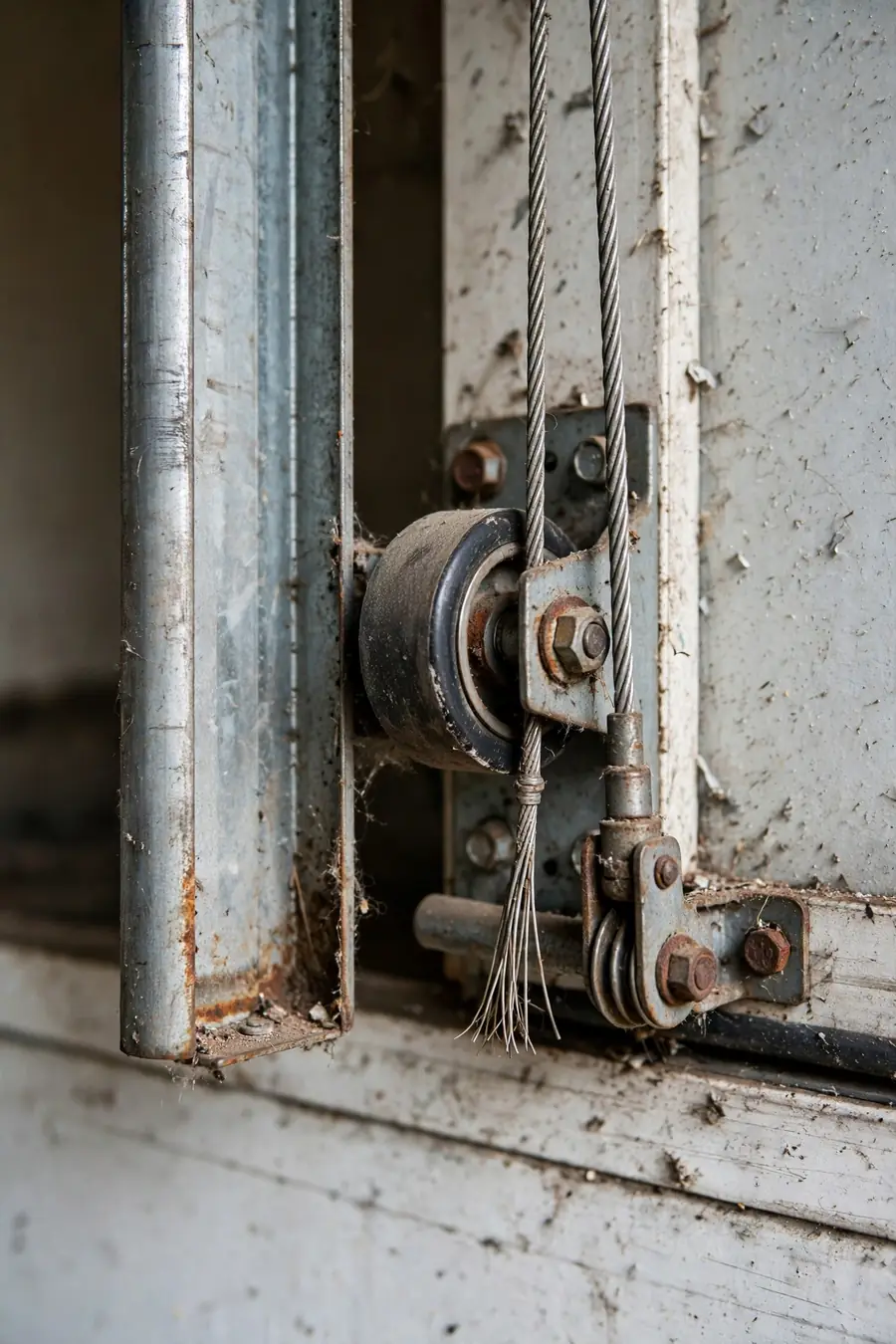
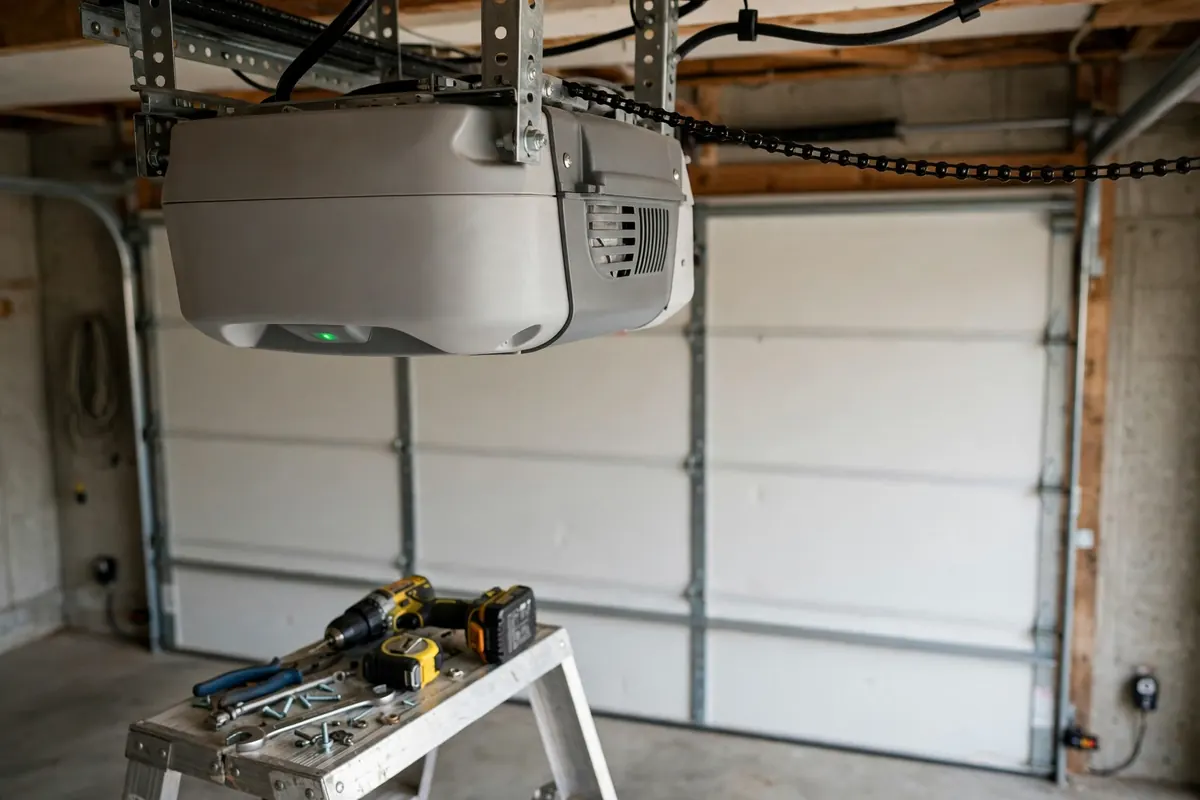
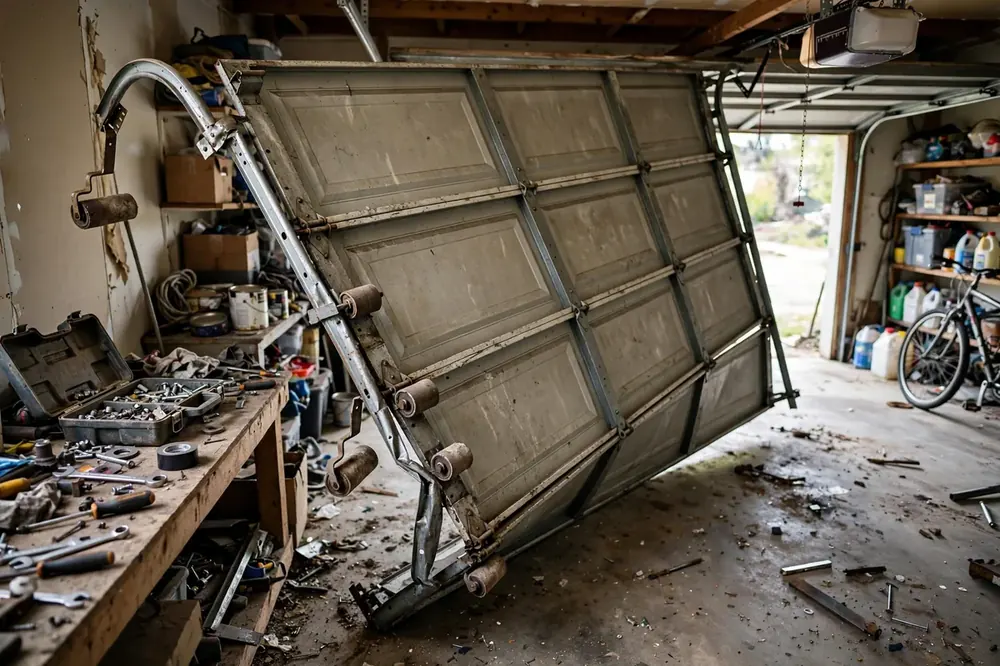
These images show the parts a wet, warm November wears out — the track and rollers, the opener, the spring, and the door itself.
Door slow, noisy, or heavy after a wet November? That is a door telling you it is about to fail — get it checked before the freeze.
Call Now to Speak to a SpecialistThanksgiving week forecast — November 20: the rain turns certain, and the inland freeze runs deeper
The week opened with the rain turning certain: Sunday-night rain now expected, then a clear Tuesday-night freeze, then rain likely on Thanksgiving Day with a northeast wind. Boston gets the mildest version of the week, and inland Massachusetts gets a colder one — Worcester runs about five degrees colder than Boston at every step, so the rain is the same, the freeze is deeper, and the door that was already worn is the one that fails.
The first hard freeze had already hit on November 16–17, with Boston down to 32°F and Quincy down to 31°F, so the doors going into the week's rain were already weakened — a spring thinned by salt air, a seal that froze to the floor once and tore a little when it broke free, a cable that was already frayed. The warm, dry days in between are the time to check them, not the time to forget them.
Thanksgiving Day storm — November 21: the Sunday-night rain, then wind on the holiday
The storm arrived in two parts: heavy rain Sunday night, then rain and wind on Thanksgiving Day itself, with the strongest gusts on the holiday and rain likely through Friday. The rain puts water into the tracks and under the bottom seal, and the freeze between the bands turns that water to ice — ice expands as it freezes, so it wedges the door to the floor, jams the rollers in the track, and strains the opener against a door that will not move.
Clear the tracks before the rain, not during it: leaves in the tracks hold water where it pools instead of draining, and the water that pools under the bottom seal is the water that freezes on the next cold night. Look at the bottom seal while the days are still dry and warm — if it is cracked or torn, water is getting in where a sound seal would keep it out.
Thanksgiving rain update — November 22: two rain bands with a freeze between them
The shape of the week settled into two rain bands with a freeze between them: heavy rain Sunday night, a clear freezing Tuesday night, then rain again from Thanksgiving morning through Friday. The freeze sits in the middle, and it is the freeze that turns the week's rain into a garage door problem — a freeze is a night at or just below 32°F, cold enough for frost, and a hard freeze is a night in the 20s, long enough for water to freeze solid, and the difference is what breaks garage doors.
If you are traveling for the holiday, the door you leave behind is the door the storm tests: a door that cannot close fully cannot lock, so check the door before you travel, and check it again when you get home. A door left open after dark, a door that opens while the house is empty, and a door that never closed after the last trip out are all things a smart opener's alert catches in minutes.
Thanksgiving night rain update — November 23: the night the rain peaks
By November 23 the week read as a dry, cold start, then rain from Thursday afternoon, peaking Thursday night with wind, and more rain Friday morning. Tuesday night was the first freeze of the season, cold enough for the water from the weekend's rain to freeze in the tracks and under the bottom seal.
The rain puts water into the tracks and under the bottom seal, and the freeze turns that water to ice. Ice expands as it freezes, so it wedges the door to the floor, jams the rollers in the track, and strains the opener against a door that will not move — and a door that was slow after the first freeze is a door to check before the rain, not after it.
Thanksgiving gale watch — November 24: what the wind tested
A Gale Watch ran from Thursday morning to Friday afternoon, and the wind became the part of the storm to respect, not just the rain. Wind pushes on the whole face of the door, and a wide double door catches more of it than a single door: the pressure flexes the panels, strains the tracks, and works the rollers and the brackets — and a door that is already out of line, or a track that is already bent, is the one that binds or jumps the track in a gust.
Keep the door closed in high wind, and never force a door that is flexing or rattling. An open door catches the wind like a sail, and a gust can slam a half-open door shut — hard enough to bend a track or rack the panels. Rain blows in under an open door too, and the water that pools under the bottom seal freezes on the next cold night.
Thanksgiving wind advisory — November 25: the last dry night to do the checks
A Wind Advisory joined the Gale Watch for the same hours, and two alerts covering the same storm meant the same thing twice: the wind is the part of this storm to respect, not just the rain. Wednesday night stayed dry and above freezing — the last dry window to do the checks, while the freeze that was last night is already behind us.
Do the safe check tonight, while the weather is still dry and mild: look at the bottom seal — if it is cracked or torn, water is getting in where a sound seal would keep it out. Test the safety sensors — both lights on means they can see each other — and clear leaves from the tracks so water can drain instead of pooling. Listen for grinding as the door moves, and watch for a slow or jerky close.
Thanksgiving Day storm, gale warning — November 26: three alerts, and what each one does to a door
On Thanksgiving Day the Gale Watch became a Gale Warning — a warning means the strong winds are now expected, not just possible — and a Coastal Flood Advisory joined it for Friday. The Gale Warning is the alert that matters most for a garage door: wind pushes on the whole face of the door, and a wide double door catches more of it than a single door.
The Wind Advisory sits on top of the Gale Warning for the same hours. The Coastal Flood Advisory is the one that brings water: the storm's wind pushes water toward the shore, and for a garage door that means water driven under the bottom seal and into the garage — if your garage sits low or near the coast, check the seal and the floor drain before Friday morning.
For local help, start from our Bay State Garage Door Repair Pros homepage, and read our November 6 floods garage door guide for what floodwater does to a door.
Frequently asked questions about November 2026 in Massachusetts
Was November 2026 really that warm and wet in Massachusetts?
Yes, by the National Weather Service's own numbers. Through November 11, Boston averaged 59.1°F — 10.8°F above normal — with 3.66 inches of rain, 2.59 inches above normal, and zero days at or below freezing. Through November 14, the month-to-date rain reached 3.88 inches, 2.21 inches above normal. It was the warmest, wettest start to a November the city has seen in years, and the rain did not stop there.
Has Boston frozen yet this November?
No — not through November 14. The coldest Boston morning so far was 35°F on November 14, after a low of 36°F on November 13, the day the nor'easter passed. Inland towns were forecast to reach freezing on Friday night, November 13 — Lowell 30°F, Worcester 32°F — while Boston stayed just above it. The first Boston freeze is still to come, and when it arrives it will be the test this month has been building toward.
What did the November 13 nor'easter do to garage doors?
In Boston it brought rain, a trace of snow, and cold air: November 13 recorded 0.18 inches of rain, a trace of snow, and a low of 36°F. Western Massachusetts saw the snow — 3 inches in eastern Hawley — and Block Island recorded gusts of 55 to 59 mph. For a garage door, the storm was the turn, not the damage. Wet seals, wet tracks, and cold air behind it freeze a door to the floor the next morning.
Why does a wet November hurt a garage door?
Because moisture gets into places a dry November never reaches: tracks and rollers that never dried out, springs and cables starting to corrode, and bottom seals that stayed wet for weeks. Salt air on coastal doors adds to it — salt plus standing water corrodes the bottom brackets first. Then the first freeze arrives, and the moisture sitting in the door all month freezes it shut or snaps a spring thinned by rust.
What should I check before the next freeze?
Do the check: listen for grinding as the door moves, watch for a slow or jerky close, test the safety sensors, and clear leaves from the tracks. Look at the bottom seal — if it is cracked or torn, water is getting in where a sound seal would keep it out. If the door is slow, noisy, or heavy as the temperature drops, do not wait for it to fail — call us for a tune-up before the freeze arrives.
About the author
Jude Bray is the lead technician at Bay State Garage Door Repair Pros, with 26 years in the trade. The business holds Massachusetts Home Improvement Contractor (HIC) Registration and Construction Supervisor License (CSL) credentials, plus IDEA garage door certifications.
Call Bay State Garage Door Repair Pros at (833) 563-1552, 24 hours a day, 7 days a week. A pre-winter tune-up now is a scheduled visit, not an emergency on a freezing morning.
Call Now to Speak to a SpecialistLast updated: November 28, 2026. Author: Jude Bray, Bay State Garage Door Repair Pros. Business address: 98-2 Ames Pl, Lowell, MA 01851. Phone: (833) 563-1552. Email: [email protected]. Weather figures in this post come from the National Weather Service Boston/Norton climate summaries for November 13 and 14, 2026, and the November 6 storm reports cited in our floods guide. Prices are not quoted here — your exact price is confirmed in writing on site. Photos and illustrations on this page do not show real Bay State jobs or staff.