
Garage Door Spring Replacement Cost in Boston, MA
What does a garage door spring replacement cost in Boston, MA? Other Boston sources report a wide range — about $271 on average, with torsion springs from $200 to $450 installed — and this post explains why the ranges differ and what moves the price.
Plan on a range, not a single figure: Angi reports a Boston average of $271, with most jobs between $162 and $379, while other Boston sources report $475 to $1,200 for torsion springs. The difference is the spring type, the door's size and weight, and whether one spring or the pair is replaced.
What do other Boston sources report for spring replacement?
There is no single Boston price for a spring replacement — the sources disagree, and the disagreement is the point. Angi reports a Boston average of $271, with most jobs between $162 and $379. Other Boston sources report torsion springs at $200 to $450 installed.
Heritage's Massachusetts guide puts the statewide range at $300 to $1,000. Murray's Boston page reports $475 to $1,200 for torsion springs. Every figure in this post is reported by the source named — none of them is a Bay State price, and your exact price is confirmed in writing on site.
| Source | Reported range | What it covers |
|---|---|---|
| Angi, Boston | $271 average; $162–$379 | Most spring jobs |
| Boston sources | $200–$450 installed | Torsion springs |
| Heritage, Massachusetts | $300–$1,000 | Statewide range |
| Murray's, Boston | $475–$1,200 | Torsion springs |
Estimate your door’s range first with our garage door repair cost estimator — it uses the same planning ranges as the table above.
Read the table as a range of doors, not a range of quotes for your door. A $162 job and a $1,200 job are different springs on different doors — and the sections below explain which factors put your door at one end or the other. Our garage door repair cost in Massachusetts guide takes the same planning-range approach for every common repair.
Why do Boston spring figures sit above the statewide range?
Boston labor runs higher than the state average, which is why Boston figures sit above the statewide range. Angi reports a Boston average of $271, with most jobs between $162 and $379, while Heritage's Massachusetts guide puts the statewide range at $300 to $1,000 and Murray's Boston page reports $475 to $1,200 for torsion springs.
Four things move the price: the spring type, the door's size and weight, the cycle rating, and whether one spring or the pair is replaced. A heavy double door needs a stronger spring than a light single door, and a stronger spring costs more — and a spring rated for more cycles costs more because it lasts longer.
Why do Boston spring replacement ranges differ so much?
Four things move the price: the spring type, the door's size and weight, the cycle rating, and whether one spring or the pair is replaced. A heavy double door needs a stronger spring than a light single door, and a stronger spring costs more.
A higher cycle rating costs more because it lasts longer — a spring rated for more open-and-close cycles is built to a higher standard, and it is fitted once instead of twice. Boston labor runs higher than the state average too, which is why Boston figures sit above the statewide range.
The sources also count different things. One source may report the spring alone, another the spring plus the visit, the balance test, and the safety check — and a range that looks like a quote for the same job is often a quote for a different job. That is why this post gives ranges with their sources, not a single figure: the only figure that matters for your door is the one written on site, after the door has been looked at.
Heard a bang on a cold morning, or a door that will not lift? That is a broken spring until proven otherwise — leave the door closed and call.
Call Now to Speak to a SpecialistTorsion vs extension: which does my Boston door have?
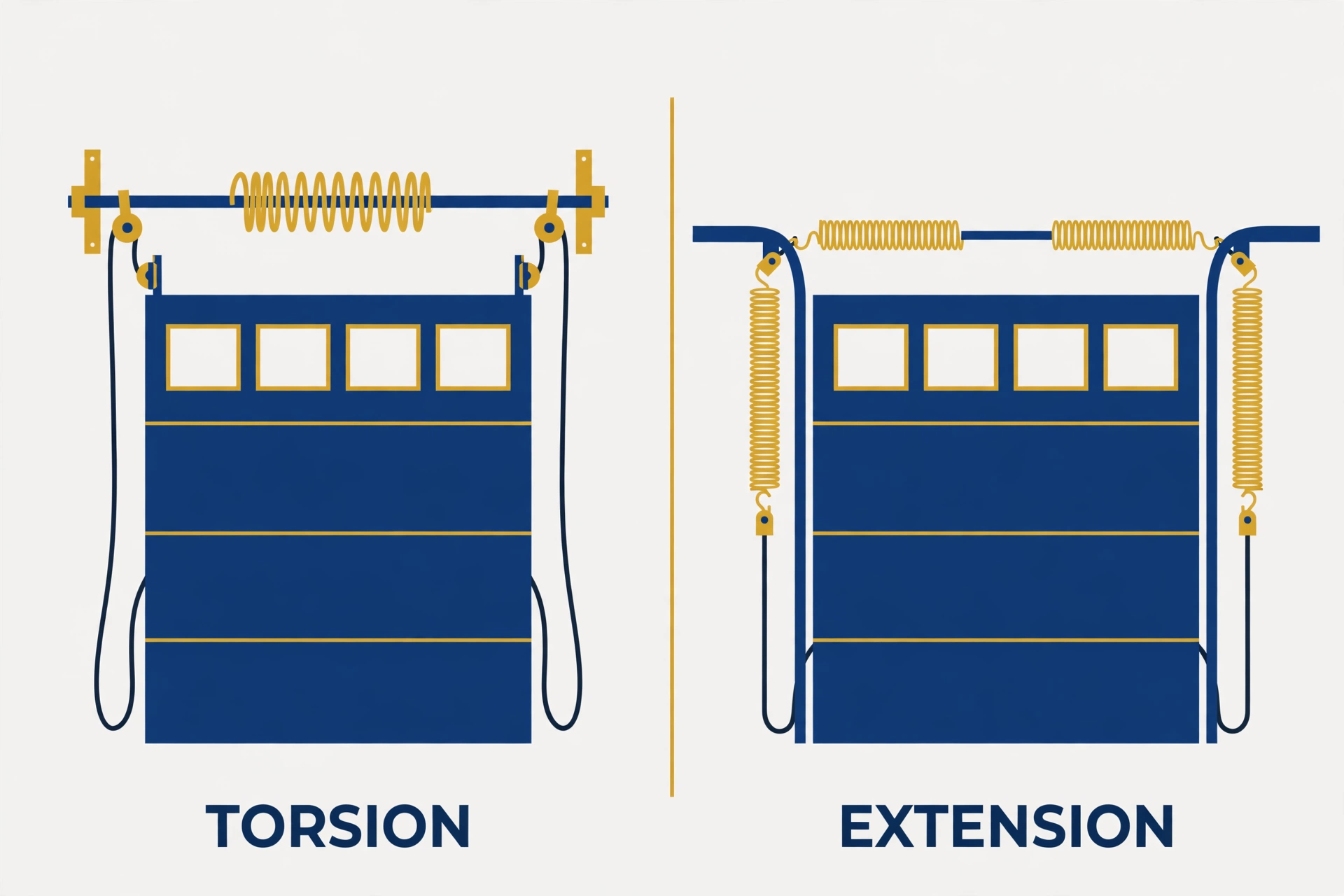
Most modern Boston doors use torsion springs: a coil that sits above the door on a metal shaft, twisting to carry the door's weight. Torsion springs usually cost more than extension springs, because they last longer and take more work to fit safely.
Extension springs run along the sides of the door and stretch to carry the weight — simpler to replace, and cheaper, but they do not last as long and they are less common on modern doors. Most of the prices in this post are torsion prices, because most Boston doors have torsion springs.
Your door has one type or the other, and a visit tells you which. Look above the door: a long coil on a shaft is a torsion spring. Look along the sides: a spring stretched out beside the track is an extension spring. Look only — do not touch either one. The spring carries the door's weight, and a spring under tension can injure you badly if it is touched the wrong way. Our garage door spring types guide explains the two types in full, with pictures of each.
What moves the price on your door
Size first: a double door is wider and heavier than a single door, and it needs a stronger spring. Weight second: a steel door weighs more than an aluminum door, an insulated door weighs more than an uninsulated one, and a door with windows and heavy hardware weighs more than a plain one. Cycle rating third: a spring rated for more cycles costs more and lasts longer. One spring or the pair fourth: replacing both costs more on the day, and less over the year, because the second spring is the same age as the first.
Condition matters too. A door that is out of balance, a track that is bent, or rollers that are worn all add work to the visit — and a spring fitted onto a door that is not running true will not last as long as it should. That is why the visit starts with a check of the whole door, not just the spring: the price follows from what the door needs, and the check is what finds it.
How long do garage door springs last?
Springs are rated in cycles, not years: one cycle is one open and one close, and a spring rated for 10,000 cycles lasts about 10,000 opens and closes. A door used twice a day reaches 10,000 cycles in about fourteen years; a door used four times a day gets there in about seven.
Cold snaps shorten the life further, because cold makes the steel less forgiving and a spring with few cycles left picks the coldest night to snap. Our how long do garage door springs last guide explains cycle ratings in plain language, including the signs a spring is near the end.
The signs are the same ones this post has already covered: a door that feels heavy, an opener that strains, a visible gap in the spring coil, and a bang on a cold morning. A spring caught early is a scheduled visit, not an emergency on a freezing morning — and a spring replaced before it snaps costs the same as a spring replaced after, without the car trapped inside.
What a spring replacement visit covers
The first job on site is always safety: making the door closed, secured, and unable to drop. Then the fault is confirmed — spring, cables, drums, and balance — and the part is matched to the door's weight, fitted, and tested before we leave. The balance test is part of the visit: the door should stay where it is put when the opener is disconnected, and a door that drops or rises on its own is a door that is not balanced. Our garage door spring replacement service covers the check, the replacement, and the balance test.
Do not try to replace a spring yourself. The spring carries the door's weight, and the winding work holds enough tension to injure you badly if it is done the wrong way. Leave it closed and call (833) 563-1552 — a spring replacement is a technician's job, and it is the one repair where doing it yourself is the most dangerous thing in the house. Start from our Bay State Garage Door Repair Pros homepage for every city we serve.
Spring replacement: the parts involved
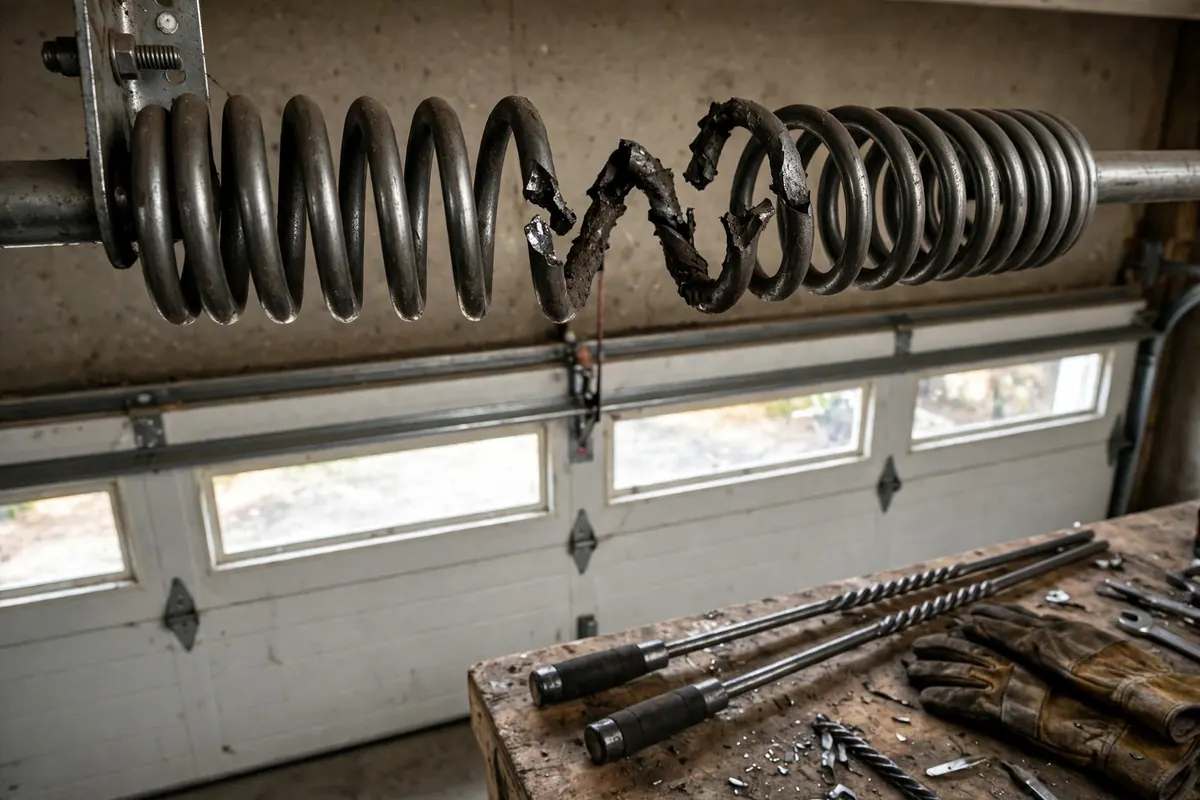
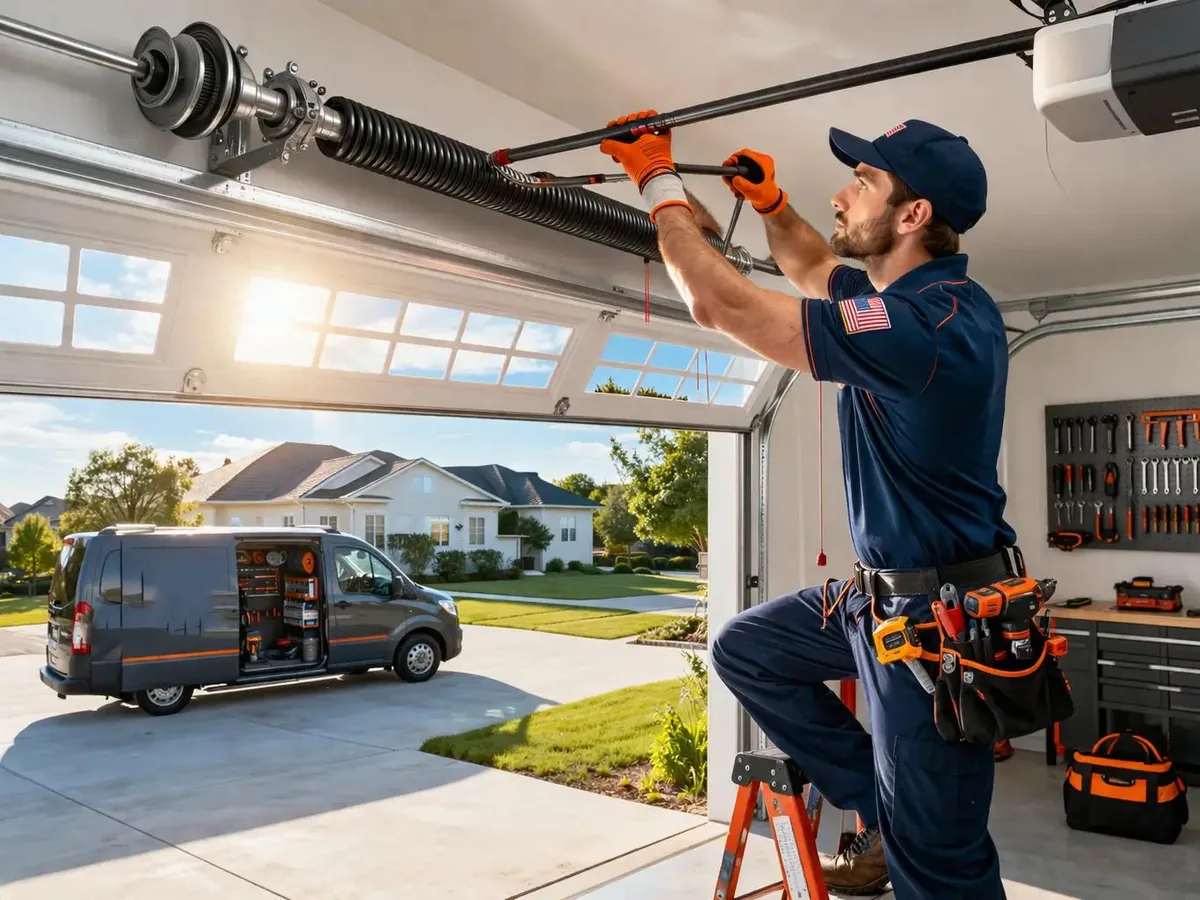
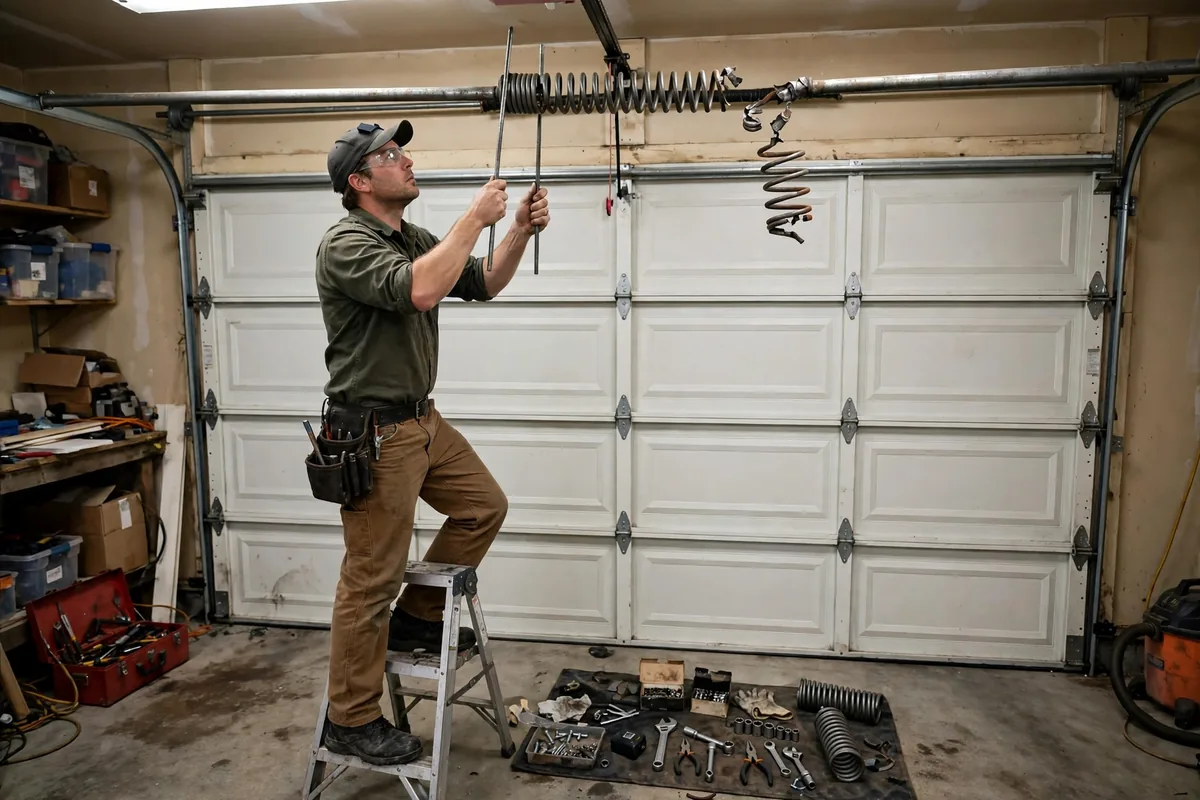
These images show the parts a spring replacement covers — the torsion spring, the winding work, the technician, and the spring above the door.
Door heavy, opener straining, or a visible gap in the spring coil? Those are the signs a spring is near the end — get it checked before it snaps.
Call Now to Speak to a SpecialistFor local help, start from our Bay State Garage Door Repair Pros homepage, and read our how long do garage door springs last guide for the signs a spring is near the end.
Frequently asked questions about garage door spring replacement cost in Boston
How much does it cost to replace a garage door spring in Boston?
Angi reports a Boston average of $271, with most jobs between $162 and $379, and torsion springs from $200 to $450 installed. Other Boston sources report higher: Heritage's Massachusetts guide puts the statewide range at $300 to $1,000, and Murray's Boston page reports $475 to $1,200 for torsion springs. The spread is real — the price depends on the spring type, the door's size and weight, and whether one spring or the pair is replaced.
Why do Boston spring replacement prices vary so much?
Four things move the price: the spring type, the door's size and weight, the cycle rating, and whether one spring or the pair is replaced. A heavy double door needs a stronger spring than a light single door, and a higher cycle rating costs more because it lasts longer. Boston labor runs higher than the state average too. That is why one source reports $162 and another reports $1,200 — they are pricing different doors, not the same job.
Torsion or extension spring — which costs more in Boston?
Torsion springs usually cost more than extension springs, because they sit above the door on a shaft, last longer, and take more work to fit safely. Extension springs run along the sides of the door and are simpler to replace. Most modern Boston doors use torsion springs, and most of the prices in this post are torsion prices. Your door has one type or the other — a visit tells you which, and the exact price follows from that.
Should both springs be replaced at the same time?
Usually yes, and the reason is age: the two springs were fitted together, they have done the same number of cycles, and the second is as worn as the first. Replacing one leaves the older spring to snap weeks later — often on the coldest morning — and a second visit costs more than doing both at once. Ask the technician on the visit: the answer depends on the springs' condition, and the exact price is confirmed in writing.
Is a spring replacement an emergency in Boston?
Yes, if the door will not open or the car is trapped inside — that is an emergency. A broken spring means the door can drop suddenly, so do not try to lift it or prop it open, and do not keep running the opener. Leave the door closed and call (833) 563-1552. If the door still opens and closes normally, the spring is worn but not broken, and a scheduled visit is the right call.
About the author
Jude Bray is the lead technician at Bay State Garage Door Repair Pros, with 26 years in the trade. The business holds Massachusetts Home Improvement Contractor (HIC) Registration and Construction Supervisor License (CSL) credentials, plus IDEA garage door certifications.
Call Bay State Garage Door Repair Pros at (833) 563-1552, 24 hours a day, 7 days a week. A spring caught early is a scheduled visit, not an emergency on a freezing morning.
Call Now to Speak to a SpecialistLast updated: November 28, 2026. Author: Jude Bray, Bay State Garage Door Repair Pros. Business address: 98-2 Ames Pl, Lowell, MA 01851. Phone: (833) 563-1552. Email: [email protected]. Prices in this post are planning ranges reported by the sources named — Angi, Heritage, and Murray's — not Bay State prices. Your exact price is confirmed in writing on site. Photos and illustrations on this page do not show real Bay State jobs or staff.