
Garage Door Security in Massachusetts: 7 Checks to Do
A garage door is the widest way into a house, and the easiest to forget. These seven checks — the opener code, the release cord, a manual lock, the windows, smart alerts, the house door, and the remotes — make a Massachusetts garage harder to get into.
Start with the opener: a modern opener changes its code every time it is used, and a lock only works when the door closes fully and square. Then check the release cord, the manual lock, the windows, and the door between the garage and the house — the four places a garage gives itself away.
1. The opener code: the first thing to check
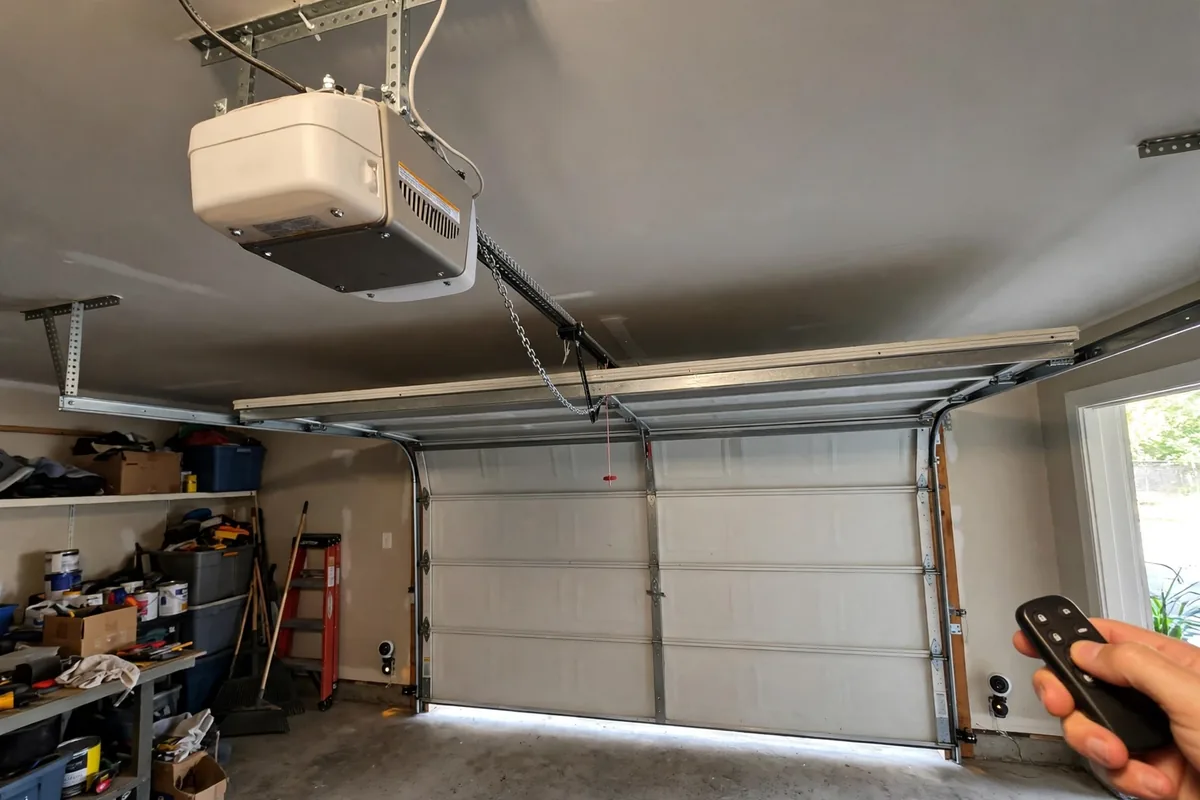
A garage door opener is a radio, and the code it sends is the key. A modern opener changes its code every time it is used — the opener and the remote agree on a new code after every press, so a signal copied once does not work twice. An old opener uses a fixed code, set once and never changed, and anyone who catches that code has the key for good. If your opener still sets its code with small switches inside the remote, it is a fixed-code opener, and it is time to replace it. Our garage door opener repair service covers the check, the repair, and the safety test — and the visit will tell you straight whether the opener is worth keeping.
The code matters because the opener is the only lock most garage doors have. A door with a fixed-code opener is a door whose key never changes — and a key that never changes can be used from the street.
Why is the emergency release the weak point most people forget?
Every opener has a red emergency-release cord, and it is the weak point most people forget. Pull it and the door comes off the opener, which is exactly what you want in a power cut — and exactly what someone outside wants too, if the cord hangs where it can be reached.
A cord that dangles low, or that can be hooked through the gap at the top of the door, defeats the lock and the opener together. Keep the cord short, keep it out of reach from outside the door, and test it twice a year: pull it only when the door is fully closed and feels balanced, move the door by hand, and reconnect it by pulling the cord toward the opener until it clicks.
The test matters because a cord that has never been pulled is a cord nobody knows works. If the door feels heavy or drops when you test it, stop: that is a broken spring, and a door with a broken spring can drop suddenly. Leave it closed and call (833) 563-1552.
Opener still on a fixed code, or a release cord that hangs where it can be reached from outside? Those are the two routes into a garage that cost nothing to close — get them checked.
Call Now to Speak to a Specialist3. A manual lock at night
A slide bolt or a keyed lock holds the door shut even if the opener is tricked or the release cord is pulled — but it only works when the door closes fully and square. The bolt has to meet its slot exactly, and the door has to be in the same place every time it closes. Lock it when the house is empty, and overnight. If the bolt misses its slot, the door has shifted — that is a visit, not a lock problem, and our garage door won't lock guide explains the safe checks in full, including how to tell a lock fault from a door fault.
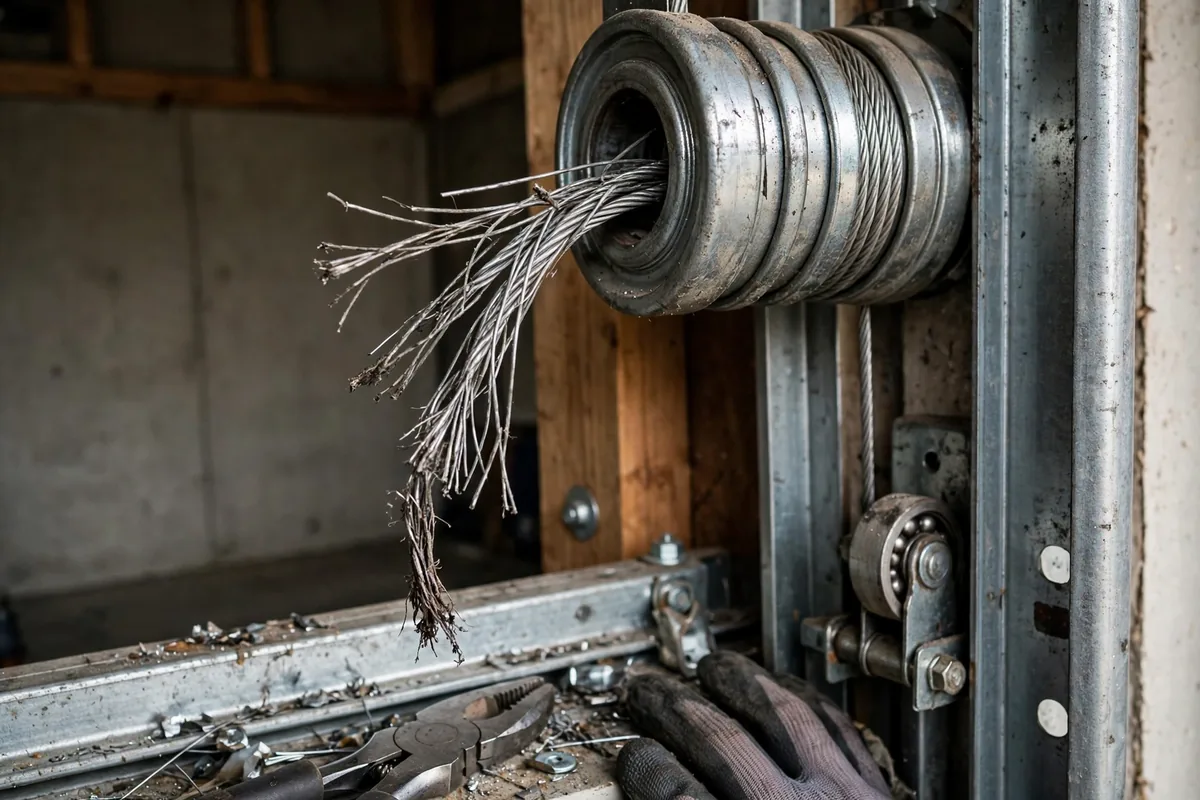
Never force a lock on a door that is jammed, slams down, or feels heavy. Forcing the bolt can bend the track, rack the panels, or snap a cable that was already frayed — and a cable that lets go does so suddenly, under full spring tension. A lock that will not catch is the door telling you something is wrong with the parts that carry its weight. Leave the door where it is, keep clear, and call.
4. Cover the windows
A garage door with clear windows shows whether anyone is home, what is inside, and whether the door is worth opening. Frost them, cover them, or fit curtains on the inside — anything that stops a look through the door from the street. The same rule applies to the windows on the house door inside the garage: if the garage door is open for an hour while you work in the yard, the house door is the only thing between the street and the house.
5. Smart alerts: know when the door moves
A smart opener tells you when the door opens, when it closes, and when it stays open — which is the part a plain opener cannot do. A door left open after dark, a door that opens while the house is empty, and a door that never closed after the last trip out are all things an alert catches in minutes, while a plain opener leaves them until morning. Set the alert for every open, not just for the night, and test it the way you test the door: open it, watch the alert arrive, and close it again.
The alerts only work when the door closes fully, so check the safety sensors at the same time: both lights on means they can see each other, and a door that does not close fully cannot lock. Our garage door safety sensors guide explains the sensor check in full. And test the backup battery before the next outage — a battery at the end of its life is the reason an opener beeps or hesitates on battery power.
6. The door between the garage and the house
The garage door is not the house's front door — the door between the garage and the house is. It should be solid, it should have a deadbolt, and it should be locked every night and every time the house is empty, even when the garage door is closed. A garage door that is forced, tricked, or left open is a garage that is open; a house door that is locked is a house that is still shut. Lock both, every night.
7. Remotes and keypads: the small things that give a door away
A remote clipped to the visor of a car parked outside is a key left in the ignition. Take it with you, or keep it in the house — and if a remote is lost or stolen, erase it from the opener the same day. Erasing takes a minute on the opener itself: press the learn button until the light goes out, then pair each remote again. Change the keypad code when you move in, and change it again if anyone who had the code should not have it any more. A keypad code that has never been changed is a code the last owner, the last tenant, and the last tradesperson all still know.
Lock mode is the setting that catches people out: a switch or a long press on the wall control that disables the remotes on purpose, easy to bump by accident. If the wall button works but the remotes do not, check lock mode first — press and hold the lock button until the icon goes out, then test a remote. If the remote works again, that was the whole fault, and no visit is needed.
What should I never do to secure my garage door?
Never leave the garage door open while the house is empty, and never leave it open overnight because the opener will close it later — a timer you have never tested is a timer you cannot trust.
Never leave a remote in a car parked outside, and never tape the release cord down or tie it off: the cord is a safety device, and a cord that cannot be pulled in a power cut is a door that cannot be opened when the power is out. Never touch a spring, a cable, or a track yourself — the spring carries the door's weight, the cable holds the door under full spring tension, and the track holds the door's path.
What does a security visit cover — and what does it cost?
A security visit starts with the same question as this post: does the door close all the way, and if not, why not? The spring, the cables and drums, and the door's balance are all checked, because a door that does not close properly does not lock properly either.
A lock or a slot that has moved is refitted on the visit, the opener code is checked, and the door is tested — including the balance and the safety sensors. No Bay State price is published here. Most common repairs are reported in the $150 to $400 range by other Massachusetts sources — a cable or roller job at the low end, a spring or opener job higher. Your exact price is confirmed in writing on site. A door that cannot lock is a security problem, not a tomorrow problem, and our emergency garage door repair service covers it any time of day or night. Start from our Bay State Garage Door Repair Pros homepage for every city we serve.
Which parts are involved in garage door security?
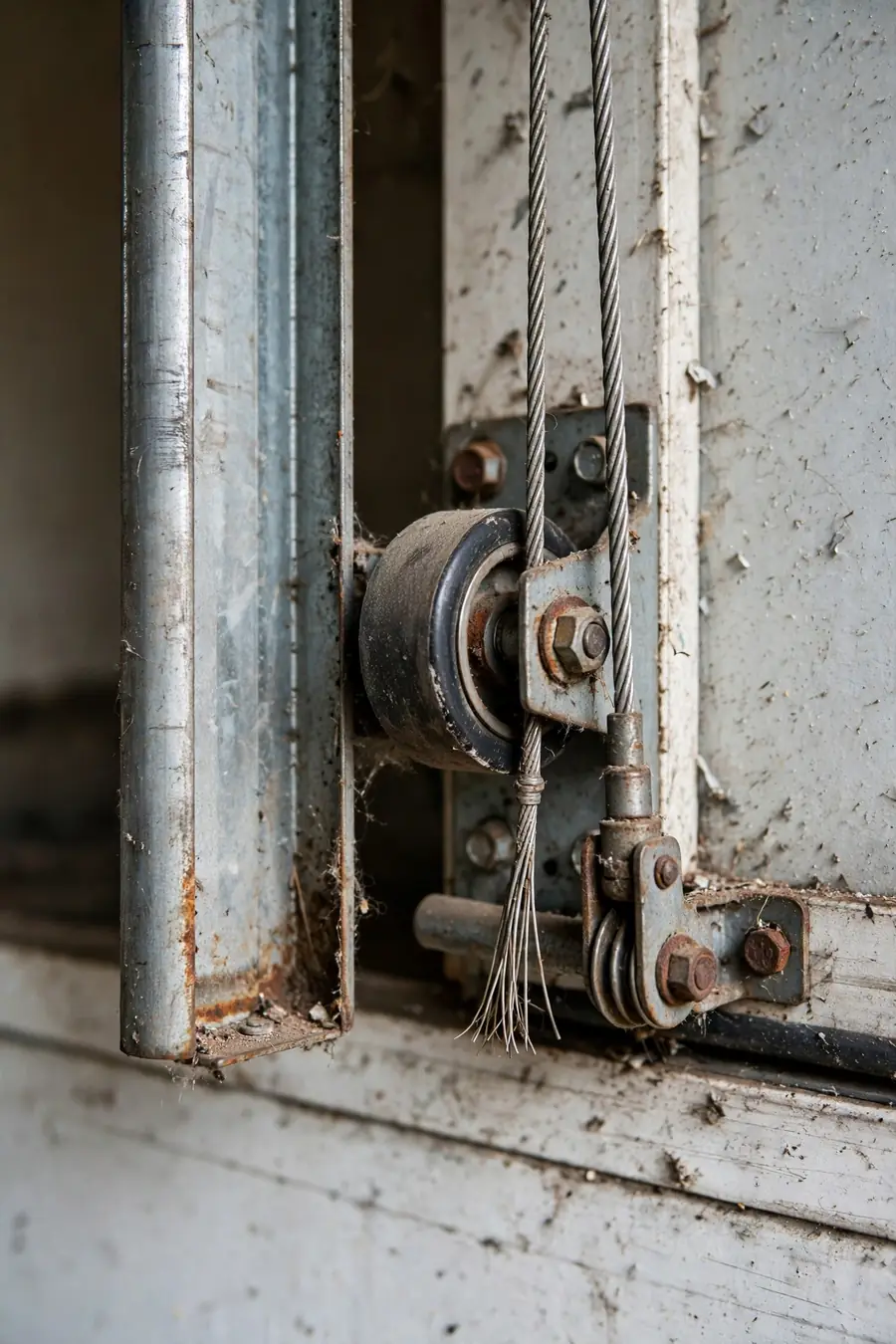
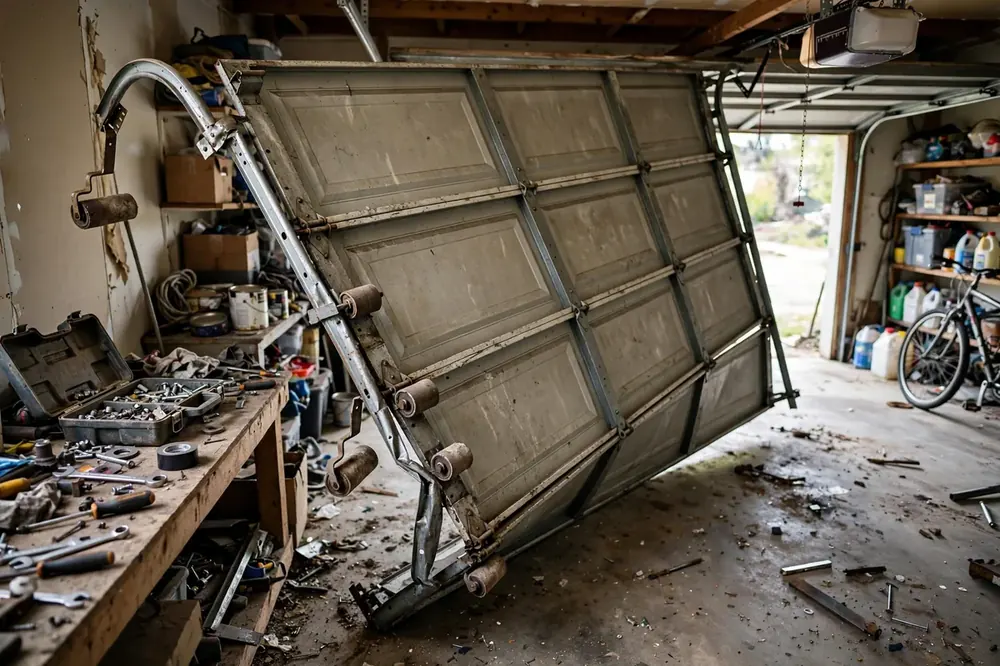
These images show the parts involved in garage door security — the opener, the track and rollers, the cable and drum, and the door off its track.
Opener still on a fixed code, or a release cord that hangs where it can be reached from outside? Those are the two routes into a garage that cost nothing to close — get them checked.
Call Now to Speak to a SpecialistFor local help, start from our Bay State Garage Door Repair Pros homepage, and read our garage door won't lock guide for the safe checks when a lock will not catch.
Frequently asked questions about garage door security in Massachusetts
Is a garage door an easy way into a house?
Yes — it is the widest door in the house, and the one most often left unlocked or half-checked. A door that does not close fully, an opener with an old fixed code, a remote left in a car parked outside, and a release cord that can be reached from outside are four separate ways in, and most houses have at least one of them. The checks below close all four.
Can someone open my garage door from outside?
Three ways, most often: an opener that still uses a fixed code, a release cord that hangs where it can be hooked from outside, or a remote left in a car parked in the driveway. A modern opener changes its code every time it is used, so a copied signal does not work twice. Keep the cord short, keep the remote with you, and the outside routes close.
Should I lock the manual lock every night?
Yes — when the house is empty, and overnight. A slide bolt or a keyed lock holds the door shut even if the opener is tricked or the release cord is pulled, but it only works when the door closes fully and square. If the bolt misses its slot, the door has shifted — that is a visit, not a lock problem. Never force a lock on a door that is jammed or heavy.
Is a smart opener safer than a plain one?
It helps, but it does not fix a worn door. A smart opener changes its code every time it is used, and it tells you when the door opens or stays open — which is the part a plain opener cannot do. But a smart opener on a door with a worn spring, a frayed cable, or a track out of line is still a worn door. Fix the door first, then add the alerts.
What do I do if a remote is lost or stolen?
Erase it from the opener, then re-pair the remotes you still have and change the keypad code. A lost remote is a key to the house until it is erased, and erasing it takes a minute on the opener itself — press the learn button until the light goes out, then pair each remote again. If the opener is old enough that it cannot erase one remote, replace it.
About the author
Jude Bray is the lead technician at Bay State Garage Door Repair Pros, with 26 years in the trade. The business holds Massachusetts Home Improvement Contractor (HIC) Registration and Construction Supervisor License (CSL) credentials, plus IDEA garage door certifications.
Call Bay State Garage Door Repair Pros at (833) 563-1552, 24 hours a day, 7 days a week. A door that cannot lock is a security problem — get it checked before it becomes a spring or cable fault.
Call Now to Speak to a SpecialistLast updated: November 28, 2026. Author: Jude Bray, Bay State Garage Door Repair Pros. Business address: 98-2 Ames Pl, Lowell, MA 01851. Phone: (833) 563-1552. Email: [email protected]. No prices are quoted here — your exact price is confirmed in writing on site. Photos and illustrations on this page do not show real Bay State jobs or staff.