
Garage Door Won't Lock in Massachusetts? Safe Checks First
A garage door that won't lock in Massachusetts usually comes down to three things: a lock that no longer lines up with its slot, a door out of balance or alignment, or an opener problem that stops the door closing fully. Here is how to tell which — safely.
Start by asking whether the door closes all the way, not by blaming the lock. A lock only works when the door sits fully closed and square. If the door closes fully and the lock still will not catch, the lock or its slot is the fault. If the door stops short, the fault is elsewhere — call (833) 563-1552.
How do I work out which kind of garage door lock I have?
Garage doors have three kinds of lock, and the fix depends on which one is failing. The first is the manual slide lock: a bolt on the inside of the door that slides into a slot in the track or the frame, holding the door shut when it is closed by hand.
The second is the keyed lock: a cylinder in the door itself, turned with a key from outside, which moves the same kind of bolt into the same kind of slot. The third is not a bolt at all — it is lock mode on the opener, a setting on the wall control that disables the remotes on purpose, usually a small switch or a long press on a button that lights a lock icon.
Each one fails differently. A slide lock or a keyed lock fails when the bolt no longer lines up with its slot — which is a door problem, not a lock problem. Lock mode fails when it is bumped on by accident, and the symptom is different again: the wall button works, the remotes do not, and the door itself is sound. Work out which kind of lock you have before you do anything else, because the checks below are different for each one — and because a lock that will not catch is usually the door telling you something, not the lock failing on its own.
Why does a garage door lock stop working?
A lock only works when the door sits fully closed and square. The bolt has to meet its slot exactly — a gap of a fraction of an inch is enough to stop it catching — and the door has to be in the same place every time it closes.
That is why a lock problem is almost always one of three things, and only one of them is the lock itself.
| What has gone wrong | What you see | What it usually means |
|---|---|---|
| Lock no longer lines up with its slot | Door closes fully, bolt misses the slot | Door has shifted, or the slot has moved |
| Door out of balance or alignment | Door stops short, hangs crooked, or drops | Spring, cable, or track fault |
| Opener or sensor problem | Door reverses, or stops before it closes | Sensor fault, or the opener stops short |
The first cause is the simplest: the door has shifted on its track, or the frame has moved a little with the seasons, and the bolt no longer meets the slot. The second is the one to respect: a door that is out of balance or out of alignment is a door whose spring, cable, or track is failing, and the lock is only the part that shows it first. The third is the most common in winter: the safety sensors stop the door before it closes fully — a dirty lens, a sensor knocked out of line, or ice under the door — and a door that does not close fully cannot lock. Our garage door safety sensors guide explains the sensor check in full, including what the lights on the sensors mean.
What safe checks can I do in ten minutes for a lock that won't catch?
Start with the simplest check of all: does the door close all the way? Watch it close from inside the garage, and look at the bottom of the door against the floor.
If there is a gap — even a small one — the door is not fully closed, and no lock can catch on a door that is not fully closed. If the door closes fully and the lock still will not catch, look at the bolt and the slot together: the bolt should meet the slot squarely, and if it is high or low by a finger's width, the door has shifted. Do not try to move the track or the slot yourself — that is visit work, and the track carries the door's weight.
The second check is the hand test, and it tells you more than any other. Pull the red emergency-release handle and move the door by hand — only if the door is fully closed and feels balanced. A smooth door that stays put when you let go points to the opener: the lock or its slot is the fault, and the door itself is sound. A heavy, sticking, or dropping door points to balance or hardware: the spring, the cable, or the track. If the door feels heavy or drops at all, stop, leave it closed and call (833) 563-1552 — a door that drops is a door whose spring or cable has failed, and it can drop suddenly.
The third check is lock mode, and it takes ten seconds. If the wall button works but the remotes and the keypad do not, the opener is almost certainly in lock mode: a setting on the wall control that disables the remotes on purpose, easy to bump by accident. Press and hold the lock button until the icon goes out, then test a remote. If the remote works again, that was the whole fault — and no visit is needed. If the wall button does not work either, the fault is the opener, not the lock, and our garage door opener repair service covers the check, the repair, and the safety test.
Door closes fully but the lock still won't catch — or the door stops short and feels heavy? That is a door fault showing up as a lock fault. Leave it closed and call.
Call Now to Speak to a SpecialistWhat never to do
Never force a lock on a door that is jammed, slams down, or feels heavy. Forcing the bolt can bend the track, rack the panels, or snap a cable that was already frayed — and a cable that lets go does so suddenly, under full spring tension. A lock that will not catch is the door telling you something is wrong with the parts that carry its weight, and forcing it turns a small fault into a bigger one. Leave the door where it is, keep clear of it, and call.
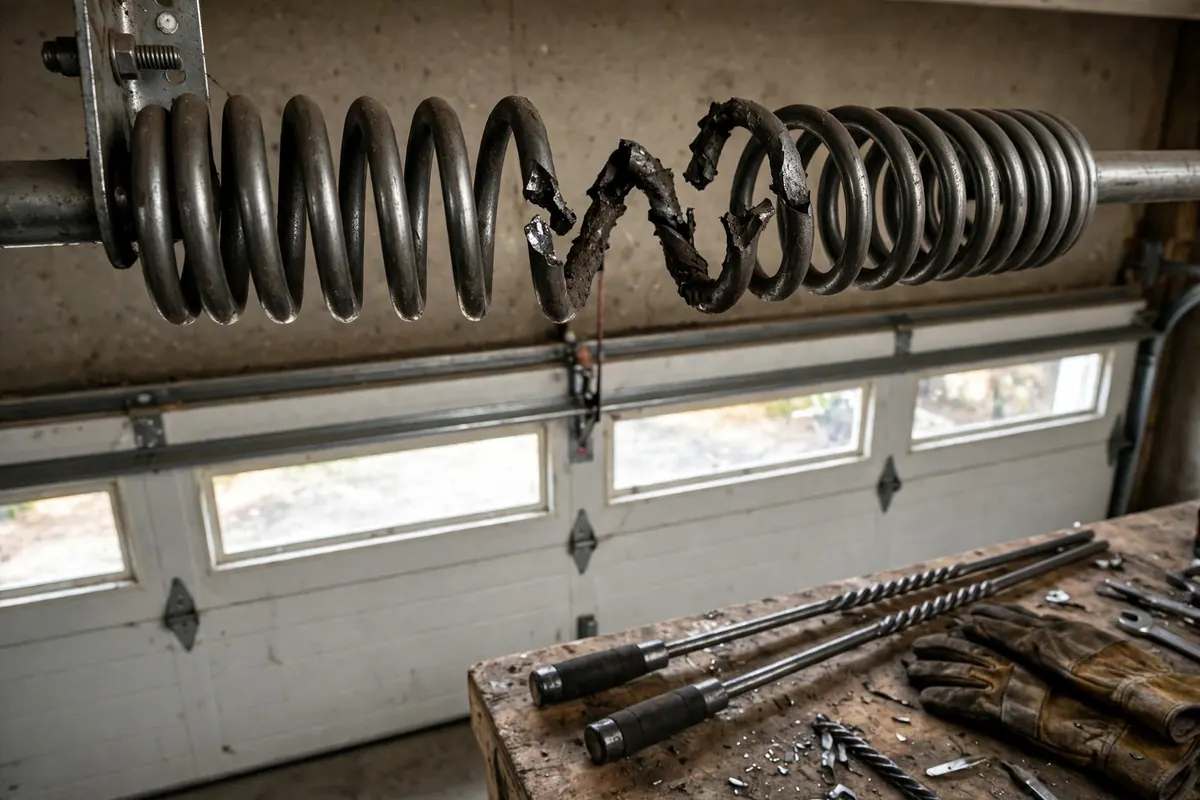
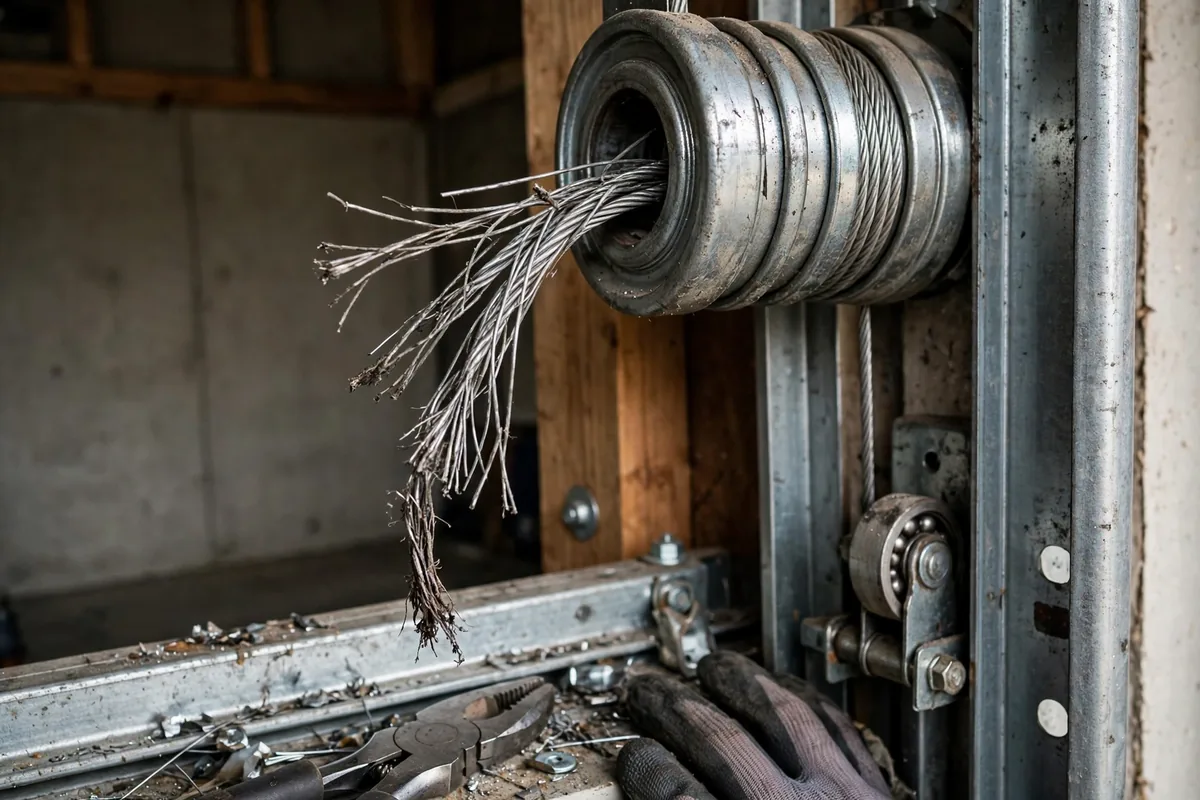
Never touch a spring, a cable, or a track yourself, for the same reason. The spring carries the door's weight, and a spring under tension can injure you badly if it is touched the wrong way. The cable holds the door to the drum under full spring tension. The track holds the door's path, and a track that is bent or misaligned needs the door taken off and re-hung. The homeowner's job is to look and to test; the technician's job is everything that carries the door's weight. If what you see involves a spring, a cable, or a track, leave it closed and call (833) 563-1552. Our garage door spring replacement service covers the check, the replacement, and the balance test.
When is a lock fault a security problem?
A door that will not lock is a security problem when the garage is left open — and in Massachusetts, that is most often an overnight problem. A door that stops short of closing leaves a gap that water, cold air, and leaves come through, and in winter the water under the seal freezes the door to the floor.
A door that cannot be locked cannot be left: move valuables out of the garage, lock the door between the garage and the house, and call any time, day or night. A door stuck open overnight is a call-now fault, not a tomorrow problem, and our emergency garage door repair service covers it any time of day or night.
The same rule applies in the other direction: a door that locks fine in summer and will not lock in winter is usually a seal or a track problem, not a lock problem. Meltwater collects under the bottom seal by day and freezes overnight, and a seal that froze once already tears a little when it breaks free. Cold contracts springs and cables, and a spring already worn is the one that snaps on the first cold morning. A lock that worked in October and will not catch in November is a door to check before the first hard freeze, not after.
What a visit covers — and what it costs
The visit starts with the same question as this post: does the door close all the way, and if not, why not? The spring, the cables and drums, and the door's balance are all checked, because a lock that will not catch is usually the last symptom of a fault somewhere else. A lock or a slot that has moved is refitted on the visit, matched to the door, and the door is tested — including the balance and the safety sensors, because a door that does not close properly does not lock properly either. No Bay State price is published here. Most common repairs are reported in the $150 to $400 range by other Massachusetts sources — a cable or roller job at the low end, a spring or opener job higher. Your exact price is confirmed in writing on site. Start from our Bay State Garage Door Repair Pros homepage for every city we serve.
A lock that won't catch: the parts involved
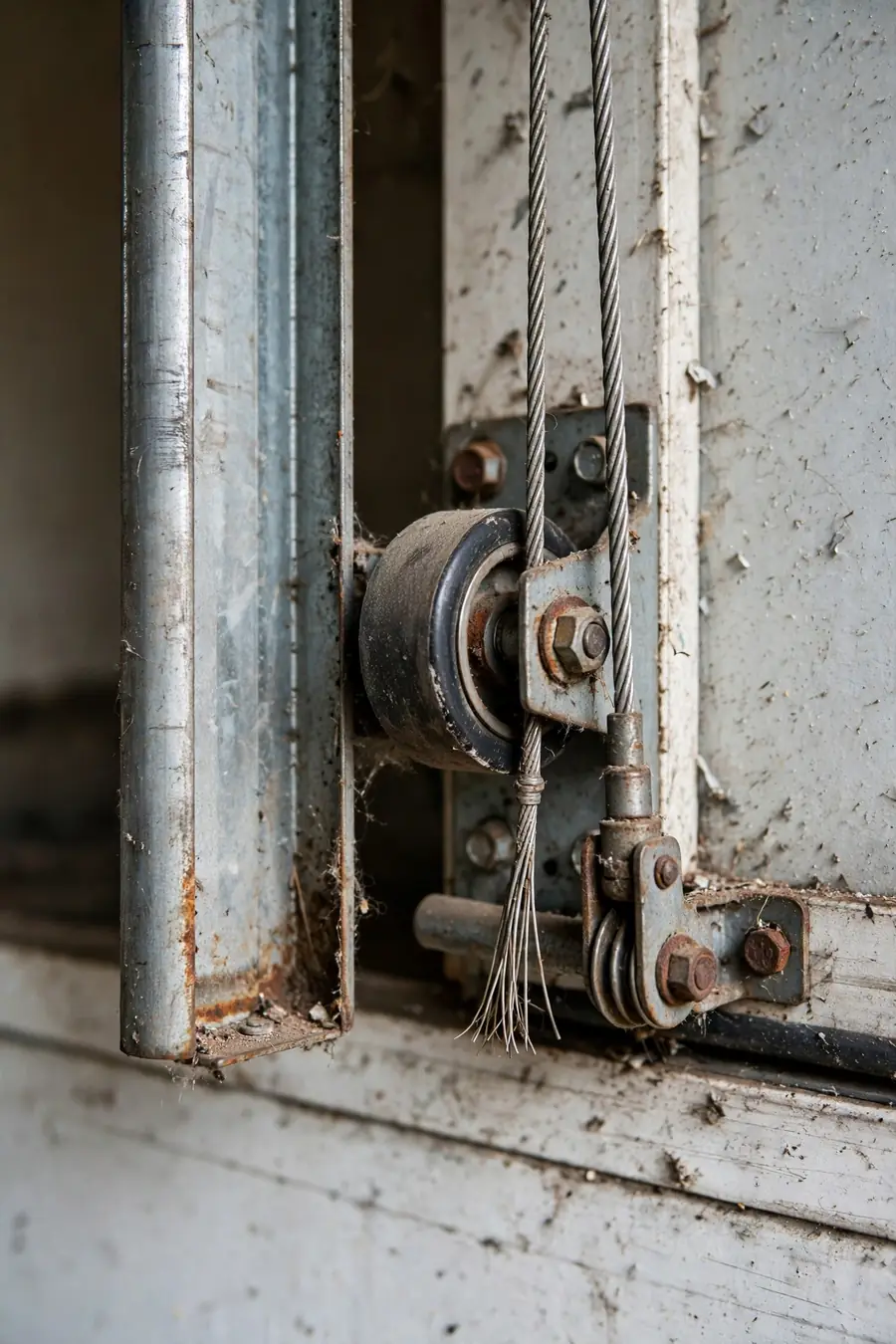
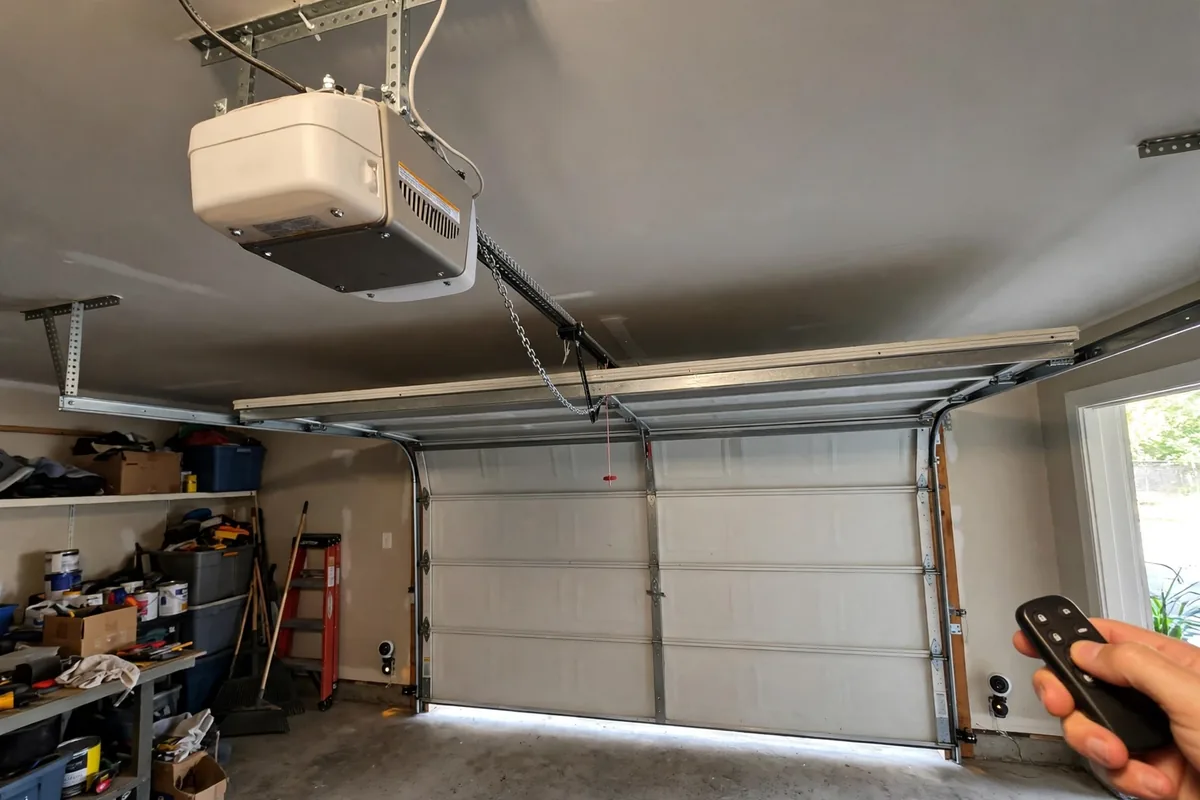
These images show the parts involved when a garage door won't lock — the spring, the track and rollers, the cable and drum, and the opener.
Door closes fully but the lock still won't catch — or the door stops short and feels heavy? That is a door fault showing up as a lock fault. Leave it closed and call.
Call Now to Speak to a SpecialistFor local help, start from our Bay State Garage Door Repair Pros homepage, and read our garage door spring replacement service for the fault that most often sits behind a stubborn lock.
Frequently asked questions about a garage door that won't lock
Why won't my garage door lock?
Almost always one of three things: a lock that no longer lines up with its slot, a door that is out of balance or out of alignment, or an opener and sensor problem that stops the door from reaching the fully closed position. A lock only works when the door sits fully closed and square, so a lock that will not catch usually means the door is not where it should be.
How can I tell if it is the lock or the door?
Pull the red emergency-release handle and move the door by hand — only if the door is fully closed and feels balanced. A smooth door that stays put points to the opener: the lock or its slot is the fault. A heavy, sticking, or dropping door points to balance or hardware: the spring, the cable, or the track. If the door feels heavy or drops at all, stop, leave it closed, and call (833) 563-1552.
What is lock mode on my garage door opener?
Lock mode is a setting on the wall control that disables the remotes on purpose — usually a switch or a long press that lights a lock icon. Check it first when the remotes stop working but the wall button still works. Press and hold the lock button until the icon goes out, then test a remote. If the wall button works and the remotes do not, it is almost certainly lock mode.
Can I force the lock closed?
No — never force a lock on a door that is jammed, slams down, or feels heavy. Forcing it can bend the track, rack the panels, or snap a frayed cable. A lock that will not catch is the door telling you something is wrong with the parts that carry its weight. Leave the door where it is, keep clear, and call (833) 563-1552 — a door that cannot lock is a security problem, not a tomorrow problem.
When is a door that won't lock an emergency?
When the door will not close, or the lock will not catch and the garage is left open. An open garage overnight is a security problem — move valuables out, lock the door between the garage and the house, and call (833) 563-1552 any time. If the door is also heavy, crooked, or jammed, leave it where it is — that is a spring or cable fault, and it is a call-now fault.
About the author
Jude Bray is the lead technician at Bay State Garage Door Repair Pros, with 26 years in the trade. The business holds Massachusetts Home Improvement Contractor (HIC) Registration and Construction Supervisor License (CSL) credentials, plus IDEA garage door certifications.
Call Bay State Garage Door Repair Pros at (833) 563-1552, 24 hours a day, 7 days a week. A lock that will not catch is usually the door telling you something — get it checked before it becomes a spring or cable fault.
Call Now to Speak to a SpecialistLast updated: November 28, 2026. Author: Jude Bray, Bay State Garage Door Repair Pros. Business address: 98-2 Ames Pl, Lowell, MA 01851. Phone: (833) 563-1552. Email: [email protected]. No prices are quoted here — your exact price is confirmed in writing on site. Photos and illustrations on this page do not show real Bay State jobs or staff.