
Why Does My Garage Door Open by Itself?
A garage door that opens by itself is a security problem, not a ghost — something is telling the opener to open. These are the usual causes in Massachusetts homes: a stuck remote, a crossed code, a shorting wall control, and a failing logic board.
First, make the door stay shut: press and hold the lock button on the wall control, or unplug the opener from the ceiling outlet. Then find the sender — check every remote and keypad for a stuck button, and look at the wall control and its wire. If nothing is stuck, the fault is in the opener itself.
What are the two kinds of a garage door opening by itself?
The symptom splits into two different faults, and naming the right one saves a service call. A garage door that goes from fully closed to fully open with nobody near it is being commanded: a transmitter, a wall control, a wiring short, or the opener's own logic board sent an open signal.
A door that starts closing and then comes back up has not been commanded at all — it has tripped its own safety system, and the cause is usually a blocked sensor, a misaligned sensor, or a travel limit set past the floor. This post covers the first kind first, because it is the security problem, and the second kind at the end, because it is the one people confuse it with.
The security problem is the one to take seriously. A door that opens on its own while the house is empty leaves the garage — and everything in it — open to anyone passing by. If your door has opened on its own even once, make it stay shut before you do anything else.
1. A stuck remote, keypad, or wall-control button
The most common reason a garage door opens on its own is a transmitter with a button that has not fully released. A visor remote wedged under a seat, a keychain remote crushed in a pocket, a keypad button held down by dirt, a wall control whose push bar is held down by gum or paint — any of them tells the opener to open, and the opener does exactly what it is told. Check every remote and keypad one at a time: take the batteries out of each remote in turn, and see whether the door stops opening on its own. The remote whose battery stops the problem is the sender.
The wall control is the one people forget. The button by the door, or the thin wire that runs from it to the opener, can short when it is pinched by a staple or damaged by moisture, and the opener reads that short as a press. If the button sticks, feels soft, or stays pressed in, it is the sender — and do not splice the wire yourself.
Door opening on its own while the house is empty? That is a security problem, not a quirk — make it stay shut first, then call.
Call Now to Speak to a Specialist2. A neighbor's remote, a previous owner's remote, or an old fixed code
Older openers use a fixed code: a row of small switches inside the remote and inside the opener that set the code, and any remote with the same setting opens the door. A neighbor with the same setting opens your door as well as theirs, and so does a previous owner's remote that was never cleared from the opener's memory. Newer rolling-code openers change the code every time, so a neighbor's remote cannot open them — but old fixed-code units are still out there.
Ask the neighbors first: if your door opens when theirs does, you have found the sender. Then clear the opener's memory and set it up again with only your remotes — the learn button on the opener does this. If your opener has a row of switches and no learn button, it is a fixed-code opener, and the fix is a new opener rather than a reprogram: some fixed-code openers also predate the rule that required safety sensors on openers made from January 1, 1993, and a door without sensors is a door to replace, not to keep.
3. A short in the wall control or its wire
The wall control runs on low-voltage wire from the button to the opener, and that wire is thin, exposed, and easy to damage. A staple driven through it when the garage was finished, a nail from a shelf, a mouse chew, or moisture where the wire runs along a damp wall can all short the two wires together — and the opener reads that short as a press. The door opens when nobody is near it, and the pattern looks random because the short comes and goes with temperature and humidity.
Look, do not splice. Follow the wire from the wall control to the opener and look for damage — a staple, a kink, a bare spot, a damp run. If you find it, leave it alone and call: a bad splice can short again or take the board with it. Our garage door opener repair service covers the wall control, the wiring, and the board, and the check finds the sender instead of guessing at it.
4. A failing logic board — often after a storm or a power cut
The logic board is the opener's brain, and a board damaged by a power surge or by age can send open and close commands on its own. Storms and outages are the common trigger: a surge rides in on the power line, and the door starts opening by itself days or weeks later. Age does the same thing more slowly — a board that has run for fifteen years can start firing on its own as its parts wear out.
If every remote has been checked, the wall control and its wire look sound, and the door still opens on its own, the board is the remaining sender — and the board is not a homeowner repair. The opener needs a meter on its inputs and a look at the board itself, and on an older opener the board costs more than the opener is worth. If the door must stay secure overnight before a repair, close it with the plug out and slide the manual lock on the track if the door has one.
5. A smart opener app, a schedule, or a timer setting
Phone apps and connected openers can be set to close at a certain time — and a schedule set by accident moves the door on a timer nobody remembers setting. Check the app on every phone that has it: look for a schedule, a timer, or an automation that moves the door, and look for a second account — a family member, a previous owner — with access to the same opener. A smart opener that opens on its own is usually following an instruction, and the instruction is in the app.
The lock button is the fastest way to tell. Press and hold the lock button on the wall control: every remote and keypad stops working while the wall button keeps working — if the door stops opening on its own, the sender was a remote, a keypad, or the app. If the door still opens with the lock on, the sender is the wall control, its wire, or the board. Our Wi-Fi garage door opener guide explains lock mode, schedules, and what a smart opener is worth paying for.
Why does my garage door close, then come back up on its own?
This is the second kind of "by itself", and it is a different fault: the door is not being commanded, it is tripping its own safety system. The safety sensors sit low on each side of the door, and when they cannot see each other the opener reverses the door.
Snow, frost, or slush kicked up from the floor can cover a lens or knock a sensor out of line. Wipe both lenses with a soft dry cloth and check that they face each other squarely: both lights on means they can see each other. Our garage door safety sensors guide explains the photo-eyes, the LED meanings, and the homeowner-safe checks.
If the sensors are clean and lined up and the door still comes back up, the travel limit is the next suspect: a limit set past the floor tells the opener the door has further to go than it does. Limits and force settings are not homeowner adjustments — set them wrong and the door closes on something it should have stopped for. Read the sensor checks first, then know when to stop pressing the button and call.
What should I do right now if my garage door opens by itself?
Make the door stay shut, then find the sender. Press and hold the lock button on the wall control to disable every remote and keypad, or pull the opener's plug from the ceiling outlet so nothing can move the door.
Close the door and slide the manual lock on the track if your door has one. Then check the remotes one at a time, look at the wall control and its wire, and check the app for a schedule — and if nothing is stuck and the door still moves, the fault is in the opener itself. Leave it closed and call (833) 563-1552.
Do not take the opener apart, and do not splice the wall control wire. The opener and its wiring are best checked with a meter by someone who does it every day — and a door that opens on its own is a door that cannot be left, especially in a week when half the street is traveling for Thanksgiving. Read our garage door opener not working in Lowell guide for the power and wall-button checks, and start from our Bay State Garage Door Repair Pros homepage for every city we serve.
Which parts are involved when a garage door opens by itself?
These images show the parts that send the signal — the opener and remote, the sensors, the opener motor, and the track and cable.
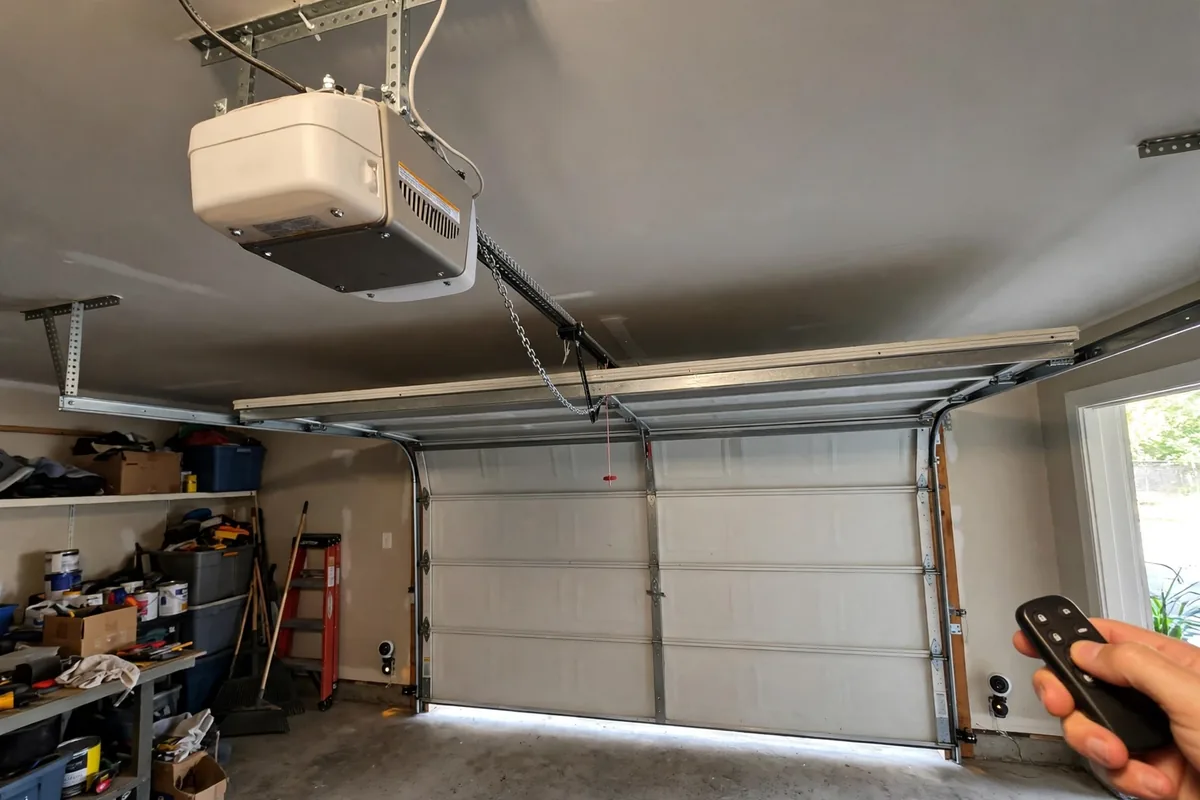
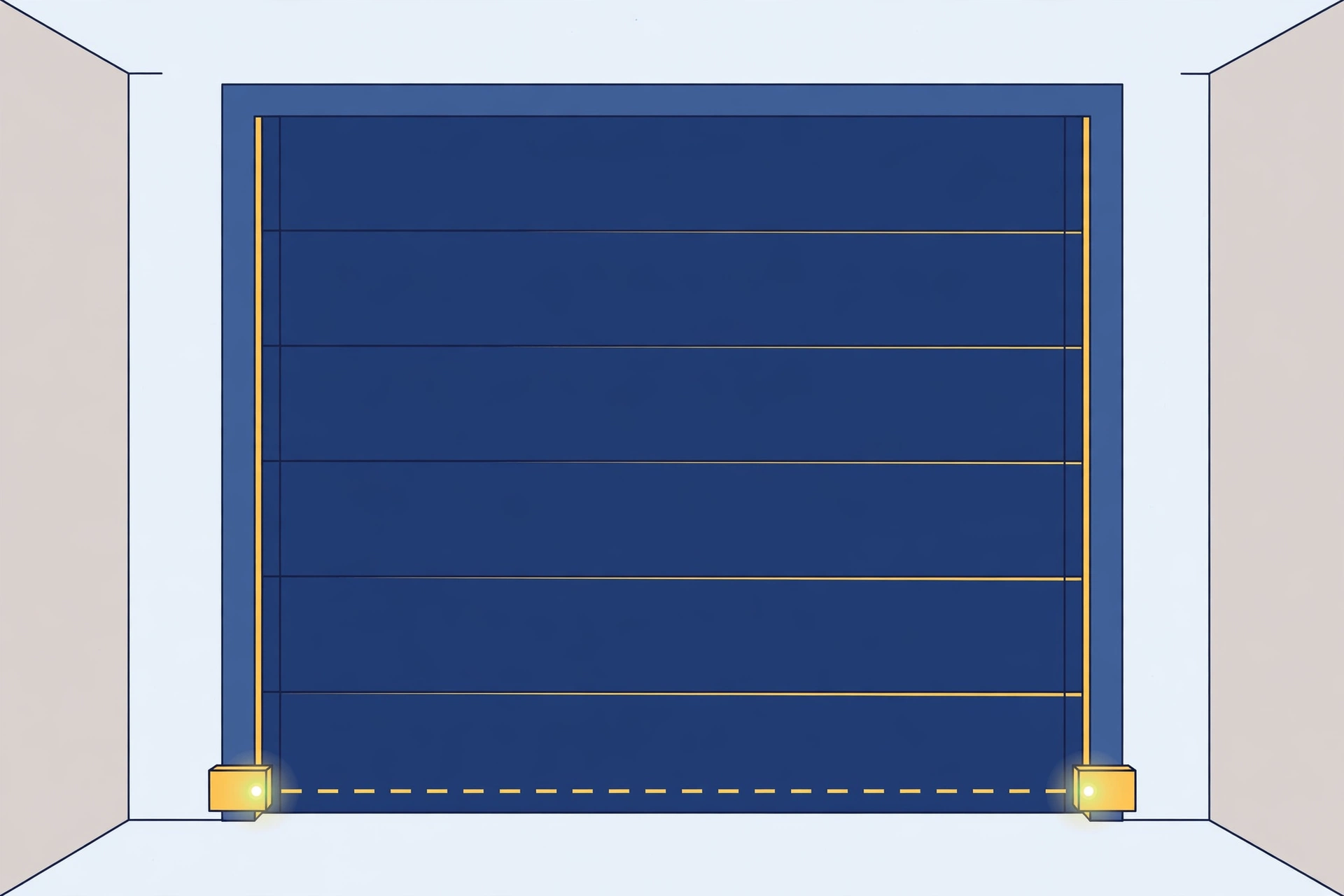
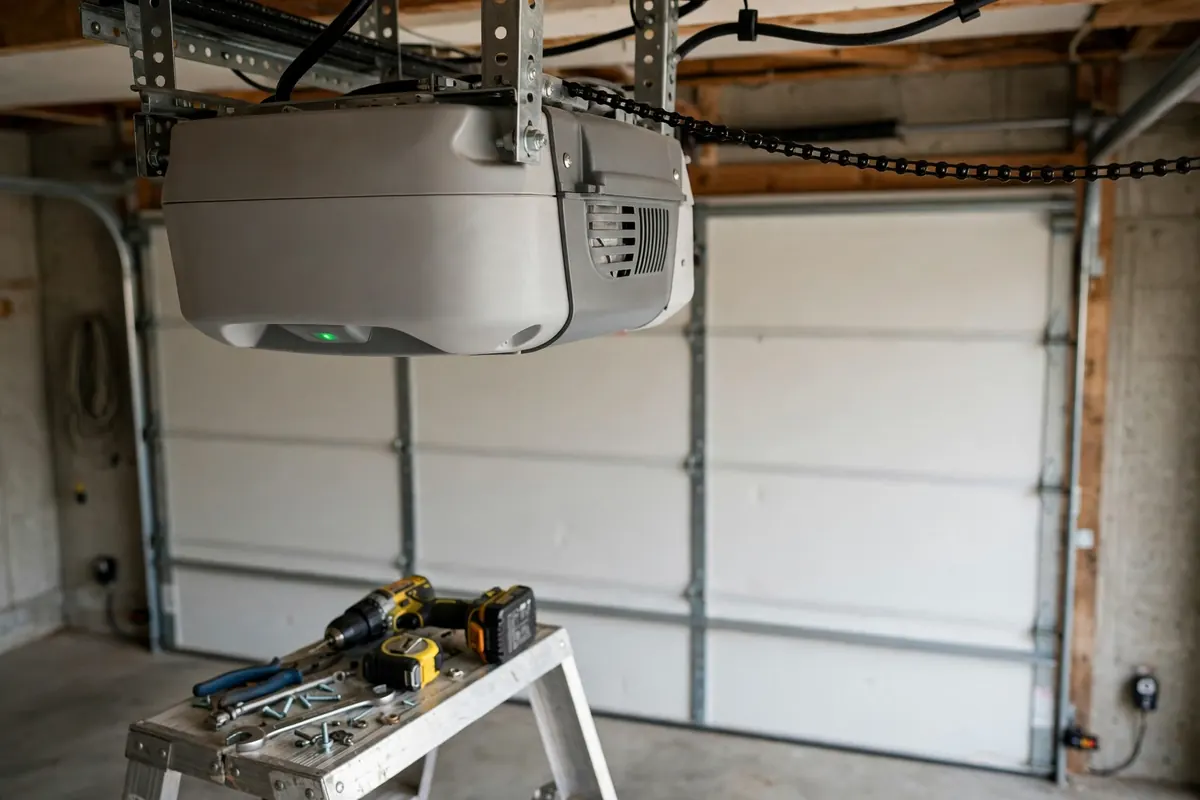
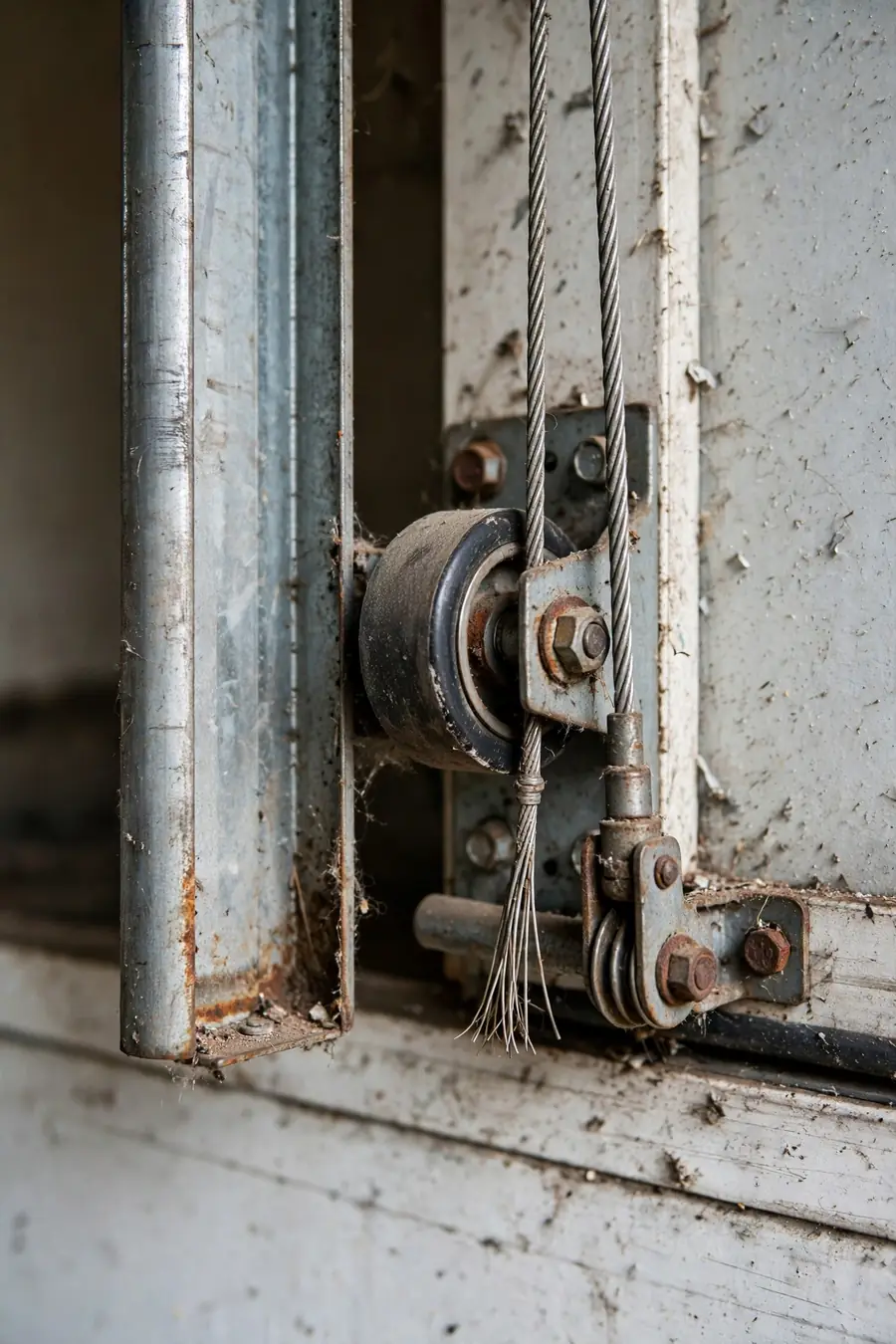
Door opening on its own, day or night? Make it stay shut first — lock button or unplug the opener — then get the sender found before you leave the house empty.
Call Now to Speak to a SpecialistFor local help, start from our Bay State Garage Door Repair Pros homepage, and read our garage door safety sensors guide for the photo-eyes and the homeowner-safe checks.
Frequently asked questions about a garage door that opens by itself
Why does my garage door open by itself at night?
Because the sender is not a person: a remote button pressed by something in a pocket or a bag, a wall control shorting as the house cools, or a logic board that fires on its own. Night is when nobody is watching, so a door that opens on its own is first noticed at night. Make the door stay shut first — lock button, or unplug the opener — then find the sender in daylight.
Can my neighbor's remote open my garage door?
It can, on an older opener with a fixed code: a row of small switches inside the remote and the opener, and a neighbor with the same setting opens your door as well as theirs. Newer rolling-code openers change the code every time, so a neighbor's remote cannot open them. If your opener has a row of switches and no learn button, it is a fixed-code opener — and a new opener is the fix, not a reprogram.
Is it the safety sensors making my door open by itself?
Usually no. The safety sensors stop a door from closing — they do not open a door that is already closed. A door that goes from fully closed to fully open on its own is being commanded: a transmitter, a wall control, a wiring short, or the opener's own logic board sent an open signal. A door that starts closing and then comes back up is the sensor fault, and that is a different fault.
Should I unplug the opener if the door keeps opening on its own?
Yes — that is the first step. Pull the opener's plug from the ceiling outlet so nothing can move the door, then close the door and slide the manual lock on the track if your door has one. The door stays shut until a technician finds the sender. Do not take the opener apart, and do not splice the wall control wire: the opener and its wiring are best checked with a meter by someone who does it every day.
Does a door that opens by itself mean I need a new opener?
Not always. A stuck remote button, a remote left in the opener's memory, or a shorting wall control can all be fixed without a new opener. A failing logic board is different: a board damaged by a surge or by age can keep firing on its own, and on an older opener the board costs more than the opener is worth. Angi reports $220 to $540 to replace a garage door opener when troubleshooting does not resolve the issue.
About the author
Jude Bray is the lead technician at Bay State Garage Door Repair Pros, with 26 years in the trade. The business holds Massachusetts Home Improvement Contractor (HIC) Registration and Construction Supervisor License (CSL) credentials, plus IDEA garage door certifications.
Call Bay State Garage Door Repair Pros at (833) 563-1552, 24 hours a day, 7 days a week. A door that opens on its own is a security problem — make it stay shut, then call.
Call Now to Speak to a SpecialistLast updated: November 28, 2026. Author: Jude Bray, Bay State Garage Door Repair Pros. Business address: 98-2 Ames Pl, Lowell, MA 01851. Phone: (833) 563-1552. Email: [email protected]. No prices are quoted here except the Angi planning range named in the answers — your exact price is confirmed in writing on site. Photos and illustrations on this page do not show real Bay State jobs or staff.