
Carriage House Garage Doors in Massachusetts
A carriage house garage door gives a Massachusetts home traditional character without giving up modern operation. Here is what the style is, which homes it suits, how steel and wood-look compare, and what to check before choosing one for your home.
A carriage house door is a sectional overhead door dressed to look like the old swinging carriage-house doors: recessed or raised panels, crossbuck overlays, decorative strap hinges, and a row of windows near the top. It rolls up on tracks and works with a standard opener, so the style is in the details, not the mechanism.
What defines a carriage house door?
The carriage house style is about visual details, not a different operating system. Most carriage house doors use sectional panels that travel vertically and then back along ceiling tracks, exactly like a standard door — the look comes from what is fixed to the panels.
Common design elements are recessed or raised panels, crossbuck overlays, vertical planks, decorative hinges and strap hardware, and window rows near the top. The best design does not need every feature at once: a clean steel door with subtle overlays may fit a Colonial home better than a heavily detailed design with oversized hardware.
The look is inspired by the swinging doors once used on carriage houses and barns, and it works across Massachusetts neighborhoods because it can complement a historic-looking farmhouse, a Cape, a Colonial, or a newer home that needs more character at the street. The goal is not to make the garage look old. It is to select details that look intentional beside the siding, the trim, the roofline, and the entry door. Our garage door panel materials guide explains steel, wood, aluminum, fiberglass, and vinyl panels side by side, and which ones hold up in Massachusetts.
Should I start with the home, not the door catalog, for a carriage house door?
A beautiful garage door can still look misplaced if its colour, windows, and panel pattern compete with the rest of the exterior. Before choosing a model, stand across the street and consider what the home already emphasizes: is it formal and symmetrical, rustic and textured, or clean-lined and contemporary with traditional touches?
For a Colonial or traditional home, a symmetrical panel layout and a restrained window pattern often work well, and black or dark bronze hardware can provide contrast against white, gray, or natural wood-tone doors. On a more rustic home, vertical plank styling and crossbuck overlays can add dimension without appearing overly formal.
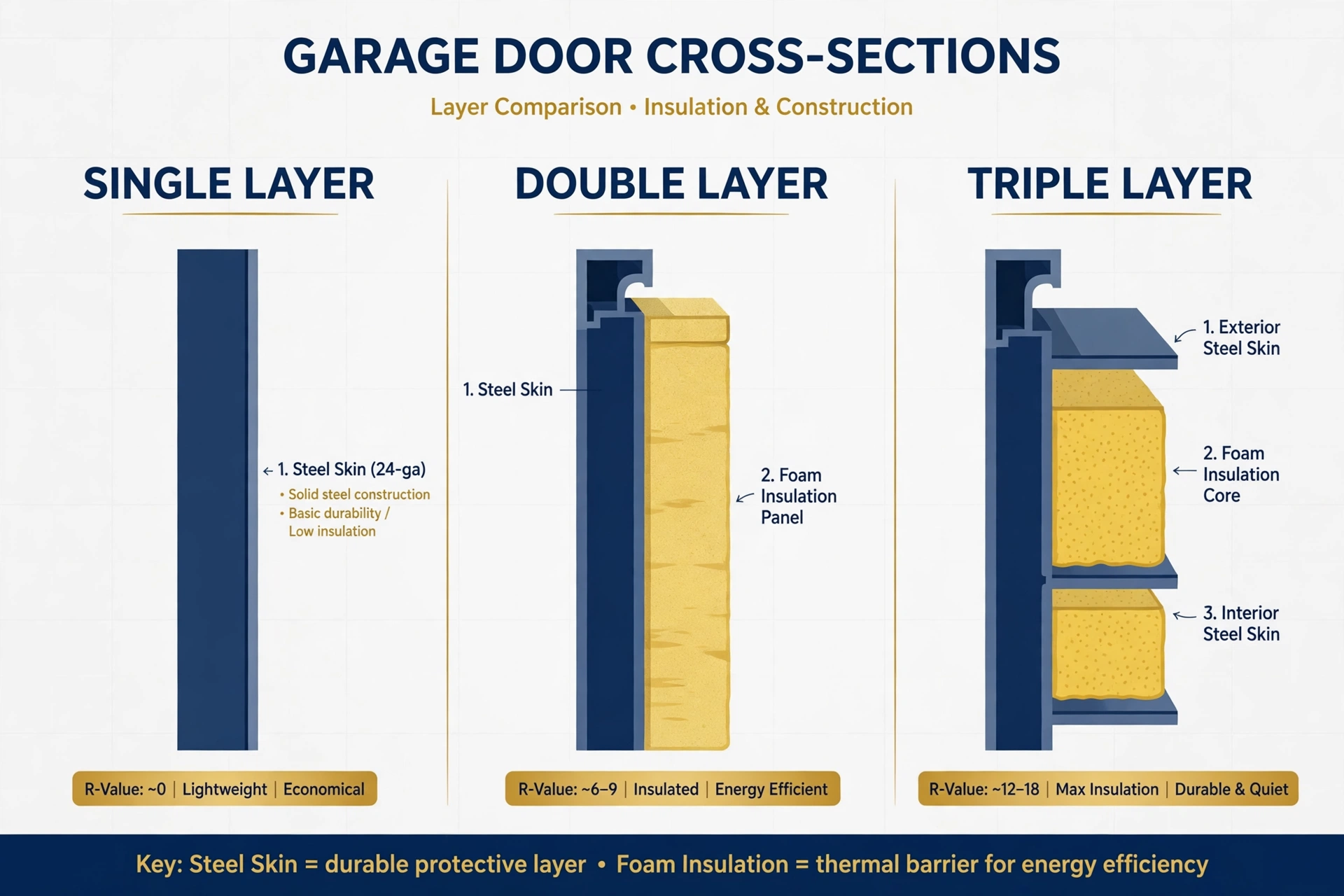
Colour deserves the same attention. White remains a reliable choice when the garage trim is white, but it is not the only option: charcoal, black, deep brown, and wood-look finishes can create a stronger focal point. Dark colours may show dust, salt residue, and minor surface marks more readily, especially after a New England winter — a practical choice is one that looks good from the curb and is realistic for the maintenance you are willing to do. Windows can make the door feel lighter and bring daylight into the garage, but they also affect privacy: clear glass is not always the right answer for a garage facing a busy street, and frosted glass is the usual compromise. Our garage door insulation guide explains R-value and layer construction, which matter as much as the style when the garage sits under a bedroom.
| Home style | Carriage house details that fit | What to avoid |
|---|---|---|
| Colonial | Symmetrical panels, restrained windows, dark hardware | Oversized hardware, heavy crossbucks |
| Cape Cod | Subtle overlays, small window row, white or wood-look | Too much detail for a small front |
| Farmhouse | Vertical planks, crossbucks, wood-look finish | Glossy modern hardware |
| Newer suburban | Clean steel, subtle overlays, frosted windows | Making the garage look older than the house |
The table is the short version of the same rule the Massachusetts guides give: match the door to the house you have, not the door in the brochure. A door that suits the house adds curb appeal; a door that fights it is the first thing a buyer notices for the wrong reason.
Carriage house doors: steel, wood-look, or real wood — which should I choose?
Steel is the practical choice for most Massachusetts homes. It holds the carriage-house look with overlays and hardware, needs little upkeep, and stands up to salt air and winter. A steel door can be finished in a wood-look grain that reads as wood from the street, without the sealing and painting that real wood demands.
Wood-look steel or composite gives the warmth of real wood without the upkeep, and it is the middle ground most buyers land on.
Real wood offers warmth and character that can look especially good on older homes, custom homes, and properties with traditional architectural details — but it needs regular sealing and painting, and it is the first material to suffer in a wet New England winter. A wooden door that has twisted out of shape no longer sits square in the opening, and no single panel fixes that. Aluminum and glass are the other end of the range: clean and contemporary, and a poor fit for a carriage-house look. The material affects more than appearance — it also influences maintenance, durability, insulation options, and long-term value, so the choice is worth making before the style is.
Should I repair or replace a carriage house door first?
Before choosing anything, it is worth being sure the old door needs replacing. Springs, cables, rollers, tracks, panels, and openers can all be repaired or replaced on their own, and many doors that look tired only need one of those parts.
A door with a broken spring is the exception: the spring carries the door's weight, so leave it closed and call (833) 563-1552. A new door usually makes sense when several panels are cracked, dented, or rotted rather than one, when a wooden door has twisted out of shape and no longer sits square, when the door has been patched so many times that the tracks, hinges, and brackets no longer match, or when the garage's use has changed — from storage to a workshop, or to a room that needs to stay warm.
If you are not sure, a technician can look at the door and tell you plainly whether repair or replacement is the better route. Our garage door repair vs replace guide walks through the same decision in full, and our new garage door cost guide for Worcester reports what other Massachusetts sources publish for a single and a double insulated door.
Start from our Bay State Garage Door Repair Pros homepage for every city we serve.
Carriage house doors: the style in the details
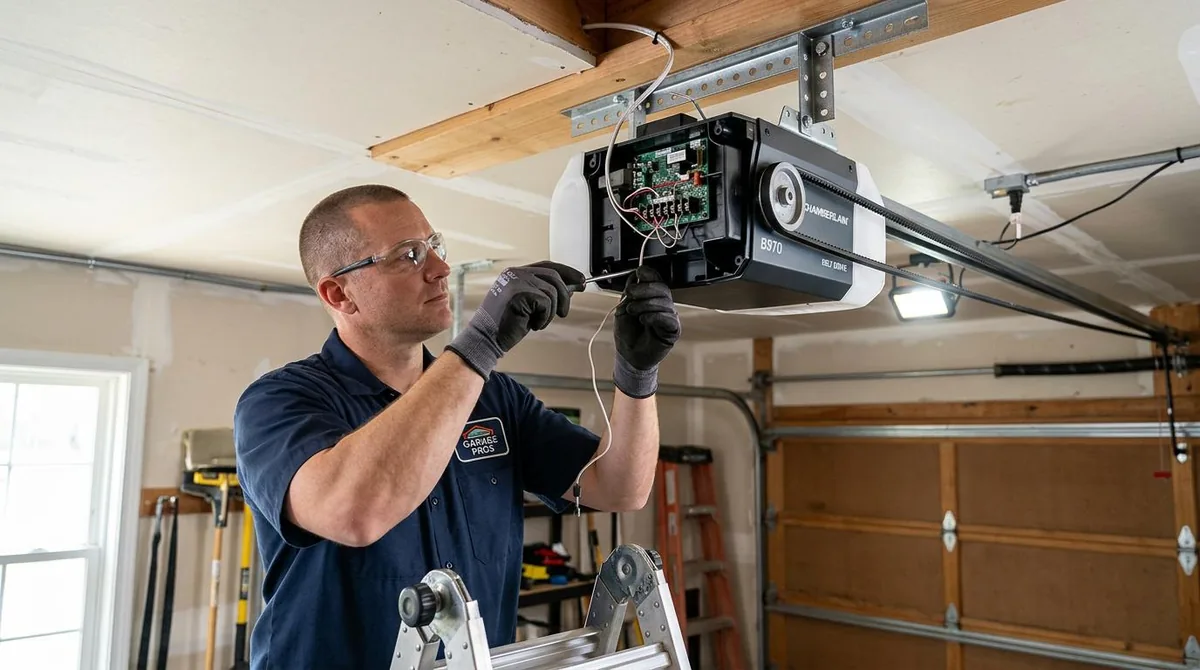
These images show the parts a carriage-house door is made of — the door itself, the insulation behind it, the track and rollers, and the opener.
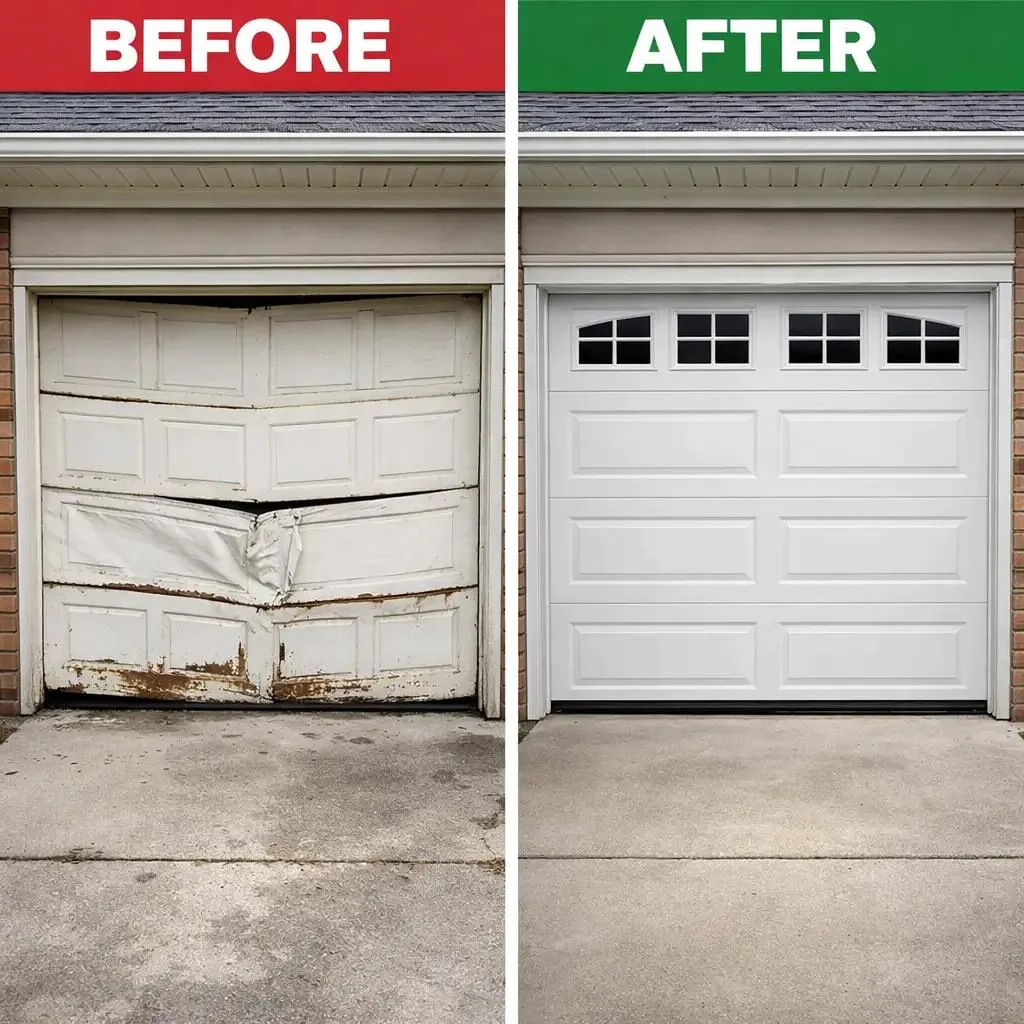

Old door tired, or ready for a new look? Springs, cables, and panels can all be fixed on their own — get the honest repair-or-replace answer before ordering a new door.
Call Now to Speak to a SpecialistFor local help, start from our Bay State Garage Door Repair Pros homepage, and read our garage door installation service for the measure, the fit, and the balance test.
Frequently asked questions about carriage house garage doors
What is a carriage house garage door?
A carriage house garage door is a sectional overhead door dressed to look like the old swinging doors once used on carriage houses and barns. It rolls up on tracks like any modern door, and works with a standard opener. The style is in the details: recessed or raised panels, crossbuck overlays, vertical planks, decorative strap hinges, and a row of windows near the top.
Do carriage house doors work with a standard garage door opener?
Yes — a carriage house door is a sectional door, so it rolls up on the same tracks and works with the same openers as any other sectional door: chain, belt, screw, or jackshaft. The decorative hardware is fixed to the panels and travels with them, so it does not interfere with the opener. If your garage has low headroom, a jackshaft opener that mounts on the wall is the usual fit.
Steel or wood-look for a carriage house door in Massachusetts?
Steel is the practical choice for most Massachusetts homes: it holds the carriage-house look with overlays and hardware, needs little upkeep, and stands up to salt air and winter. Wood-look steel or composite gives the warmth of real wood without the upkeep. Real wood looks best on older and custom homes, but it needs regular sealing and painting, and it is the first material to suffer in a wet New England winter.
What does a carriage house garage door cost in Massachusetts?
No Bay State price is published here. Other Massachusetts sources report a single insulated steel door at about $2,160 on average, and a double at about $4,740, and a carriage-house style sits in the same new-door range — what moves the price is size, insulation, material, windows, and hardware. Your exact price is confirmed in writing on site before anything is ordered.
Which Massachusetts homes suit a carriage house door?
Colonials, Capes, farmhouses, and older New England homes are the natural fit: the style was made for houses with traditional trim, a symmetrical front, and a porch or a barn nearby. It also suits newer homes that need more character at the street. The test is the house, not the catalog: stand across the street and ask whether the door's panels, windows, and hardware look intentional beside the siding, the trim, and the entry door.
About the author
Jude Bray is the lead technician at Bay State Garage Door Repair Pros, with 26 years in the trade. The business holds Massachusetts Home Improvement Contractor (HIC) Registration and Construction Supervisor License (CSL) credentials, plus IDEA garage door certifications.
Call Bay State Garage Door Repair Pros at (833) 563-1552, 24 hours a day, 7 days a week. A new door is a once-in-a-generation purchase — get the measure and the written price first.
Call Now to Speak to a SpecialistLast updated: November 28, 2026. Author: Jude Bray, Bay State Garage Door Repair Pros. Business address: 98-2 Ames Pl, Lowell, MA 01851. Phone: (833) 563-1552. Email: [email protected]. Style guidance in this post follows the garage-door guides named in the text — your home's own trim, siding, and rooflines are the final word. Prices are not quoted here — your exact price is confirmed in writing on site. Photos and illustrations on this page do not show real Bay State jobs or staff.