
Garage Door Panel Materials Compared: Steel, Wood & More
This garage door panel materials guide compares steel, wood, aluminum, fiberglass, and vinyl on weight, dent and rust behavior, maintenance, and look, and explains when a single section can be replaced instead of the whole door, to help you choose the right material for your home.
For most Massachusetts homes, steel is the best balance of cost, durability, and low maintenance. Wood wins on look and costs the most upkeep, aluminum suits coastal homes that need rust resistance, and fiberglass or vinyl suit buyers who want a wood look without wood maintenance.
Steel: the default for a reason
Steel is the most common garage door material, and the reason is balance. It is stronger than aluminum and most wood doors relative to its weight, it resists warping in temperature swings, and it comes in the widest range of styles, colors, and finishes, including steel surfacing imprinted with realistic wood grain that is hard to tell from real wood once installed. For most homes, steel is the material everything else is compared against.
Steel's maintenance is low: washing with mild soap and water is usually enough, and pre-painted galvanized steel is among the lowest-upkeep door surfaces available. Its weaknesses are dents and rust. Thin single-layer steel dents easily, and a scratch through the paint down to bare metal can rust if it is not touched up, especially in coastal air or where road salt reaches the garage. Thicker steel, around 24 to 25 gauge in the comparison tables, resists impact better, and triple-layer steel doors with foam cores are the most dent-resistant steel construction because the foam stiffens the panel from behind.
Steel also carries insulation best. Steel doors are made in single, double, and triple-layer construction, and foam-filled triple-layer steel doors reach the highest published R-values for residential doors, around R-6 to R-18 depending on thickness and foam type. If insulation matters to you, steel gives you the most options. Our insulation guide explains the R-value ranges and constructions in full.
Wood: the best look, the most upkeep
Wood is the traditional premium material, and nothing else quite matches it for appearance. Natural grain, custom designs, carriage-house styles, and the ability to stain or paint to match the house exactly make wood the first choice for historic homes and for owners who want a door that looks made rather than manufactured. Wood also insulates naturally, with comparison tables putting wood doors around R-5 to R-10 from the material itself.
The price of that look is upkeep, and it is the highest of any common material. Wood needs regular painting or staining, every few years by most guides, and that schedule is not optional: neglected wood absorbs moisture, and moisture leads to rot and warping, which breaks the door's seal and can jam the sections in their tracks. Wood is also heavy, which means springs and an opener matched to its weight, and a heavier door costs more to lift every single cycle.
Wood suits a home where the door is part of the architecture and the owner accepts the maintenance schedule that comes with it. It suits a rental, a coastal home with constant salt exposure, or a household that wants a fit-and-forget door poorly. If you love the wood look but not the upkeep, steel with a wood-grain finish or fiberglass molded to mimic wood grain are worth comparing before you commit, since both are covered below.
Aluminum: light, rust-proof, and less insulating
Aluminum's great advantage is that it does not rust. For coastal homes, humid areas, and anywhere salt air reaches the garage, that alone can decide the choice: where a steel door would need its scratches watched and touched up, an aluminum door simply does not corrode. Aluminum is also far lighter than steel and solid wood, which makes manual operation easier and reduces the load on the opener and its springs, extending their working life.
Aluminum's weaknesses are denting and insulation. It dents more easily than steel, and comparison tables rate its hail and impact resistance as poor against steel's good to very good. Thermally it is the weakest common material, around R-4 to R-8 in the tables, because aluminum conducts heat readily and most aluminum doors are thin-skinned. Aluminum-and-glass doors, the modern full-view style, lose more heat again through the glass, and a full-view glass door is itself heavy, needing heavy-duty springs and a stronger opener despite the light frames.
Maintenance is low: regular cleaning with soapy water is enough, with no repainting or sealing schedule like wood. Aluminum suits modern homes, coastal homes, and anyone who values light weight and rust resistance over insulation and dent resistance. It suits an attached garage in a cold climate less well, unless the construction is foam-filled and the insulation gap is accepted.
Fiberglass and vinyl: the wood look without the wood work
Fiberglass panels are molded skins, often textured to simulate wood grain, usually over a steel frame, and sometimes foam-filled for insulation. They resist denting better than aluminum, do not rot like wood, and do not rust like steel, which makes them a strong choice for damp areas. Maintenance is low: an occasional clear protective recoat every few years is the main job, and comparison tables put fiberglass insulation around R-6 to R-14 when foam-filled.
Fiberglass has two weaknesses to know about before buying. First, it can crack under heavy impact, and guides note it can turn brittle in extreme cold, with some fiberglass doors reported to crack in harsh winters. That matters in Massachusetts, where a door faces both winter cold and the occasional thrown ball or reversing car. Second, the underlying material can yellow over time, especially in harsh climates, which shows most on light-colored doors. Fiberglass costs more than steel, sometimes significantly for premium wood-look finishes.
Vinyl is the lowest-maintenance material of all. Vinyl doors flex on impact rather than denting, which gives them good impact resistance in the tables, and their insulation sits around R-6 to R-12. Their weakness is the opposite of fiberglass: where fiberglass imitates wood well, vinyl's look is more plainly synthetic, and most guides agree vinyl is no substitute for a well-built steel door on appearance. Vinyl suits a household that wants a door it never has to think about, and cares less about matching a historic or high-end facade.
Side by side: weight, dents, rust, maintenance, and look
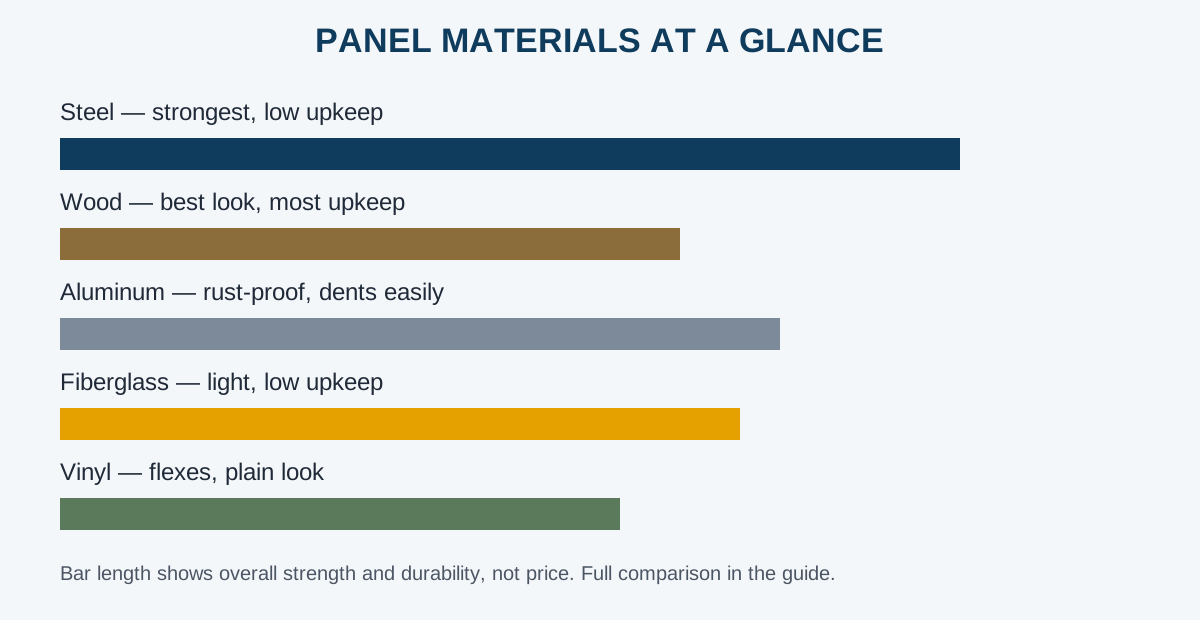
Put together, the comparison looks like this. Weight, lightest to heaviest: aluminum, fiberglass and vinyl, steel, then wood as the heaviest. That order matters because every extra pound is carried by the springs and the opener, and a door's springs must be matched to its weight: changing material usually means rebalancing the door, which is technician work, not a homeowner adjustment.
Dent and impact behavior: steel, especially thicker and foam-filled steel, resists dents best; vinyl flexes and springs back; fiberglass resists denting but can crack under a hard hit; aluminum dents most easily; wood dents least in the sense that it is thick and solid, but it gouges and splits instead. Rust and rot: aluminum, fiberglass, and vinyl do not rust; steel rusts where paint is broken through to bare metal; wood does not rust but rots and warps when its finish fails. Maintenance, least to most: vinyl and pre-painted galvanized steel, then aluminum and fiberglass, then steel that needs scratch touch-ups, then wood with its regular paint or stain cycle. Look: wood first for natural character, then fiberglass and wood-grain steel for imitating it, then steel for range of styles, then aluminum for modern minimalism, then vinyl for plain practicality.
No material wins every row, which is why the choice comes down to what your house punishes most: salt air, cold, impacts from kids and cars, or neglect. A coastal home punishes steel with rust; a cold attached garage punishes aluminum with heat loss; a busy family driveway punishes thin steel and aluminum with dents; and any home punishes wood if its finish schedule slips.
One section or the whole door? How replacement logic works
Garage doors are built in horizontal sections, and in many cases a single damaged section can be replaced without replacing the whole door. That is the cheaper and less disruptive repair when the damage is limited to one section, the tracks, rollers, and opener are sound, and a matching section is still available. Matching means the same maker, model, size, and colour, and it is not always possible: makers discontinue lines, colors change, and a section made years ago may no longer be produced.
A full door replacement makes more sense when several sections are damaged, when the frame or tracks are bent, when the door's material is failing generally rather than in one spot, or when no matching section can be found. It also makes sense when the door is being replaced for another reason anyway, such as insulation or a style change, since the panel decision then comes free with the new door. A single section that does not match looks wrong and can run unevenly, so a mismatched section is not a saving: it is a door that still needs replacing.
Two things to be careful about in this decision. First, never accept a claim that a replacement section comes from an authorized dealer or a brand partnership unless it is documented: panels are matched by maker, model, size, and colour if still made, and no dealer status should be claimed without proof. Second, a section swap changes the door's weight if the new section's material or construction differs from the old one, which means the springs should be checked and rebalanced by a technician as part of the job. See our panel replacement service page for how the job is priced and done, and our new door installation service page for full replacements.
Choosing between them: five questions to ask first
Start with the garage's job. Is it attached to the house, with rooms above or beside it? Then insulation and noise matter, which pushes toward foam-filled steel. Is it detached and used only for parking? Then almost any material works, and cost and looks can decide. Is it a workshop or heated space? Then insulation matters again, whatever the building's position.
Next, what does your location punish? Coastal and salt-air homes should weight rust resistance heavily, which favors aluminum, fiberglass, or vinyl over bare steel. Cold inland homes should weight insulation, which favors steel. Homes with a busy driveway should weight dent resistance, which favors thicker steel or vinyl over thin steel and aluminum.
Then, how much maintenance will actually happen? Be honest about this one, because it decides more doors than any other question. If repainting and sealing every few years will not happen, wood will punish that neglect with rot, and a low-maintenance material is the honest choice. If the door must match a historic facade, that maintenance may be worth it, but it should be chosen knowingly, not discovered afterwards.
Finally, check the practical constraints: the door's weight against the existing springs and opener, whether a matching section is still made if only part of the door is damaged, and whether the budget covers the material's real cost, including its maintenance over the door's life rather than just the purchase price. A cheap door that needs replacing early, or an expensive door whose upkeep is skipped, both cost more than the mid-range door that fits the house. Call (833) 563-1552, Monday to Saturday, 9:00 AM to 6:00 PM, and describe the door you have and the house it serves, and we can talk through which material fits.
Garage door repair work
Ready for help? Call (833) 563-1552, Monday to Saturday, 9:00 AM to 6:00 PM, and describe the problem.
Call (833) 563-1552For local help, start from our Bay State Garage Door Repair Pros homepage, see our pages for garage door repair in Lowell and garage door repair in Cambridge, and read Garage Door Maintenance Checklist next.
Frequently asked questions about garage door panel materials
Which garage door material needs the least maintenance?
Vinyl and pre-painted galvanized steel need the least: periodic cleaning with mild soap and water is usually enough. Aluminum and fiberglass are close behind, while steel needs scratch touch-ups to prevent rust, and wood needs painting or staining every few years.
Do steel garage doors rust?
They can, where paint is scratched through to bare metal, especially in coastal air or where road salt reaches the garage. Galvanized steel with intact paint resists rust well, and touching up scratches promptly is the main prevention. Aluminum, fiberglass, and vinyl do not rust at all.
Can one damaged panel be replaced, or must the whole door go?
One section can be replaced when the damage is limited to that section and a matching section is still made, in the same maker, model, size, and colour. A full door makes more sense when several sections are damaged, the frame or tracks are bent, or no matching section can be found.
Is a wood garage door worth the extra upkeep?
It is worth it when the door is part of the home's architecture and the owner accepts repainting or staining every few years. If that schedule will slip, wood will rot and warp, and steel with a wood-grain finish or molded fiberglass gives most of the look without the upkeep.
Are fiberglass doors good in cold Massachusetts winters?
Mostly, but with a caution. Foam-filled fiberglass insulates well and resists damp, yet guides report fiberglass can turn brittle and crack in extreme cold or under hard impact. For a cold, busy driveway, thicker foam-filled steel is usually the safer choice.