
Why Is My Garage Door So Loud?
A garage door that grinds, squeaks, pops, or rattles is telling you something — usually worn rollers, dry hinges, or loose hardware. Match the sound to its cause in this guide, and know which noises mean call now. Bay State: (833) 563-1552, open 24/7.
A loud garage door is usually worn rollers, dry hinges, or loose hardware — the parts that move on every cycle. Squeak means dry metal, grind means worn rollers, pop means a spring under strain, rattle means loose hardware. A loud bang, or a door that jerks or drops, is a call-now fault: leave it closed and call (833) 563-1552.
How do I match the sound to the cause of a loud garage door?
A garage door only makes a handful of sounds, and each one points at a different part. The trick is to listen for when the sound happens — on the way up, on the way down, at the start of the cycle, or all the way through — and to notice whether the door still moves smoothly.
A door that is loud but smooth is usually a wear problem. A door that is loud and jerky, heavy, or crooked is a broken part. Our garage door spring types guide explains the springs behind several of these sounds, and our spring fault checker tool walks through the symptoms one by one.
| The sound | What it usually points to | How urgent |
|---|---|---|
| Squeak | Dry hinges or rollers, no lubrication | Soon — a tune-up, not an emergency |
| Grind | Worn rollers or bearings dragging on the track | Soon — it scores the track |
| Pop or creak | Spring binding, hinge cracked, door out of balance | Soon — call before it fails |
| Rattle | Loose bolts on hinges or track brackets | Soon — tighten, then check |
| Scrape | Bent track, roller jumping the rail | Now — stop running the door |
| Loud bang, then heavy door | Spring snapped | Emergency — leave it closed |
| Hum with no movement | Opener gear stripped, or door jammed | Now — stop pressing the button |
If the sound matches the last two rows, stop there and call (833) 563-1552. The rest of this guide is for the first five — the wear problems that make a door loud over months.
What are the 7 causes of a loud garage door, in order of how often they are found?
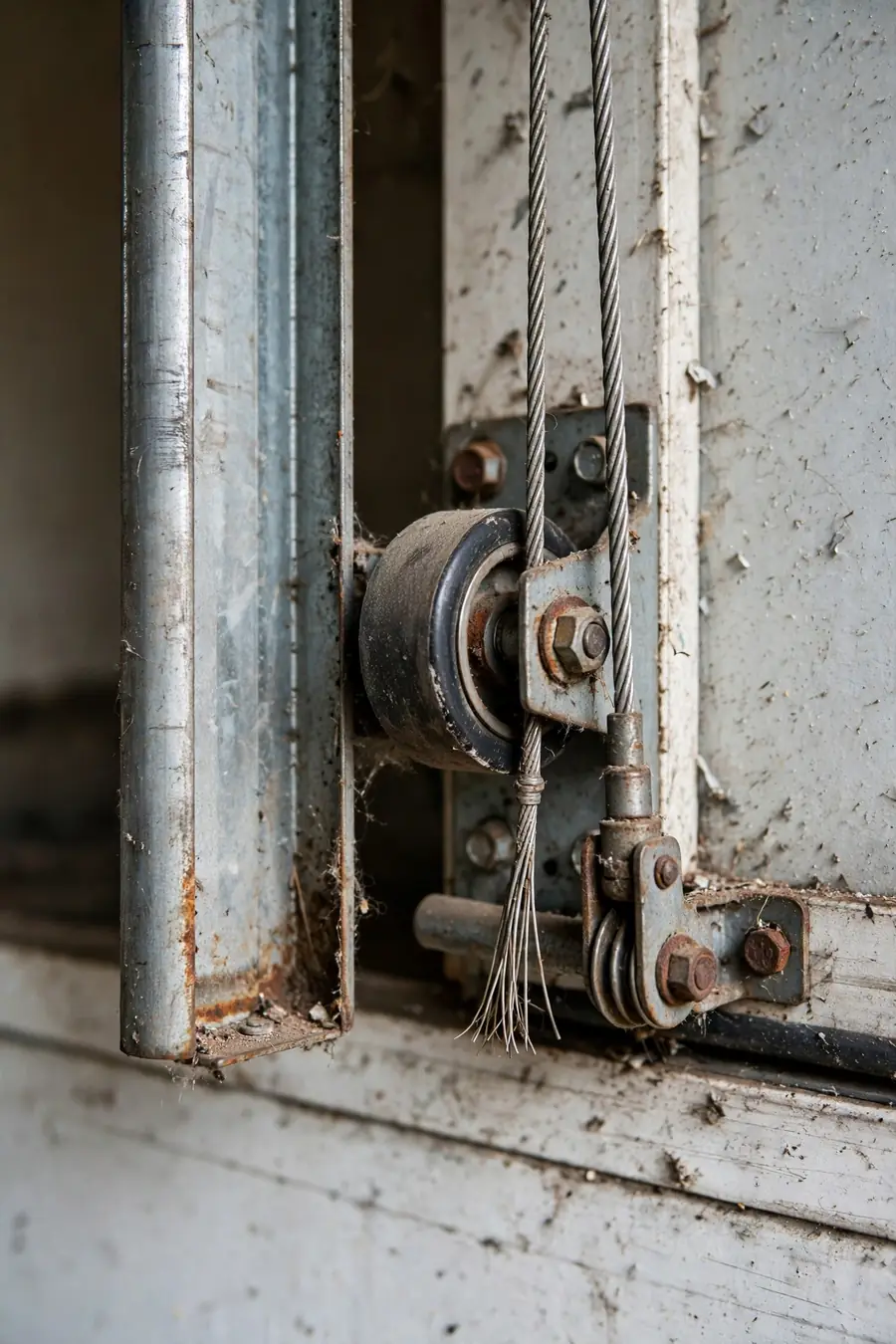
1. Worn rollers. The most common cause of a loud door, by a long way. Rollers are the small wheels that carry the door up and down its tracks, and they wear evenly over thousands of cycles.
A worn roller wobbles, has flat spots, or has a seized bearing, so it drags instead of rolling — and dragging metal is grinding metal. Black dust on the tracks is the giveaway. A full set is replaced together, because rollers wear evenly: a new roller next to a worn one will not run true. Our garage door roller replacement service covers steel and nylon sets matched to your door's weight.
2. Dry hinges. Hinges are the metal joints between the door's sections, and they flex on every cycle. Without lubrication they squeak — a high, dry sound that gets worse in cold weather, when the lubricant thickens. Lubricating the hinges and rollers with a silicone-based spray is the one safe homeowner fix in this guide, and it is also part of every tune-up. If lubrication does not quiet the door, the hinges are worn, not dry, and they need replacing.
3. Loose hardware. A garage door vibrates on every cycle, and vibration loosens bolts. Loose hinge bolts and track-bracket bolts rattle — a loose, buzzing sound that comes and goes as the door moves. Tightening them with a socket wrench, snug rather than forced, is safe to do yourself. If a bolt keeps coming loose, the hole is worn, and the bracket or hinge needs replacing rather than another turn of the wrench.
4. A bent or misaligned track. The track is the steel channel the rollers run in, and it has to be straight and true. A track bent by a bump from a car, a ladder, or a shifting garage wall makes the rollers scrape and bind — a harsh, metallic sound that gets worse as the door passes the bend. A door that scrapes in the same place every time is a track problem, and it needs a visit: do not keep running a door with a bent track, because the rollers will jump the rail, and a jumped track can bend panels or snap a cable.
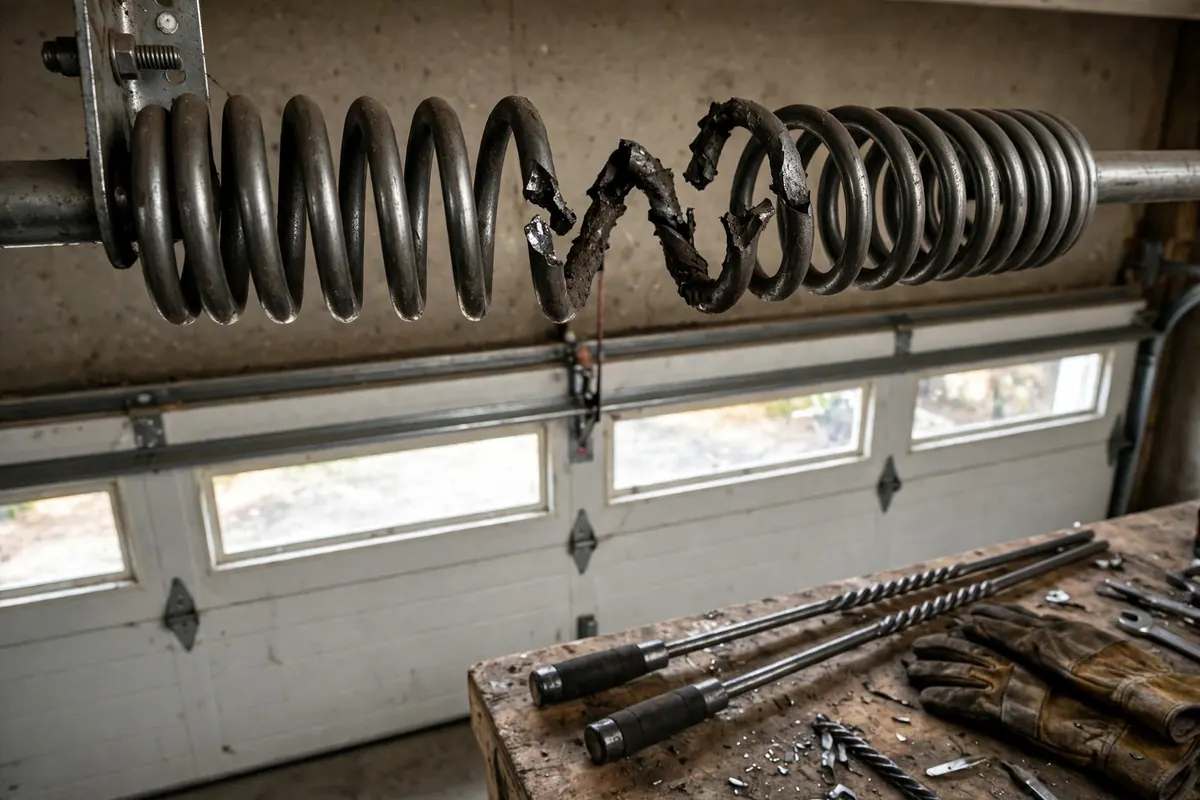
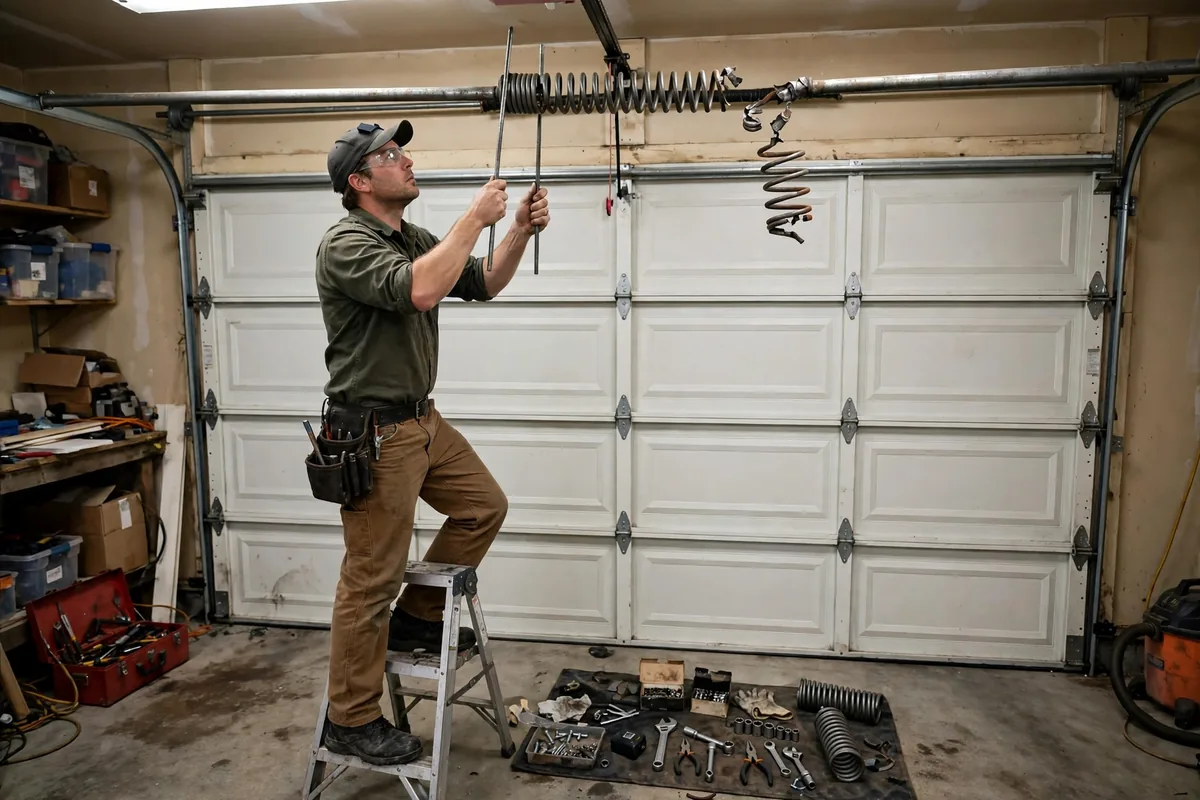
5. An unbalanced door. A balanced door stays put halfway up when the opener is disconnected. A door that drops or rises on its own is out of balance — usually a spring losing its strength — and the opener has to fight it on every cycle. The fight sounds like straining, popping, and groaning, and it wears the opener out. An unbalanced door is a spring problem, and springs are never a homeowner job: a spring replacement covers the check, the replacement, and the balance test.
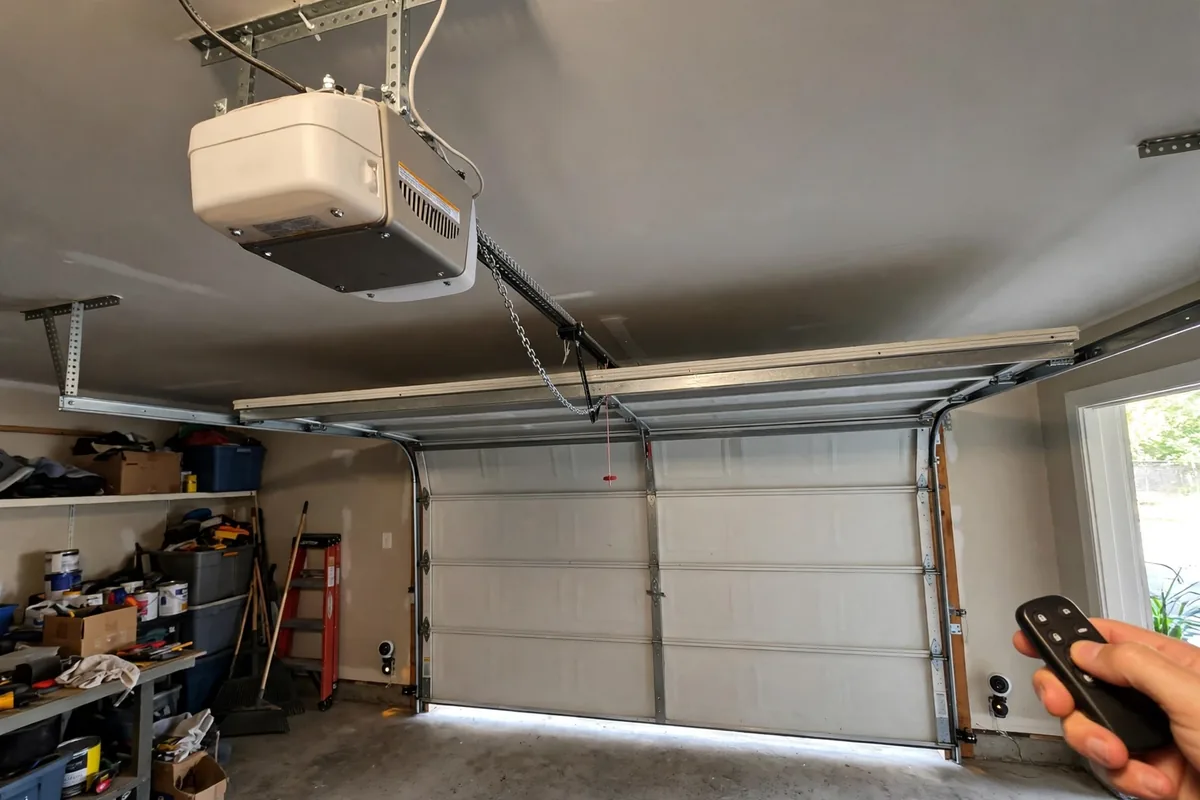
6. A worn opener gear or drive. The opener's drive gear turns the trolley that pulls the door. When the gear wears, the opener hums, clicks, or grinds without moving the door — or moves it in jerks. A hum with no movement is a stop-now symptom: pressing the button again and again strips the gear further and can burn the motor out. An opener repair covers the gear, the drive, and the safety sensors together.
7. A loose chain or belt. Chain-drive openers stretch over time, and a loose chain slaps against the rail — a rhythmic slapping sound on every cycle. Belt-drive openers do not stretch the same way, but a worn belt slips and squeals. Both are opener adjustments, and both need a visit: a chain that is too loose can jump its sprocket, and a belt that slips will not hold the door.
Grinding, popping, or a door that jerks? That is a worn part — call before it fails completely.
Call Now to Speak to a SpecialistWhat are the safe homeowner checks for a loud door — and where do they stop?
Two things are safe to do yourself, and they fix the two quietest causes. First, lubricate: a silicone-based spray on the rollers and the hinges, on both sides of the door, once or twice a year — never on the tracks themselves, which need to stay dry so the rollers grip.
Second, tighten: a socket wrench on the hinge bolts and the track-bracket bolts, snug rather than forced, and never on the spring hardware. Then run the door and listen. If the squeak or rattle is gone, the fix worked. If the grind, pop, scrape, or bang is still there, the noise is a worn part, and it needs a visit — rollers, hinges, a track, or a spring. Do not touch the springs, cables, or track alignment, and do not adjust the opener's force setting to make a noisy door move: a door that needs more force to move is a door with a fault, and forcing it makes the fault worse. Our garage door tune-up service covers the full annual check — lubrication, hardware, balance, and safety sensors — in one visit.
One more check is worth doing while you are there: look at the bottom seal. A door that is loud in winter is often a door whose seal has frozen to the floor, and the opener strains against the ice. Our frozen-shut guide explains how to tell ice from a broken spring, and our winter garage door guide for Massachusetts covers the full pre-freeze check. For Lowell detail, see our garage door repair Lowell MA page.
When should I call about a loud garage door — and what should I say?
Call now if the noise came with a loud bang, if the door jerks, stops partway, hangs crooked, or drops the last few inches, or if the door feels very heavy by hand. Those are broken parts, and the door can drop or jam while it is moving — leave it closed, keep the area clear, and call (833) 563-1552.
Call soon — a scheduled visit, not an emergency — if the door grinds, squeaks, pops, or rattles but still moves smoothly. Tell us the sound and when it happens: "grinding on the way up", "popping at the start", "rattling all the way down". That is enough for us to confirm a visit time and bring the right part where possible. And if the noise started after a storm, a bump, or a freeze, say so — the cause is usually in the story.
A loud garage door: the parts behind the noise
These images show the parts behind most garage door noise — the rollers and track, the hinges, the springs, and the opener.
Grinding, popping, or a door that jerks? That is a worn part — call before it fails completely.
Call Now to Speak to a SpecialistFor local help, start from our Bay State Garage Door Repair Pros homepage, and read our winter garage door guide for Massachusetts for the full pre-freeze check.
Frequently asked questions about a loud garage door
Why is my garage door so loud all of a sudden?
A door that gets loud suddenly has usually had a part fail, not wear out slowly: a roller bearing has seized, a hinge has cracked, a cable has frayed, or a spring has snapped. A loud bang followed by a heavy door is a broken spring — leave it closed and call us. A grinding that started suddenly, or a door that jerks or stops, is also a call-now fault.
What does a grinding garage door mean?
Grinding usually means worn rollers or worn bearings: the roller wheel no longer turns freely, so it drags along the track and grinds metal off both. Black dust on the tracks is the giveaway. Grinding that goes on for months scores the track and strains the opener, so it is worth a call before the track is damaged — a roller set is a repair, a scored track is a bigger job.
Can I make my garage door quieter myself?
Two things are safe to do yourself: lubricate the rollers and hinges with a silicone-based spray, and tighten the bolts on the hinges and the track brackets with a socket wrench — snug, not forced. Do not touch the springs, cables, or track alignment, and do not adjust the opener's force setting. If lubrication and tightening do not quiet the door, the noise is a worn part, and it needs a visit: rollers, hinges, or a track problem.
Why does my garage door pop or bang when it opens?
A pop or bang as the door starts to move usually means a spring or hinge under strain: the spring is binding, a hinge is cracked, or the door is out of balance and the opener is fighting it. A single loud bang followed by a door that will not lift is a snapped spring — leave it closed and call us. Repeated popping means the door is out of balance, and it will wear the opener out.
When is a noisy garage door an emergency?
Call now if the noise came with a loud bang, if the door jerks, stops partway, hangs crooked, or drops the last few inches. Those are broken parts — a snapped spring, a frayed cable, a bent track — and the door can drop while it moves. A merely squeaky or rattling door that still moves smoothly can wait for a scheduled visit — but noise is wear, and wear spreads.
About the author
Jude Bray is the lead technician at Bay State Garage Door Repair Pros, with 26 years in the trade. The business holds Massachusetts Home Improvement Contractor (HIC) Registration and Construction Supervisor License (CSL) credentials, plus IDEA garage door certifications.
Call Bay State Garage Door Repair Pros at (833) 563-1552, 24 hours a day, 7 days a week. Describe the sound and when it happens.
Call Now to Speak to a SpecialistLast updated: November 28, 2026. Author: Jude Bray, Bay State Garage Door Repair Pros. Business address: 98-2 Ames Pl, Lowell, MA 01851. Phone: (833) 563-1552. Email: [email protected]. Prices are planning ranges reported by other sources, not a quote for your door. Photos and illustrations on this page do not show real Bay State jobs or staff.