
Jackshaft Garage Door Opener Massachusetts: Wall-Mount Openers for Low-Headroom Lowell Garages
A jackshaft garage door opener Massachusetts homeowners ask about mounts on the wall beside the door, not on the ceiling. It turns the torsion tube directly, so it fits garages with little room above the door — common in many Lowell garages. Call (833) 563-1552 with questions.
A jackshaft opener — also called a wall-mount opener — sits on the wall beside your garage door and turns the torsion tube that lifts the door. Because nothing hangs from the ceiling, it is a good fit when the space above the door is tight. If your door is heavy, crooked, or stuck, leave it closed and call us.
What a jackshaft opener is
A jackshaft opener is a garage door opener that mounts on the wall beside the door, at the end of the torsion tube — the steel bar that runs across the top of the door. Instead of a motor hanging from the ceiling and a long rail running back over the door, a small motor unit sits on the wall and turns the torsion tube directly. The tube turns the cable drums, the drums wind the lift cables, and the cables lift the door. The door itself does not change. The same springs, cables, tracks, and rollers do the lifting, and the same safety sensors watch the doorway. Only the motor moves — from the ceiling to the side wall. That is why it is also called a wall-mount opener. If you have ever looked up at a garage ceiling and seen a motor unit and a rail, a jackshaft opener is that same job done from the wall instead.
Why are Lowell's older garages a natural fit for a jackshaft opener?
Lowell has a lot of older homes, and many of their garages were built when ceilings were lower and storage was an afterthought. In those garages, the space above the door is often tight. There may be barely room for a ceiling rail and motor, let alone a shelf above it.
A jackshaft opener solves that problem by moving the motor to the wall, so the ceiling stays clear. The space above the door can then hold shelves, bikes, or kayaks instead of a motor unit. That is the main reason Lowell homeowners ask about wall-mount openers: not because the door is different, but because the garage is. If your garage ceiling is low, or if you want the ceiling free for storage, a jackshaft opener is worth a look before you replace a ceiling-mounted opener like-for-like. For the repair side of the same garage, our page on garage door repair in Lowell covers springs, cables, openers, and off-track doors across the city.
Low headroom is not the only reason. Some Lowell garages have beams, pipes, or a loft floor running across the ceiling where a rail would go. A ceiling opener needs a clear run from the door back to the motor, and anything in the way is a problem. A wall-mount opener needs none of that. It needs wall space beside the door and a power outlet nearby — and that is all. If your garage ceiling is busy, the wall beside the door is often the clearest spot in the room.
How do jackshaft, chain, and belt openers differ?
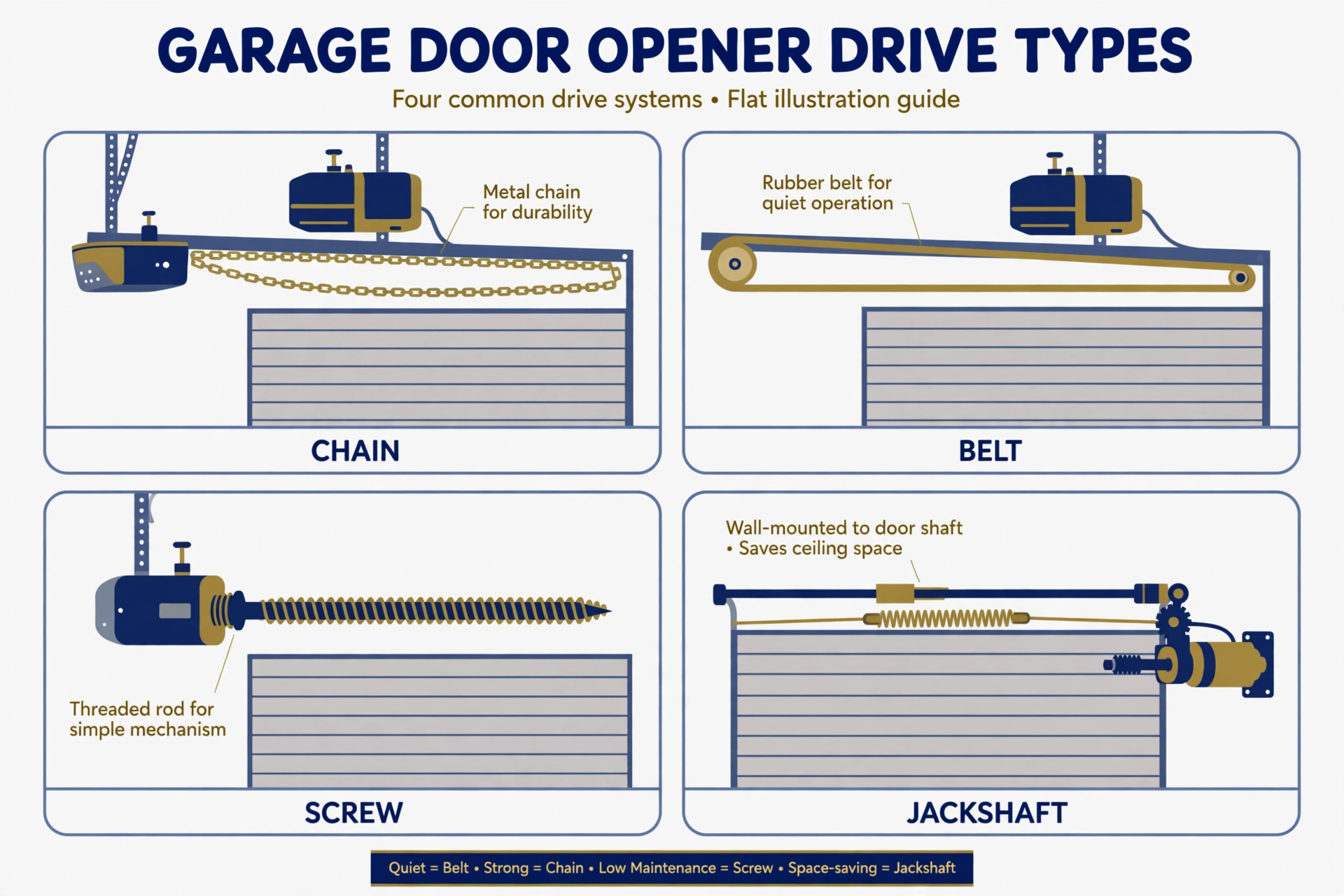
Most garage doors in Massachusetts open with one of three opener types. A chain drive pulls the door with a metal chain on a ceiling rail. A belt drive does the same job with a rubber belt, and it usually runs quieter.
Both hang from the ceiling and need headroom above the door. A jackshaft opener works differently: it mounts on the wall and turns the torsion tube, so there is no rail at all. The door, springs, cables, and tracks are the same in all three cases. The opener only changes how the lifting force gets to the door. Which type suits your garage depends on the room you have, not on the door itself. Our guide to garage door opener types explains chain and belt drives in more detail.
| Opener type | Where it mounts | How it moves the door | Best when |
|---|---|---|---|
| Chain drive | Ceiling, on a rail | Metal chain pulls the door along the rail | There is plenty of headroom and a clear ceiling |
| Belt drive | Ceiling, on a rail | Rubber belt pulls the door along the rail | You want a quieter ceiling-mounted opener |
| Jackshaft | Wall beside the door | Motor turns the torsion tube directly | Headroom is low or the ceiling is needed for storage |
The table hides one more difference: weight and noise. A ceiling opener hangs its weight on the ceiling joists, while a jackshaft opener puts its weight on the wall beside the door. And with no chain or belt moving along a rail, there is less to rattle — which matters if a bedroom sits above the garage.
How do I tell if a jackshaft opener fits my garage?
Three checks decide whether a jackshaft opener fits your garage. First, look at the wall beside the door. The motor needs a clear patch of wall next to the torsion tube, with a power outlet nearby. Shelves, pegboards, and bikes hung on that wall will need to move.
Second, look above the door. Your door needs a torsion tube and torsion springs — the bar and springs that run across the top of the door. If your door has extension springs running along the side tracks instead, a jackshaft opener is usually not the right fit. Third, check the door itself. With the door fully closed, try the manual release and lift the door a little by hand. It should feel balanced, not heavy, and it should stay where you leave it. If it feels heavy, drops, or hangs crooked, stop — leave it closed and call us. A door that is heavy, crooked, or jerky has a spring, cable, or track problem, and a new opener will not fix it. If you are not sure what type of springs your door has, our garage door opener size selector can help you work through the measurements, and a technician can confirm the rest on a visit.
One more check is easy to forget: the door has to be a sectional door that rolls up on tracks. A jackshaft opener turns the torsion tube, and the tube only exists on doors that roll up. If your door swings out, slides sideways, or folds, a wall-mount opener is not the answer. And if the door is wider than a normal single or double garage door, ask first — the motor still has to turn the same tube, and the door still has to be balanced.
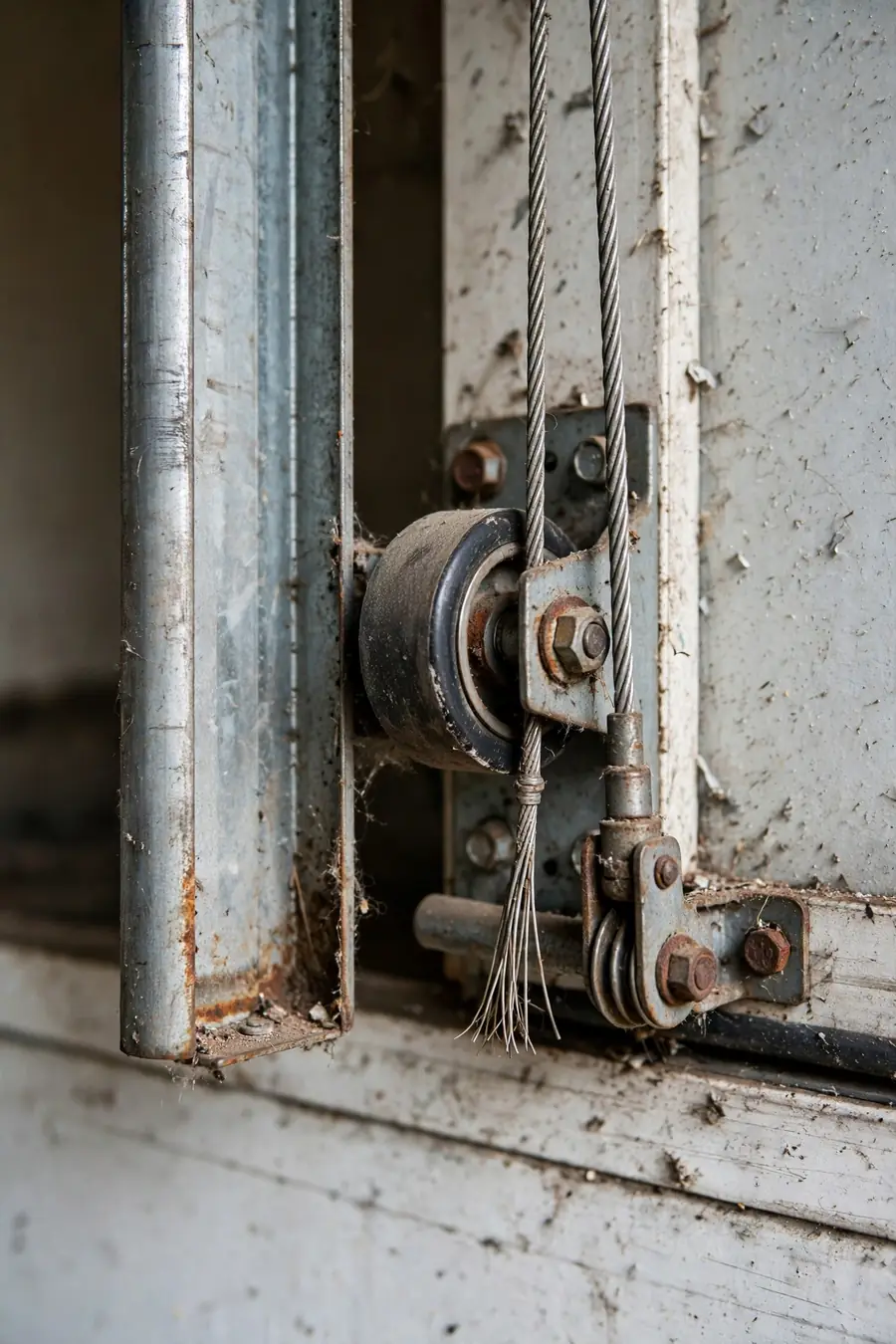
What do the parts of a jackshaft opener look like?
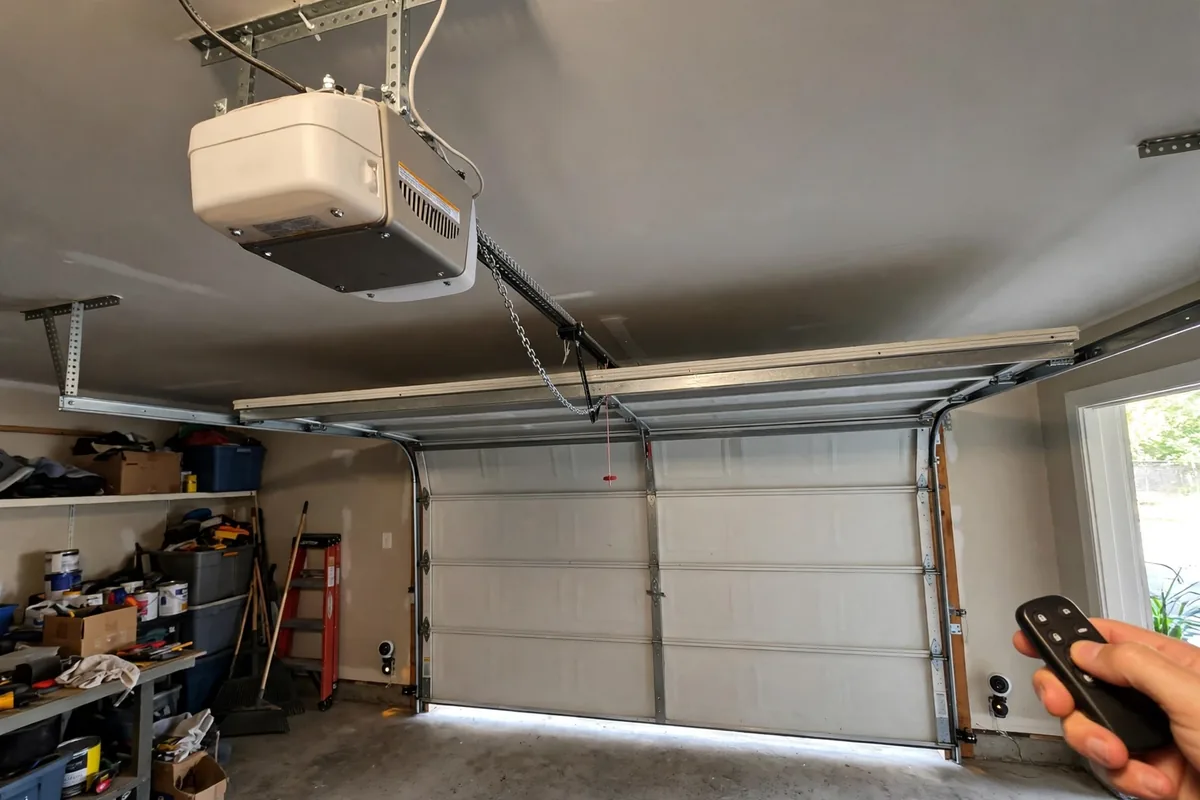
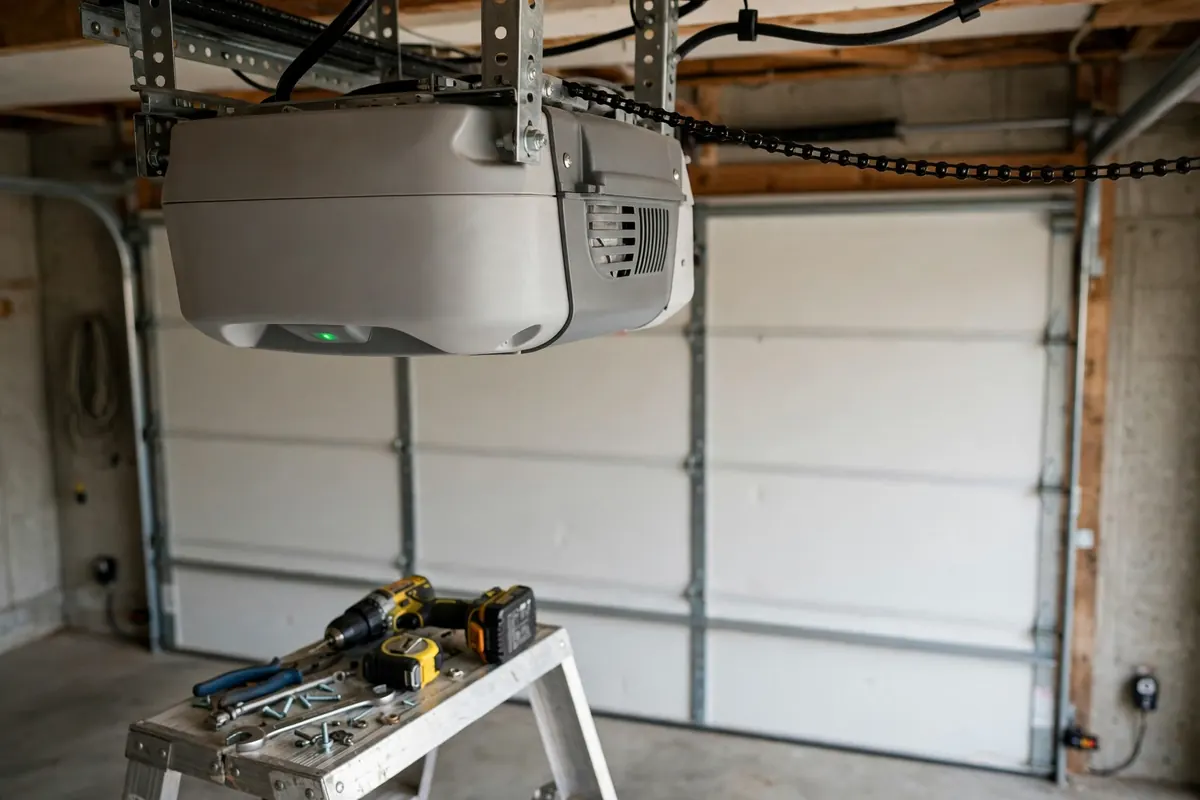
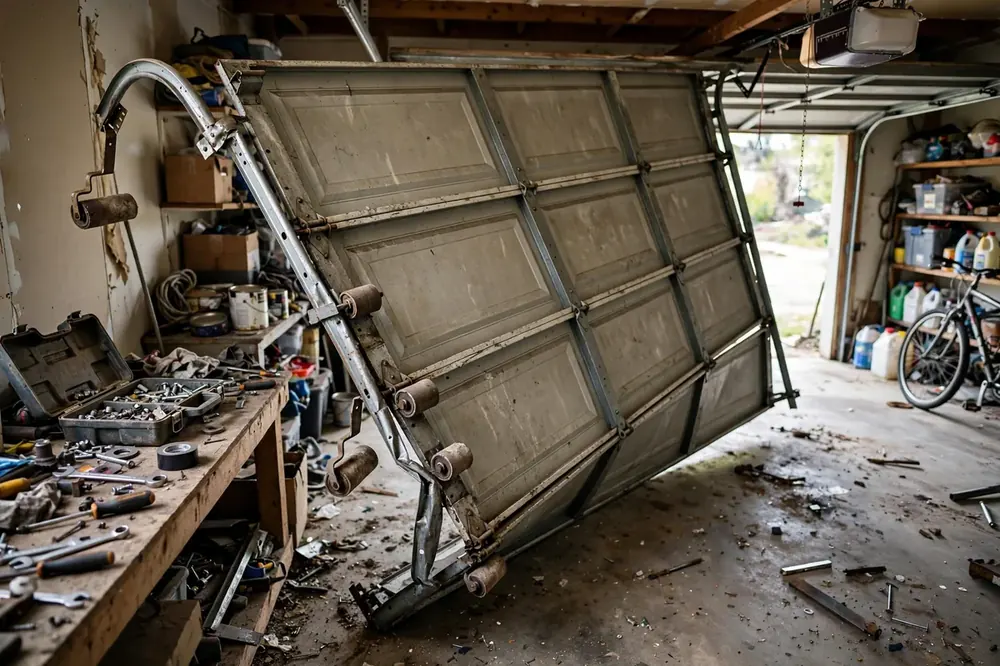
These images show the parts involved in a wall-mount opener job — the opener types, the motor and remote, the tracks and cables, and the door itself. All of them are generated illustrations, not photos of real jobs.
What a jackshaft opener cannot fix
A new opener — jackshaft or otherwise — cannot fix a broken part. If the spring has snapped, the cable has come off the drum, or the door has come off its track, the door will still be heavy, crooked, or stuck with a new motor on the wall. Openers lift a balanced door; they do not repair one. That is why the door should be checked before any opener is fitted. Fitting an opener to a door that is not balanced will wear the opener out fast and can make the damage worse. If your door feels heavy when you lift it by hand, hangs crooked, grinds, or stops halfway, leave it closed and call us. Those are spring, cable, or track problems, and they need a repair visit first.
Door heavy, crooked, or stuck? That is not an opener problem — leave it closed and call us.
Call Now to Speak to a SpecialistLiving with a wall-mount opener day to day
Day to day, a jackshaft opener works like any other opener: a remote or a wall button opens and closes the door, and safety sensors stop the door if something is in the way. Two things are worth asking about before you choose one. The first is the manual release: if the power goes out, the release lets you open the door by hand — but only when the door is fully closed and balanced, and never if the door is part-open or feels heavy. The second is battery backup: ask whether the opener keeps working during a power cut, so a car is not trapped in the garage. Wall-mount openers also tend to run quietly, because there is no chain or belt moving along a rail. That helps if a bedroom sits above the garage. When the opener needs service, the motor is on the wall at hand height, not hanging from the ceiling, so it is easy to reach. If you are thinking about a new opener, our garage door opener installation page explains what a fitting visit covers.
One small habit keeps a wall-mount opener happy: keep the wall around the motor clear. It is tempting to hang tools, hoses, or bikes on the only free patch of wall in the garage, and that patch is usually the one beside the door. Leave room around the motor so it can be reached, and keep the safety sensors clean and lined up. Dust and cobwebs on a sensor can stop the door from closing, and that looks like an opener fault when it is only a dirty eye.
Is a jackshaft opener right for my garage?
A jackshaft opener is a simple idea: move the motor off the ceiling and onto the wall, and the whole garage gets easier to use. For a low-headroom Lowell garage, that one change can free the ceiling for storage and remove the rail that never quite fit.
The door itself stays the same, and the same rules apply — a balanced door, sound springs and cables, and safety sensors that work. If your door is heavy, crooked, or stuck, sort that first: leave it closed and call (833) 563-1552.
For local help, start from our Bay State Garage Door Repair Pros homepage, and read our garage door opener types guide next.
Frequently asked questions about jackshaft garage door openers
What is a jackshaft garage door opener?
A jackshaft opener is a wall-mount garage door opener. The motor sits on the wall beside the door, at the end of the torsion tube, and turns the tube directly to lift the door. There is no rail on the ceiling and no motor hanging overhead. The door, springs, cables, and tracks stay the same — only the motor changes place. It is the same job done from the side wall instead of the ceiling.
Does a jackshaft opener fit any garage door?
No — it needs a torsion tube above the door, with torsion springs. Most sectional garage doors in Massachusetts have one, but not all. If your door uses extension springs that run along the tracks instead, a jackshaft opener usually will not fit, and a ceiling-mounted opener is the better choice. The door also needs to be balanced, with sound springs and cables, before any new opener is fitted.
Is a wall-mount opener better than a ceiling opener?
It depends on your garage, not on the door. A wall-mount opener is better when the ceiling is low or you want the ceiling free for storage, because nothing hangs overhead. A ceiling opener is better when there is plenty of headroom and no wall space beside the door. Both lift the same door the same way, and both need safety sensors. Choose by the room you have, not by which one looks newer.
Can I keep my ceiling storage with a jackshaft opener?
Yes — that is one of the main reasons people choose one. With no rail and no motor on the ceiling, the space above the door is free for shelves, bikes, or other storage. Check that nothing stored above the door hangs down into the door’s path, and keep the area around the wall-mounted motor clear so it can be reached for service. The door still needs the same clear space to travel up and down.
What should I do if my door is heavy or crooked before fitting a new opener?
Sort the door out first. A heavy, crooked, or grinding door has a spring, cable, or track problem, and a new opener will not fix it — it will wear out faster and can make the damage worse. Leave the door closed, do not force it, and do not touch the springs or cables. Call (833) 563-1552 and describe what the door is doing, and a repair visit can come before any opener is fitted.
About the author
Jude Bray is the lead technician at Bay State Garage Door Repair Pros, with 26 years in the trade. The business holds Massachusetts Home Improvement Contractor (HIC) Registration and Construction Supervisor License (CSL) credentials, plus IDEA garage door certifications.
Call Bay State Garage Door Repair Pros at (833) 563-1552, 24 hours a day, 7 days a week. Leave the door closed and describe what it is doing.
Call Now to Speak to a SpecialistLast updated: November 28, 2026. Author: Jude Bray, Bay State Garage Door Repair Pros. Business address: 98-2 Ames Pl, Lowell, MA 01851. Phone: (833) 563-1552. Email: [email protected]. Photos and illustrations on this page do not show real Bay State jobs or staff.