
How to Lubricate Your Garage Door in Massachusetts
A garage door that grinds or squeaks usually needs lubrication, not a new part. Here is what to oil, what never to oil, and which lubricant your door's manual actually asks for — twice a year, before the first freeze.
Lubricate the hinge pivots, the steel roller bearings, and the spring coils with a light coat, twice a year. Never lubricate the tracks or the wheels of nylon rollers. Use the lubricant type your owner's manual names — makers disagree — and if the door still grinds after lubrication, call (833) 563-1552.
What does lubrication do — and what can it not fix?
Lubrication is the cheapest maintenance a garage door gets, and it is also the most misunderstood. A light coat on the moving metal parts cuts the friction that makes a door grind and squeak, keeps steel parts from rusting, and lets the rollers and hinges move the way they were built to move.
It is a twice-a-year job that takes less than ten minutes, and it is the difference between a door that runs quietly for years and a door that grinds its rollers flat.
What it cannot do is fix a worn part. A roller with a flat spot grinds no matter how much oil it gets. A bent track binds no matter how clean it is. A spring near the end of its life snaps on the first cold morning no matter how well it was oiled. Lubrication quiets a healthy door; it cannot repair one. Our garage door maintenance checklist covers the full twice-a-year routine, of which lubrication is one step — and this post is the lubrication step, in full.
What should I lubricate, and what should I never touch?
The rule is simple: oil the parts that pivot and roll, and never oil the path they roll on. Lubricate the hinge pivots where the door panels join, the bearings inside steel rollers, the spring coils, and the bearings at each end of the spring shaft.
A light coat is enough — spray a small burst, wipe off the excess so it does not drip on the floor or the car, and run the door a few times to spread it.
Never lubricate the tracks, the wheels of nylon rollers, or plastic hinges. The tracks are the path the rollers ride, and grease on that path attracts dust and grit, which drags on the rollers and wears the bearings faster. Nylon roller wheels are meant to run dry — at most, some makers allow a little spray on the roller stem, never on the wheel. And never touch a spring, a cable, or a track yourself beyond a light coat on the spring coil: the spring carries the door's weight, the cable holds it to the drum under full spring tension, and both can injure you badly if they are touched the wrong way.
| Part | Lubricate? | How |
|---|---|---|
| Hinge pivots | Yes | Small burst into each pivot, wipe the excess |
| Steel roller bearings | Yes | Spray into the bearing, not the wheel |
| Spring coils | Yes, lightly | Light coat over the coils, door closed |
| End bearings (spring shaft) | Yes | Small amount where the shaft passes through |
| Tracks | No, never | Wipe clean with a dry rag instead |
| Nylon roller wheels | No | Run dry; oil the stem only if the manual allows |
The table is the whole routine in one place, and it is the same routine the manufacturers print in their manuals: oil the pivots and the bearings, keep the tracks dry, and keep oil off nylon. If your manual says something different, follow your manual — the makers do not all agree, and the manual is the one source written for your exact door. Our garage door tune-up service covers the professional version: lubrication, balance and safety-reverse tests, and a hardware check, done in one visit.
Which lubricant should I use for my garage door?
There is no single best lubricant for a garage door, because the makers give different advice — and the difference matters. Clopay calls silicone-based sprays an excellent choice: they keep their thickness over a wide temperature range, which is what a Massachusetts door needs, going from a summer afternoon to a January morning.
Wayne-Dalton, in its 9100 door manual, says the opposite: clean and lubricate hinges, steel rollers, and bearings with a non-silicone lubricant. Genie says to use lubricants made specifically for garage doors, and mentions a light-weight, silicone-based grease for moving parts in its winter tips. LiftMaster and Chamberlain say to apply a small amount of a garage door lubricant to rollers, bearings, and hinges once a year.
The sensible choice, if your manual is lost, is a spray made for garage doors, or a silicone spray: it leaves a light film, it does not attract dust the way heavy grease does, and Clopay recommends it for hinges, rollers, and springs. White lithium grease is the other common choice — it penetrates tight spaces and dries to a non-tacky film — and it is what many trade guides name alongside silicone spray. What to avoid is heavy automotive grease, which attracts dirt and makes the problem worse, and standard WD-40, which is a solvent that strips oils and evaporates. If your manual names a product or a type, use it. If it does not, a garage-door spray or a silicone spray is the safe default.
What is the twice-a-year lubrication routine?
Do it in spring, after the salt and slush are gone, and in fall, before the first freeze — those are the two moments the door needs it most. Close the door and unplug the opener if you will be working near moving parts.
Wipe the old grease and grit off the hinges and the metal roller stems first: fresh oil on top of old grit just moves the grit around. Then apply a light coat to the hinge pivots and the roller bearings, a light coat over the spring coils while the door is down, and a small amount where the spring shaft passes through the end bearings.
Wipe off the excess so it does not drip on the floor or the car, run the door a few times to spread it, and listen: a healthy door runs smoother and quieter after the routine, and the change is obvious. Check the tracks while you are there — wipe the inner channels with a dry rag, and look for a roller that wobbles, a hinge that is loose, or a cable that is fraying. Any of those is a call, not a lubrication job: a worn roller, a loose hinge, and a frayed cable are all faults that oil cannot fix, and a frayed cable can let go without warning. Our garage door roller replacement service covers the full set, with the hinges and the track alignment checked at the same time.
When lubrication is not the answer
If the door still grinds, jerks, or stops partway after a proper lubrication, the fault is a worn part. Rollers wear out: steel rollers crack and develop flat spots, nylon rollers chip, and a worn roller grinds no matter how much oil it gets. A bent track binds the door, a frayed cable drags one side, and a spring near the end of its life makes the opener strain. The test is the sound after the routine: if the door is quieter, the lubrication did its job; if it grinds the same, the part is worn. Stop running a door that grinds the same after lubrication — every extra cycle wears the part further — leave it closed and call (833) 563-1552. Start from our Bay State Garage Door Repair Pros homepage for every city we serve.
Lubrication: the parts it protects
These images show the parts a twice-a-year lubrication protects — the spring, the track and rollers, the cable and drum, and the opener.
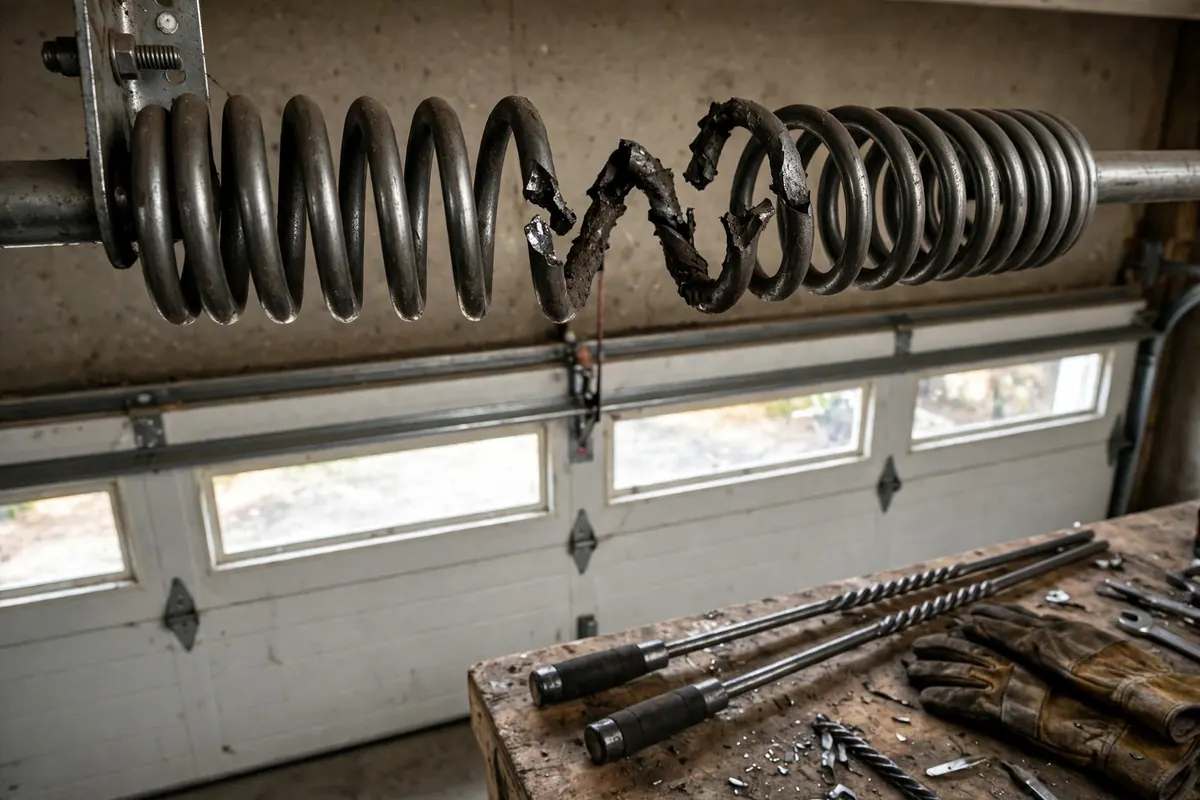
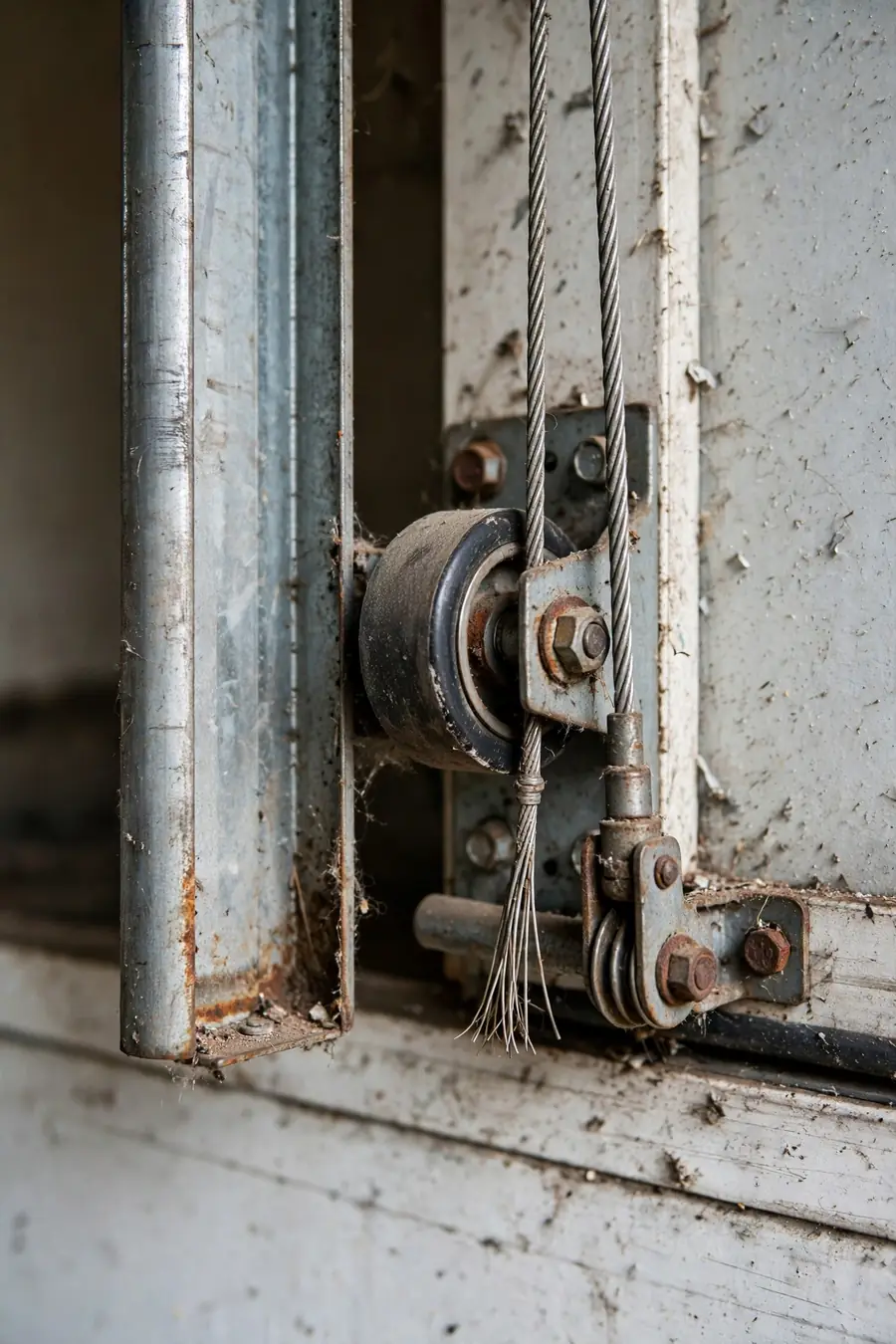
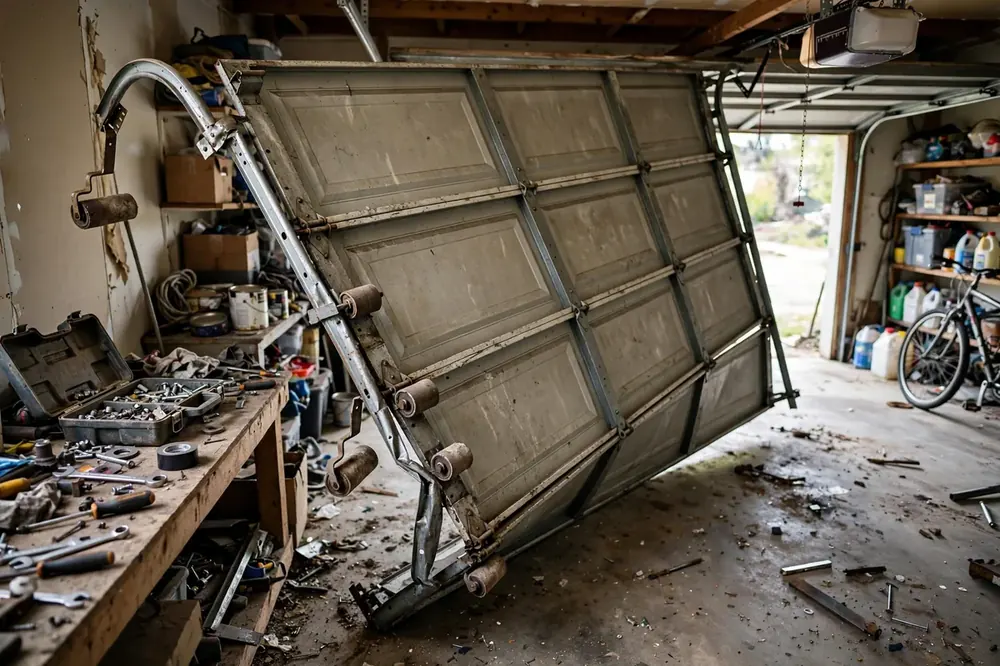
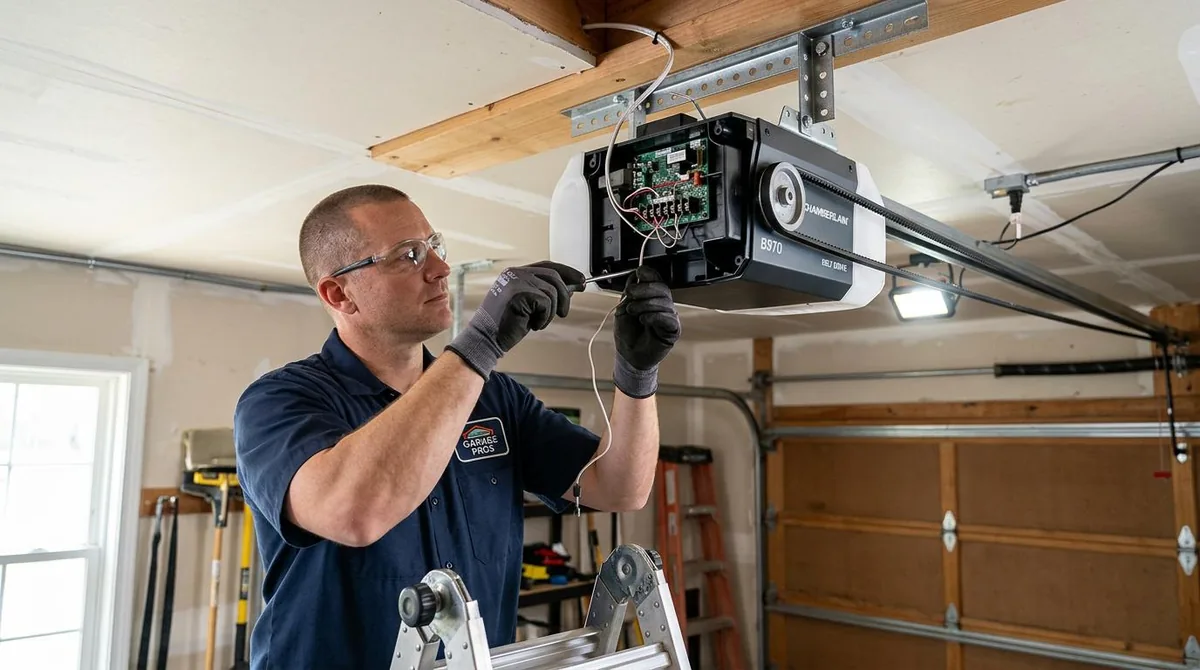
Door grinding even after a proper lubrication? Oil quiets a healthy door — it cannot fix a worn roller, a bent track, or a tired spring. Get it checked before the freeze.
Call Now to Speak to a SpecialistFor local help, start from our Bay State Garage Door Repair Pros homepage, and read our garage door maintenance checklist for the full twice-a-year routine.
Frequently asked questions about lubricating a garage door
How often should I lubricate my garage door in Massachusetts?
Twice a year — once in spring, after the salt and slush are gone, and once in fall, before the first freeze. That is the rhythm the manufacturers and the garage door trade groups give: hinge pivots, roller bearings, and spring coils, twice a year, with a light coat. A door that runs every day, or a door near the coast where salt air works on the hardware, earns the same twice-a-year routine.
What is the best lubricant for a garage door?
There is no single answer, because the makers disagree — and your owner's manual is the one source written for your exact door. Clopay calls silicone-based sprays an excellent choice for garage doors. Wayne-Dalton, in its 9100 door manual, says to clean and lubricate hinges, steel rollers, and bearings with a non-silicone lubricant. LiftMaster and Chamberlain say to apply a small amount of a garage door lubricant to rollers, bearings, and hinges once a year.
Should I lubricate the garage door tracks?
No — never put lubricant inside the tracks. The tracks are the path the rollers ride, and grease on that path attracts dust, grit, and pet hair, which drags on the rollers and wears the bearings faster. Wipe the inner channels of both tracks with a dry rag, or a damp rag, and leave them dry. A door that grinds after the tracks are clean and the moving parts are oiled has a worn roller or a bent track.
Can I use WD-40 on my garage door?
Not the standard blue-and-yellow can. Standard WD-40 is a solvent and a water displacer, not a long-term lubricant: it strips away the oils that are already there and evaporates fast, so the door is drier after it than before. Clopay advises against regular WD-40 on garage doors. The WD-40 company sells separate Specialist silicone and white lithium grease sprays, and those are made for the job.
What if my garage door still grinds after lubrication?
Then the fault is a worn part. Rollers wear out: steel rollers crack and develop flat spots, nylon rollers chip, and a worn roller grinds no matter how much oil it gets. A bent track, a frayed cable, or a spring near the end of its life grinds too. Lubrication quiets a healthy door; it cannot fix a worn one. If the door still grinds, jerks, or stops partway after lubrication, stop running it and call (833) 563-1552.
About the author
Jude Bray is the lead technician at Bay State Garage Door Repair Pros, with 26 years in the trade. The business holds Massachusetts Home Improvement Contractor (HIC) Registration and Construction Supervisor License (CSL) credentials, plus IDEA garage door certifications.
Call Bay State Garage Door Repair Pros at (833) 563-1552, 24 hours a day, 7 days a week. A twice-a-year lubrication is a scheduled visit, not an emergency on a freezing morning.
Call Now to Speak to a SpecialistLast updated: November 28, 2026. Author: Jude Bray, Bay State Garage Door Repair Pros. Business address: 98-2 Ames Pl, Lowell, MA 01851. Phone: (833) 563-1552. Email: [email protected]. Lubricant guidance in this post follows the manufacturers' own manuals as reported by other sources — your owner's manual is the final word for your door. Prices are not quoted here — your exact price is confirmed in writing on site. Photos and illustrations on this page do not show real Bay State jobs or staff.