
Why Is My Garage Door Opener Blinking in Massachusetts?
A blinking garage door opener is not a fault — it is a diagnostic code. Count the flashes, match the pattern, and you will know whether it is the sensors, the travel, or a part. Here is how to read the light in Massachusetts, and when to call (833) 563-1552.
Count the flashes: the pattern is the code. Most blinking means the door goes up but will not close, and the lights flash — that is usually the safety sensors. Wipe the lenses, clear the beam, and check both lights are steady. If the code points to a spring or a cable, stop and call (833) 563-1552.
What does a blinking opener light mean?
A blinking light on a garage door opener is a diagnostic signal, and the pattern of flashes is the message. When the opener tries to close the door and something is wrong, it flashes its light or the arrow buttons on the motor unit in a pattern: a number of flashes, then a pause, then the pattern repeats.
Count the flashes, and you have the code. Find the code, and you know whether the fault is a two-minute check or a part.
Every manufacturer publishes its own code chart in the owner's manual, and the patterns are the same in outline on most modern openers: sensor codes, travel codes, and logic-board codes. The charts below are the common pattern reported by other sources — not a promise for your unit, and not a Bay State claim. Codes are model-specific, and light and sound patterns vary by model and software version, so treat the table as a starting point and your owner's manual as the final word. Our garage door safety sensors guide explains the beam, the lights, and the alignment that most blinking turns out to be.
How do I count the flashes on my garage door opener?
Stand where you can see the motor unit and watch one full pattern: count the flashes, wait for the pause, and count again. On many modern openers the code shows on the up and down arrow buttons: the up arrow flashes first, then the down arrow, so one up flash followed by four down flashes is code 1-4.
On older units the code shows on a single diagnostic light or on the wall control. Write down what you see — the number of flashes, whether the door moves at all, and what the door does when you try the wall button — and that is what you describe on the call.
Do the count twice, because a pattern that is miscounted points at the wrong fault. A code that flashes once and then four times is not the same code as one that flashes four times and then once, and the fix for a sensor code is not the fix for a travel code. If the light is flashing and the door will not move at all, do not keep pressing the button to test it: every attempt strains the opener against a door that is not moving. Our garage door opener types guide explains the chain, belt, and wall-mount openers the codes sit on, and which of them carry a battery backup.
What are the common blinking-light codes, in plain words?
The table below is the common pattern reported by other sources, paraphrased from the manufacturers' own support pages and manuals. It is a starting point for reading your opener, not a diagnosis for your unit — your owner's manual is the final word.
A code that points to the door's balance, a broken spring, or a loose cable is a door problem, not an opener problem.
| What you see | What it usually means | What to do |
|---|---|---|
| Door will not close, lights flash | Safety sensors blocked, misaligned, or a wire cut | Wipe lenses, clear the beam, check both lights |
| Door moves 6 to 8 inches and stops, or hums | Door binding, or a broken spring | Move the door by hand first; if it will not move, call |
| Door opens, then drifts down on its own | Door out of balance, or travel set wrong | Balance test; do not keep running it |
| No movement, no sound | Logic board failure | Unplug for 5 seconds; if the code returns, call |
| Battery light keeps flashing green | Battery charging circuit fault | Call — the board, not the battery, is the fault |
| Door stops or reverses, beeps, lights flash | Door binding, or too heavy for the opener | Remove obstructions, check rollers; if it keeps happening, call |
The sensor row is the one that matters most, because it is the one you will see most often: the door goes up but will not close, and the lights flash. That is the beam, the alignment, or the wire — and the safe checks below sort it out in most cases. The other rows are the ones that mean stop: a door that moves a few inches and stops, or hums without moving, is a door meeting resistance or a spring that has failed, and the spring carries the door's weight. Our garage door spring replacement service covers the check, the replacement, and the balance test — and a spring caught early is a scheduled visit, not an emergency on a freezing morning.
Why does the most common blink mean the door will not close?
The door goes up but will not close, and the lights flash. That is the safety sensors, nine times out of ten: the beam is broken, the sensors are misaligned, or a wire is cut. The sensors sit a few inches above the floor on each side of the door, and they send an invisible infrared beam across the opening.
If the receiver does not see the beam, the opener refuses to close the door and flashes its light — and the cause is usually something small: a leaf in the beam, dust or a cobweb on a lens, a sensor bracket bumped a fraction of an inch out of line, or low winter sun shining straight into a lens.
Wipe both lenses with a soft cloth, clear anything in the beam, and check both sensor lights are steady — one often green and the other amber. If the lights stay out after that, the wire or the sensor itself is the fault, and that is a technician job: the thin wires running from the sensors to the motor head can be pinched by the door mechanism or damaged by pests, and a single blink or two blinks on the diagnostic light often means a severed or reversed wire. Our garage door reverses when closing in Fall River post covers the same fault from the other side — what it means when the door goes down a bit and then comes back up.
When blinking means stop and call
Some codes are a call, not a check. If the door will not move by hand, is crooked, or a spring is broken, leave it closed and call (833) 563-1552 — do not keep running the opener to test it. A door that is out of balance can trigger the same codes as a broken spring, and a spring under tension can injure you badly if it is touched the wrong way. The cable holds the door to the drum under full spring tension, and a cable that lets go does so suddenly. Never adjust a spring, a cable, or the travel limits yourself: the travel limits define exactly where the door stops, and a limit set wrong is a door that closes on whatever is in its path. Our garage door opener repair service covers the opener, the sensors, and the safety reverse together, because a blinking opener is rarely a fault in one part alone.
What to do right now
Count the flashes, write down the pattern, and check the sensors: wipe both lenses, clear the beam, and check both lights are steady. If the beam is clear and the lights are steady, try the wall button once. If the door moves normally, the fault is in the sensors or the wire. If the door moves a few inches and stops, hums without moving, or will not move by hand, stop and call (833) 563-1552, and describe the pattern on the call — the number of flashes, and what the door does. A blinking opener is a door telling you its fault in code, and the sooner it is read, the smaller the repair stays. Start from our Bay State Garage Door Repair Pros homepage for every city we serve.
A blinking opener: the parts that report the fault
These images show the parts a blinking opener reports on — the sensors, the opener motor, the spring, and the track and rollers.
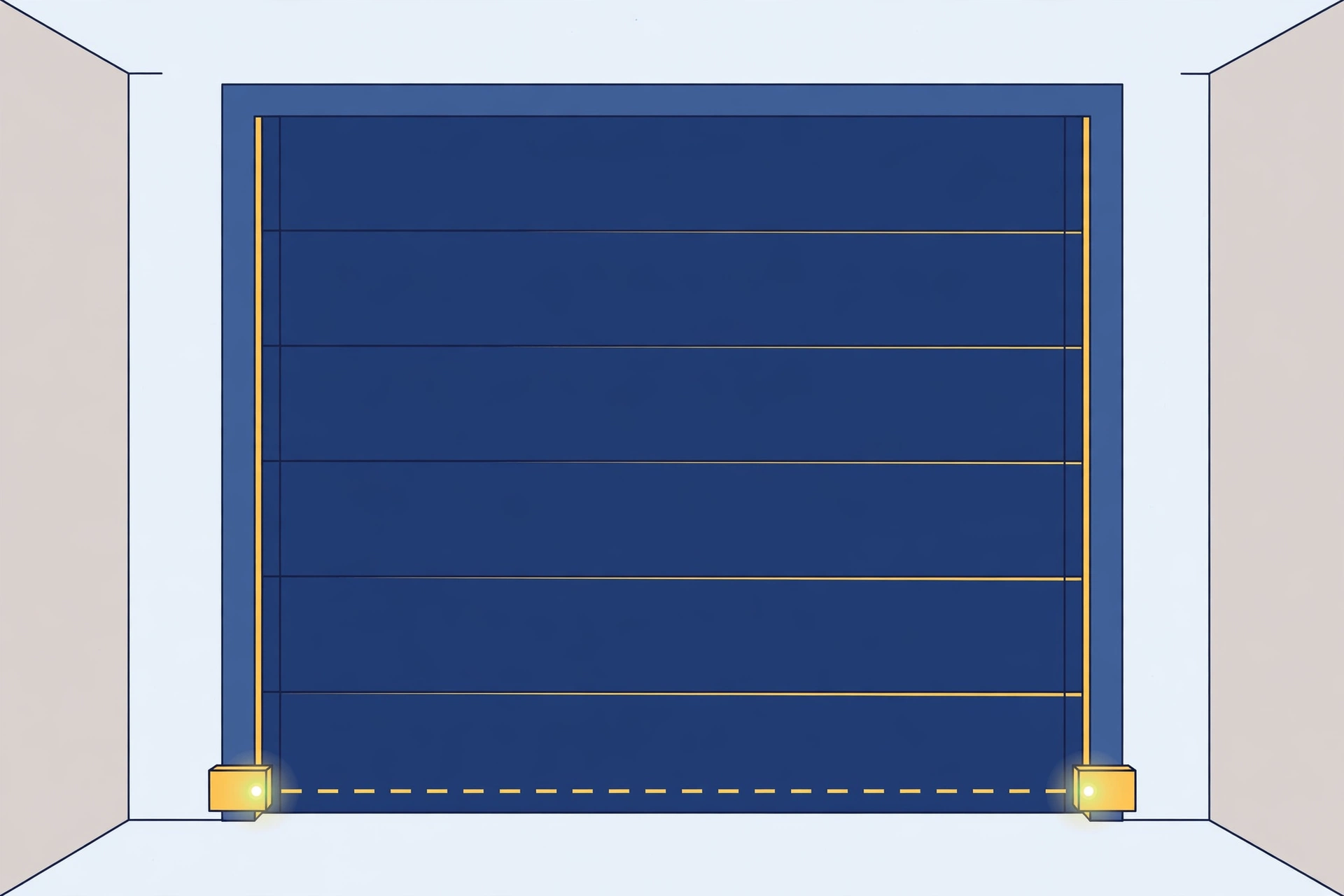
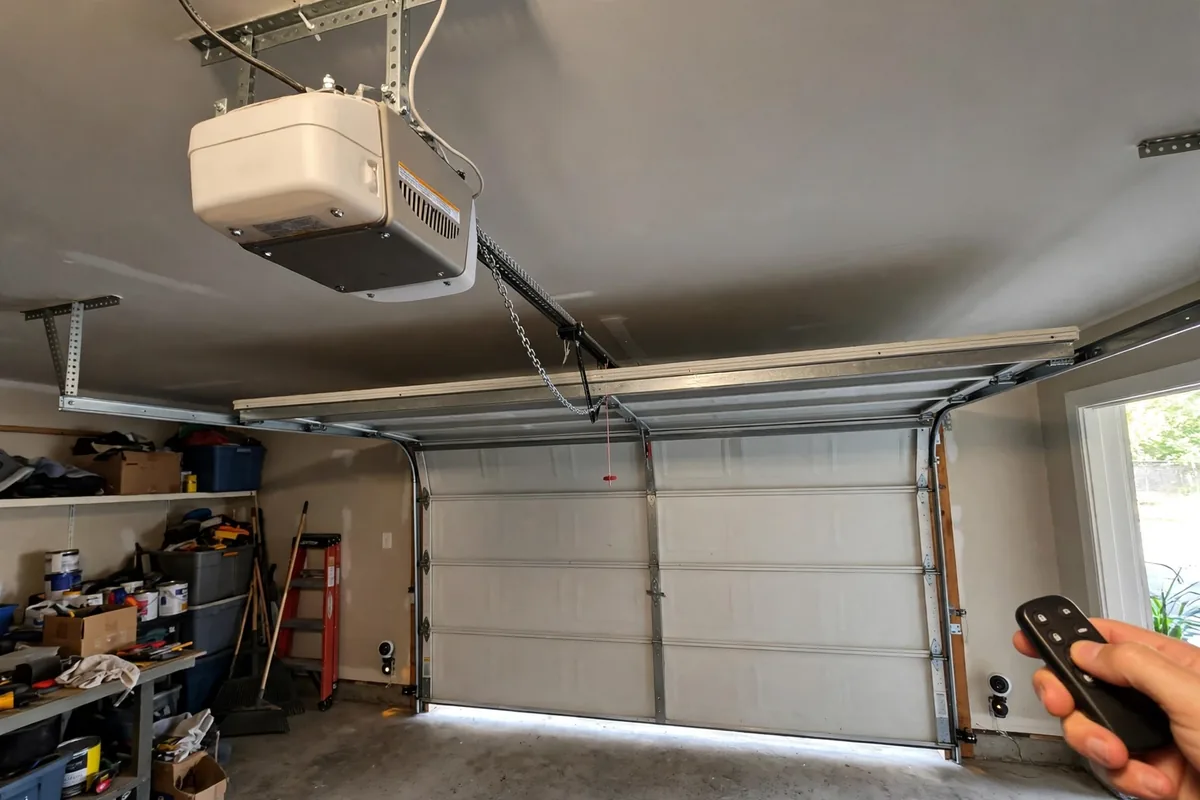
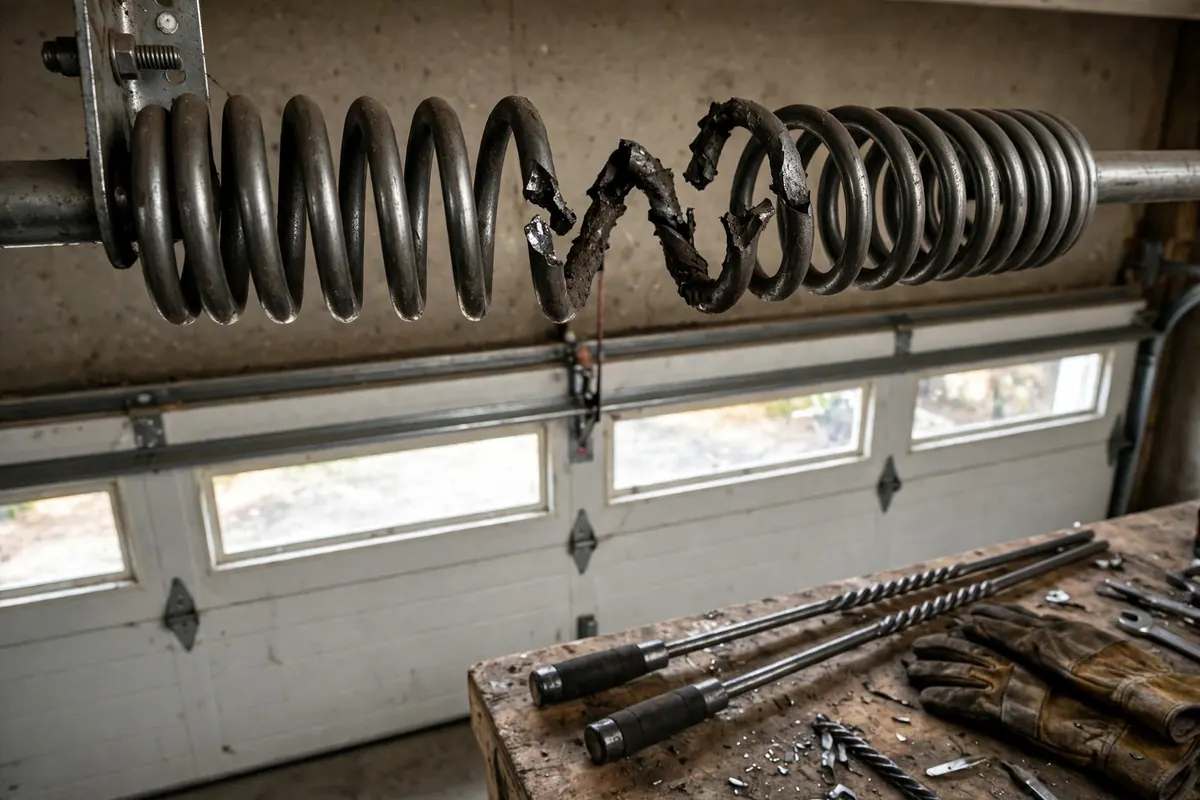
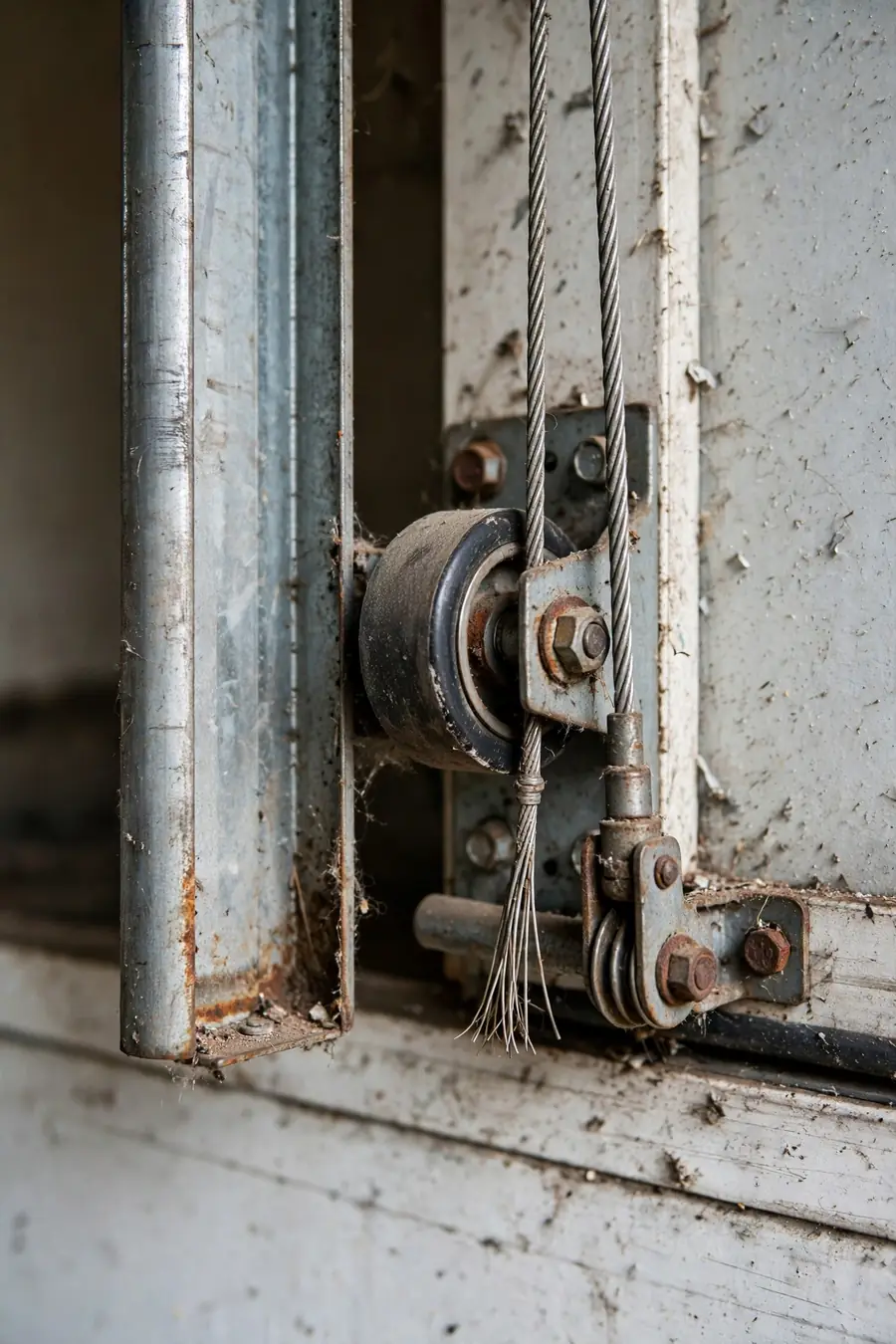
Opener blinking and the door will not close? Count the flashes, wipe the lenses, and check both sensor lights — if the code points to a spring or a cable, stop and call.
Call Now to Speak to a SpecialistFor local help, start from our Bay State Garage Door Repair Pros homepage, and read our garage door safety sensors guide for the beam, the lights, and the alignment.
Frequently asked questions about a blinking garage door opener
What does a blinking light on my garage door opener mean?
It is a diagnostic code, not a random fault. The opener flashes its light — or the up and down arrow buttons on the motor unit — in a pattern, and the pattern names the fault: the sensors cannot see each other, the door is meeting resistance, or the travel limits are not set. Count the flashes, match the pattern to the code table below, and you will know whether it is a two-minute check or a part.
Why does my garage door opener blink and the door will not close?
That is the most common blink of all, and it is the safety sensors nine times out of ten. The door goes up but will not close, and the lights flash: the beam is broken, the sensors are misaligned, or a wire is cut. Wipe both lenses, clear anything in the beam, and check both sensor lights are steady. If the lights stay out after that, the wire or the sensor itself is the fault — call (833) 563-1552.
What do the garage door opener blink codes mean?
The codes come from the manufacturers' own manuals, and the pattern is the same on most modern openers: a number of flashes, then a pause, then the pattern repeats. A sensor code means the beam is broken or the wire is cut. A travel code means the door meets resistance or the limits are not set. A logic-board code means the board itself has failed. Codes are model-specific, so your owner's manual is the final word.
What should I do when my garage door opener keeps blinking?
Count the flashes first, then check the sensors: wipe both lenses, clear the beam, and check both sensor lights are steady. If the beam is clear and the lights are steady, try the wall button once — if the door moves normally, the fault is in the sensors or the wire. If the door moves a few inches and stops, hums without moving, or will not move by hand, stop and call (833) 563-1552.
Does a blinking garage door opener mean it needs replacing?
Not usually. Most blinking is a sensor fault or a wire — a small job, not a new opener. A logic-board code or a travel code can be a bigger job, and a code that points to the door's balance, a broken spring, or a loose cable is a door problem, not an opener problem. If the opener is old and noisy and throwing codes, a replacement may be the honest answer — and we will say so plainly.
About the author
Jude Bray is the lead technician at Bay State Garage Door Repair Pros, with 26 years in the trade. The business holds Massachusetts Home Improvement Contractor (HIC) Registration and Construction Supervisor License (CSL) credentials, plus IDEA garage door certifications.
Call Bay State Garage Door Repair Pros at (833) 563-1552, 24 hours a day, 7 days a week. Count the flashes, describe the pattern on the call, and get the fault fixed — not guessed at.
Call Now to Speak to a SpecialistLast updated: November 28, 2026. Author: Jude Bray, Bay State Garage Door Repair Pros. Business address: 98-2 Ames Pl, Lowell, MA 01851. Phone: (833) 563-1552. Email: [email protected]. Code patterns in this post are the common pattern reported by other sources — your owner's manual is the final word for your unit. Prices are not quoted here — your exact price is confirmed in writing on site. Photos and illustrations on this page do not show real Bay State jobs or staff.