
Garage Door Won't Open After a Power Cut? How to Get Out Safely
A garage door that won't open after a power cut is usually a dead opener, not a broken door — the opener needs power, the door itself is mechanical. This guide covers the safe checks, the red manual release, and when to leave it closed and call (833) 563-1552.
After a power cut, a garage door that will not open is usually a dead opener, not a broken door. Check the breaker and the wall button first, and only use the red manual release if the door is fully closed and balanced. If the door feels very heavy or hangs crooked, leave it closed and call (833) 563-1552.
First check: is it the whole house, or just the opener?
Before you touch the door, find out how wide the outage is. If the lights are out everywhere, the whole house has lost power and the opener is simply dead — there is nothing wrong with the door.
If the lights are on but the opener is dead, the problem is smaller: a tripped breaker, a tripped GFCI outlet in the garage, or the opener's own plug worked loose. Check the breaker panel for a tripped breaker, press the reset button on the garage GFCI outlet, and check that the opener is plugged in. Then try the wall button — not the remote. If the wall button works, the opener is fine and the problem is the remote: a dead battery, a lock button left on, or a lost pairing. If the wall button does nothing and the power is on, the opener itself needs attention.
| What you find | What it usually means | What to do |
|---|---|---|
| Whole house dark | Area outage; opener has no power | Wait for power, or use the manual release (below) |
| Lights on, opener dead | Tripped breaker or GFCI outlet | Reset the breaker and the GFCI, then try the wall button |
| Wall button works, remote does not | Remote battery, lock mode, or lost pairing | Fresh battery first; check the lock button on the wall control |
| Opener hums, door does not move | Stripped gear, disconnected trolley, or broken spring | Stop pressing the button. Leave it closed. Call us. |
| Door very heavy by hand | Broken spring — the counterbalance has failed | Do not lift it. Leave it closed. Call us. |
When is it safe to pull the red manual release — and when is it not?
Every opener has a red emergency release cord hanging from the rail, with a handle you pull to disconnect the door from the opener so you can lift it by hand. It is safe to use only when the door is fully closed and the springs are sound.
Pull the cord down and toward the door, then lift the door by hand. It should lift smoothly with one hand, stay where you leave it, and lower gently. If it does any of those things, the door is balanced and the release was safe to use.
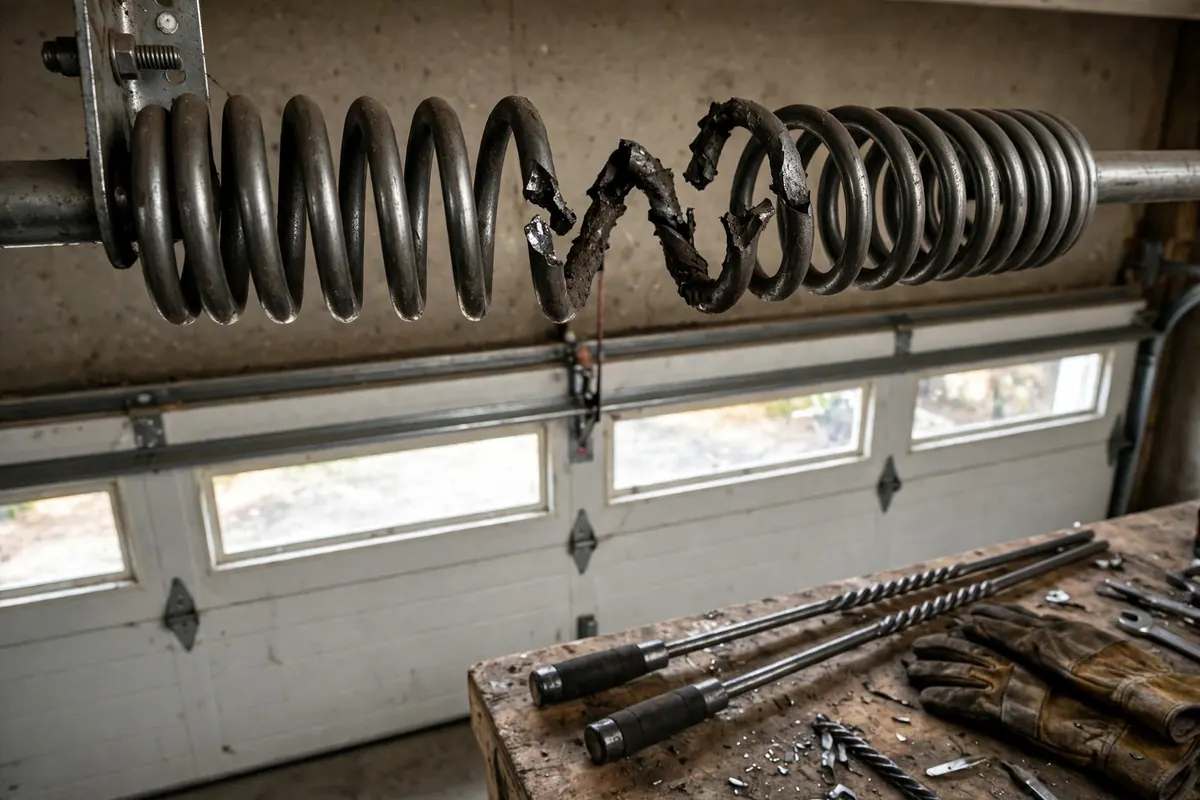
It is NOT safe to pull the cord when the door is partly open, when it hangs crooked, when it feels very heavy, when you heard a bang, or when you can see a gap in the spring or a loose cable. In those cases the spring or cable has failed, and disconnecting the opener removes the only thing holding the door up — it can drop without warning. A door with a broken spring must be left closed. Our garage door spring replacement service covers that fault, and the first instruction on every spring job is the same: leave it closed and call us.
How do I get the car out without damaging the door?
If the door is fully closed, balanced, and the release was safe to pull, lift the door by hand and drive the car out, then lower the door gently by hand and leave it closed until the power returns.
Do not leave the door standing open while the power is out — with the opener disconnected, nothing holds it in place, and a gust or a bump can bring it down. If the door will not lift by hand, or it feels heavy, jerks, or sticks partway, stop. Forcing a heavy door by hand can pull a cable off the drum or bend a panel, and a door that drops while you are under it can hurt you. Leave it closed, keep the car where it is, and call us — a trapped car is an emergency, and we will say so on the phone.
How do I reconnect the opener when the power returns?
When the power comes back, the opener needs to be reconnected to the door. Pull the red release cord toward the door — toward the closed position — until the trolley clicks back onto the carriage, then run the opener once with the wall button and let it re-engage.
Then test the safety reverse, because an outage can leave the opener's limits confused: place a roll of paper towels flat on the floor under the door and close it with the wall button. The door should touch the roll and reverse. If it crushes the roll or keeps going, stop using the opener and call us — the safety reverse is not working. Also check the photo-eye sensors: wipe the lenses, check both lights are on, and make sure nothing is blocking the beam. Our garage door safety sensors guide explains what the lights mean. If the trolley will not re-engage, or the opener runs without moving the door, the rail or trolley may be damaged — our garage door opener repair service starts with diagnosis before any new opener is quoted.
Opener hums but the door won't move after the power came back? Stop pressing the button and call us.
Call Now to Speak to a SpecialistWhat happened in the Taunton outage on November 6, 2026?
This is not a hypothetical problem in Massachusetts — it happened last week. On Friday, November 6, 2026, about 10,000 customers lost power from noon to about 2 p.m. in Taunton, Raynham, East Taunton, and Lakeville, after a lightning strike hit a National Grid transmission line.
The Taunton Municipal Lighting Plant restored power the same afternoon. For two hours, every garage door opener in those towns was dead — and every homeowner who needed the car out had to decide whether to use the manual release. The lesson from that afternoon is the same as the lesson in this guide: the release is safe only on a closed, balanced door, and a door that feels heavy or hangs crooked is a broken part, not a power problem. With another storm forecast for later this week, it is worth checking your release cord and your battery backup now, while the power is on. For local detail, Taunton is one of our live service pages — see our garage door repair page for the Taunton area on our service-areas hub.
Battery backup — and the new federal rule
A battery backup lets the opener run for a few cycles during an outage, so the car can get out without the manual release. It is optional in Massachusetts, but it is worth having if the garage is your main way in and out of the house. Test it before you need it: unplug the opener for a minute and try the wall button. If it beeps, hesitates, or refuses to move, the battery is likely at the end of its life — and a battery is a replaceable part, not a reason to replace the opener.
There is also a new federal rule to know about. The U.S. Consumer Product Safety Commission published a direct final rule on October 30, 2026, amending the mandatory safety standard for automatic residential garage door operators to match the UL 325 standard. Under the new rule, an opener with a battery backup must verify it has enough charge to complete a full open-and-close cycle before it moves the door. If it cannot, it must stop and leave the door open rather than try — so a door never gets stuck halfway with its entrapment protection dead. The rule takes effect on December 29, 2026, for openers manufactured or imported on or after that date, and it binds manufacturers and importers — it asks nothing of homeowners directly. If your opener beeps, hesitates, or refuses to close on battery power, the battery is the first thing to check. The full rule is published in the Federal Register as FR Doc 2026-22213. If you are thinking about a new opener with battery backup, our garage door opener installation service covers fitting and setup, including pairing remotes and keypads before we leave.
When to call
Call if the opener hums but the door does not move, if the door feels very heavy by hand, if it hangs crooked or jerks, if the trolley will not re-engage, or if the safety reverse test fails. Those are broken parts or failed safety systems, not power problems. Leave the door closed, keep the area clear, and call (833) 563-1552 any time, day or night. For our base city, see our garage door repair Lowell MA page — Lowell homes lose power in the same storms, and the same checks apply.
Power cuts and garage doors: the parts involved
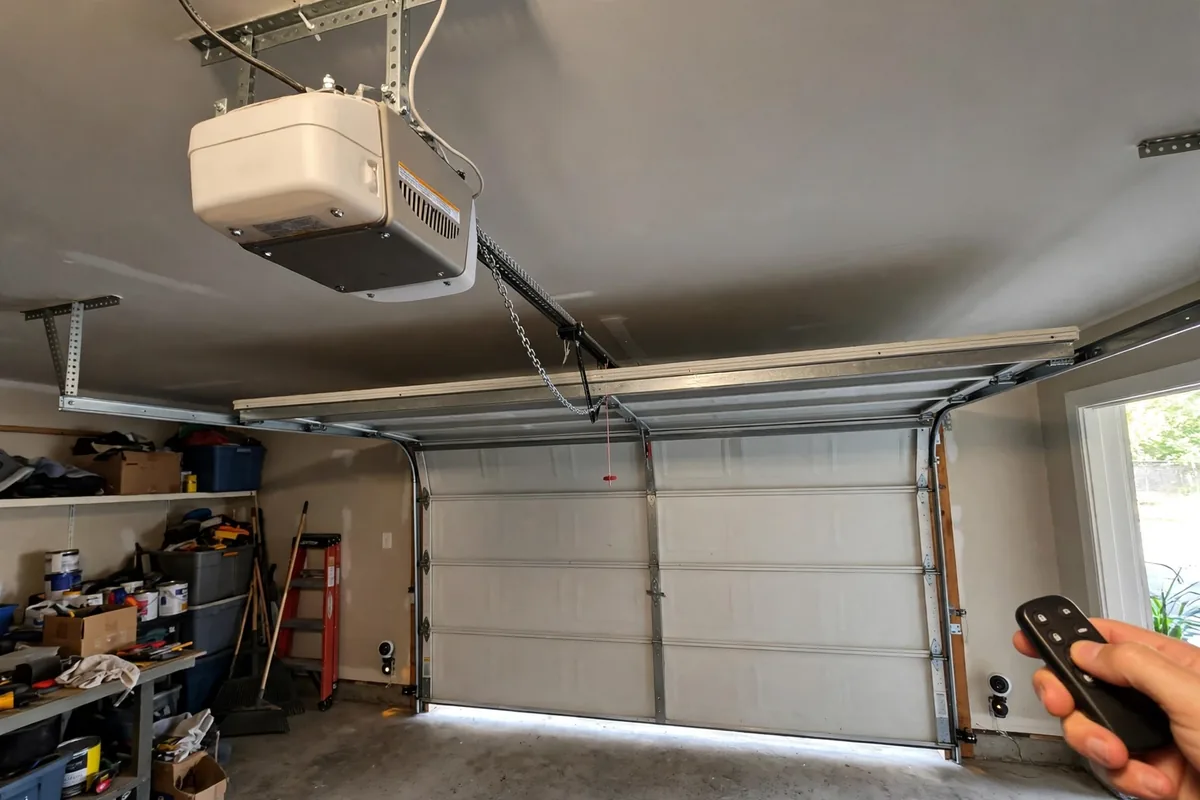
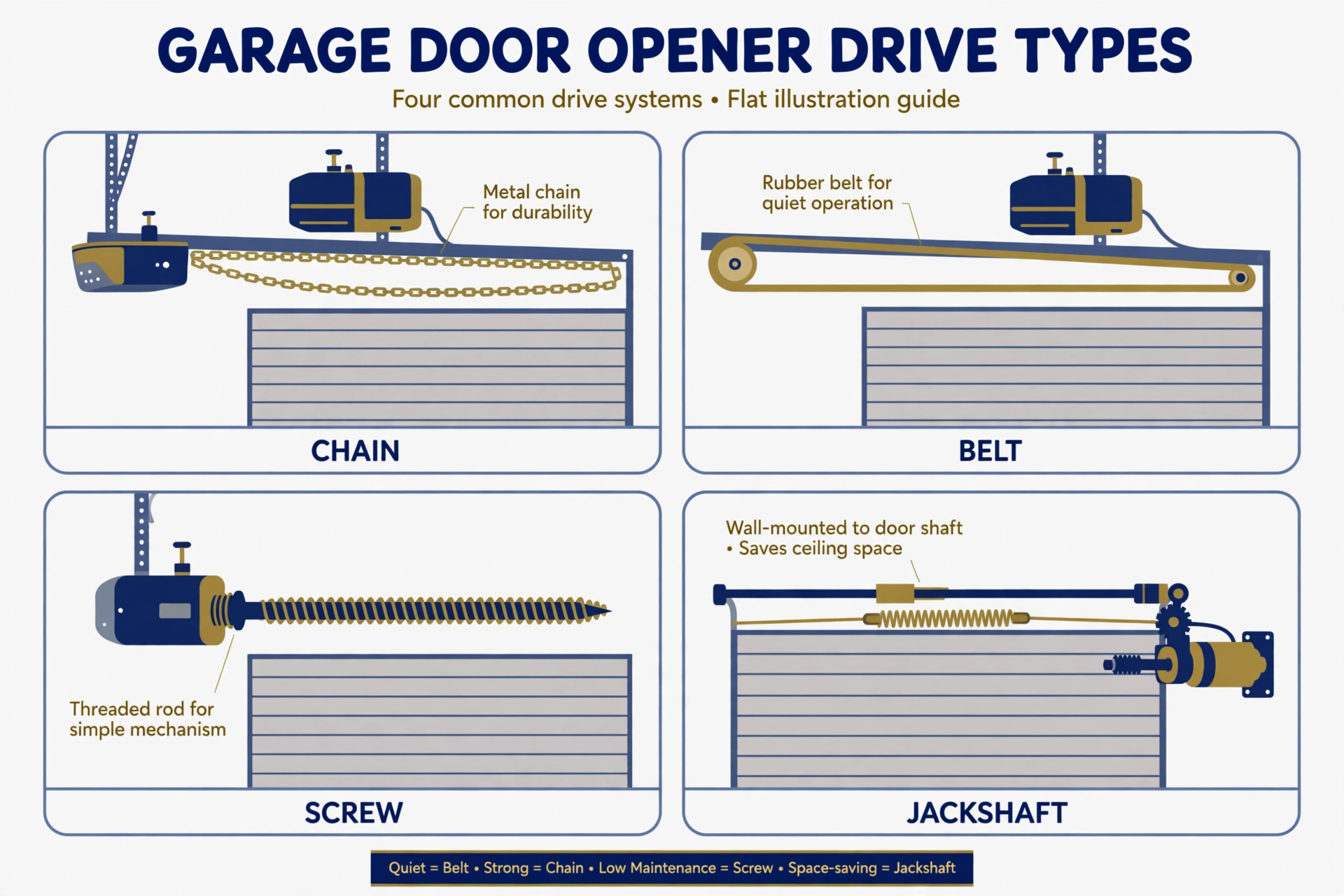
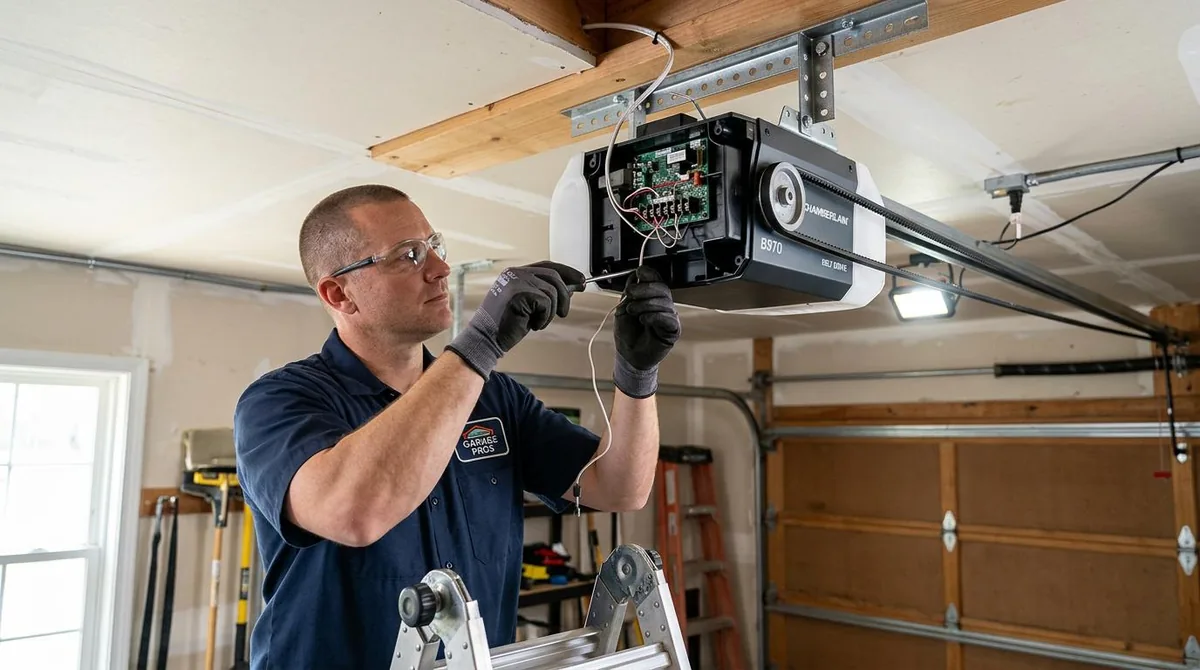
These images show the parts involved when an opener loses power — the opener motor, the release mechanism, and the spring that must be checked before the door is lifted by hand.
Opener hums but the door won't move after the power came back? Stop pressing the button and call us.
Call Now to Speak to a SpecialistFor local help, start from our Bay State Garage Door Repair Pros homepage, and see our garage door repair in Lowell page for our base city.
Frequently asked questions about a garage door after a power cut
Why won't my garage door open after a power cut?
The opener runs on mains power, so a power cut leaves it dead — the door itself is mechanical and has not broken. The usual causes are the outage itself, a tripped breaker or GFCI outlet that did not reset when power returned, a lock or vacation button left on, or a remote that lost its pairing. If the wall button works but the remote does not, the problem is the remote, not the opener.
Is it safe to pull the red emergency release cord?
Only if the door is fully closed and the springs are sound. Pull the cord — a red handle hanging from the opener rail — and lift the door by hand. It should lift smoothly. Never pull the cord on a door that is partly open, crooked, or very heavy, or if you heard a bang or see a gap in the spring. A door with a broken spring can drop without warning once disconnected.
How do I reconnect my garage door opener after the power comes back?
Pull the red release cord toward the door — toward the closed position — until the trolley clicks back onto the carriage, then run the opener once with the wall button. Then test the safety reverse: place a roll of paper towels under the door and close it — the door should reverse when it touches it. If it does not reverse, stop using the opener. If the trolley will not re-engage, the rail or trolley may be damaged.
My opener hums but the door doesn't move after an outage — what now?
A hum with no movement usually means the opener is getting power but cannot move the door — a stripped drive gear, a disconnected trolley, or a broken spring holding the door down. Stop pressing the button: running it can strip the gear further or pull a cable off the drum. Check whether the door lifts by hand with the opener disconnected — if it feels very heavy, the spring is the problem. Leave it closed and call (833) 563-1552.
Do I need a battery backup for my garage door opener in Massachusetts?
A battery backup is optional in Massachusetts, but worth having if your garage is your main way in and out — it runs the opener for a few cycles during an outage. Test it before you need it: unplug the opener for a minute and try the wall button. If it beeps, hesitates, or refuses to move, the battery is likely at the end of its life. A new federal rule on battery backup takes effect December 29, 2026.
What if my garage door won't open after a power outage?
A power outage and a power cut are the same event for your opener — when the power goes, the opener has no drive until it comes back. First check the breaker and any GFCI outlet on the circuit, then try the opener again once power is restored. If it hums but the door does not move, or the door is stuck halfway, do not force it — call (833) 563-1552 and describe what you see.
About the author
Jude Bray is the lead technician at Bay State Garage Door Repair Pros, with 26 years in the trade. The business holds Massachusetts Home Improvement Contractor (HIC) Registration and Construction Supervisor License (CSL) credentials, plus IDEA garage door certifications.
Call Bay State Garage Door Repair Pros at (833) 563-1552, 24 hours a day, 7 days a week. Leave the door closed and describe what it is doing.
Call Now to Speak to a SpecialistLast updated: November 28, 2026. Author: Jude Bray, Bay State Garage Door Repair Pros. Business address: 98-2 Ames Pl, Lowell, MA 01851. Phone: (833) 563-1552. Email: [email protected]. Prices are planning ranges reported by other sources, not a quote for your door. Photos and illustrations on this page do not show real Bay State jobs or staff.