
Coastal Salt Air Garage Doors in Massachusetts
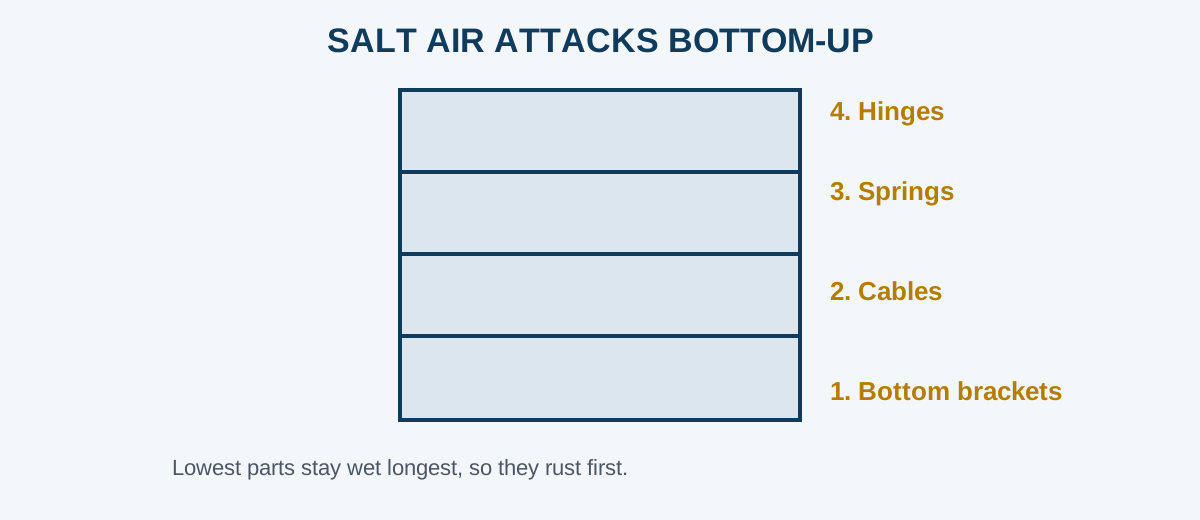
Salt air attacks a coastal garage door from the bottom up: bottom brackets, cables, and springs rust first because salt holds moisture against the metal. This guide covers which materials resist it, the rinse routine that slows it, and when to call a technician.
Salt air rusts a garage door faster than ordinary rain because salt holds moisture against the metal, so the steel never fully dries. Rinse the door with fresh water, watch the bottom brackets and cables, and leave springs and cables to a technician.
Why salt air is harder on a garage door than ordinary rain
A garage door near the Massachusetts coast lives in air that carries salt. Sea breezes lift microscopic salt particles off the water and drop them on every exposed surface, and salt has one property that makes it destructive: it pulls moisture out of the air and holds it against the metal. A door in a coastal town therefore stays damp long after the rain stops, and damp, salty steel rusts far faster than dry inland steel. Trade guides describe the same process as salt-fog corrosion, the reason ship hulls need constant maintenance.
The effect is strongest closest to the water and after strong onshore winds, when salt mist can coat a door daily. It does not stop at the shoreline, though: salt travels inland on the wind, so homes a few streets back from the harbor still see faster corrosion than homes further inland. If you live in Fall River, New Bedford, Lynn, Salem, or Revere, your door is working in a salt-air environment whether or not you can see the water from your driveway.
Where salt does the damage first
Salt damage follows a pattern, and knowing it tells you where to look. Bottom brackets and the bottom section go first, because they sit closest to the ground, collect standing water, and stay wet longest. Lift cables come next: surface rust weakens the strands, and a rusted cable is a cable closer to snapping. Springs rust on their coils, hinges and roller stems seize, and plain steel screws and bolts rust, stain the door, and can loosen faster than they would inland.
The opener is not immune either. Salty, humid air can corrode circuit boards and remote receivers, and a remote that works only at close range in a coastal home may be suffering from salt grime on its contacts rather than a dead battery. Look for the early warnings: a chalky white residue on metal parts, orange rust spots, flaking paint, new squeaking or grinding, and a door that moves unevenly. Those are signs to act on, not to wait out.
Materials that resist salt air, and materials that suffer
If you are choosing a door for a coastal home, the material matters more than it does inland. Aluminium resists rust almost entirely, even with constant salt exposure, but it dents more easily than steel, so it suits homes where the door will not take knocks from bikes, bins, or balls. Fiberglass resists corrosion well and shrugs off salt, though it is less common and harder to match to every style. Galvanized or coated steel is the practical middle ground: the coating protects the steel underneath, provided the coating itself is kept intact and touched up where it chips.
Bare, uncoated steel is the worst choice near the coast, and untreated wood is close behind: damp coastal air makes wood swell, warp, and hold moisture against its hinges and brackets, and some coastal guides report unprotected doors showing rust within months. Whatever the material, check the warranty before you buy. At least one major manufacturer lists salt spray and coastal weather exposure as a warranty exclusion, and leaving rust untreated can cost you coverage, so read your own warranty rather than assuming the coast is covered.
Homeowner-safe habits: rinse, wipe, watch
The single most effective habit costs nothing but a hose. Rinse the outside face of the door with fresh water after strong onshore winds, and at least monthly through the salt season, to wash the salt film off before it settles into joints and hardware. Keep the pressure washer away from the opener and the springs: a gentle rinse is enough, and blasting drives water into places it should not go. Wipe the tracks clean with a dry cloth, check the bottom seal for splits, and open and close the door fully, listening for new noises.
Lubrication helps, but only the right kind and only in the right places. A thin coat of corrosion-resistant lubricant on hinges, rollers, and pulleys, wiped free of drips, protects the parts you can reach; more oil does not mean more protection, it mostly means more dirt sticking to the parts. Never grease the tracks themselves, and never touch springs, cables, or track alignment yourself. Looking at those parts is safe. Working on them is not, because they carry the door's full weight under tension.
What a coastal service visit adds
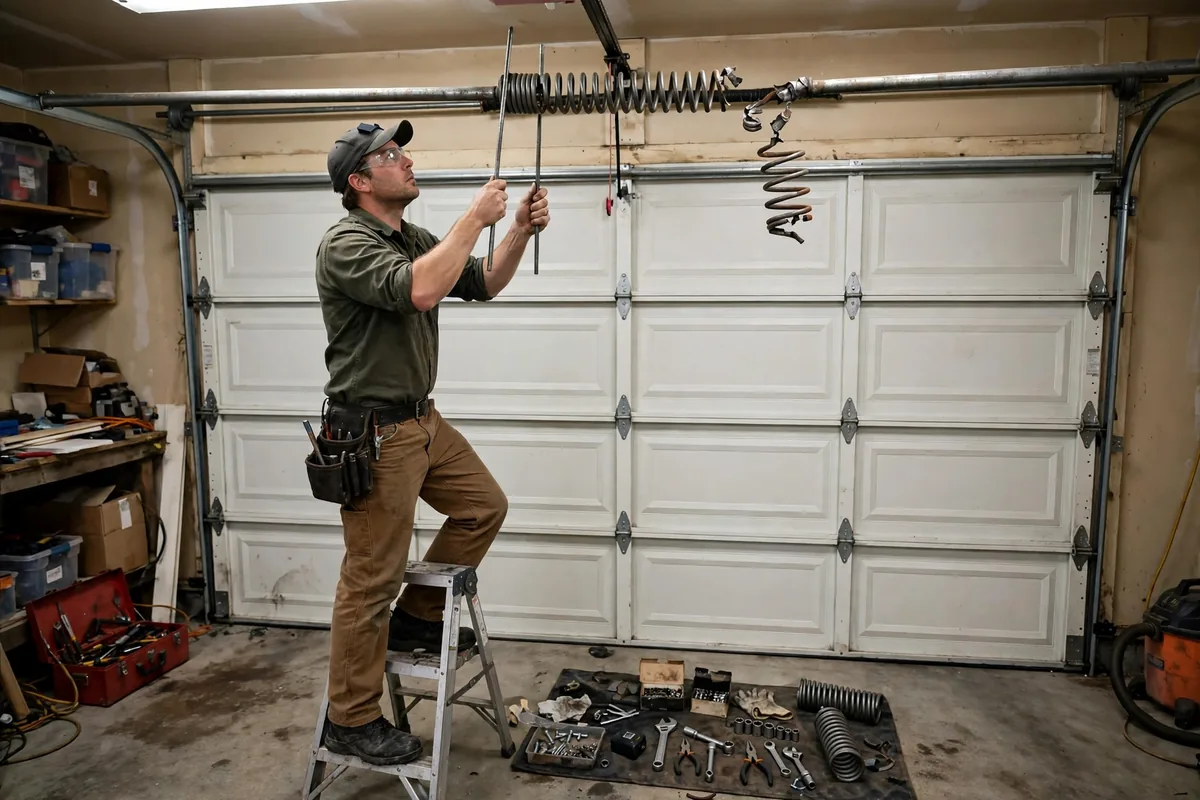
A professional visit for a coastal door covers everything you cannot safely do yourself: spring and cable inspection, re-tensioning where needed, and lubrication with products suited to salt environments. The technician also replaces corroded fixings with stainless or galvanized ones, checks the bottom brackets and cable drums closely, and tests the opener's force and safety reverse, which salt corrosion can quietly degrade.
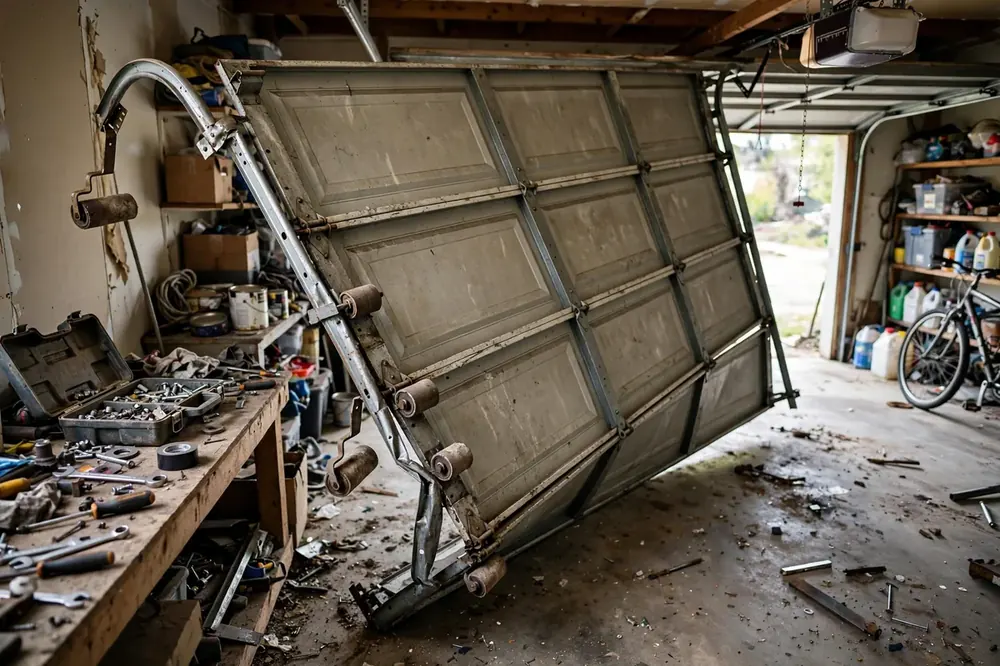
How often depends on how close you are to the water. Coastal trade guidance suggests a professional inspection every six months for homes close to the shore, and annually for homes further inland. If your door is already showing rust on cables or springs, do not wait for the next scheduled visit: rust-weakened parts fail without much warning, and a snapped cable or spring can drop the door. For cable work specifically, see our cable repair page, and for doors whose bottom sections have rusted through, see panel replacement.
Coastal Massachusetts cities we serve
Salt air is a regional problem on both of Massachusetts' coasts. On the South Coast, Fall River and New Bedford face the Taunton River, Mount Hope Bay, and Buzzards Bay, with harbor salt air and wind-driven moisture reaching doors well inland of the waterfront. On the North Shore, Lynn, Salem, and Revere face the open Atlantic, where onshore winds carry salt further and winter storms drive it harder. The guide's advice is the same in both regions, but the exposure is not: a door on a Revere beachfront street and a door in an inland Fall River neighborhood face different salt loads, and your service visit should be timed to yours.
For city-specific help, start from our garage door repair in Fall River and garage door repair in New Bedford pages, which carry each city's own service detail. This guide lists no ZIP codes by design: ZIP-level coverage belongs on the city pages, where it can be kept exact. And if you are weighing a full door replacement for a coastal home, read our repair versus replace guide before you decide, since a rusted bottom section and a rusted whole door are different jobs.
Garage door repair work

Ready for help? Call (833) 563-1552, Monday to Saturday, 9:00 AM to 6:00 PM, and describe the problem.
Call (833) 563-1552For local help, start from our Bay State Garage Door Repair Pros homepage, see our pages for garage door repair in Fall River and garage door repair in New Bedford, and read Garage Door Repair vs Replace next.
Frequently asked questions
How does salt air damage a garage door?
Salt particles carried on sea breezes settle on metal and hold moisture against it, so the steel never fully dries. That damp, salty film speeds up rust on bottom brackets, cables, springs, hinges, and tracks, and the damage starts at the lowest, wettest parts first.
Which parts of a coastal garage door fail first?
Bottom brackets, bottom sections, lift cables, and springs usually show rust first, because they sit closest to the ground and stay damp longest. Hinges, roller stems, and fasteners follow, and a corroded fastener can stain the door even before the part itself fails.
Which garage door materials hold up best near the coast?
Aluminium resists rust almost entirely but dents more easily than steel, fiberglass resists corrosion well, and galvanized or coated steel holds up far better than bare steel. Untreated wood suffers most in damp coastal air, swelling, warping, and holding moisture against its hardware.
How often should I rinse a coastal garage door?
Rinse the outside face with fresh water from a hose after strong onshore winds, and at least monthly in the salt season. Keep the pressure washer away from the opener and the springs, and wipe the tracks clean with a dry cloth rather than blasting them.
When should a coastal door be checked by a technician?
Book a professional check at least once a year, and every six months if your home is close to the water. Springs, cables, and balance are pro-only work: a technician can spot rust-weakened parts and replace corroded fixings with stainless or galvanized ones before they fail.