
Signs Your Garage Door Needs Repair
Garage doors rarely fail without warning. This guide explains the signs your garage door needs repair in Massachusetts — sticking, grinding, reversing, sagging, or a heavy door — what each symptom usually means, and what to do first, so a small fault stays a small repair.
If your garage door suddenly sticks, grinds, reverses, sits crooked, or feels heavy, it needs attention — usually a worn roller, spring, cable, sensor, or track. Stop using a crooked or off-track door, note the symptom, and call (833) 563-1552, Monday to Saturday, 9:00 AM to 6:00 PM.
The short answer: act on new behaviour, not on age alone
If your door suddenly behaves differently — it sticks, makes a new noise, reverses for no clear reason, or feels much heavier — that change is the warning sign, not the age of the door on its own. Most garage door problems start small: a worn roller, a frayed cable, a spring losing strength, or a sensor knocked out of line. Catching them early usually means a smaller repair, while ignoring them can turn a worn part into a door that jams, drops, or comes off its track. The sections below walk through each symptom in plain language, what part it usually points to, and when to stop using the door and call.
A garage door that will not open or close all the way
A door that stops a few inches up, stops short of the floor, or only moves when you hold the button down is telling you something is wrong with the lifting system or the safety system. Broken torsion springs are a common cause: the opener motor is not strong enough to lift the full weight of the door on its own, so it stalls. A misaligned track or a bent track can also stop the door at the same point every time, because the rollers bind in the damaged section.
Photo-eye safety sensors can cause the same symptom in a different way. If a sensor is dirty, knocked out of line, or blocked, the opener may refuse to close the door or reverse it straight after it starts down. That is the safety system doing its job, and it is worth checking the simple things first: clear anything leaning against the sensors near the floor, wipe the sensor lenses gently, and look for a loose wire. If the door still will not travel fully, stop forcing it. Repeated attempts can strain the opener motor and make a track or cable problem worse. Opener repair covers motor, gear, sensor, and remote problems, while spring replacement covers a door that has become too heavy for its opener.
Loud new noises: grinding, scraping, squeaking, and popping
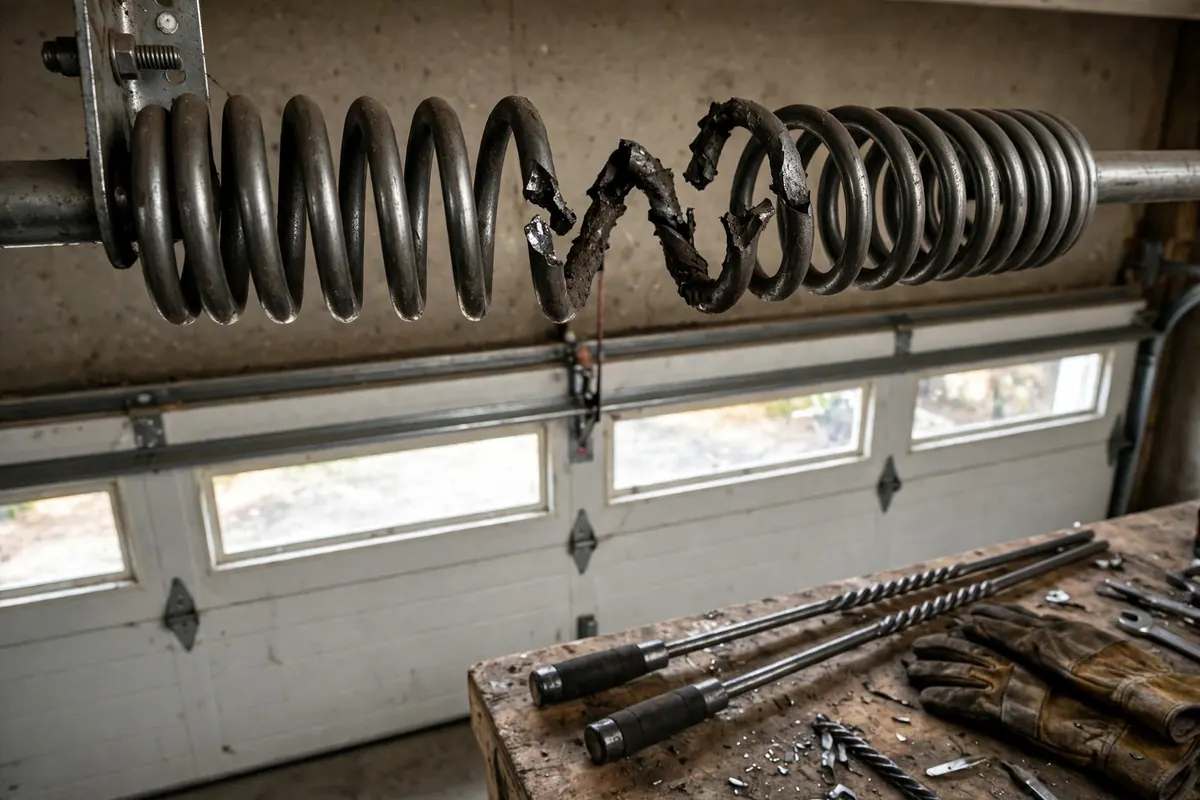
A quiet door is a healthy door. Grinding or scraping usually means metal rubbing where it should not: worn rollers, a track that has shifted, or hinges that have loosened over thousands of open-and-close cycles. Squeaking often points to dry rollers, hinges, or bearings that need lubrication during a service visit. A loud bang from the garage, followed by a door that will barely move, is the classic sign of a broken torsion spring — the coil has snapped and the door has lost its counterbalance.
Popping or creaking as the door moves can come from a spring coil binding, a roller catching in a dented track, or a panel flexing because a hinge or strut has worked loose. Do not try to diagnose a noise by standing under the door while it moves, and do not spray lubricant on springs or cables yourself to quiet them down. Note when the noise happens — on the way up, on the way down, or at the same spot every time — because that detail helps a technician find the worn part faster. If the noise appeared suddenly and the door now moves unevenly, treat it as a cable or roller problem until it is checked, and keep the door closed.
Spotted one of these problems? Call and describe what your door is doing — that description helps us bring the right parts.
Call (833) 563-1552A crooked, sagging, or off-track garage door
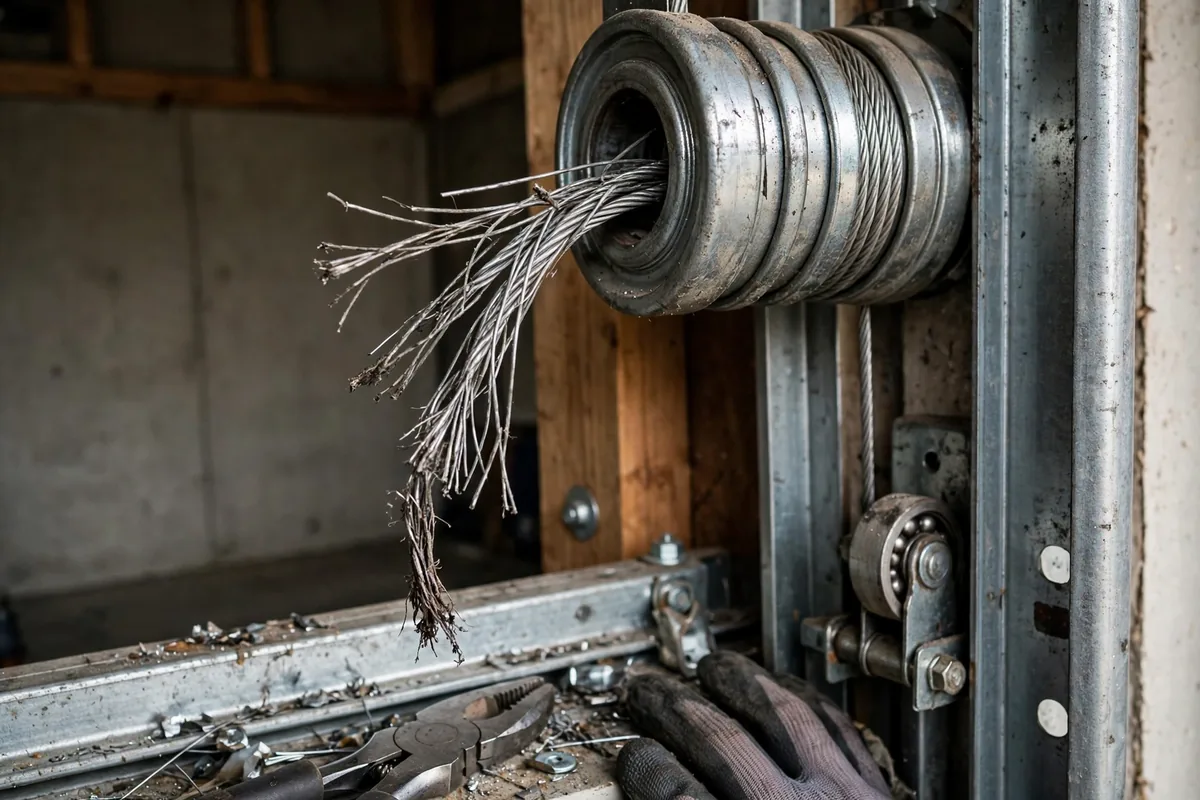
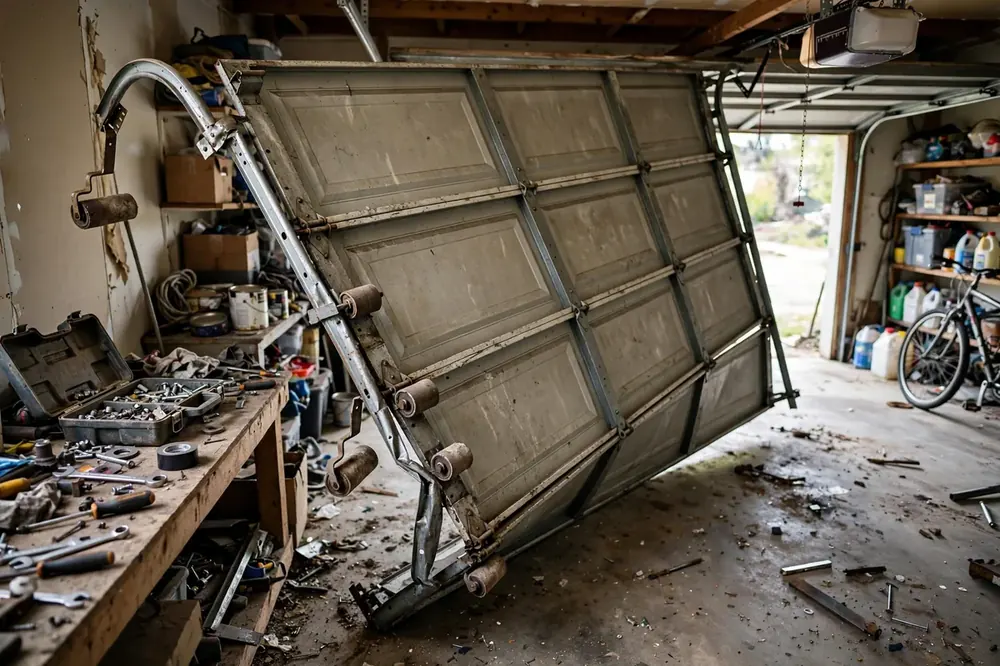
A door that hangs lower on one side, looks tilted when closed, or has visibly left its track is the symptom to take most seriously. It usually means one side of the lifting system has failed: a snapped lift cable, a broken spring on one side, a worn roller that has jumped the track, or a track bracket that has bent or pulled loose. The door is then held unevenly, and its full weight can shift without warning.
If your door is off track, stop using it completely. Do not try to lift it back onto the track by hand, and do not run the opener to force it straight — that can bend the track further, damage the panels, or drop the door. Keep people and cars clear, leave the door where it is, and call. Off-track repair covers track realignment, roller replacement, and the cable or spring failure that usually caused the door to leave the track in the first place.
A door that reverses, stops halfway, or will not stay up
A door that starts down and then reverses on its own may be reacting to a blocked or misaligned photo-eye sensor, or to resistance from a binding track or a door that is out of balance. The auto-reverse feature is a safety requirement under the UL 325 standard, so a reversing door is not always broken — but a door that reverses every time, or that used to close cleanly and now does not, needs checking. First, look for anything in the doorway, clear the track area of stored items, and clean the sensor lenses.
A door that will not stay up when you lift it by hand, or that drifts down on its own, points to springs that have lost tension or a balance problem. Never test balance by disconnecting the opener and letting go of a heavy door — that test belongs to a technician with the right tools, because a door that falls can cause serious injury. The same applies to a door that feels much heavier than it used to: the springs are no longer carrying their share of the weight, and the opener is doing work it was not built to do. Spring replacement restores the counterbalance, and a tune-up visit checks balance, tension, and safety sensors together.
A heavy door, a gap in the spring coil, and spring age
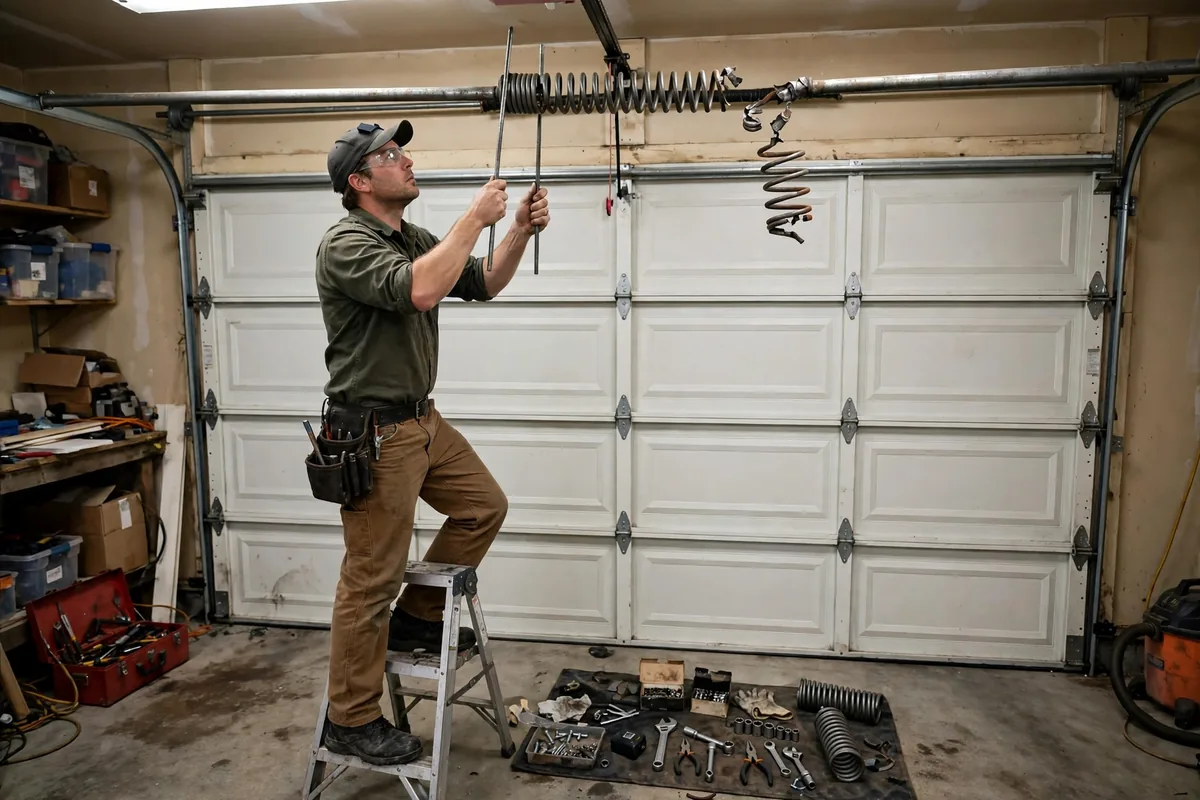
Torsion springs sit on a shaft above the door, and extension springs run along the tracks on either side. A visible gap in a torsion spring coil is a clear sign it has broken — the coil has snapped apart at one point, and the door will feel heavy or will not open at all. Extension springs show their age differently: stretching, rust, or a cable that has gone slack on one side. Rust matters in Massachusetts because damp garage air and road salt carried in on cars wear on bare steel over time.
As a general, typical figure reported by competitors — not Bay State data — garage door springs are often rated for around 10,000 cycles, which works out to roughly 7 to 10 years for a door used a few times a day. A door used far more often, or a spring fitted to a heavier door, can reach the end of that life sooner. Age alone is not a reason to replace a spring that still works, but a spring near that age that is also noisy, rusty, or making the door heavy is worth having checked before it breaks at an inconvenient moment.
Spotted one of these problems? Call and describe what your door is doing — that description helps us bring the right parts.
Call (833) 563-1552What to do first when you spot a warning sign
First, stop using a door that is crooked, off track, sagging, or making a sudden loud noise. Leave it closed if you can, keep children and pets away from it, and do not try to lift a heavy door by hand or force the opener to run. Second, write down what you noticed: when it started, whether it happens going up or down, any new noise, and whether one side moves before the other. That short description is genuinely useful — it helps us work out whether the likely problem is a spring, a cable, a roller, a track, or the opener before anyone arrives.
Third, call (833) 563-1552, Monday to Saturday, 9:00 AM to 6:00 PM, and describe the symptom. You will get a clear next step, not a diagnosis over the phone: what is safe to leave alone, what needs a visit, and what to avoid doing in the meantime. If the door is stuck open and you cannot secure the garage, say so on the call so the visit can be prioritised within those hours.
Signs by part: spring, cable, roller, opener, and panel
Springs: a loud bang, a door that feels heavy, a gap in the coil, or a door that only opens a few inches. Cables: a door that leans to one side, a cable hanging loose or visibly frayed, or a door that drops unevenly. Rollers and tracks: grinding, jerking, sticking at the same point, or rollers visibly out of the track. Opener: a motor that runs but the door does not move, a remote or keypad that stops working, or a door that reverses without an obstruction. Panels: a dented or cracked section, a door that flexes or rattles, or daylight showing through a damaged section.
One symptom can have more than one cause — a grinding door could be rollers, track, or hinges — so the part-by-part list above is a starting point, not a diagnosis. The service pages explain each repair in full: spring replacement, cable repair, opener repair, off-track repair, and panel replacement. If you are unsure which one fits, describe the symptom on the call and we will point you to the right page and the right next step.
Garage door repair work
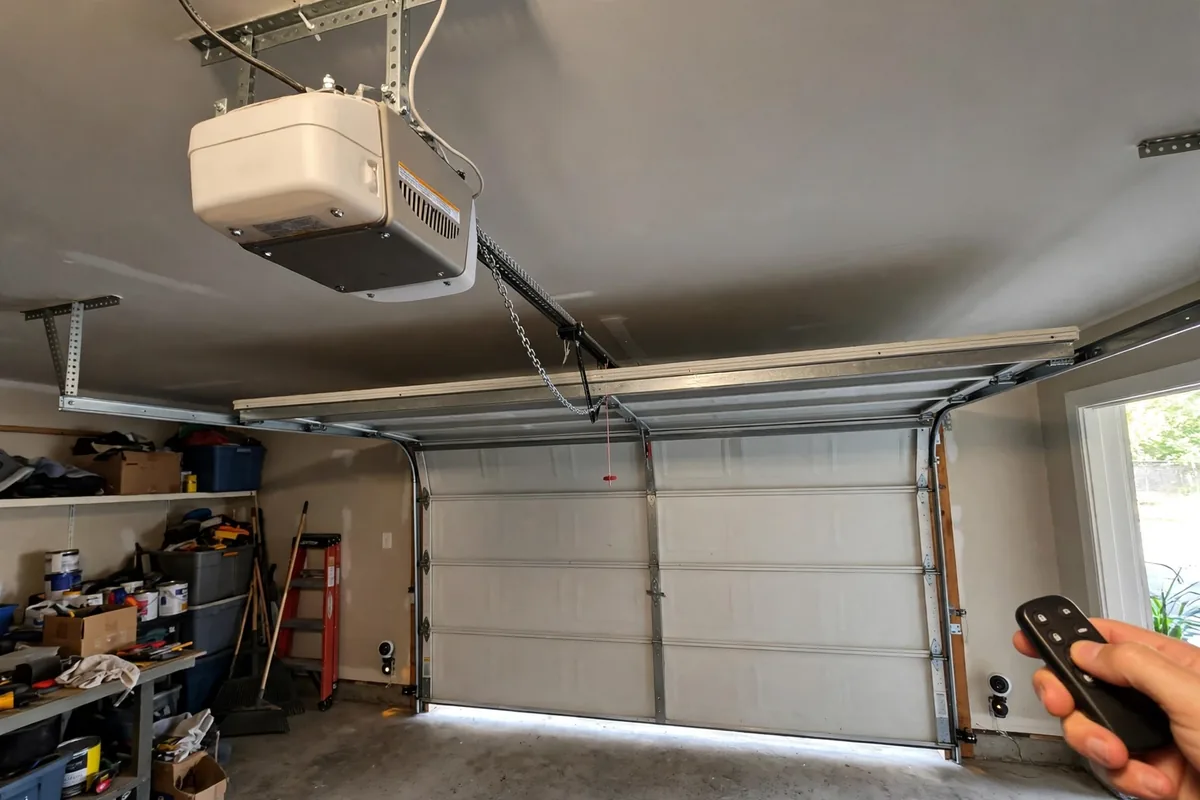
Ready for help? Call (833) 563-1552, Monday to Saturday, 9:00 AM to 6:00 PM, and describe the problem.
Call (833) 563-1552