
Do You Need a Permit for a Garage Door in MA?
Do you need a permit for a garage door in Massachusetts? Usually no for routine repairs, sometimes yes when the work changes the structure or the wiring. This guide explains the line, in general terms, and when to check with your town building department.
Most routine garage door repairs in Massachusetts — springs, cables, rollers, and like-for-like opener swaps — usually need no building permit. You may need one when the work widens the opening, changes the framing, or adds new electrical wiring; check with your town building department first.
The short answer: like-for-like repairs usually need no permit; structural or electrical changes may
For most routine garage door work in Massachusetts — replacing a broken spring, a frayed cable, worn rollers, or an opener with a like-for-like model — a building permit is not usually required, because nothing about the building itself changes. A permit becomes possible when the work changes the structure, the size of the opening, or the electrical wiring: widening the opening, changing the header or framing, adding a new electrical circuit, or installing an opener where none existed before. This guide is general information only, not legal advice, and the final word for your address is always your town or city building department.
What usually does not need a permit: routine garage door repairs
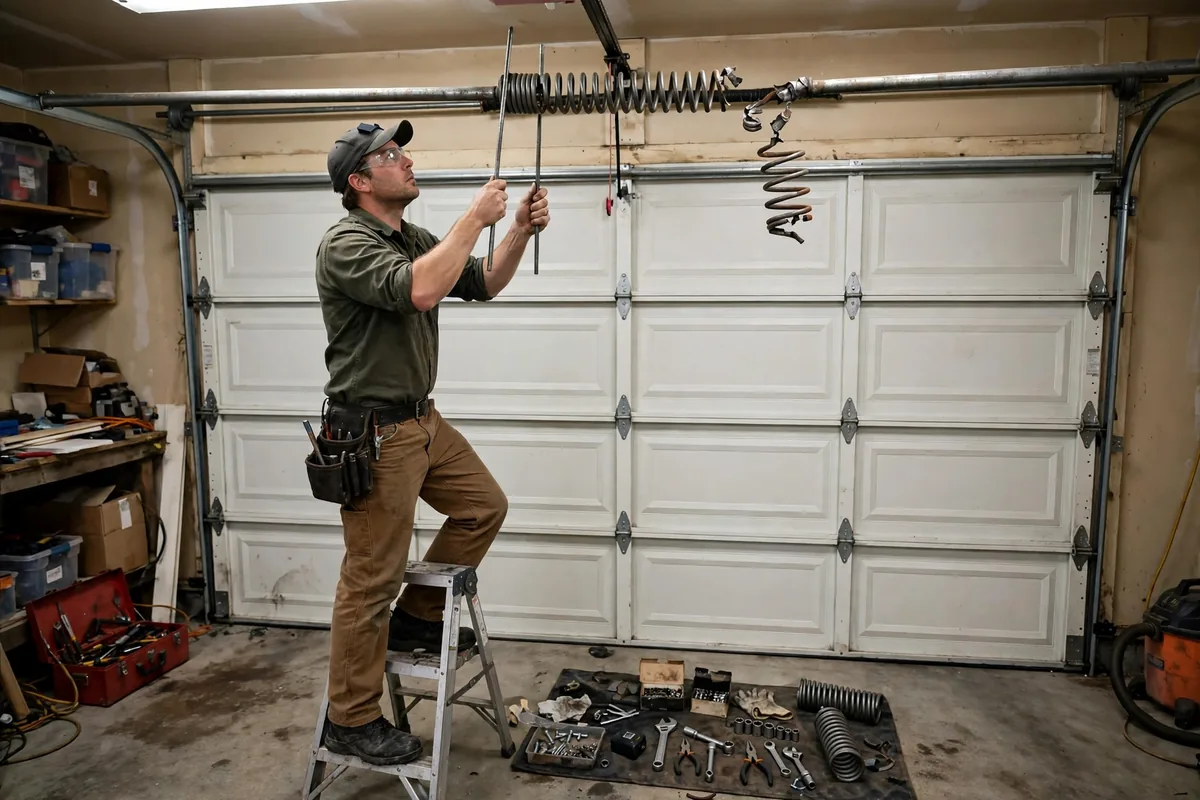
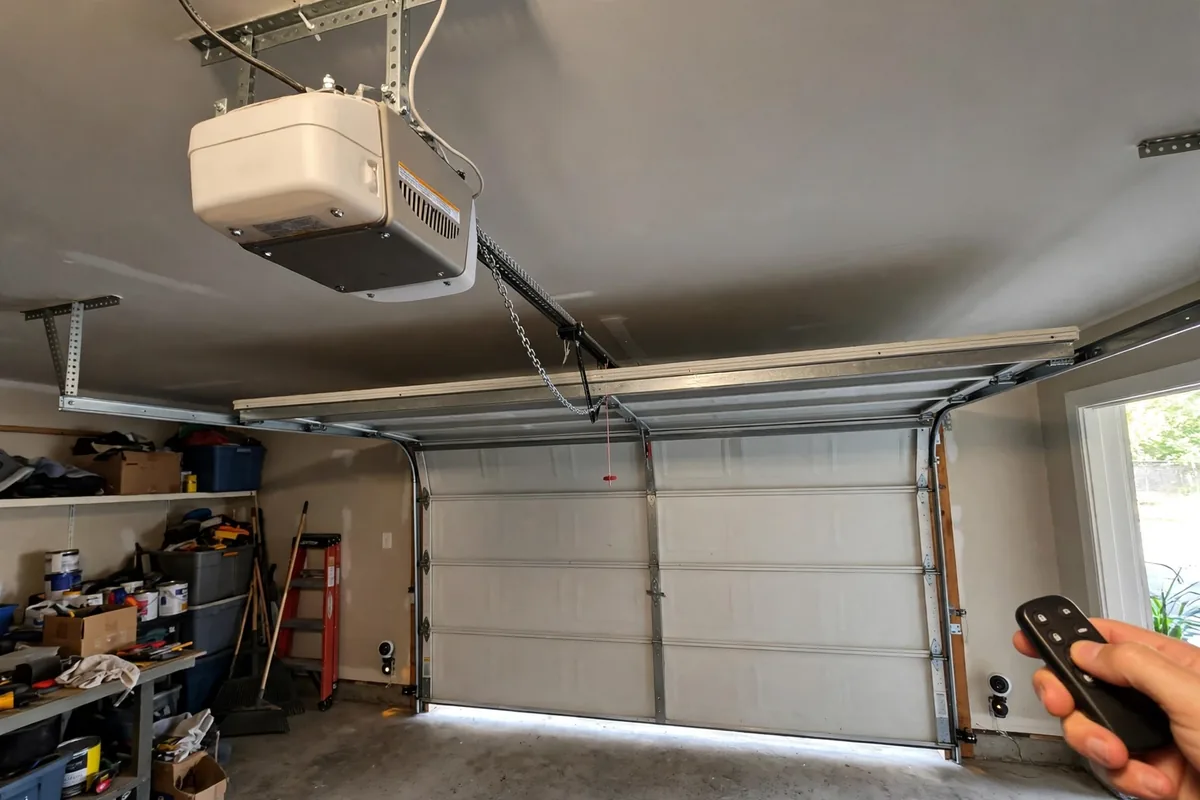
Routine repairs replace a worn or broken part with an equivalent part, in the same place, without altering the building. That covers torsion and extension spring replacement, lift cable replacement, roller and hinge replacement, track realignment or replacement in the same opening, weather seal replacement, and opener repair or like-for-like opener replacement. None of those jobs changes the opening size, the structural framing, or the electrical supply, which is why they are generally treated as maintenance rather than construction.
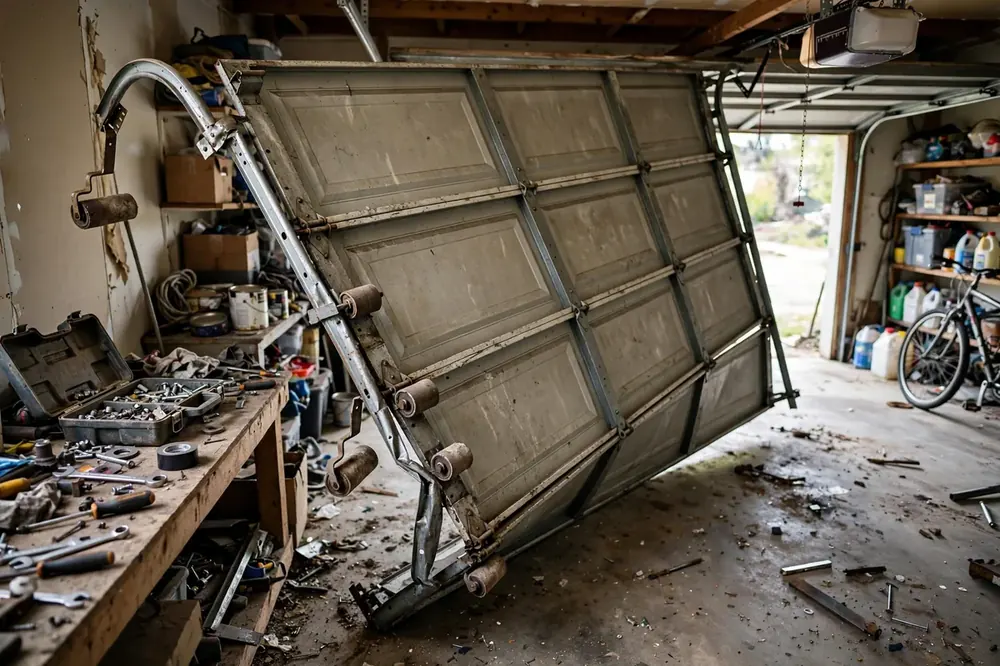
That general rule has a limit worth knowing. If a repair uncovers a larger problem — a rotted header, a bent frame, or wiring that is damaged or not to code — the repair itself may still be maintenance, but the extra work to fix the framing or wiring may not be. A technician who finds that kind of problem should tell you before doing the extra work, and should be able to say whether it is likely to need approval. For the repairs in this section, see spring replacement, cable repair, and opener repair.
What can trigger a permit: opening, structure, and electrical changes
Three kinds of change commonly trigger a permit question. First, changing the opening: widening or narrowing the garage door opening, raising the header, or converting a single door opening into a double, all of which affect the structural framing and the load above the door. Second, structural work itself: replacing a rotted or damaged header, reframing a wall section, or altering the wall that carries the door. Third, electrical work: adding a new circuit for an opener, moving an outlet, or wiring an opener where the garage previously had no opener and no suitable supply.
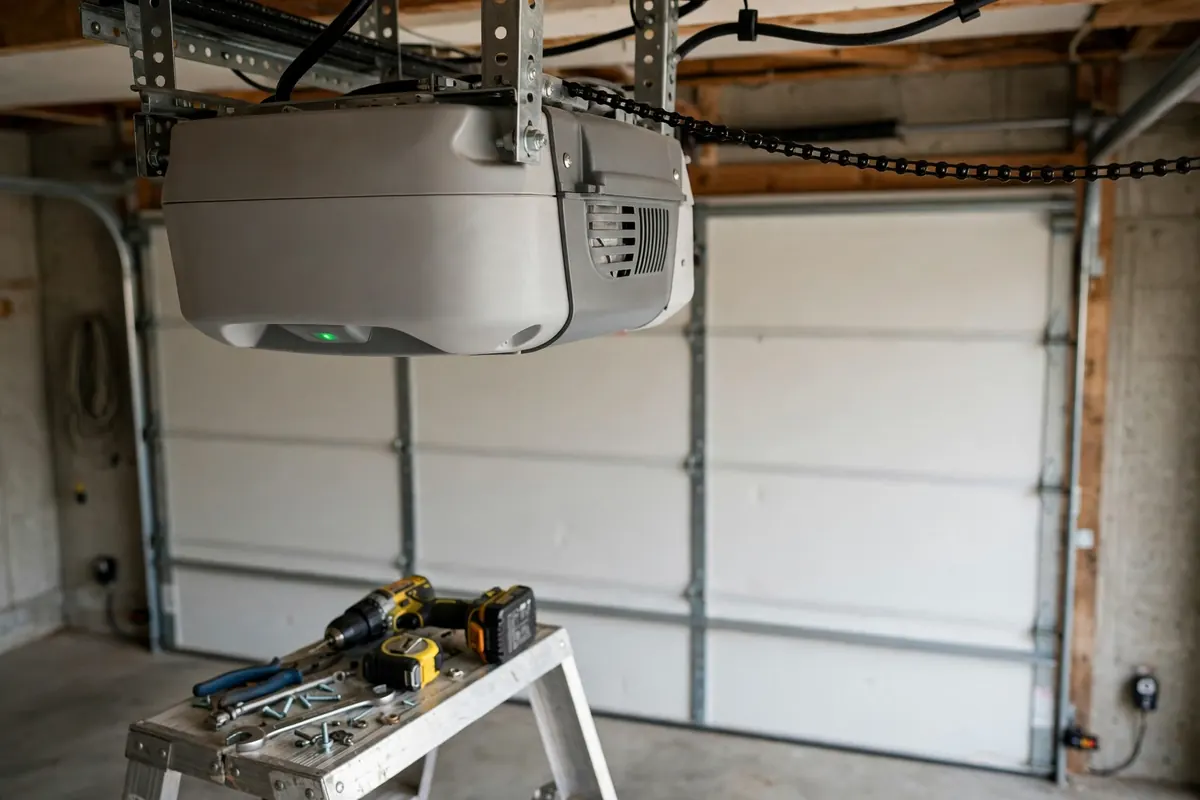
A new garage door installation in an existing, unchanged opening is usually treated differently from a new opening: the door, tracks, springs, and opener are replaced, but the building is not altered. Even then, some towns ask to be told about a full replacement, and a door that changes the fire separation between garage and house — for example, a door in a wall that must resist fire — needs care about the rating of the replacement. If your job involves any of the three changes above, check before work starts, not after: a permit applied for late can mean the work has to be opened up for inspection. Garage door installation and opener installation explain which jobs are like-for-like and which involve new wiring or a new opening.
Spotted one of these problems? Call and describe what your door is doing — that description helps us bring the right parts.
Call (833) 563-1552Massachusetts State Building Code (780 CMR) and your town building department
Garage door and building work in Massachusetts falls under the Massachusetts State Building Code, known as 780 CMR, which is adopted and enforced locally by each town or city building department — often called the building inspector or inspectional services department. That local enforcement is why there is no single statewide answer to “do I need a permit?”: the code sets the framework, but your town applies it, sets its own application process, and decides whether your specific job needs approval. Always check with the building department for the town where the garage stands, not with a neighbouring town's rules.
Boston is sometimes cited as an example, and it shows why local detail matters: Boston's Inspectional Services Department has used a short-form permit structure reported as $20 plus $10 per $1,000 of job value for certain small jobs. That is a Boston example only, not a statewide fee, and fees change — confirm the current fee and form with the department before relying on any figure. Other towns use different forms, fees, and thresholds, and some handle small garage door jobs over the counter while others want a full application. A short phone call or visit to your town's building department, describing the job in one sentence, usually settles the question.
What to have ready when you check, and what to ask
Before you contact the building department, write down four things: whether the opening size is changing, whether any framing or header work is involved, whether any new electrical circuit or outlet is needed, and whether the door is in a wall between the garage and the house. With those four answers, the department can usually tell you straight away whether a permit is needed, what form to use, and whether an inspection is required after the work. Ask specifically whether the job needs a permit, whether an inspection is needed, and what paperwork the installer should leave you with.
Also ask your installer the same questions before the job starts, and check that a contractor doing installation work is registered as a home improvement contractor in Massachusetts. The state's registration page explains what registration means and how to check it: Massachusetts home improvement contractor registration. Keep any permit, approval, or inspection sign-off with your house records — it matters when you sell, insure, or extend the property, and it proves the work was done with approval where approval was needed. If you are still unsure after checking, the safe course is to ask the building department in writing and keep the reply.
General information only: when to get professional advice
This guide is general information about how permits usually work for garage door jobs in Massachusetts. It is not legal advice, and it is not a substitute for advice about your specific property, your town's current rules, or a job that involves structural engineering, fire separation, or historic-district controls. If your garage is in a historic district, a condominium, or a building with shared walls, additional approvals may apply beyond the building code, and those are worth checking with the relevant authority before work starts.
For most owners, the practical rule is simple: routine repair, no permit expected, but check if anything structural or electrical is involved; new opening, new framing, or new wiring, check first. When in doubt, one call to your town building department settles it, and that call costs nothing. For the full range of garage door services covered in this guide, see all services and the frequently asked questions, including the permit question answered there.
Permit process step by step: what usually happens
Where a permit is needed, the usual process has four steps, and none of them is complicated for a straightforward garage door job. First, you or your installer contact the town building department and describe the job: opening size, framing work, and electrical work, as listed above. Second, the department says whether a permit is needed and which form applies, and you submit the form with a description of the work and, for larger jobs, a simple drawing or the door specification. Third, the work is carried out, and the installer keeps to the approved description — if the scope changes mid-job, the department should be told before the change is made, not after.
Fourth, where an inspection is required, the department inspects the finished work and signs it off. That sign-off is the document to keep with your house records, alongside any permit approval. For a small job the inspection may be a short visit; for a job involving framing or wiring it may be more detailed, and the installer should be present to answer questions. Timelines vary by town and by workload, and no honest guide can promise how long a particular town will take, so ask the department for its current timescale when you apply. If no permit is needed, ask for that answer in writing as well — a short email confirmation from the department is easy to file and removes any doubt later.
One further point: a permit, where one is required, is about the building work, not about the installer. Hiring a registered contractor does not remove the need for a permit, and having a permit does not remove the need to check the contractor. The two checks sit side by side — permit from the town, registration from the state — and both are worth doing before a large job starts.
Garage door repair work
Ready for help? Call (833) 563-1552, Monday to Saturday, 9:00 AM to 6:00 PM, and describe the problem.
Call (833) 563-1552